Kirjojen hintavertailu. Mukana 12 595 353 kirjaa ja 12 kauppaa.

Kirjailija

Guy Laforest

Kirjat ja teokset yhdessä paikassa: 7 kirjaa, julkaisuja vuosilta 1995-2016, suosituimpien joukossa Sortir de l'impasse. Vertaile teosten hintoja ja tarkista saatavuus suomalaisista kirjakaupoista.

7 kirjaa

Kirjojen julkaisuhaarukka 1995-2016.

The Parliaments of Autonomous Nations

The Parliaments of Autonomous Nations

Guy Laforest; André Lecours

McGill-Queen's University Press
2016
sidottu
At a time when nationalist movements are forcefully looking for new forms of political, institutional, and constitutional accommodation - if not seeking independence altogether - insight into their dynamics is more useful than ever. In The Parliaments of Autonomous Nations, Guy Laforest and Andre Lecours assemble an original perspective on minority nations in Belgium, Canada, Spain, and the United Kingdom. Analyzing how parliaments in Flanders, Quebec, Catalonia, Galicia, the Basque Country, Scotland, and Northern Ireland have worked to build, consolidate, and express their identities, manage and protect the cultural distinctiveness of their communities, as well as articulate self-determination claims, contributors provide insights into these nations' democracies and traditions. Essays also focus on the central parliaments of multinational states, and on the methods used by these parliaments to promote their own national identities and respond to minority nations' claims for recognition, autonomy, or even independence. An illuminating look at the internal forces of Western governments, The Parliaments of Autonomous Nations also offers a broad view of vital concerns such as nationalist struggles, federalism, and parliamentarism.
The Parliaments of Autonomous Nations

The Parliaments of Autonomous Nations

Guy Laforest; André Lecours

McGill-Queen's University Press
2016
nidottu
At a time when nationalist movements are forcefully looking for new forms of political, institutional, and constitutional accommodation - if not seeking independence altogether - insight into their dynamics is more useful than ever. In The Parliaments of Autonomous Nations, Guy Laforest and Andre Lecours assemble an original perspective on minority nations in Belgium, Canada, Spain, and the United Kingdom. Analyzing how parliaments in Flanders, Quebec, Catalonia, Galicia, the Basque Country, Scotland, and Northern Ireland have worked to build, consolidate, and express their identities, manage and protect the cultural distinctiveness of their communities, as well as articulate self-determination claims, contributors provide insights into these nations' democracies and traditions. Essays also focus on the central parliaments of multinational states, and on the methods used by these parliaments to promote their own national identities and respond to minority nations' claims for recognition, autonomy, or even independence. An illuminating look at the internal forces of Western governments, The Parliaments of Autonomous Nations also offers a broad view of vital concerns such as nationalist struggles, federalism, and parliamentarism.
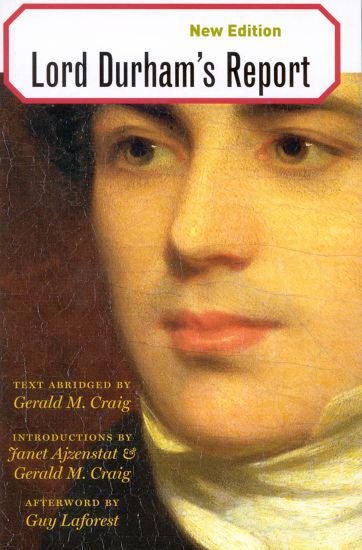
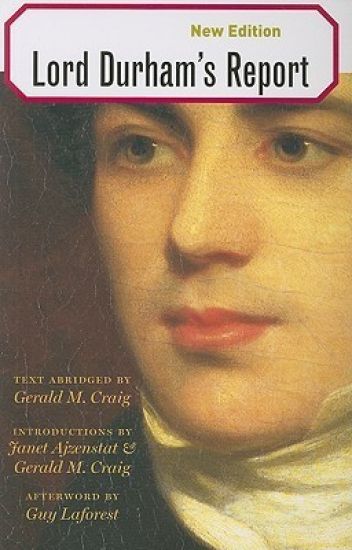
Lord Durham's Report

Lord Durham's Report

Gerald M. Craig; Janet Ajzenstat; Guy Laforest

McGill-Queen's University Press
2006
sidottu
In his famous 1839 call to reform, John George Lambton, Earl of Durham, recommended that Upper and Lower Canada be accorded responsible government by uniting the two provinces under a single legislative assembly - a union which would also bring about the assimilation of the French-Canadians. The Report has been criticized ever since - from British imperialists who found it dangerously liberal to French Canadians who despised Durham for his presumed racism. This new edition of Gerald Craig's abridgement retains his 1963 introduction and adds essays that debate Durham's political assumptions and goals, re-examine the philosophical and historical context in which the Report was created, and review the Report's reception and influence. Janet Ajzenstat reconsiders the report in the context of nineteenth-century debates about the relation between culture and political institutions, arguing that Durham should be seen as a progressive universalist opposed to the divisions of race and creed who wanted to give more freedom to French- and English-Canadians alike. Guy Laforest re-examines the report in terms of British liberal imperialism and twentieth-century English-Canadian perspectives to argue that Durham was a one-sided sociologist and the first in long line who used liberalism for imperialist purposes.
Lord Durham's Report

Lord Durham's Report

Gerald M. Craig; Janet Ajzenstat; Guy Laforest

McGill-Queen's University Press
2006
nidottu
In his famous 1839 call to reform, John George Lambton, Earl of Durham, recommended that Upper and Lower Canada be accorded responsible government by uniting the two provinces under a single legislative assembly - a union which would also bring about the assimilation of the French-Canadians. The Report has been criticized ever since - from British imperialists who found it dangerously liberal to French Canadians who despised Durham for his presumed racism. This new edition of Gerald Craig's abridgement retains his 1963 introduction and adds essays that debate Durham's political assumptions and goals, re-examine the philosophical and historical context in which the Report was created, and review the Report's reception and influence. Janet Ajzenstat reconsiders the report in the context of nineteenth-century debates about the relation between culture and political institutions, arguing that Durham should be seen as a progressive universalist opposed to the divisions of race and creed who wanted to give more freedom to French- and English-Canadians alike. Guy Laforest re-examines the report in terms of British liberal imperialism and twentieth-century English-Canadian perspectives to argue that Durham was a one-sided sociologist and the first in long line who used liberalism for imperialist purposes.
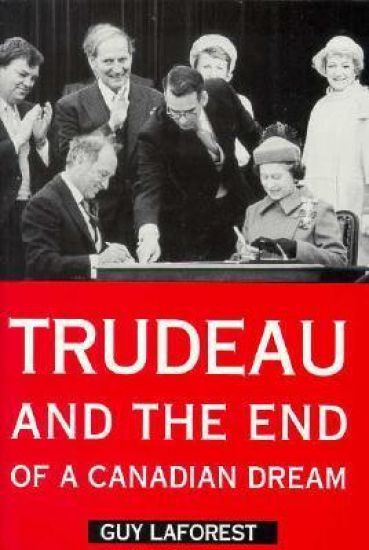
Trudeau and the End of a Canadian Dream

Trudeau and the End of a Canadian Dream

Guy Laforest

McGill-Queen's University Press
1995
nidottu
In 1982 Prime Minister Pierre Trudeau realized his life's ambition: the patriation of the Canadian constitution and the enshrinement of a Charter of Rights and Freedoms. At the same time he dealt a severe blow to his arch-enemies, the nationalists in Quebec who believed that a significant and rewarding partnership with Canada was possible without renouncing their identity as Quebecers. Laforest reveals that Trudeau betrayed the trust of the people of Quebec during the 1980 referendum on sovereignty-association and contends that the whole patriation exercise, completed without the consent of Quebec, is not legitimate in that province. He also holds Trudeau responsible for the ultimate rejection of the "distinct society" clause in the Meech Lake Accord, which had given a glimmer of hope to Quebec federalists. Trudeau and the End of a Canadian Dream shows how constitutional reform, and the political culture it fostered, shattered the hopes of those who believed that being both a Canadian and a Quebecer was possible.