Kirjojen hintavertailu. Mukana 12 595 353 kirjaa ja 12 kauppaa.

Kirjailija

Guy Nordenson

Kirjat ja teokset yhdessä paikassa: 5 kirjaa, julkaisuja vuosilta 2010-2024, suosituimpien joukossa David Hammons. Vertaile teosten hintoja ja tarkista saatavuus suomalaisista kirjakaupoista.

5 kirjaa

Kirjojen julkaisuhaarukka 2010-2024.

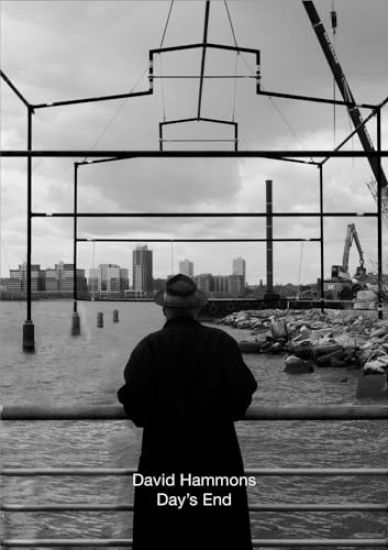
David Hammons

David Hammons

Adam D. Weinberg; Kellie Jones; Guy Nordenson; Ben Okri

YALE UNIVERSITY PRESS
2024
sidottu
An in-depth look at a public art project by David Hammons with an overview of the enigmatic artist’s career Published to commemorate David Hammons’s (b. 1943) public art project Day’s End, located in New York City, this book documents the sculpture and offers broader context into Hammons’s enigmatic work. In 2014, Hammons sent the Whitney Museum of American Art a sketch for a monument to Gordon Matta-Clark (1943–1978), paying homage to Matta-Clark’s legendary Day’s End (1975)—an industrial, cathedral-like space of altered architecture—once located near today’s Whitney in Manhattan’s Meatpacking District. Completed in 2021, Hammons’s work, also titled Day’s End, was realized by the Whitney in collaboration with Hudson River Park, and is on permanent view. One of the most important artists working in the United States, Hammons makes art across mediums, often outside traditional venues. In addition to photographic documentation, the book includes essays on the origins of Day’s End, Hammons’s career scope, and a contribution by poet Ben Okri. Distributed for the Whitney Museum of American Art
Structures of Coastal Resilience

Structures of Coastal Resilience

Catherine Seavitt Nordenson; Guy Nordenson; Julia Chapman

Island Press
2018
sidottu
An inspiring guide to innovative strategies for preparing communities for unprecedented climate impacts Structures of Coastal Resilience presents new strategies for creative and collaborative approaches to coastal planning for climate change. In the face of sea level rise and an increased risk of flooding from storm surge, we must become less dependent on traditional approaches to flood control that have relied on levees, sea walls, and other forms of hard infrastructure. Instead, authors Catherine Seavitt Nordenson, Guy Nordenson, and Julia Chapman reimagine how coastal planning might better serve communities grappling with a future of uncertain environmental change. They offer inspiring insights into new approaches to design, engineering, and planning, envisioning an ecological approach to developing adaptive and resilient futures for coastal areas.
Structures of Coastal Resilience

Structures of Coastal Resilience

Catherine Seavitt Nordenson; Guy Nordenson; Julia Chapman

Island Press
2018
nidottu
Structures of Coastal Resilience presents new strategies for creative and collaborative approaches to coastal planning for climate change. In the face of sea level rise and an increased risk of flooding from storm surge, we must become less dependent on traditional approaches to flood control that have relied on levees, sea walls, and other forms of hard infrastructure. But what are alternative approaches for designers and planners facing the significant challenge of strengthening their communities to adapt to uncertain climate futures? Authors Catherine Seavitt Nordenson, Guy Nordenson, and Julia Chapman have been at the forefront of research on new approaches to effective coastal resilience planning for over a decade. In Structures of Coastal Resilience, they reimagine how coastal planning might better serve communities grappling with a future of uncertain environmental change. They encourage more creative design techniques at the beginning of the planning process, and offer examples of innovative work incorporating flexible natural systems into traditional infrastructure. They also draw lessons for coastal planning from approaches more commonly applied to fire and seismic engineering. This is essential, they argue, because storms, sea level rise, and other conditions of coastal change will incorporate higher degrees of uncertainty--which have traditionally been part of planning for wildfires and earthquakes, but not floods or storms. This book is for anyone grappling with the immense questions of how to prepare communities to flourish despite unprecedented climate impacts. It offers insights into new approaches to design, engineering, and planning, envisioning adaptive and resilient futures for coastal areas.
Reading Structures

Reading Structures

Guy Nordenson

Lars Muller Publishers
2015
sidottu
This monograph presents 39 complex structures by the Princeton University professor and structural engineer Guy Nordenson. The body of work, developed with architects and artists including Raimund Abraham, Henry N. Cobb, Steven Holl, Michael Maltzan, Richard Meier, SANAA, and many others, reveals Nordenson's unique contributions to a progressive collaborative design process as both engineer and designer. The structures in this volume span twenty-eight years, from his early work with Paul Weidlinger, to his formation of the New York office of Ove Arup & Partners, through the first 13 years since the 1998 establishment of his current independent practice, Guy Nordenson and Associates.
Patterns and Structure

Patterns and Structure

Guy Nordenson

Lars Muller Publishers
2010
nidottu
This rich collection of writings and criticisms by structural engineer and Princeton University professor Guy Nordenson, brings together previously published essays on structural engineering, architecture, design, and seismic research from 1973 to 2008. Decade by decade, Nordenson's essays provide the unique viewpoint of the structural engineer and design collaborator, adding context that relates not only to the history of architecture and engineering, but locates these fields in a larger network of cultural relevance. Originally commissioned by publications like The New York Times, Domus, The Harvard Design Magazine, Perspecta, Lotus, Earthquake Spectra, and MoMA's Tall Buildings exhibition catalog, Nordenson's writings investigate a wide range of genres: from technical reports on seismicity, methods and technologies in structural engineering, architectural criticisms, the importance of collaboration in design, to the metaphor of tall buildings, design democracy at Ground Zero, and engineering history and theory. This compilation is a wonderful reflection on Nordenson's career thus far and the changing pace and stature of structural engineering.