
Kirjojen hintavertailu. Mukana 12 430 066 kirjaa ja 12 kauppaa.
Kirjailija
H. Bruck
Kirjat ja teokset yhdessä paikassa: 3 kirjaa, julkaisuja vuosilta 1936-2003, suosituimpien joukossa Ergänzungsband. Vertaile teosten hintoja ja tarkista saatavuus suomalaisista kirjakaupoista.
K. W. Meissner; E. Schoenberg; H. Brück; H. von Klüber; H. Rosenberg; G. Eberhard; W. Hassenstein; Bengt Strömgren; S. Rosseland; W. Grotrian; O. Laporte; K. Wurm; W. E. Bernheimer; G. Abetti; S. A. Mitchell; K. Graff; A. Kopff; Fr. Becker; W. Becker; Knut Lundmark; H. Shapley; Heber D. Curtis; B. Lindblad; K. G. Malmquist; H. Ludendorff; F. J. M. Stratton; W. Rabe
Dieser Buchtitel ist Teil des Digitalisierungsprojekts Springer Book Archives mit Publikationen, die seit den Anfängen des Verlags von 1842 erschienen sind. Der Verlag stellt mit diesem Archiv Quellen für die historische wie auch die disziplingeschichtliche Forschung zur Verfügung, die jeweils im historischen Kontext betrachtet werden müssen. Dieser Titel erschien in der Zeit vor 1945 und wird daher in seiner zeittypischen politisch-ideologischen Ausrichtung vom Verlag nicht beworben.
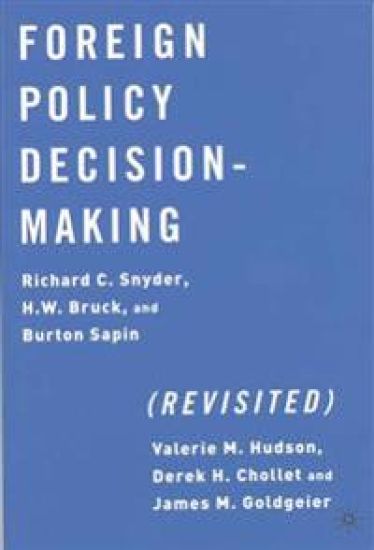
This classic work has helped shape the field of international relations and especially influenced scholars interested in how foreign policy is made. At a time when conventional wisdom and traditional approaches are being questioned, and when there is increased interest in the importance of process, the insights of Snyder, Bruck and Sapin have continuing and increased relevance. Prescient in its focus on the effects on foreign policy of individuals and their preconceptions, organizations and their procedures, and cultures and their values, "Foreign Policy Decision-Making" is of continued relevance for anyone seeking to understand the ways foreign policy is made. Their seminal framework is here complemented by two new chapters examining its influence on generations of scholars, the current state of the field, and areas for future research.