Kirjojen hintavertailu. Mukana 12 390 323 kirjaa ja 12 kauppaa.

Kirjailija

H.Craig Miner

Kirjat ja teokset yhdessä paikassa: 7 kirjaa, julkaisuja vuosilta 1977-2006, suosituimpien joukossa The Corporation and the Indian. Vertaile teosten hintoja ja tarkista saatavuus suomalaisista kirjakaupoista.

Mukana myös kirjoitusasut: H. Craig Miner

7 kirjaa

Kirjojen julkaisuhaarukka 1977-2006.

Next Year Country

Next Year Country

H.Craig Miner

University Press of Kansas
2006
sidottu
West of Highway 81, there lies another Kansas. While it accounts for two-thirds of the state's land area, it is sparsely populated and nearly desert dry. Before 1940, it was still distinctly rural - a place that some residents called the ""Edge of the World."" Several generations of the Miner family have lived and farmed in Ness County, providing Craig Miner with a rich and very personal backdrop for this heartfelt and compelling portrait of western Kansas. In ""Next Year Country"", he recounts the resilience of his fellow Kansans through two depressions and the Dust Bowl, showing how the region changed dramatically over fifty years - not for the better, some might say. In this striking regional history, Miner blends the voices of real people with writings of small-town journalists to show life as it was really lived from 1890 to 1940. He has fashioned a richly textured look at determined individuals as they confronted the vagaries of raw Nature and learned to adapt to the machine age. And he captures the drama and vitality of rural and small-town life at a time when children could die in a blizzard on their way home from school, in a place where gaping holes of cellars and wells from abandoned homesteads posed real hazards to nighttime travelers. No mere nostalgic reverie, Miner's book chronicles the hard challenges to these Kansans' ambitious efforts to create a regional economy and society based on wheat in an area once thought only marginally suitable for cereal crops. His diverse topics include the history of agricultural experiment stations, new approaches to irrigation, and the impact of the tractor and the combine; the role of women's clubs in developing culture, the growth of higher education, and the rise of the secession movement; and how people responded to pests, from prairie dogs to grasshoppers, and to radical groups, from the IWW to the KKK. ""Next Year Country"" depicts the kind of rugged individualism that is often touted in America but seldom seen anymore, a testament to how people dealt with both Nature and transformative change. It is both a love song to Kansas and the best kind of regional history, showing that life has to be taken on its own terms to understand how people really lived.
The Rebirth of the Missouri Pacific, 1956-1983

The Rebirth of the Missouri Pacific, 1956-1983

H. Craig Miner

Texas A M University Press
2000
nidottu
In 1956, the era of tail-finned cars and nineteen-cents-a-gallon gasoline, the Missouri Pacific Railroad emerged on the corporate scene as a private company after twenty-three years in a receivership. In its past lay a collapsed rail empire, a sensational bankruptcy struggle that shattered dreams and betrayed trusts, an emotional battle over stockholders' interests, and the flamboyant maneuvers of the railroad's overseers. In its future lay two computerized, merger-dominated decades in which the railroad business would serve as a classic example of a tradition-bound industry forced to adapt to "future shock." The transition from crippled line to prime property would become, as one politician later put it, "a lawyers' paradise, and a security-holders' nightmare." H. Craig Miner, using a wealth of oral and written primary sources, with the cooperation of the company and complete access to records and personnel, describes and critically analyzes, the physical and financial revolution of the Missouri Pacific.
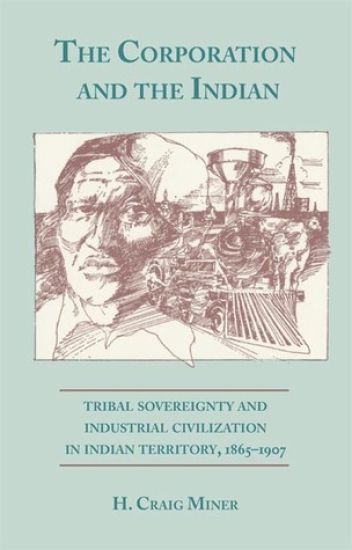
The Corporation and the Indian

The Corporation and the Indian

H. Craig Miner

University of Oklahoma Press
1989
nidottu
In 1865, Indian tribes could not know that in just over forty years their greatest natural possession, their tribal lands, would be largely controlled by powerful contenders for their riches, American corporations. Significant as those tangible losses were, the Indian tribes parted with an even more valuable possession, their tribal sovereignty.H. Craig Miner explains that once the large and powerful railway, livestock, coal, and oil companies realized the potential of Indian Territory, they sought to enter the area and utilize its natural resources. The tribes, plagued by a lack of unified purpose, saw their losses occur before any effective protection procedure could be established. Because many whites married to Indians and mixed-blood members of the tribes were concerned with their own financial development, their decisions were of long term benefit to the corporations.In this unique, pioneering study, Miner reinforces his argument that Indian-white coexistence through market negotiation was thought by both sides to be possible in 1865. Each side had things the other wanted, and there was no sympathy for taking Indian property by military force. Yet the history of relations between the corporation and the Indian became a history of increasing political intervention to enforce various abstract solutions to the ""Indian Question.''The Corporation and the Indian leaves the strong impression that, while the Indians might have done no better had their own stratagems in dealing with American corporations been allowed to develop more freely, they hardly could have done any worse.
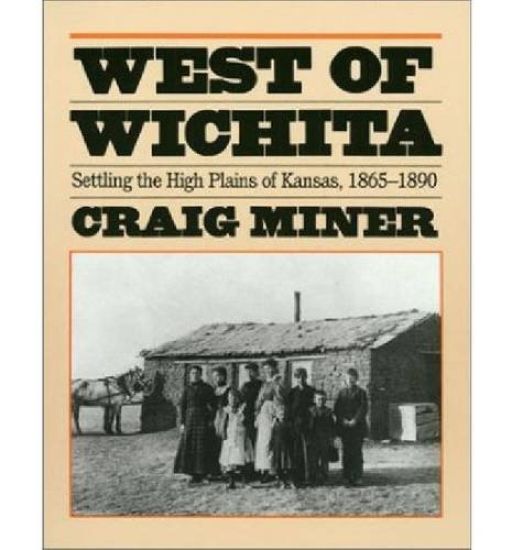
West of Wichita

West of Wichita

H.Craig Miner

University Press of Kansas
1986
nidottu
This volume, which presents a slice-of-life on the Plains during its early settlement, adds rich detail to our understanding of the struggle for survival in a harsh landscape that tested the hardiest pioneer. Miner concentrates not only on the major economic events of the period--railroad building, Indian raids, the grasshopper invasion of 1874, the blizzard of 1886--but also on the more personal experiences equally important: building sod houses, choosing crops, filing of claims, fighting varmints, and dealing with the deaths of children on the prairie.
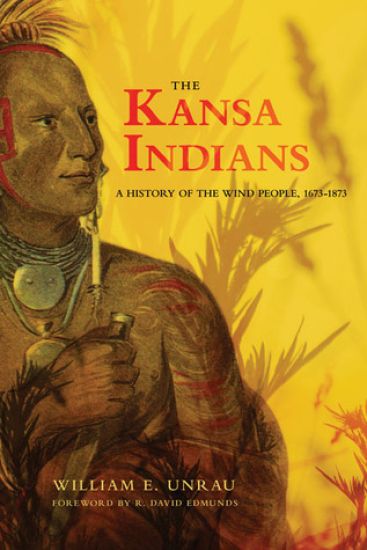
The Kansa Indians

The Kansa Indians

William E. Unrau; H. Craig Miner; R. David Edmunds

University of Oklahoma Press
1986
nidottu
After their first contacts with whites in the seventeenth century, the Kansa Indians began migrating from the eastern United States to what is now eastern Kansas, by way of the Missouri Valley. Settling in villages mostly along the Kansas River, they led a semi-sedentary life, raising corn and a few vegetables and hunting buffalo in the spring and fall. It was an idyllic existence-until bad, and then worse, things began to happen.William E. Unrau tells how the Kansa Indians were reduced from a proud people with a strong cultural heritage to a remnant forced against their will to take up the whites' ways. He gives a balanced but hard-hitting account of an important and tragic chapter in American history.
The End of Indian Kansas

The End of Indian Kansas

H.Craig Miner; William E. Unrau

University Press of Kansas
1977
nidottu
When Kansas became a U.S. territory in 1854 literally all of its land area was guaranteed by treaty to Indians. More than 10,000 Kickapoos, Delawares, Sacs, Foxes, Shawnees, Potawatomis, Kansas, Ottawas, Wyandots, and Osages, not to mention a number of smaller tribes, inhabited Kansas. By 1875 there were only a couple of bands left. The forced removal of thousands of Indians from eastern Kansas between 1854 and 1871 affected more Indians and occupied more government time than the celebrated exploits of the military against the more warlike western tribes. In this volume Miner and Unrau show Kansas at mid-century to be a moral testing ground where the drama of Indian disinheritance was played out. They relate how railroad men, land speculators, and timber operations came to be firmly entrenched on Indian land in territorial Kansas. They examine remarkable incongruities in Indian policy, land policy, law, and administration, pointing to specific cases in which legal maneuvers by the federal government--within the framework of treaties, statutes, and executive pronouncements--helped to insure the pattern of tribal destruction. Separate chapters deal with internal factionalism in the Indian tribes, the practice of government chief-making, and the Indian Ring--the sub rosa alliances influencing the treaty or sale process. The authors also include revealing portraits of the individuals, from territorial governors to railroad officials, who helped engineer the end of Indian Kansas. The reader's perception of those brave, hard-working sod-house settlers may never be the same after reading this book.--American West.