Kirjojen hintavertailu. Mukana 12 595 353 kirjaa ja 12 kauppaa.

Kirjailija

H. F. Van Emden

Kirjat ja teokset yhdessä paikassa: 4 kirjaa, julkaisuja vuosilta 1996-2004, suosituimpien joukossa Beyond Silent Spring. Vertaile teosten hintoja ja tarkista saatavuus suomalaisista kirjakaupoista.

Mukana myös kirjoitusasut: H.F. van Emden

4 kirjaa

Kirjojen julkaisuhaarukka 1996-2004.

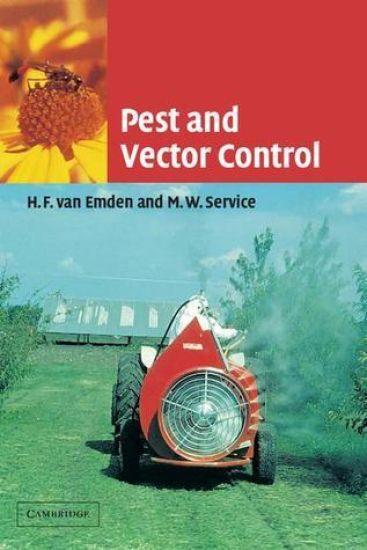
Pest and Vector Control

Pest and Vector Control

H. F. Van Emden; M. W. Service

Cambridge University Press
2004
pokkari
As ravagers of crops and carriers of diseases affecting plants, humans and animals, insects present a challenge to a growing human population. In Pest and Vector Control, Professors van Emden and Service describe the available options for meeting this challenge, discussing their relative advantages, disadvantages and future potential. Methods such as chemical and biological control, host tolerance and resistance are discussed integrating (often for the first time) information and experience from the agricultural and medical/veterinary fields. Chemical control is seen as a major component of insect control, both now and in the future, but this is balanced with an extensive account of associated problems, especially the development of pesticide-tolerant populations.
Pest and Vector Control

Pest and Vector Control

H. F. Van Emden; M. W. Service

Cambridge University Press
2004
sidottu
As ravagers of crops and carriers of diseases affecting plants, humans and animals, insects present a challenge to a growing human population. In Pest and Vector Control, first published in 2004, Professors van Emden and Service describe the available options for meeting this challenge, discussing their relative advantages, disadvantages and future potential. Methods such as chemical and biological control, host tolerance and resistance are discussed integrating (often for the first time) information and experience from the agricultural and medical/veterinary fields. Chemical control is seen as a major component of insect control, both now and in the future, but this is balanced with an extensive account of associated problems, especially the development of pesticide-tolerant populations.
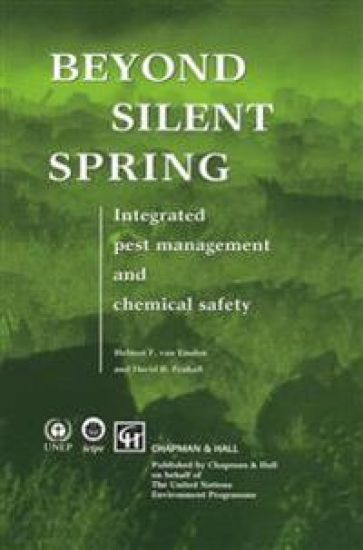
Beyond Silent Spring

Beyond Silent Spring

H.F. van Emden; David B. Peakall

Chapman and Hall
1996
nidottu
More than 32 years ago, Rachel Carson's Silent Spring appeared upon the scene as a landmark of literary achievement which contributed greatly to the foundation of the modern environmental movement. Rachel Carson had designed Silent Spring to shock the public into action against the misuse of chemical pesticides. More than anything else, the book also served as an ecological primer, demonstrating the interrelationship of all things and the dependence of each on a healthy environment for survival. Today, Silent Spring is generally credited with providing impetus to the whole range of anti-pollution laws that came into force in the 1970s. It is also perceived as having played a crucial role in the eventual banning of DDT as well as in the restricted use or total phasing out of the most notorious hard pesticides identified in the book. The vigorous growth of the chemical industry geared to the production of newer and ever more powerful pesticides can be traced to the introduc­ tion of the organochlorine insecticide DDT in the 1940s. These pesticides were meant not only to control insects but also animal pests, disease and weeds. Initially their development was based on the belief that they would provide a definitive solution to pest and vector problems.
Beyond Silent Spring

Beyond Silent Spring

H.F. van Emden; David B. Peakall

Chapman and Hall
1996
sidottu
More than 32 years ago, Rachel Carson's Silent Spring appeared upon the scene as a landmark of literary achievement which contributed greatly to the foundation of the modern environmental movement. Rachel Carson had designed Silent Spring to shock the public into action against the misuse of chemical pesticides. More than anything else, the book also served as an ecological primer, demonstrating the interrelationship of all things and the dependence of each on a healthy environment for survival. Today, Silent Spring is generally credited with providing impetus to the whole range of anti-pollution laws that came into force in the 1970s. It is also perceived as having played a crucial role in the eventual banning of DDT as well as in the restricted use or total phasing out of the most notorious hard pesticides identified in the book. The vigorous growth of the chemical industry geared to the production of newer and ever more powerful pesticides can be traced to the introduc­ tion of the organochlorine insecticide DDT in the 1940s. These pesticides were meant not only to control insects but also animal pests, disease and weeds. Initially their development was based on the belief that they would provide a definitive solution to pest and vector problems.