Kirjojen hintavertailu. Mukana 12 595 353 kirjaa ja 12 kauppaa.

Kirjailija

H.G. Cocks

Kirjat ja teokset yhdessä paikassa: 6 kirjaa, julkaisuja vuosilta 2007-2026, suosituimpien joukossa Nameless Offences. Vertaile teosten hintoja ja tarkista saatavuus suomalaisista kirjakaupoista.

Mukana myös kirjoitusasut: H. G. Cocks, H G Cocks

6 kirjaa

Kirjojen julkaisuhaarukka 2007-2026.

Pornographers, Hacks, and Blackmailers in Interwar France
After the 1881 declaration of press freedom, France enjoyed a golden age of print, arguably up until the 1950s. This book shines a much-needed light on one of the key elements of France’s new literary age: that being the production of ‘pornography’ of all kinds. H.G. Cocks reveals how publishers and writers, both mainstream and clandestine, tried to cash in on the vogue for erotic literature which surfaced at the time. Though the vast majority of what was produced was no more than risqué or saucy, Cocks shows that this was seen as far more dangerous than frank sexual imagery, as it was mostly legal and within the range of the ordinary reader. Pornographers, Hacks, and Blackmailers in Interwar France reflects on how, as a result of this gold rush for what one writer called the ‘faux obscene’, a great deal of writing, journalism, and quite a few literary and even political careers were supported by the writing of ‘pornography’. For some, this new wave of indecent literature seemed to be sapping the morale of the Republic, while for others it was simply part of the creative literary and journalistic ferment of the period. In that sense, Cocks convincingly argues, the pornographic became part of the curious mixture of cultural energy and malaise that enveloped the struggling French democracy.

Pornographers, Hacks, and Blackmailers in Interwar France
After the 1881 declaration of press freedom, France enjoyed a golden age of print, arguably up until the 1950s. This book shines a much-needed light on one of the key elements of France’s new literary age: that being the production of ‘pornography’ of all kinds.H.G. Cocks reveals how publishers and writers, both mainstream and clandestine, tried to cash in on the vogue for erotic literature which surfaced at the time. Though the vast majority of what was produced was no more than risqué or saucy, Cocks shows that this was seen as far more dangerous than frank sexual imagery, as it was mostly legal and within the range of the ordinary reader. Pornographers, Hacks, and Blackmailers in Interwar France reflects on how, as a result of this gold rush for what one writer called the ‘faux obscene’, a great deal of writing, journalism, and quite a few literary and even political careers were supported by the writing of ‘pornography’. For some, this new wave of indecent literature seemed to be sapping the morale of the Republic, while for others it was simply part of the creative literary and journalistic ferment of the period. In that sense, Cocks convincingly argues, the pornographic became part of the curious mixture of cultural energy and malaise that enveloped the struggling French democracy.
Visions of Sodom

Visions of Sodom

H. G. Cocks

University of Chicago Press
2017
sidottu
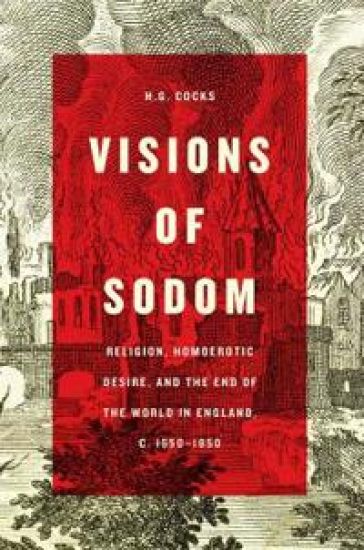
The book of Genesis records the fiery fate of Sodom and Gomorrah a storm of fire and brimstone was sent from heaven and, for the wickedness of the people, God destroyed the cities "and all the plains, and all the inhabitants of the cities, and that which grew upon the ground." According to many Protestant theologians and commentators, one of the Sodomites' many crimes was homoerotic excess. In Visions of Sodom, H. G. Cocks examines the many different ways in which the story of Sodom's destruction provided a template for understanding homoerotic desire and behaviour in Britain between the Reformation and the nineteenth century. Sodom was not only a marker of sexual sins, but also the epitome of false usually Catholic religion, an exemplar of the iniquitous city, a foreshadowing of the world's fiery end, an epitome of divine and earthly punishment, and an actual place that could be searched for and discovered. Visions of Sodom investigates each of these ways of reading Sodom's annihilation in the three hundred years after the Reformation. The centrality of scripture to Protestant faith meant that Sodom's demise provided a powerful origin myth of homoerotic desire and sexual excess, one that persisted across centuries, and retains an apocalyptic echo in the religious fundamentalism of our own time.
Classified

Classified

H G Cocks

Arrow Books Ltd
2010
pokkari
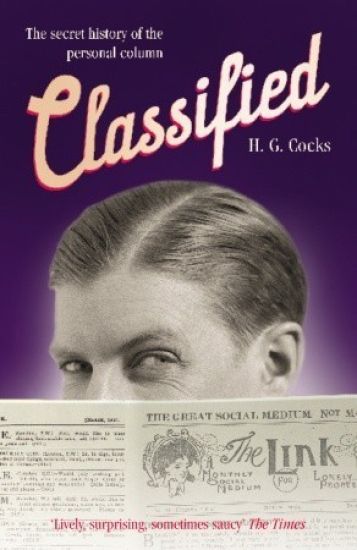
'Lonely Young Officer, up to his neck in Flanders mud, would like to correspond with young lady (age 18-20), cheery and good looking.' 1916'Discreet, attractive couple 21 and 25 wish to meet couples and singles 21-35 for exciting and fun-loving adult relationships. Open-minded but not way out. No prejudices. Full length photo, address, and detailed letter assures same.' 1969From the 'sporty' girls and 'artistic' boys of the Edwardian era to the 'lonely' soldiers of the Great War, the marriage bureaux of the fifties, and on to the internet dating sites of today, Classified tells the story of those who used personal ads to search for love, friendship, marriage and adventure.
Nameless Offences

Nameless Offences

H. G. Cocks

I.B. Tauris
2009
nidottu
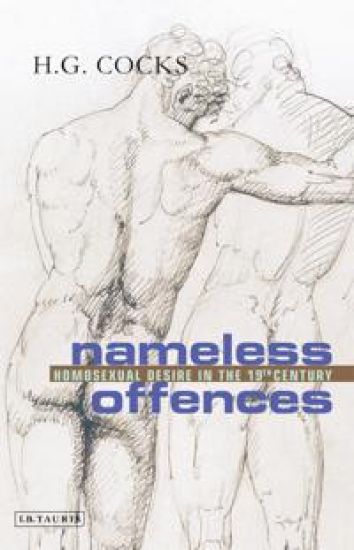
What did the Victorians know about desire between men? Was it really 'the love that dare not speak its name'? "Nameless Offences" argues that even before Oscar Wilde and the rise of sexual science there was an open, public and concerted discussion of same-sex desire that went to the heart of Victorian notions of masculinity, civil society, class and identity. How did homosexuality come to be known as a 'secret vice', consigned to a secret place - the closet - when contemporaries regularly described its existence as widespread, threatening and even notorious? "Nameless Offences" asks where the closet came from and how the English learned to describe that which was 'nameless' and indescribable in this way. This groundbreaking book offers the definitive portrait of male homosexuality in the nineteenth century and includes many perceptive insights into what it reveals about the interaction between public and private morality which lay at the heart of Victorian England.
A Gay History of Britain

A Gay History of Britain

Matt Cook; Robert Mills; Randolph Trumbach; H.G. Cocks

Greenwood World Publishing
2007
sidottu
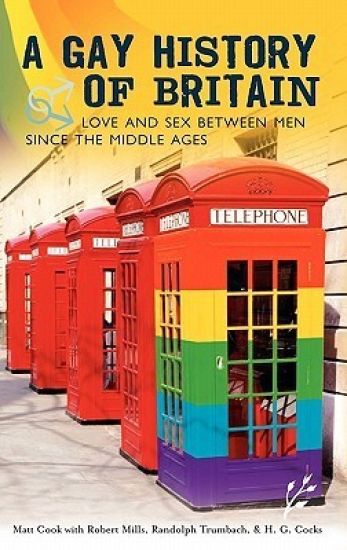
The book explores the changing ways in which male-male sex and love have been perceived and experienced from the late Anglo-Saxon period to the present. Celebrated figures, such as Richard Lionheart, whose love for Philip Augustus of France was so well-documented, Oscar Wilde, gubject of the most explosive scandal of the Victorian period, and Derek Jarman, the great artist and chronicler of the age of AIDS, are examined alongside little-known figures: Eleanor/John Rykener, a cross-dresser in Chaucer's England, the mollies of eighteenth-century London, the habituants of underground gay bars and cafes in 1930s Manchester and Brighton, and the newly-confident gays of contemporary Britain, who marry, adopt children and command the increasingly powerful 'pink pound'. Drawing on a fabulous wealth of research, the authors - each an expert in his field - have worked closely together to deliver a powerful, highly-readable and eye-opening history of love and desire between men in Britain.