Kirjojen hintavertailu. Mukana 12 595 353 kirjaa ja 12 kauppaa.

Kirjailija

H. Gilbert Welch

Kirjat ja teokset yhdessä paikassa: 5 kirjaa, julkaisuja vuosilta 2006-2012, suosituimpien joukossa Overdiagnosed Lib/E: Making People Sick in Pursuit of Health. Vertaile teosten hintoja ja tarkista saatavuus suomalaisista kirjakaupoista.

5 kirjaa

Kirjojen julkaisuhaarukka 2006-2012.

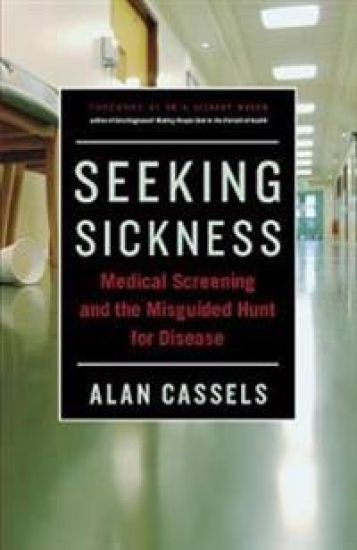
Seeking Sickness

Seeking Sickness

Alan Cassels; H. Gilbert Welch

Greystone Books,Canada
2012
pokkari
Why wouldn't you want to be screened to see if you're at risk for cancer, heart disease, or another potentially lethal condition? After all, better safe than sorry. Right? Not so fast, says Alan Cassels. His Seeking Sickness takes us inside the world of medical screening, where well-meaning practitioners and a profit-motivated industry offer to save our lives by exploiting our fears. He writes that promoters of screening overpromise on its benefits and downplay its harms, which can range from the merely annoying to the life threatening. If you're facing a screening test for breast or prostate cancer, high cholesterol, or low testosterone, someone is about to turn you into a patient. You need to ask yourself one simple question: Am I ready for all the things that could go wrong?
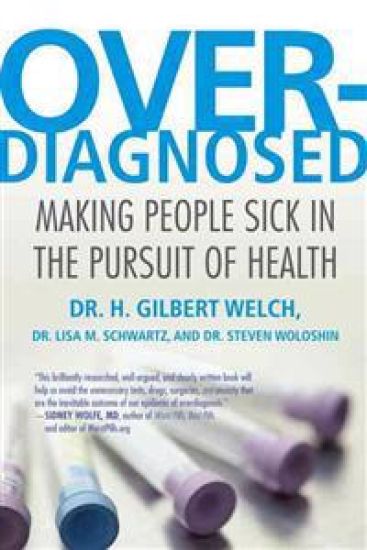
Overdiagnosed

Overdiagnosed

H. Gilbert Welch; Lisa Schwartz; Steve Woloshin

Beacon Press
2012
pokkari
A complex web of factors has created the phenomenon of overdiagnosis: the popular media promotes fear of disease and perpetuates the myth that early, aggressive treatment is always best; in an attempt to avoid lawsuits, doctors have begun to leave no test undone, no abnormality overlooked; and profits are being made from screenings, medical procedures, and pharmaceuticals. Revealing the social, medical, and economic ramifications of a health-care system that overdiagnoses and overtreats patients, Dr. H. Gilbert Welch makes a reasoned call for change that would save us pain, worry, and money.
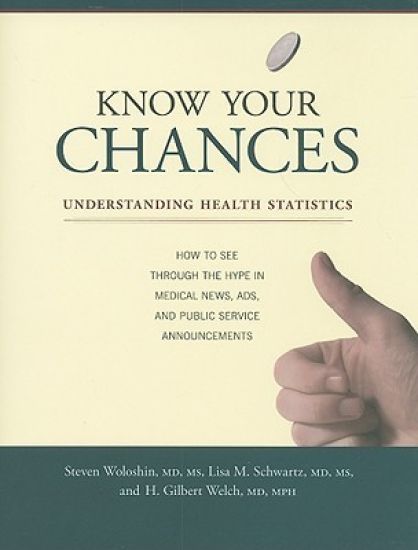
Know Your Chances

Know Your Chances

Steven Woloshin; Lisa M. Schwartz; H. Gilbert Welch

University of California Press
2008
pokkari
Every day we are bombarded by television ads, public service announcements, and media reports warning of dire risks to our health and offering solutions to help us lower those risks. But many of these messages are incomplete, misleading, or exaggerated, leaving the average person misinformed and confused. "Know Your Chances" is a lively, accessible, and carefully researched book that can help consumers sort through this daily barrage by teaching them how to interpret the numbers behind the messages.In clear and simple steps, the authors - all of them staff physicians at the Veterans Administration Medical Center in White River Junction, Vermont - take the mystery out of medical statistics. By learning to understand the medical statistics and knowing what questions to ask, readers will be able to see through the hype and find out what - if any - credible information remains. The book's easy-to-understand charts will help ordinary people put their health concerns into perspective. This short, reader-friendly volume will foster communication between patients and doctors and provide the basic critical-thinking skills necessary for navigating today's confusing health landscape.
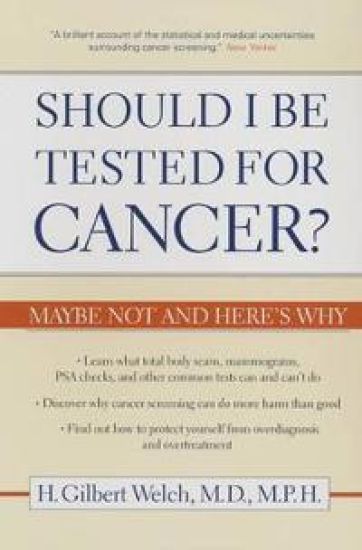
Should I Be Tested for Cancer?

Should I Be Tested for Cancer?

H. Gilbert Welch

University of California Press
2006
pokkari
Getting tested to detect cancer early is one of the best ways to stay healthy - or is it? In this lively, carefully researched book, a nationally recognized expert on early cancer detection challenges one of medicine's most widely accepted beliefs: that the best defense against cancer is to always try to catch it early. Read this book and you will think twice about common cancer screening tests such as total body scans, mammograms, and prostate-specific antigen (PSA) tests. Combining patient stories and solid data on common cancers, Dr. H. Gilbert Welch makes the case that testing healthy people for cancer is really a double-edged sword: while these tests may help, they often have surprisingly little effect and are sometimes even harmful. Bringing together a body of little-known medical research in an engaging and accessible style, he discusses in detail the pitfalls of screening tests, showing how they can miss some cancers, how they can lead to invasive, unnecessary treatments, and how they can distract doctors from other important issues. Welch's conclusions are powerful, counterintuitive, and disturbing: the early detection of cancer does not always save lives, it can be hard to know who really has early cancer, and there are some cancers better left undiscovered. "Should I Be Tested for Cancer?" is the only book to clearly and simply lay out the pros and cons of cancer testing for the general public. It is indispensable reading for the millions of Americans who repeatedly face screening tests and who want to make better-informed decisions about their own health care.