Kirjojen hintavertailu. Mukana 12 657 676 kirjaa ja 12 kauppaa.
Kirjailija
H H Munro Saki
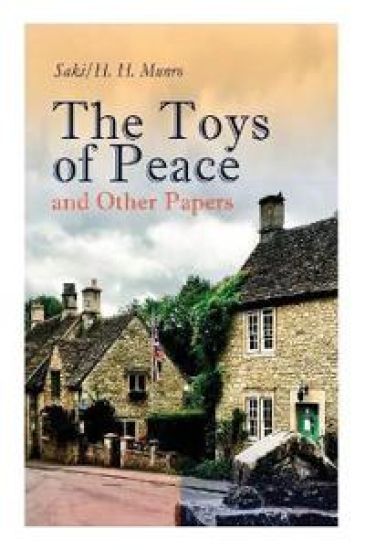
Kirjat ja teokset yhdessä paikassa: 17 kirjaa, julkaisuja vuosilta 2004-2025, suosituimpien joukossa The toys of peace and other papers . By: H. H. Munro ( Saki ). Vertaile teosten hintoja ja tarkista saatavuus suomalaisista kirjakaupoista.
Mukana myös kirjoitusasut: H H Munro (Saki), H. H. Munro (Saki), H. H. Munro (. Saki )., H. H. Munro Saki, H. H. Munro ("saki"), H. H. Munro (?Saki?)
Hector Hugh Munro (18 December 1870 - 14 November 1916), better known by the pen name Saki, and also frequently as H. H. Munro, was a British writer whose witty, mischievous and sometimes macabre stories satirize Edwardian society and culture. He is considered a master of the short story, and often compared to O. Henry citation needed] and Dorothy Parker citation needed]. Influenced by Oscar Wilde, Lewis Carroll and Rudyard Kipling, he himself influenced A. A. Milne, No l Coward and P. G. Wodehouse.
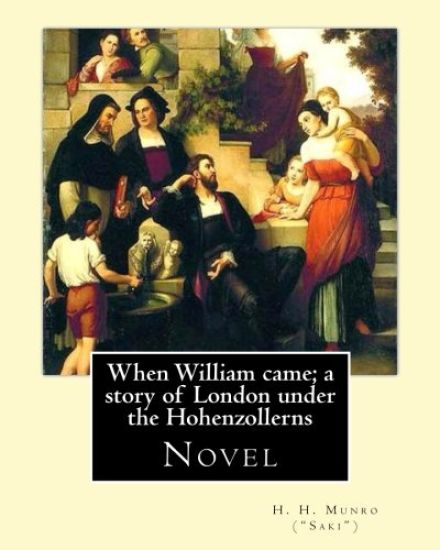
Hector Hugh Munro (18 December 1870 - 14 November 1916), better known by the pen name Saki, and also frequently as H. H. Munro, was a British writer whose witty, mischievous and sometimes macabre stories satirize Edwardian society and culture. He is considered a master of the short story, and often compared to O. Henry citation needed] and Dorothy Parker citation needed]. Influenced by Oscar Wilde, Lewis Carroll and Rudyard Kipling, he himself influenced A. A. Milne, No l Coward and P. G. Wodehouse. Besides his short stories (which were first published in newspapers, as was customary at the time, and then collected into several volumes), he wrote a full-length play, The Watched Pot, in collaboration with Charles Maude; two one-act plays; a historical study, The Rise of the Russian Empire, the only book published under his own name; a short novel, The Unbearable Bassington; the episodic The Westminster Alice (a parliamentary parody of Alice in Wonderland); and When William Came, subtitled A Story of London Under the Hohenzollerns, a fantasy about a future German invasion and occupation of Britain. Early life Hector Hugh Munro was born in Akyab, British Burma, which was then still part of the British Raj, and was governed from Calcutta under the authority of the Viceroy of India. Saki was the son of Charles Augustus Munro, an Inspector General for the Indian Imperial Police, by his marriage to Mary Frances Mercer (1843-1872), the daughter of Rear Admiral Samuel Mercer. Her nephew, Cecil William Mercer, later became a famous novelist as Dornford Yates. In 1872, on a home visit to England, Mary Munro was charged by a cow, and the shock caused her to miscarry. She never recovered and soon died. After the death of Munro's mother, Charles Munro sent his children, including two-year-old Hector, home to England. The children were sent to Broadgate Villa, in Pilton village near Barnstaple, North Devon to be raised by their grandmother and paternal maiden aunts Charlotte and Augusta in a strict and puritanical household. It is said that they were most likely models for a few of his characters, notably 'The Lumber Room' and 'Sredni Vashtar". Leading slightly insular lives Munro and his siblings, during their early years were educated under tutelage of governesses. At the age of 12 the young Hector Munro was educated at Pencarwick School in Exmouth and then as a boarder at Bedford School. In 1887, after his retirement, his father returned from Burma, and embarked upon a series of European travels with Hector and his siblings. Hector followed his father in 1893 into the Indian Imperial Police and was posted to Burma, but successive bouts of fever meant his return home after only fifteen months Writing career In 1896, he decided to move to London to make a living as a writer. Munro started his writing career as a journalist for newspapers such as the Westminster Gazette, the Daily Express, the Morning Post, and magazines such as the Bystander and Outlook. His first book The Rise of the Russian Empire, a historical study modelled upon Edward Gibbon's The Decline and Fall of the Roman Empire, appeared in 1900, under his real name, but proved to be something of a false start. Whilst he was writing The Rise of the Russian Empire, he made his first foray into short story writing and published a piece called 'Dogged' in St Paul's in February 1899. He then moved into the world of political satire in 1900 with a collaboration with Francis Carruthers Gould entitled "Alice in Westminster". Gould produced the sketches, and Munro wrote the text accompanying them, using the pen-name "Saki" for the first time. The series lampooned political figures of the day ('Alice in Downing Street' begins with the memorable line, '"Have you ever seen an Ineptitude?"' - referring to a zoomorphised Arthur Balfour), and was published in the Liberal Westminster Gazette.....
The Unbearable Bassington follows Comus Bassington, a young man from a wealthy family, who grows bored with the comforts of his privileged life and seeks out new experiences for excitement. While Comus is charming, witty, and highly capable of winning people over with his charisma, he is also selfish, manipulative, and careless in his treatment of others. The story, set in Edwardian England, explores themes of class, social status, and morality. Comus, though born into wealth and status, spends much of his time indulging in mischief and pursuing pleasure. It is a witty and critical exploration of the superficiality of high society, the perils of overindulgence, and the absurdity of social conventions. Through his biting humor and satirical style, Saki critiques the self-satisfied characters who drift through life without ever confronting the realities of hard work or personal responsibility, highlighting the consequences of overindulgence and the emptiness of a life lived without purpose or real effort.
Reproduction of the original. The publishing house Megali specialises in reproducing historical works in large print to make reading easier for people with impaired vision.
Reproduction of the original. The publishing house Megali specialises in reproducing historical works in large print to make reading easier for people with impaired vision.
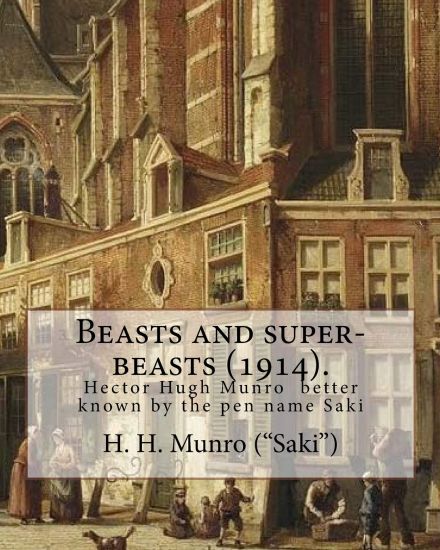
Beasts and Super-Beasts, a collection of short stories, was first published in 1914 and was written by Saki, a pen name for Hector Hugh Munro. The title is a parody of Man and Superman by George Bernard Shaw. Along with The Chronicles of Clovis, Beasts and Super-Beasts are one of Saki's best-known works. It was his last book of short stories before he died in World War I, and many of its tales, most notably "The Open Window," are frequently repeated in anthologies. The majority of the stories in this collection feature animals in some way, which serves as the inspiration for the title. In a number of the stories, Clovis Sangrail, a figure from earlier Saki works, makes an appearance. The majority of the stories have a prior publication in journals. Beasts and Super-Beasts adhere to Saki's earlier literary output's straightforward language, cynicism, and sardonic humor stylistically. Saki, a pen name for Hector Hugh Munro, wrote a collection of short stories titled Monsters and Super beasts that was first released in 1914. The title is a parody of Man and Superman by George Bernard Shaw.
The Toys of Peace Louise Tea The Disappearance of Crispina Umberleigh The Wolves of Cernogratz Louis The Guests The Penance The Phantom Luncheon A Bread and Butter Miss Bertie's Christmas Eve Forewarned The Interlopers Quail Seed Canossa The Threat Excepting Mrs. Pentherby Mark The Hedgehog The Mappined Life Fate The Bull Morlvera Shock Tactics The Seven Cream Jugs The Occasional Garden The Sheep The Oversight Hyacinth The Image of the Lost Soul The Purple of the Balkan Kings The Cupboard of the Yesterdays For the Duration of the War
Hector Hugh Munro (18 December 1870 - 14 November 1916), better known by the pen name Saki, and also frequently as H. H. Munro, was a British writer whose witty, mischievous and sometimes macabre stories satirize Edwardian society and culture. He is considered a master of the short story, and often compared to O. Henry citation needed] and Dorothy Parker citation needed]. Influenced by Oscar Wilde, Lewis Carroll and Rudyard Kipling, he himself influenced A. A. Milne, No l Coward and P. G. Wodehouse. Besides his short stories (which were first published in newspapers, as was customary at the time, and then collected into several volumes), he wrote a full-length play, The Watched Pot, in collaboration with Charles Maude; two one-act plays; a historical study, The Rise of the Russian Empire, the only book published under his own name; a short novel, The Unbearable Bassington; the episodic The Westminster Alice (a parliamentary parody of Alice in Wonderland); and When William Came, subtitled A Story of London Under the Hohenzollerns, a fantasy about a future German invasion and occupation of Britain. Early life Hector Hugh Munro was born in Akyab, British Burma, which was then still part of the British Raj, and was governed from Calcutta under the authority of the Viceroy of India. Saki was the son of Charles Augustus Munro, an Inspector General for the Indian Imperial Police, by his marriage to Mary Frances Mercer (1843-1872), the daughter of Rear Admiral Samuel Mercer. Her nephew, Cecil William Mercer, later became a famous novelist as Dornford Yates. In 1872, on a home visit to England, Mary Munro was charged by a cow, and the shock caused her to miscarry. She never recovered and soon died. After the death of Munro's mother, Charles Munro sent his children, including two-year-old Hector, home to England. The children were sent to Broadgate Villa, in Pilton village near Barnstaple, North Devon to be raised by their grandmother and paternal maiden aunts Charlotte and Augusta in a strict and puritanical household. It is said that they were most likely models for a few of his characters, notably 'The Lumber Room' and 'Sredni Vashtar". Leading slightly insular lives Munro and his siblings, during their early years were educated under tutelage of governesses. At the age of 12 the young Hector Munro was educated at Pencarwick School in Exmouth and then as a boarder at Bedford School. In 1887, after his retirement, his father returned from Burma, and embarked upon a series of European travels with Hector and his siblings. Hector followed his father in 1893 into the Indian Imperial Police and was posted to Burma, but successive bouts of fever meant his return home after only fifteen months Writing career In 1896, he decided to move to London to make a living as a writer. Munro started his writing career as a journalist for newspapers such as the Westminster Gazette, the Daily Express, the Morning Post, and magazines such as the Bystander and Outlook. His first book The Rise of the Russian Empire, a historical study modelled upon Edward Gibbon's The Decline and Fall of the Roman Empire, appeared in 1900, under his real name, but proved to be something of a false start. Whilst he was writing The Rise of the Russian Empire, he made his first foray into short story writing and published a piece called 'Dogged' in St Paul's in February 1899. He then moved into the world of political satire in 1900 with a collaboration with Francis Carruthers Gould entitled "Alice in Westminster". Gould produced the sketches, and Munro wrote the text accompanying them, using the pen-name "Saki" for the first time. The series lampooned political figures of the day ('Alice in Downing Street' begins with the memorable line, '"Have you ever seen an Ineptitude?"' - referring to a zoomorphised Arthur Balfour), and was published in the Liberal Westminster Gazette.....
Besides his short stories (which were first published in newspapers, as was customary at the time, and then collected into several volumes), he wrote a full-length play, The Watched Pot, in collaboration with Charles Maude; two one-act plays; a historical study, The Rise of the Russian Empire, the only book published under his own name; a short novel, The Unbearable Bassington; the episodic The Westminster Alice (a parliamentary parody of Alice in Wonderland); and When William Came, subtitled A Story of London Under the Hohenzollerns, a fantasy about a future German invasion and occupation of Britain. Early life Hector Hugh Munro was born in Akyab, British Burma, which was then still part of the British Raj, and was governed from Calcutta under the authority of the Viceroy of India. Saki was the son of Charles Augustus Munro, an Inspector General for the Indian Imperial Police, by his marriage to Mary Frances Mercer (1843-1872), the daughter of Rear Admiral Samuel Mercer. Her nephew, Cecil William Mercer, later became a famous novelist as Dornford Yates. In 1872, on a home visit to England, Mary Munro was charged by a cow, and the shock caused her to miscarry. She never recovered and soon died. After the death of Munro's mother, Charles Munro sent his children, including two-year-old Hector, home to England. The children were sent to Broadgate Villa, in Pilton village near Barnstaple, North Devon to be raised by their grandmother and paternal maiden aunts Charlotte and Augusta in a strict and puritanical household. It is said that they were most likely models for a few of his characters, notably 'The Lumber Room' and 'Sredni Vashtar". Leading slightly insular lives Munro and his siblings, during their early years were educated under tutelage of governesses. At the age of 12 the young Hector Munro was educated at Pencarwick School in Exmouth and then as a boarder at Bedford School. In 1887, after his retirement, his father returned from Burma, and embarked upon a series of European travels with Hector and his siblings. Hector followed his father in 1893 into the Indian Imperial Police and was posted to Burma, but successive bouts of fever meant his return home after only fifteen months Writing career In 1896, he decided to move to London to make a living as a writer. Munro started his writing career as a journalist for newspapers such as the Westminster Gazette, the Daily Express, the Morning Post, and magazines such as the Bystander and Outlook. His first book The Rise of the Russian Empire, a historical study modelled upon Edward Gibbon's The Decline and Fall of the Roman Empire, appeared in 1900, under his real name, but proved to be something of a false start. Whilst he was writing The Rise of the Russian Empire, he made his first foray into short story writing and published a piece called 'Dogged' in St Paul's in February 1899. He then moved into the world of political satire in 1900 with a collaboration with Francis Carruthers Gould entitled "Alice in Westminster". Gould produced the sketches, and Munro wrote the text accompanying them, using the pen-name "Saki" for the first time. The series lampooned political figures of the day ('Alice in Downing Street' begins with the memorable line, '"Have you ever seen an Ineptitude?"' - referring to a zoomorphised Arthur Balfour), and was published in the Liberal Westminster Gazette.....
Hector Hugh Munro (18 December 1870 - 14 November 1916), better known by the pen name Saki, and also frequently as H. H. Munro, was a British writer whose witty, mischievous and sometimes macabre stories satirize Edwardian society and culture. He is considered a master of the short story, and often compared to O. Henry citation needed] and Dorothy Parker citation needed]. Influenced by Oscar Wilde, Lewis Carroll and Rudyard Kipling, he himself influenced A. A. Milne, No l Coward and P. G. Wodehouse. Besides his short stories (which were first published in newspapers, as was customary at the time, and then collected into several volumes), he wrote a full-length play, The Watched Pot, in collaboration with Charles Maude; two one-act plays; a historical study, The Rise of the Russian Empire, the only book published under his own name; a short novel, The Unbearable Bassington; the episodic The Westminster Alice (a parliamentary parody of Alice in Wonderland); and When William Came, subtitled A Story of London Under the Hohenzollerns, a fantasy about a future German invasion and occupation of Britain. Early life Hector Hugh Munro was born in Akyab, British Burma, which was then still part of the British Raj, and was governed from Calcutta under the authority of the Viceroy of India. Saki was the son of Charles Augustus Munro, an Inspector General for the Indian Imperial Police, by his marriage to Mary Frances Mercer (1843-1872), the daughter of Rear Admiral Samuel Mercer. Her nephew, Cecil William Mercer, later became a famous novelist as Dornford Yates. In 1872, on a home visit to England, Mary Munro was charged by a cow, and the shock caused her to miscarry. She never recovered and soon died. After the death of Munro's mother, Charles Munro sent his children, including two-year-old Hector, home to England. The children were sent to Broadgate Villa, in Pilton village near Barnstaple, North Devon to be raised by their grandmother and paternal maiden aunts Charlotte and Augusta in a strict and puritanical household. It is said that they were most likely models for a few of his characters, notably 'The Lumber Room' and 'Sredni Vashtar". Leading slightly insular lives Munro and his siblings, during their early years were educated under tutelage of governesses. At the age of 12 the young Hector Munro was educated at Pencarwick School in Exmouth and then as a boarder at Bedford School. In 1887, after his retirement, his father returned from Burma, and embarked upon a series of European travels with Hector and his siblings. Hector followed his father in 1893 into the Indian Imperial Police and was posted to Burma, but successive bouts of fever meant his return home after only fifteen months Writing career In 1896, he decided to move to London to make a living as a writer. Munro started his writing career as a journalist for newspapers such as the Westminster Gazette, the Daily Express, the Morning Post, and magazines such as the Bystander and Outlook. His first book The Rise of the Russian Empire, a historical study modelled upon Edward Gibbon's The Decline and Fall of the Roman Empire, appeared in 1900, under his real name, but proved to be something of a false start. Whilst he was writing The Rise of the Russian Empire, he made his first foray into short story writing and published a piece called 'Dogged' in St Paul's in February 1899. He then moved into the world of political satire in 1900 with a collaboration with Francis Carruthers Gould entitled "Alice in Westminster". Gould produced the sketches, and Munro wrote the text accompanying them, using the pen-name "Saki" for the first time. The series lampooned political figures of the day ('Alice in Downing Street' begins with the memorable line, '"Have you ever seen an Ineptitude?"' - referring to a zoomorphised Arthur Balfour), and was published in the Liberal Westminster Gazette.....
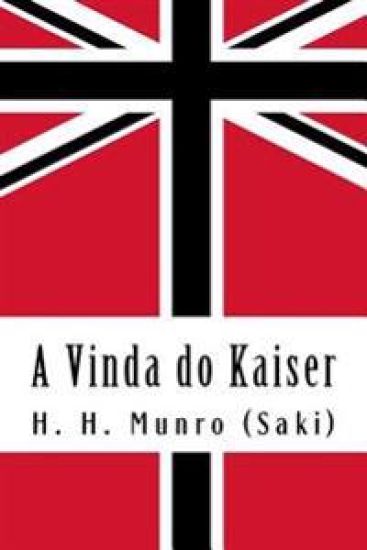
Neste romance de 1913, a Gr -Bretanha e a Alemanha entram em guerra, e os alem es se saem vitoriosos. Com o pa s invadido, a alta sociedade londrina tenta se adaptar aos novos conquistadores. Murrey e Cicely Yeovil, unidos pelo casamento e separados por suas convic es, descobrem suas novas vidas sob o jugo da Casa de Hohenzollern.A Vinda do Kaiser o segundo romance de H. H. "Saki" Munro, mais conhecido por seus contos sat ricos e macabros. A hist ria investiga as consequ ncias sociais de uma derrota militar e ilustra a ansiedade brit nica com um conflito que um ano antes j parecia inevit vel.