
Kirjailija
H. L. Mencken
Kirjat ja teokset yhdessä paikassa: 192 kirjaa, julkaisuja vuosilta 1927-2026, suosituimpien joukossa Roy; A tale in the days of Sir John Moore (Edition1). Vertaile teosten hintoja ja tarkista saatavuus suomalaisista kirjakaupoista.
Mukana myös kirjoitusasut: H L Mencken, H.L. Mencken, H. L Mencken
192 kirjaa
Kirjojen julkaisuhaarukka 1927-2026.
Henry Louis Mencken (September 12, 1880 - January 29, 1956) was an American journalist, essayist, satirist, cultural critic and scholar of American English. He commented widely on the social scene, literature, music, prominent politicians and contemporary movements. His satirical reporting on the Scopes Trial, which he dubbed the "Monkey Trial," also gained him attention.As a scholar, Mencken is known for The American Language, a multi-volume study of how the English language is spoken in the United States. As an admirer of the German philosopher Friedrich Nietzsche, he was an outspoken opponent of organized religion, theism, populism, and representative democracy, the latter of which he viewed as systems in which inferior men dominated their superiors. Mencken was a supporter of scientific progress, and was critical of osteopathic and chiropractic medicine. He was also an ardent critic of economics.Mencken opposed the American entry into both World War I and World War II. Some of the terminology in his private diary entries has been described by some researchers as racist and antisemitic, although this characterisation has been disputed. His attitude to African-Americans reflected the conservative paternalism of his era and "the kind of anti-Semitism that appears in Mencken's private diary may be found elsewhere: for example, in the early letters of Eleanor Roosevelt and Adlai Stevenson." He seemed to show a genuine enthusiasm for militarism, though never in its American form. "War is a good thing," he once wrote, "because it is honest, it admits the central fact of human nature ... A nation too long at peace becomes a sort of gigantic old maid."His longtime home in the Union Square neighborhood of West Baltimore was turned into a city museum, the H. L. Mencken House. His papers were distributed among various city and university libraries, with the largest collection held in the Mencken Room at the central branch of Baltimore's Enoch Pratt Free Library. (wikipedia.org)
Henry Louis Mencken (September 12, 1880 - January 29, 1956) was an American journalist, essayist, satirist, cultural critic and scholar of American English. He commented widely on the social scene, literature, music, prominent politicians and contemporary movements. His satirical reporting on the Scopes Trial, which he dubbed the "Monkey Trial," also gained him attention.As a scholar, Mencken is known for The American Language, a multi-volume study of how the English language is spoken in the United States. As an admirer of the German philosopher Friedrich Nietzsche, he was an outspoken opponent of organized religion, theism, populism, and representative democracy, the latter of which he viewed as systems in which inferior men dominated their superiors. Mencken was a supporter of scientific progress, and was critical of osteopathic and chiropractic medicine. He was also an ardent critic of economics.Mencken opposed the American entry into both World War I and World War II. Some of the terminology in his private diary entries has been described by some researchers as racist and antisemitic, although this characterisation has been disputed. His attitude to African-Americans reflected the conservative paternalism of his era and "the kind of anti-Semitism that appears in Mencken's private diary may be found elsewhere: for example, in the early letters of Eleanor Roosevelt and Adlai Stevenson." He seemed to show a genuine enthusiasm for militarism, though never in its American form. "War is a good thing," he once wrote, "because it is honest, it admits the central fact of human nature ... A nation too long at peace becomes a sort of gigantic old maid."His longtime home in the Union Square neighborhood of West Baltimore was turned into a city museum, the H. L. Mencken House. His papers were distributed among various city and university libraries, with the largest collection held in the Mencken Room at the central branch of Baltimore's Enoch Pratt Free Library. (wikipedia.org)

The American language; a preliminary inquiry into the development of English in the United States
H L Mencken
Alpha Edition
2020
pokkari
This book has been considered by academicians and scholars of great significance and value to literature. This forms a part of the knowledge base for future generations. So that the book is never forgotten we have represented this book in a print format as the same form as it was originally first published. Hence any marks or annotations seen are left intentionally to preserve its true nature.
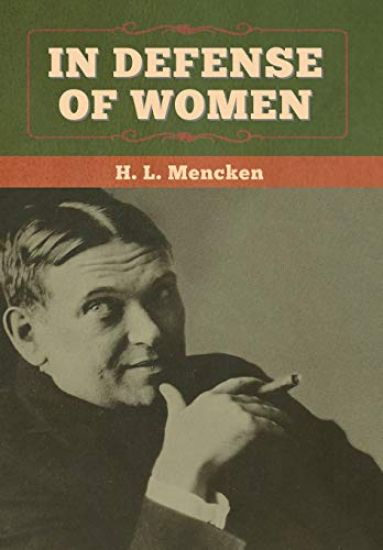
In Defense of Women is H. L. Mencken's 1918 book on women and the relationship between the sexes. Some laud the book as progressive while others brand it as reactionary. While Mencken did not champion women's rights, he described women as wiser in many novel and observable ways, while demeaning average men.According to Mencken's biographer, Fred Hobson: "Depending on the position of the reader, he was either a great defender of women's rights or, as a critic labelled him in 1916, 'the greatest misogynist since Schopenhauer', 'the country's high-priest of woman-haters.'" The original goal of Defense was to help clarify Mencken's views on women, garnered from an inconsistent and confusing reputation in newspaper columns, various reviews, and several plays. Along with Marion Bloom and Kay Laurell, Mencken gathered material for his book not from libraries and universities, but from saloons and hotels.The original title for Defense was A Book for Men Only, but other working titles included The Eternal Feminine as well as The Infernal Feminine. (wikipedia.org)
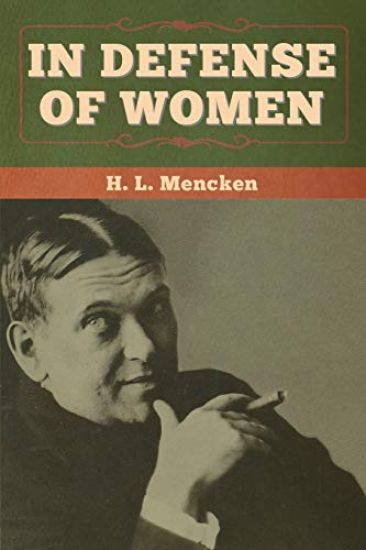
In Defense of Women is H. L. Mencken's 1918 book on women and the relationship between the sexes. Some laud the book as progressive while others brand it as reactionary. While Mencken did not champion women's rights, he described women as wiser in many novel and observable ways, while demeaning average men.According to Mencken's biographer, Fred Hobson: "Depending on the position of the reader, he was either a great defender of women's rights or, as a critic labelled him in 1916, 'the greatest misogynist since Schopenhauer', 'the country's high-priest of woman-haters.'" The original goal of Defense was to help clarify Mencken's views on women, garnered from an inconsistent and confusing reputation in newspaper columns, various reviews, and several plays. Along with Marion Bloom and Kay Laurell, Mencken gathered material for his book not from libraries and universities, but from saloons and hotels.The original title for Defense was A Book for Men Only, but other working titles included The Eternal Feminine as well as The Infernal Feminine. (wikipedia.org)
The Free Lance, September-December 1911: Edited and Annotated by S. T. Joshi
H. L. Mencken
Independently Published
2020
nidottu
H. L. Mencken's "Free Lance" columns during the final quarter of 1911 continue to range over a wide array of subjects. He criticizes the extreme measures advocated by the Maryland Anti-Vivisection Society; he attacks local politicians, from the mayor on down, for sundry instances of malfeasance; he repeatedly censures the city of Baltimore for failing to curtail outbreaks of typhoid; he ridicules various organizations promoting medical quackery. Along the way, Mencken finds occasion to discuss poetry and fiction (including Theodore Dreiser's novel Jennie Gerhardt), and he also presents a pungent letter from "Nicholas Satan" on the city's Sunday laws. A moving column on Baltimore's poor treatment of its African American citizens, leading to unacceptably high instances of disease among its population, points to Mencken's devotion to the cause of "common decency" and the vital role of journalists in fostering it.
The Free Lance, May-August 1911: Edited and Annotated by S. T. Joshi
H. L. Mencken
Independently Published
2019
nidottu
On May 8, 1911, H. L. Mencken began a column in the Baltimore Evening Sun entitled "The World in Review." The next day he retitled it "The Free Lance"-and continued writing the column six days a week for the next four and a half years. This enormous body of work, totalling about 1200 columns and amounting to 1.5 million words, is an incredibly rich storehouse of Mencken's opinions on a wide array of topics. In some columns he addresses serious issues: the distressing prevalence of typhoid in the larger American cities, including Baltimore; the pestiferious influence of the Anti-Saloon League in promoting prohibition of alcoholic beverages; and all manner of political malfeasance both locally and nationally. But in most of his columns he displays his pungent satirical wit, lampooning poetasters, self-righteous moralists, and political and literary hacks of every description. In several columns Mencken begins outlining his views of the "American language," the distinctive slang that Americans have adopted as a departure from formal English; Mencken later wrote a landmark treatise on the subject. Throughout these columns, H. L. Mencken displays the perspicacity and penchant for humor and satire that made him the greatest journalist of his day.

Writings in the Baltimore Evening Sun, August 1911-June 1912: Edited and Annotated by S. T. Joshi
H. L. Mencken
Independently Published
2019
nidottu
This volume of H. L. Mencken's writings consists almost entirely of unsigned editorials, although there is a long and detailed signed article on the Democratic National Convention of 1912, when Woodrow Wilson was nominated. But as Mencken had begun writing his "Free Lance" columns in May 1911, he had little time to write other work aside from these occasional articles on the editorial page. They continue to focus on Mencken's pet subjects: the preeminence of Maryland over other states in the art of cuisine; political shenanigans, both locally and nationally; the urgent need to rid the world of typhoid, cholera, tuberculosis, and other serious diseases; and world affairs, ranging from Canada and Mexico to England, Germany, and China. Other articles exhibit Mencken's continuing interest in drama, the opera, and music in general. Throughout, H. L. Mencken displays the wit, perspicacity, and satirical instincts characteristic of all his writing.

Writings in the Baltimore Evening Sun, April-July 1911: Edited and Annotated by S. T. Joshi
H. L. Mencken
Independently Published
2019
nidottu
In this volume of his writings from the Baltimore Evening Sun, H. L. Mencken continues to display his fascination with the drama, writing articles on Shakespeare, the history of drama in India, Rachel Crothers, Mary Austin, and other playwrights. He also writes articles on minstrelsy and vaudeville, demonstrating his interest in dramatic entertainment for the masses. A pungent review-article on contemporary poetry shows Mencken poking fun at poetasters of all sorts. The bulk of this volume consists of unsigned editorials, as Mencken's signed articles were abruptly curtailed once he began writing the "Free Lance" column in May. These unsigned editorials run the gamut in subject-matter, from sendups of local politicians to discussions of the pleasures of eating to political and military events around the world. Once again, Mencken displays the breadth of his interests and his unfailing wit and pungency.

Writings in the Baltimore Evening Sun, January-March 1911: Edited and Annotated by S. T. Joshi
H. L. Mencken
Independently Published
2019
nidottu

Writings in the Baltimore Evening Sun, October-December 1910: Edited and Annotated by S. T. Joshi
H. L. Mencken
Independently Published
2019
nidottu
In this volume of his writings in the Baltimore Evening Sun, H. L. Mencken writes a series of important papers stressing the differences between American and British English, especially as it is spoken by the inhabitants of the two countries. These papers set the stage for Mencken's pioneering treatise, The American Language (1919). Other articles reveal Mencken's continuing fascination for the drama, with pieces on Henrik Ibsen, August Strindberg, Henri Bataille, Jerome K. Jerome, Percy Mackaye, and Clyde Fitch. Political affairs also engage Mencken's attention, with essays on the campaign for direct election of senators and the British Parliament's attempts to reform the House of Commons. In a flurry of unsigned editorials, Mencken ranges widely in tone and subject matter, from political turmoil in Russia and China to the "fraud" of pumpkin pie. Once again, Mencken displays his virtuosity as a sharp-witted, controversial, and eminently readable commentator.
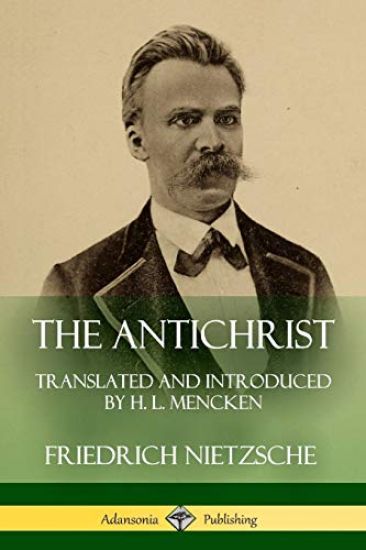
Nietzsche's famous attack upon established Christianity and religion is brought to the reader in this superb edition of The Antichrist, introduced and translated by H.L. Mencken. The incendiary tone throughout The Antichrist separates it from most other well-regarded philosophical texts; even in comparison to Nietzsche's earlier works, the tone of indignation and conviction behind each argument made is evident. There is little lofty ponderousness; the book presents its arguments and points at a blistering pace, placing itself among the most accessible and comprehensive works of philosophy. The Antichrist comprises a total of sixty-two short chapters, each containing a distinct philosophical argument or angle upon the targets of Christianity, organised religion, and those who masquerade as faithful but are in actuality anything but. Pointedly opposed to notions of Christian morality and virtue, Nietzsche vehemently sets out a case for the faith's redundancy and lack of necessity in human life.
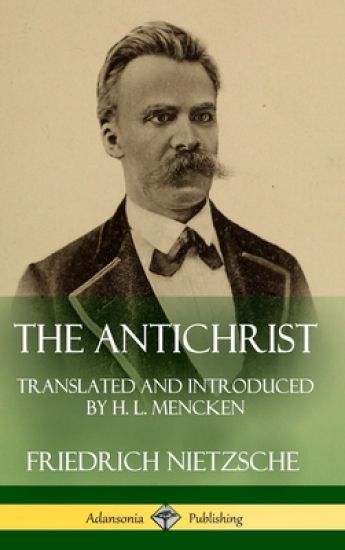
Nietzsche's famous attack upon established Christianity and religion is brought to the reader in this superb hardcover edition of The Antichrist, introduced and translated by H.L. Mencken. The incendiary tone throughout The Antichrist separates it from most other well-regarded philosophical texts; even in comparison to Nietzsche's earlier works, the tone of indignation and conviction behind each argument made is evident. There is little lofty ponderousness; the book presents its arguments and points at a blistering pace, placing itself among the most accessible and comprehensive works of philosophy. The Antichrist comprises a total of sixty-two short chapters, each with distinct philosophical arguments or angle upon the targets of Christianity, organised religion, and those who masquerade as faithful but are in actuality anything but. Pointedly opposed to notions of Christian morality and virtue, Nietzsche vehemently sets out a case for the faith's redundancy and lack of necessity in human life.
The decisive influence of Friedrich Nietzsche on H.L. Mencken is readily acknowledged in the vast literature on the great American journalist and social critic. However, Mencken's 1908 study of the philosopher has been relegated to footnote status by Mencken's critics and biographers and has been largely ignored by Nietzsche scholars. There are good reasons for reversing this judgment. Mencken's work was one of the first comprehensive and sympathetic treatments of Nietzsche's thought in the English language. It is a provocative engagement with the German philosopher's complex and elusive ideas, enhanced by a style that reverberates with a verve and dynamism approaching Nietzsche's own.Mencken presents a view of Nietzsche that elucidates the latter's complex and contentious form of the "gospel of individualism" while evincing a keen appreciation of his unrivalled capacity for critical analysis. The historical scope of Nietzsche's thought is fully evident in Mencken's analysis as is its application to modern societies and politics. In tracing the biographical and intellectual impetus for Nietzsche's relentless attacks on conventional moralities and established modes of thought, Mencken discerned both an ideal and a method for grappling with social and cultural issues that remain salient in our own time.

H. L. Mencken, Collection
Henry Louis Mencken; H. L. Mencken
Createspace Independent Publishing Platform
2014
nidottu
Henry Louis "H. L." Mencken (1880 - 1956) was an American journalist, essayist, magazine editor, satirist, critic of American life and culture, and scholar of American English. Known as the "Sage of Baltimore", he is regarded as one of the most influential American writers and prose stylists of the first half of the twentieth century. Many of his books remain in print. Mencken is known for writing The American Language, a multi-volume study of how the English language is spoken in the United States, and for his satirical reporting on the Scopes trial, which he dubbed the "Monkey Trial". He commented widely on the social scene, literature, music, prominent politicians and contemporary movements. In this book: The Antichrist (translator) In Defense of Women The American Language A Book of Prefaces A Book of Burlesques Damn , A Book of Calumny

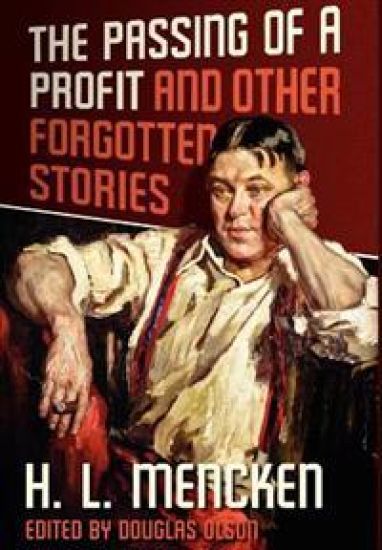
The Passing of a Profit and Other Forgotten Stories
Henry Louis Mencken; H L Mencken
Forgotten Stories Press
2012
sidottu