Kirjojen hintavertailu. Mukana 12 167 025 kirjaa ja 12 kauppaa.

Kirjailija

Hal Brands

Kirjat ja teokset yhdessä paikassa: 26 kirjaa, julkaisuja vuosilta 2008-2026, suosituimpien joukossa Affording Defense. Vertaile teosten hintoja ja tarkista saatavuus suomalaisista kirjakaupoista.

26 kirjaa

Kirjojen julkaisuhaarukka 2008-2026.

Dealing with Political Ferment in Latin America: The Populist Revival, The Emergence of the Center, and Implications For U.S. Policy [Enlarged Edition]
The current political dynamics in Latin America is analyzed, and their meaning for the United States is evaluated. The author argues that references to a uniform "left turn" in the region are misleading, and that Latin America is actually witnessing a dynamic competition between two very different forms of governance. Represented by leaders like Hugo Chavez, Evo Morales, and others, radical populism emphasizes the politics of grievance and a penchant for extreme solutions. Moderate, centrist governance can be found in countries like Chile, Brazil, Mexico, Colombia, and Uruguay. It stresses diplomatic pragmatism, the protection of democratic practices, and the need to blend macroeconomic responsibility with a social conscience. To the extent that the United States can strengthen the centrists while limiting the damage caused by radical populism, the author argues it can promote integral growth, democratic stability, and effective security cooperation in Latin America.
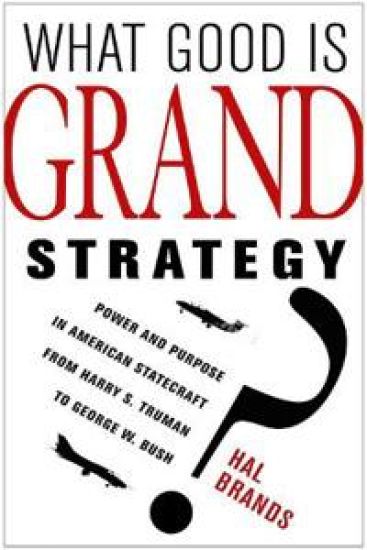
What Good Is Grand Strategy?

What Good Is Grand Strategy?

Hal Brands

Cornell University Press
2014
sidottu
This is a solid piece of scholarship that should be of great value in modern American history classes, foreign policy surveys, and course work in international relations.— Brooks Flippen â•H-Net Reviews Grand strategy is one of the most widely used and abused concepts in the foreign policy lexicon. In this important book, Hal Brands explains why grand strategy is a concept that is so alluring-and so elusive-to those who make American statecraft. He explores what grand strategy is, why it is so essential, and why it is so hard to get right amid the turbulence of global affairs and the chaos of domestic politics. At a time when "grand strategy" is very much in vogue, Brands critically appraises just how feasible that endeavor really is. Brands takes a historical approach to this subject, examining how four presidential administrations, from that of Harry S. Truman to that of George W. Bush, sought to "do" grand strategy at key inflection points in the history of modern U.S. foreign policy. As examples ranging from the early Cold War to the Reagan years to the War on Terror demonstrate, grand strategy can be an immensely rewarding undertaking-but also one that is full of potential pitfalls on the long road between conception and implementation. Brands concludes by offering valuable suggestions for how American leaders might approach the challenges of grand strategy in the years to come.
Dilemmas of Brazilian Grand Strategy
This is a review of Brazilian grand strategy under President Luiz Inacio Lula da Silva. During Lula's nearly 8 years in office, he has pursued a multi-tiered grand strategy aimed at hastening the transition from unipolarity to a multipolar order in which international rules, norms, and institutions are more favorable to Brazilian interests. Lula has done so by emphasizing three diplomatic strategies: soft-balancing, coalition-building, and seeking to position Brazil as the leader of a more united South America. This strategy has successfully raised Brazil's profile and increased its diplomatic flexibility, but it has also exposed the country to four potent strategic dilemmas that could complicate or undermine its ascent. These touch on issues ranging from anemic macroeconomic performance to rising tensions in Brazil's relationship with the USA. The efficacy of Brazilian grand strategy-and its implications-will be contingent on how Lula's successors address these dilemmas.
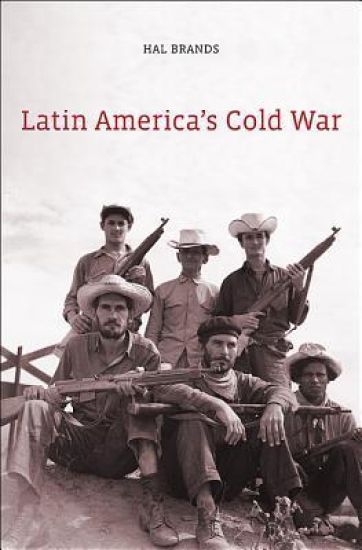
Latin America’s Cold War

Latin America’s Cold War

Hal Brands

Harvard University Press
2012
nidottu
For Latin America, the Cold War was anything but cold. Nor was it the so-called “long peace” afforded the world’s superpowers by their nuclear standoff. In this book, the first to take an international perspective on the postwar decades in the region, Hal Brands sets out to explain what exactly happened in Latin America during the Cold War, and why it was so traumatic.Tracing the tumultuous course of regional affairs from the late 1940s through the early 1990s, Latin America’s Cold War delves into the myriad crises and turning points of the period—the Cuban revolution and its aftermath; the recurring cycles of insurgency and counter-insurgency; the emergence of currents like the National Security Doctrine, liberation theology, and dependency theory; the rise and demise of a hemispheric diplomatic challenge to U.S. hegemony in the 1970s; the conflagration that engulfed Central America from the Nicaraguan revolution onward; and the democratic and economic reforms of the 1980s.Most important, the book chronicles these events in a way that is both multinational and multilayered, weaving the experiences of a diverse cast of characters into an understanding of how global, regional, and local influences interacted to shape Cold War crises in Latin America. Ultimately, Brands exposes Latin America’s Cold War as not a single conflict, but rather a series of overlapping political, social, geostrategic, and ideological struggles whose repercussions can be felt to this day.
From Berlin to Baghdad

From Berlin to Baghdad

Hal Brands

The University Press of Kentucky
2008
sidottu
Containing Communism was the primary goal of American foreign policy for four decades, allowing generations of political leaders to build consensus atop a universally accepted foundation. From Berlin to Baghdad dissects numerous attempts, after communism's collapse, to devise a new grand strategy that could match containment's moral clarity and political efficacy. In the 1990s, the Bush and Clinton administrations eventually acknowledged that they could not reduce America's multifaceted post--Cold War objectives to a single fundamental precept. After 9/11, George W. Bush promoted the war on terror as America's new global mission, but this potential successor to containment lost much of its strength as conflicts in the Middle East weakened public morale. From Berlin to Baghdad sheds new light on America's search for purpose in the politically volatile new world of the twenty-first century.