Kirjojen hintavertailu. Mukana 12 595 353 kirjaa ja 12 kauppaa.

Kirjailija

Hal K. Rothman

Kirjat ja teokset yhdessä paikassa: 9 kirjaa, julkaisuja vuosilta 1992-2013, suosituimpien joukossa Saving the Planet. Vertaile teosten hintoja ja tarkista saatavuus suomalaisista kirjakaupoista.

9 kirjaa

Kirjojen julkaisuhaarukka 1992-2013.

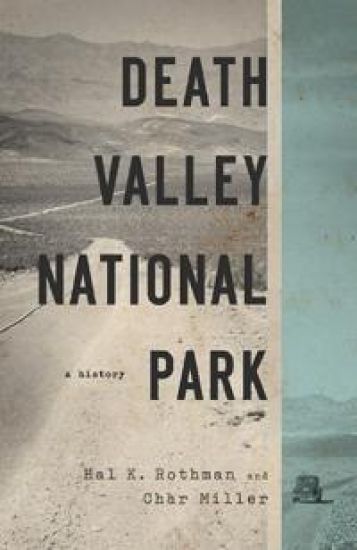
Death Valley National Park

Death Valley National Park

Hal K. Rothman; Char Miller

University of Nevada Press
2013
nidottu
The first comprehensive study of the park, past and present, Death Valley National Park probes the environmental and human history of this most astonishing desert. Established as a national monument in 1933, Death Valley was an anomaly within the national park system. Though many who knew this landscape were convinced that its stark beauty should be preserved, to do so required a reconceptualisation of what a park consists of, grassroots and national support for its creation, and a long and difficult political struggle to secure congressional sanction. This history begins with a discussion of the physical setting, its geography and geology, and descriptions of the Timbisha, the first peoples to inhabit this tough and dangerous landscape. In the nineteenth and early twentieth centuries, new arrivals came to exploit the mineral resources in the region and develop permanent agricultural and resort settlements. Although Death Valley was established as a national monument in 1933, fear of the harsh desert precluded widespread acceptance by both the visiting public and its own administrative agency. As a result, Death Valley lacked both support and resources. This volume details the many debates over the park’s size; conflicts between miners, farmers, the military, and wilderness advocates; the treatment of the Timbisha; and the impact of tourists on its cultural and natural resources. In time, Death Valley came to be seen as one of the great natural wonders of the United States and was elevated to full national park status in 1994. The history of Death Valley National Park embodies the many tensions confronting American environmentalism.
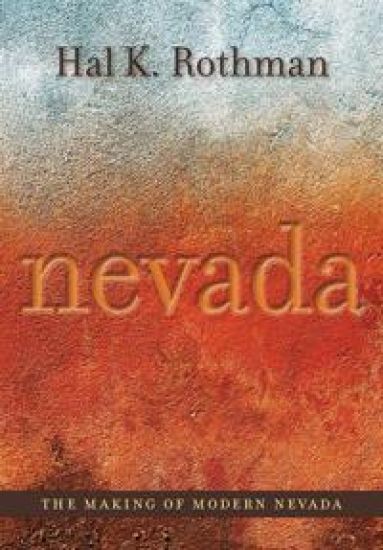
The Making of Modern Nevada

The Making of Modern Nevada

Hal K. Rothman; David M. Wrobel

University of Nevada Press
2010
nidottu
Nevada has always been different from other states. Almost from its beginning, Nevada sanctioned behaviors considered immoral elsewhere—gambling, prize-fighting, brothels, easy divorce—and embraced a culture of individualism and disdain for the constraints of more conventional society. In The Making of Modern Nevada, author Hal Rothman focuses on the factors that shaped the state’s original maverick, colonial status and those that later allowed it to emerge as the new standard of American consumer- ism and postmodern liberalism. Rothman introduces the masters who sought to own Nevada, from bonanza kings to Mafia mobsters, as well as the politicians, miners, gamblers, civic and civil-rights leaders, union organ- izers, and casino corporate moguls who guided the state into prosperity and national importance. He also analyzes the role of mob and labor union money in the development of Las Vegas; the Sagebrush Rebellion; the rise of megaresorts and of Las Vegas as a world icon of leisure and pleasure; and the political and social impact of the proposed Yucca Mountain nuclear waste repository. The Making of Modern Nevada is essential reading for anyone who wonders how the Silver State got this way, and where it may be going in the twenty-first century.
Playing the Odds

Playing the Odds

Hal K. Rothman; William DeBuys

University of New Mexico Press
2007
nidottu
"This collection of Hal Rothman's wide-ranging, brash, and brilliant essays on Las Vegas offers up a treasury of insights on the follies and possibilities of the New West. Confident, passionate, learned and, yes, wise, Rothman is simply one of the most important voices writing on the region today. He is also a hell of a lot of fun to read."--Virginia Scharff, professor of history and Director, Center for the Southwest, University of New Mexico, Albuquerque, and Women of the West chair at the Institute for the Study of the American West, Autry National Center, Los Angeles"Hal Rothman has been enlightening me, irritating me, surprising me, and making me laugh for twenty years. Reading his columns reminds me why. He has long been one of the brashest, loudest, smartest, and most original voices in the West. Not even ALS could quiet him. These columns aren't the same as talking to him, but they come close."--Richard White, Margaret Byrne Professor of American History, Stanford University"Hal Rothman is both the greatest Western historian of his generation and an H. L. Mencken in cowboy boots. Here is a magnificent collection of his opinion, wit, and wisdom."--Mike Davis, author of Planet of Slums and Buda's Wagon
Blazing Heritage

Blazing Heritage

Hal K. Rothman

Oxford University Press Inc
2007
sidottu
National parks played a unique role in the development of wildfire management on American public lands. With a different mission and powerful meaning to the public, the national parks were a psychic battleground for the contests between fire suppression and its use as a management tool. Blazing Heritage tells how the national parks shaped federal fire management.
Saving the Planet

Saving the Planet

Hal K. Rothman

Ivan R Dee, Inc
2001
pokkari
Since 1900 Americans’ attitudes toward the world they inhabit have changed as greatly as their own way of life. As their pace quickened, as they left the rural world of their pre-industrial ancestors and moved to urban areas, Americans became enamored of the natural world, if only as a myth. In Saving the Planet, Hal Rothman explains why Americans now see in the environment a salvation of themselves and their society, and a respite from the pressures of modern life. Mr. Rothman traces the origins of environmentalism to the diverse reform currents of the 1890s and the conservation movement of the Progressive era. Focusing on the roles of advocacy groups, prominent activists, business, legislation, and the federal bureaucracy, he shows how the idea of conservation management was transformed after World War II into a program for “quality of life.” Driven largely by affluence, this revolution in American attitudes is, Mr. Rothman argues, one of many by-products of the decline in outright faith in technology. His cogent narrative history is punctuated throughout with accounts of crucial episodes in the growth of environmentalism—Hetch-Hetchy, the Echo Park Dam, the oil spill at Santa Barbara, Love Canal, and others.
Devil's Bargains

Devil's Bargains

Hal K. Rothman

University Press of Kansas
1998
sidottu
The American West has always been seen as a land of opportunity, but tourism has transformed it into a land of opportunism. From Sun Valley to Santa Fe, towns all over the region have been turned over to outsiders - not just those who visit, but those who control. There's no denying that tourism has been a blessing for many: it's brought economic and cultural prosperity to communities without obvious means of support and allowed towns on the brink of ruin to renew themselves. But in too many cases, the costs of tourism have challenged the benefits and proven it to be a devil's bargain. Environmental historian Hal Rothman examines the impact of tourism on the West in the 20th century to illuminate that industry's darker side. He tells how tourism evolved from Grand Canyon railroad trips to Sun Valley ski weekends to Disneyland vacations, and how the post-World War II boom in air travel and luxury hotels capitalized on Americans' newfound leisure and income. He identifies three dominant forms of tourism - cultural, recreational and entertainment - and shows how they've melded together as the tourism industry has begun to transform everyday places into images of what visitors expect to see. From major destinations like Las Vegas to revitalized towns like Aspen and Moab, Rothman reveals how the initial development of tourism may seem inocuous at first; but residents ultimately realize that control of their communities has been placed in the hands of corporate financiers and that they've lost the very authority they sought to preserve. Because tourism often results in a redistribution of wealth and power, observes Rothman, it represents a new form of colonialism for the region - not East over West, but haves over have-nots. By sharing stories of real places and the experiences of real people that depict the true nature of tourism, Rothman doesn't just document change but enables us to understand why and how it takes place. Balancing historical perspective with an eye for what is now happening in the region, his book aims to set the standard for the study of tourism.
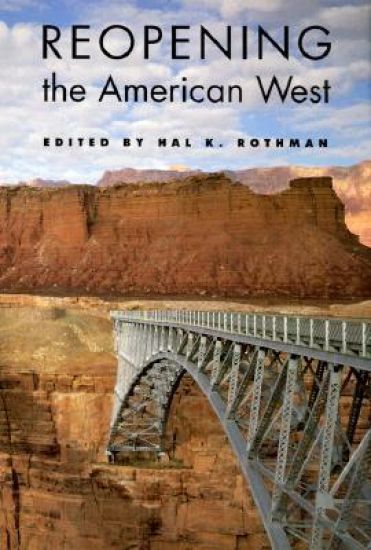
Reopening the American West

Reopening the American West

Hal K. Rothman

University of Arizona Press
1998
nidottu
Take a good look at the American West and you'll see that the frontier is undergoing constant changes not only changes made to the land but also changes in attitudes about the land held by the people who live there. In this book Mike Davis, Stephen Pyne, William deBuys, Donald Worster, Dan Flores, and others re-examine the relationship between people and the environment in the American West over five hundred years, from the legacy of Coronado's search for the Cities of Gold to the social costs of tourism and gaming inflicted by modern adventurers. By exploring places in the West, aspects of the region's past, and ways of understanding some of its pressing issues, the authors foster a better understanding of how people interact and perceive land. Reopening the American West takes a fresh approach to the history of the region, examining the premises of earlier scholars as well as those who have redefined the study of the West over the past two decades. It combines provocative essays with insightful analyses to address issues that are representative of the West in the twentieth century multiculturalism, water issues, resource exploitation and to reopen the West for all readers interested in new ways of looking at its wide-open spaces. CONTENTS-Places-Dreams of Earth, William deBuys-Environmentalism and Multiculturalism, Dan L. Flores-Pyre on the Mountain, Stephen J. Pyne-Las Vegas Versus Nature, Mike Davis-Pasts: The Legacy of John Wesley Powell, Donald Worster-Pokey's Paradox: Tourism and Transformation on the Western Navajo Reservation, Hal Rothman-Negotiating National Identity: Western Tourism and "See American First," MargueriteSchaffer-Understanding-Place Humanists at the Headgates, Helen Ingram: Tapping the Rockies: Resource Exploitation and Conservation in the Intermountain West, Char Miller: The Meaning of Place: Reimagining Community in a Changing West, Robert Gottlieb
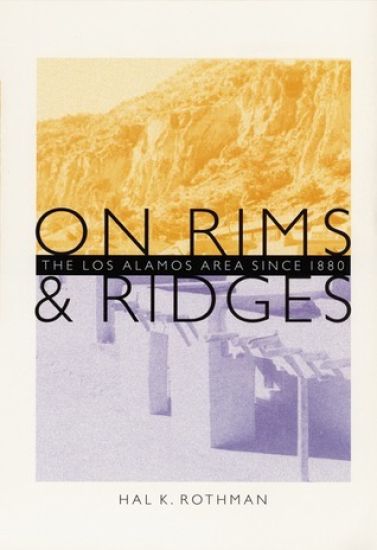
On Rims and Ridges

On Rims and Ridges

Hal K. Rothman

University of Nebraska Press
1997
pokkari
New Mexico's Pajarito Plateau encompasses the Bandelier National Monument and the atomic city of Los Alamos. On Rims and Ridges throws into stark relief what happens when native cultures and Euro-American commercial interests interact in such a remote area with limited resources. The demands of citizens and institutions have created a form of environmental gridlock more often associated with Manhattan Island than with the semiurban West, writes Hal K. Rothman.
On Rims and Ridges

On Rims and Ridges

Hal K. Rothman

University of Nebraska Press
1992
sidottu
'A fine environmental history...Known more for its role in the development of the atomic bomb than for its natural resources, the Los Alamos area characterizes the struggle between institutions and environmental values common throughout the American West...Rothman interweaves human and natural history in a well-written narrative, personally and lovingly told' - "Environmental History Review". 'A thoroughly researched, well-written case study of a beautiful, yet fragile region' - "Western Historical Quarterly". 'A history book written so beautifully that it is a delight to read' - "New Mexico Historical Review". 'This is a useful study because it examines a wide variety of issues, from economic change to the role of the federal government and to environmental topics, that are important in the history of the American West' - "American Historical Review".'This historical account of changes in land use on the Pajarito Plateau of northern New Mexico offers a wealth of insights into the development of western communities...Highly recommended' - "Library Journal". New Mexico's Pajarito Plateau encompasses the Bandelier National Monument and the atomic city of Los Alamos. "On Rims and Ridges" throws into stark relief what happens when native cultures and Euro-American commercial interests interact in such a remote area with limited resources. The demands of citizens and institutions have created a form of environmental gridlock more often associated with Manhattan Island than with the semiurban West, writes Hal K. Rothman. A professor of history at the University of Nevada, Las Vegas, and the author of "Preserving Different Pasts: The American National Monuments", he has provided a new epilogue for this paperback edition.