Kirjojen hintavertailu. Mukana 12 390 323 kirjaa ja 12 kauppaa.

Kirjailija

Haleh Ardebili

Kirjat ja teokset yhdessä paikassa: 3 kirjaa, julkaisuja vuosilta 2009-2019, suosituimpien joukossa Energy Storage. Vertaile teosten hintoja ja tarkista saatavuus suomalaisista kirjakaupoista.

3 kirjaa

Kirjojen julkaisuhaarukka 2009-2019.

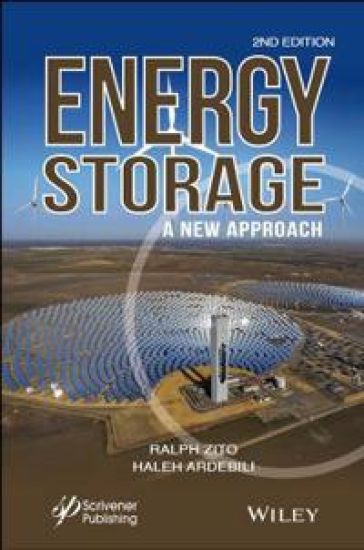
Energy Storage

Energy Storage

Ralph Zito; Haleh Ardebili

John Wiley Sons Inc
2019
sidottu
This new revision of an instant classic presents practical solutions to the problem of energy storage on a massive scale. This problem is especially difficult for renewable energy technologies, such as wind and solar power, that, currently, can only be utilized while the wind is blowing or while the sun is shining. If energy storage on a large scale were possible, this would solve many of our society’s problems. For example, power grids would not go down during peak usage. Power plants that run on natural gas, for example, would no longer burn natural gas during the off-hours, as what happens now. These are just two of society’s huge problems that could be solved with this new technology. This new edition includes additional discussion and new sections on energy problem including increasing population and greenhouse effects, and an expanded overview of energy storage types. Chapter two has been expanded to provide further discussion of the fundamentals of energy and new sections on elastic, electrical, chemical, and thermal energy. Two new chapters have been added that provide a discussion of electrolytes and membranes and on flexible and stretchable energy storage devices. A new section has also been added on the future of energy storage in the final chapter. This is a potentially revolutionary book insofar as technical books can be “revolutionary.” The technologies that are described have their roots in basic chemistry that engineers have been practicing for years, but this is all new material that could revolutionize the energy industry. Whether the power is generated from oil, natural gas, coal, solar, wind, or any of the other emerging sources, energy storage is something that the industry must learn and practice. With the world energy demand increasing, mostly due to the industrial growth in China and India, and with the West becoming increasingly more interested in fuel efficiency and “green” endeavors, energy storage is potentially a key technology in our energy future.
Encapsulation Technologies for Electronic Applications

Encapsulation Technologies for Electronic Applications

Haleh Ardebili; Jiawei Zhang; Michael G. Pecht

William Andrew Publishing
2018
nidottu
Encapsulation Technologies for Electronic Applications, Second Edition, offers an updated, comprehensive discussion of encapsulants in electronic applications, with a primary emphasis on the encapsulation of microelectronic devices and connectors and transformers. It includes sections on 2-D and 3-D packaging and encapsulation, encapsulation materials, including environmentally friendly 'green' encapsulants, and the properties and characterization of encapsulants. Furthermore, this book provides an extensive discussion on the defects and failures related to encapsulation, how to analyze such defects and failures, and how to apply quality assurance and qualification processes for encapsulated packages. In addition, users will find information on the trends and challenges of encapsulation and microelectronic packages, including the application of nanotechnology. Increasing functionality of semiconductor devices and higher end used expectations in the last 5 to 10 years has driven development in packaging and interconnected technologies. The demands for higher miniaturization, higher integration of functions, higher clock rates and data, and higher reliability influence almost all materials used for advanced electronics packaging, hence this book provides a timely release on the topic.
Encapsulation Technologies for Electronic Applications

Encapsulation Technologies for Electronic Applications

Haleh Ardebili; Michael G. Pecht

William Andrew Publishing
2009
sidottu
Electronics are used in a wide range of applications including computing, communication, biomedical, automotive, military and aerospace. They must operate in varying temperature and humidity environments including indoor controlled conditions and outdoor climate changes. Moisture, ionic contamination, heat, radiation and mechanical stresses are all highly detrimental to electronic devices and can lead to device failures. Therefore, it is essential that the electronic devices be packaged for protection from their intended environments, as well as to provide handling, assembly, electrical and thermal considerations. Currently, more than 99% of microelectronic devices are plastic encapsulated. Improvements in encapsulant materials, and cost incentives have stretched the application boundaries for plastic electronic packages. Many electronic applications that traditionally used hermetic packages such as military are now using commercial-off-the-shelf (COTS) plastic packages. Plastic encapsulation has the advantages of low cost, smaller form factors, and improved manufacturability. With recent trends in environmental awareness, new environmentally friendly or ' green' encapsulant materials (i.e. without brominated additives) have emerged. Plastic packages are also being considered for use in extreme high and low temperature electronics. 3-D packaging and wafer-level-packaging (WLP) require unique encapsulation techniques. Encapsulant materials are also being developed for micro-electro-mechanical systems (MEMS), bio-MEMS, bio-electronics, and organic light-emitting diodes (O-LEDs). This book offers a comprehensive discussion of encapsulants in electronic applications. The main emphasis is on the encapsulation of microelectronic devices; however, the encapsulation of connectors and transformers is also addressed. This book discusses 2-D and 3-D packaging and encapsulation, encapsulation materials including environmentally friendly 'green' encapsulants, and the properties and characterization of encapsulants. Furthermore, this book provides an extensive discussion on defects and failures related to encapsulation, how to analyze such defects and failures, and how to apply quality assurance and qualification process for encapsulated packages. This book also provides information on the trends and challenges of encapsulation and microelectronic packages including application of nanotechnology.