
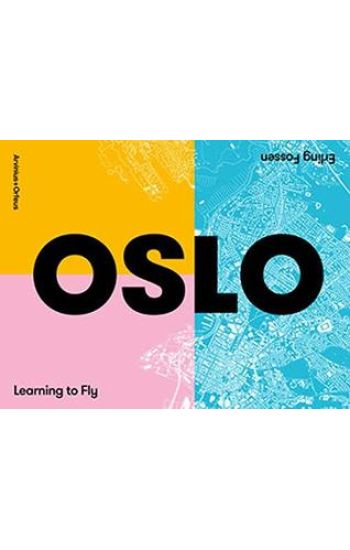
Oslo : Learning to Fly
Erling Fossen; Elin Børrud; Ellen de Vibe; Halvor Weider Ellefsen; Påhl H. Eng; Anne Beate Hovind; Dana Jdid; Bjørnar Johnsen; Erling Lae; Asbjørg Næss; Kathrine Nyhus; Emil Paaske; Liv Sæteren; Knut Schreiner; Lin Skaufel; Marianne Skjulhaug; Aga Skorupka; Henning Sunde; Aslaug Tveit; Silje Barkesten; Greg Clark; Kamzy Gunaratnam; Kristin Jarmund; David Leonard; Maiuran Loganathan; Tin Phan; Aat Vos; Janne Wilberg; Ivar Winther
Arvinius+Orfeus Publishing
2018
nidottu
Oslo Learning to Fly offers the first comprehensive presentation of the radical transformation of this former sleepy village into an emerging world city. Oslo has been among the fastest growing cities in Europe for decades and this book spans from the conversion of a major shipyard into the multi-use borough Aker Brygge in the late 1980s, and into 2030 when the transformation to a post-industrial city will be complete.Inside, the philosophy and principles behind Oslos urban development are revealed and the book may be used both as a tool-kit for urban practitioners in post-industrial cities, and as a gift book for people all over the world who want to familiarise themselves with the Oslopolitan way of life and with how to do the noblest art of them al: the art of city making. Oslo Learning to Fly is divided into four chapters. Chapter 1 is dedicated to the harbour landscape of the Fjord City, Chapter 2 to the managing of growth through hub densification, Chapter 3 is about transformation and refinement of the already existing urban fabric, and Chapter 4 covers the relevance of so-called third places and their importance in enabling the concept of community. And please, dont leave me on the coffee table. Im made for walking. Bring me with you when you walk the streets of Oslo, and use me as a treasure map to discover the secrets of the city.Erling Fossen is a human geographer and self-proclaimed urban doctor. He is currently the project leader of Oslo Metropolitan Area a non-profit organisation devoted to urban development in the Greater Oslo.
