Kirjojen hintavertailu. Mukana 12 126 233 kirjaa ja 12 kauppaa.

Kirjailija

Hamid Dabashi

Kirjat ja teokset yhdessä paikassa: 55 kirjaa, julkaisuja vuosilta 1989-2026, suosituimpien joukossa After Savagery. Vertaile teosten hintoja ja tarkista saatavuus suomalaisista kirjakaupoista.

55 kirjaa

Kirjojen julkaisuhaarukka 1989-2026.

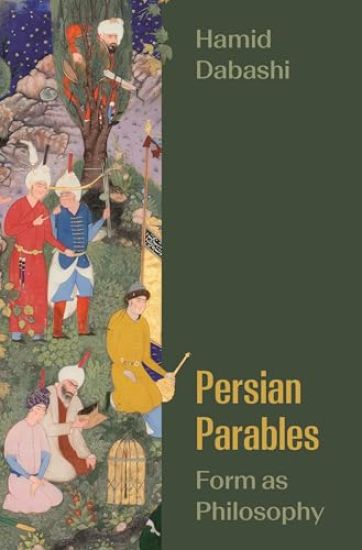
Persian Parables

Persian Parables

Hamid Dabashi

PRINCETON UNIVERSITY PRESS
2026
pokkari
A major reassessment of the parable in Persian literature and its contribution to philosophical and creative thinking In this book, Hamid Dabashi offers a radical reconsideration of the parable in Persian literature, arguing that parabolic thinking is a mode of philosophical reflection. Dabashi eschews the conventional focus on the supposed moral or political allusions in these parables—the “moral of the story”—to allow the radical surfaces of their poetic disposition to reveal themselves. He turns his attention instead to what Kafka called “the fabulous yonder” as the defining moment of the parable. Focusing on a sustained course of Persian parables through the ages, Dabashi shows that the genre is not limited to masterpieces by such iconic poets as Sa’di, Rumi, Attar, and Sana’i. In fact, he argues, parabolic thinking has a much wider domain in Persian literature and philosophy and plays a distinct role within Persian and Islamic traditions. The cumulative result of these parables spread across Persian prose and poetry is an Alam al-Mithal, a parabolic world—a world of parables, similitudes, and verisimilitudes. Dabashi points to the moment in these works when life is absorbed into the formal fabric of the stories, erasing the borderline between fact and fantasy, history and story, the living and the dead, the real and the unreal—and life itself, as we live it, becomes a strange and captivating parable. With this circular self-referentiality, parables enable a way of thinking as a philosophical form.

Persian Parables

Persian Parables

Hamid Dabashi

PRINCETON UNIVERSITY PRESS
2026
sidottu
A major reassessment of the parable in Persian literature and its contribution to philosophical and creative thinking In this book, Hamid Dabashi offers a radical reconsideration of the parable in Persian literature, arguing that parabolic thinking is a mode of philosophical reflection. Dabashi eschews the conventional focus on the supposed moral or political allusions in these parables—the “moral of the story”—to allow the radical surfaces of their poetic disposition to reveal themselves. He turns his attention instead to what Kafka called “the fabulous yonder” as the defining moment of the parable. Focusing on a sustained course of Persian parables through the ages, Dabashi shows that the genre is not limited to masterpieces by such iconic poets as Sa’di, Rumi, Attar, and Sana’i. In fact, he argues, parabolic thinking has a much wider domain in Persian literature and philosophy and plays a distinct role within Persian and Islamic traditions. The cumulative result of these parables spread across Persian prose and poetry is an Alam al-Mithal, a parabolic world—a world of parables, similitudes, and verisimilitudes. Dabashi points to the moment in these works when life is absorbed into the formal fabric of the stories, erasing the borderline between fact and fantasy, history and story, the living and the dead, the real and the unreal—and life itself, as we live it, becomes a strange and captivating parable. With this circular self-referentiality, parables enable a way of thinking as a philosophical form.
The Subversive Seventies in Tehran

The Subversive Seventies in Tehran

Hamid Dabashi

EDINBURGH UNIVERSITY PRESS
2025
sidottu
The 1970s are emerging as a pivotal decade in global history, in which enduring and unprecedented revolutionary changes radically altered our conception of society, polity and culture. In this book, Hamid Dabashi gives a potent account of the momentous changes in Iran during this time, mapping the social, political and cultural forces that shaped the decade and led to the downfall of the Pahlavi dynasty.Recollecting his years as a student in the Iranian capital, Dabashi explores the social and cultural scene of 1970s Tehran and offers a thorough account of the political disposition of the country in the years leading up to the 19779 revolution. He places this in the context of revolutionary aspirations around the world, putting Tehran on the map of the global 'subversive seventies'. The story is framed around an analysis of iconic novels and films that both reflected and shaped the time in which they were produced.
Mashya and Mashyana Unearthed

Mashya and Mashyana Unearthed

Hamid Dabashi

EDINBURGH UNIVERSITY PRESS
2025
nidottu
Using Iran as an example of an ancient civilization with a sustained course of continuity all the way to the present time, this book moves towards a philosophical reflection on the relationship between what we see and feel today when engaging with art, literature and film and what we have otherwise deeply buried in the forgotten layers of our collective consciousness from time immemorial.
Imagine a Nation

Imagine a Nation

Hamid Dabashi

BLOOMSBURY PUBLISHING PLC
2025
sidottu
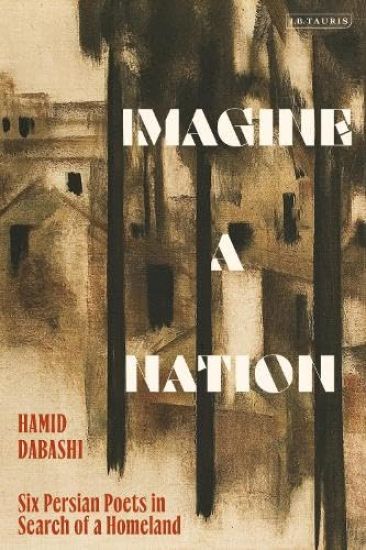
From Ferdowsi to Rumi and Hafiz, poetry has played a central role in the historical Iranian cultural imagination. How have contemporary poets contributed to this imagining of a nation, in the context of the twentieth century and its momentous events? In this book, Hamid Dabashi interrogates the oeuvre of six major poets: Nima Yushij (1895-1960), Mehdi Akhavan-e Sales (1929-1990), Ahmad Shamlou (1925-2000) Forough Farrokhzad (1934-1967), Sohrab Sepehri (1928-1980) and finally Esmail Khoi (1938-2021). Reading their works in the context of Iranian political history, from the Constitutional Revolution to the Iranian Revolution and beyond, he interprets their poetry as exercises in imagining an Iran that was still emerging and being contested. Providing an original theoretical and critical interpretation of modern Iran’s most well-known poets, based on his own translations from the Persian originals, this book will be essential reading for students and scholars of Persian literature and Iranian studies.
Imagine a Nation

Imagine a Nation

Hamid Dabashi

BLOOMSBURY PUBLISHING PLC
2025
nidottu
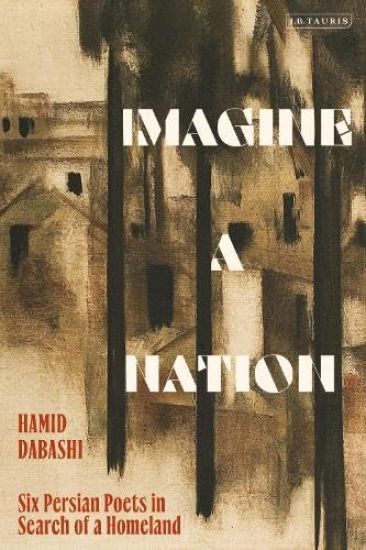
From Ferdowsi to Rumi and Hafiz, poetry has played a central role in the historical Iranian cultural imagination. How have contemporary poets contributed to this imagining of a nation, in the context of the twentieth century and its momentous events? In this book, Hamid Dabashi interrogates the oeuvre of six major poets: Nima Yushij (1895-1960), Mehdi Akhavan-e Sales (1929-1990), Ahmad Shamlou (1925-2000) Forough Farrokhzad (1934-1967), Sohrab Sepehri (1928-1980) and finally Esmail Khoi (1938-2021). Reading their works in the context of Iranian political history, from the Constitutional Revolution to the Iranian Revolution and beyond, he interprets their poetry as exercises in imagining an Iran that was still emerging and being contested. Providing an original theoretical and critical interpretation of modern Iran’s most well-known poets, based on his own translations from the Persian originals, this book will be essential reading for students and scholars of Persian literature and Iranian studies.
After Savagery

After Savagery

Hamid Dabashi

Haymarket Books
2025
sidottu
Written during a genocide, After Savagery reveals the ethical bankruptcy of “Western philosophy” and how it undergirds the erasure of the colonized. The death toll in Gaza continues to rise-a cold, lifeless number representing entire communities crushed under the weight of settler colonialism. What remains of the theories we use to understand our world? With lyrical and lucid fury, Hamid Dabashi exposes the racist roots of Western philosophy, demanding that readers overcome its pernicious phantom of relevance. Rather than perceiving “the West” as giving carte blanche to Israel, Dabashi insists that Israel must be understood as its quintessence. If Israel is the West and the West is Israel, then Palestine is the world and the world is Palestine. Holding to glimmers from revolutionary works of literature and film, Dabashi argues, in grief and love, that the wretched of the earth need poetry after barbarism—and that Palestine is the site of a liberated imagination.
Iran in Revolt

Iran in Revolt

Hamid Dabashi

Haymarket Books
2025
sidottu
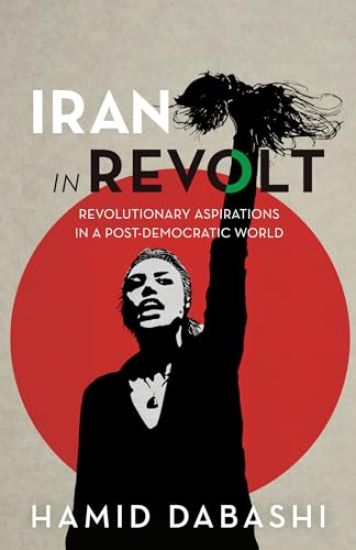
In his retelling of the boldness and tragedy of the Zhina uprising in Iran, Hamid Dabashi asks: What constitutes the success of revolutions and how do we measure their failures? In September 2022, a young Kurdish woman, Zhina Mahsa Amini, was killed in police custody for failing to observe the strict dress code imposed on Iranian women. Her death sparked a massive social uprising within and outside of Iran. The slogan, “Woman, Life, Freedom,” spread like wildfire from Amini’s hometown to solidarity protests held in London, New York, Melbourne, Paris, Seoul and beyond. The pain felt by millions of Iranians, caused by the Islamic Republic, was on the global stage again. Yet, misreadings of the Zhina uprising—both accidental and insidious—began to proliferate, with different parties vying for power. Iran in Revolt by author and scholar Hamid Dabashi cuts through the white noise of imperialist war mongers and social media bots to provide a careful and principled account of the revolution, and how it has forever altered the nature of politics in Iran and the wider region. Iran in Revolt argues that “democracy” and the “nation-state” are tired concepts, exploring what it means to fight for a just society instead. Through detailed political, philosophical, and historical analysis, Dabashi shows that the vulnerable lives and fragile liberties of nations have never been so intimately connected, just as the pernicious cruelties of ruling regimes have never been so identical as they are today.
Iran in Revolt

Iran in Revolt

Hamid Dabashi

Haymarket Books
2025
pokkari
In his retelling of the boldness and tragedy of the Zhina uprising in Iran, Hamid Dabashi asks: What constitutes the success of revolutions and how do we measure their failures? In September 2022, a young Kurdish woman, Zhina Mahsa Amini, was killed in police custody for failing to observe the strict dress code imposed on Iranian women. Her death sparked a massive social uprising within and outside of Iran. The slogan, “Woman, Life, Freedom,” spread like wildfire from Amini’s hometown to solidarity protests held in London, New York, Melbourne, Paris, Seoul and beyond. The pain felt by millions of Iranians, caused by the Islamic Republic, was on the global stage again. Yet, misreadings of the Zhina uprising—both accidental and insidious—began to proliferate, with different parties vying for power. Iran in Revolt by author and scholar Hamid Dabashi cuts through the white noise of imperialist war mongers and social media bots to provide a careful and principled account of the revolution, and how it has forever altered the nature of politics in Iran and the wider region. Iran in Revolt argues that “democracy” and the “nation-state” are tired concepts, exploring what it means to fight for a just society instead. Through detailed political, philosophical, and historical analysis, Dabashi shows that the vulnerable lives and fragile liberties of nations have never been so intimately connected, just as the pernicious cruelties of ruling regimes have never been so identical as they are today.
Where Is Abbas Kiarostami?

Where Is Abbas Kiarostami?

Hamid Dabashi

University of California Press
2025
sidottu
When Abbas Kiarostami suddenly passed away in July 2016, he was already an iconic figure in world cinema—and his reputation as a master filmmaker has only grown since. In this book, celebrated scholar Hamid Dabashi offers a new way of looking at Kiarostami's artworld, one that questions the very idea of film philosophy. Dabashi's authoritative account of the philosophical resonances of Kiarostami's oeuvre offers an iconoclastic critique of the field's Eurocentrism and, in vivid prose, makes the case for a new method of appreciating the work of this essential figure. The result is a provocative perspective on the totality of Kiarostami's legacy that, with deep roots in Iranian aesthetic and Persian poetic and philosophical traditions, overcomes film's provincial preoccupation with its Western heritage and charts a new path forward for film-philosophy.
Where Is Abbas Kiarostami?

Where Is Abbas Kiarostami?

Hamid Dabashi

University of California Press
2025
pokkari
When Abbas Kiarostami suddenly passed away in July 2016, he was already an iconic figure in world cinema—and his reputation as a master filmmaker has only grown since. In this book, celebrated scholar Hamid Dabashi offers a new way of looking at Kiarostami's artworld, one that questions the very idea of film philosophy. Dabashi's authoritative account of the philosophical resonances of Kiarostami's oeuvre offers an iconoclastic critique of the field's Eurocentrism and, in vivid prose, makes the case for a new method of appreciating the work of this essential figure. The result is a provocative perspective on the totality of Kiarostami's legacy that, with deep roots in Iranian aesthetic and Persian poetic and philosophical traditions, overcomes film's provincial preoccupation with its Western heritage and charts a new path forward for film-philosophy.
Mashya and Mashyana Unearthed

Mashya and Mashyana Unearthed

Hamid Dabashi

EDINBURGH UNIVERSITY PRESS
2024
sidottu
Using Iran as an example of an ancient civilization with a sustained course of continuity all the way to the present time, this book moves towards a philosophical reflection on the relationship between what we see and feel today when engaging with art, literature and film and what we have otherwise deeply buried in the forgotten layers of our collective consciousness from time immemorial.
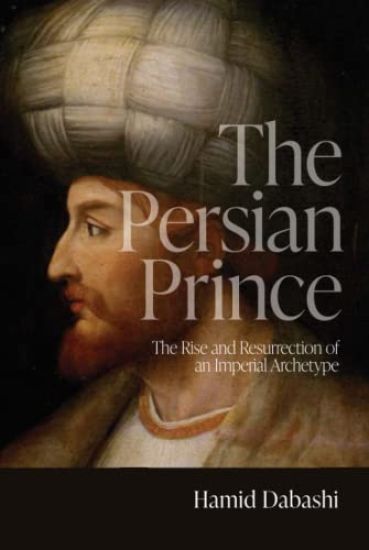
The Persian Prince

The Persian Prince

Hamid Dabashi

STANFORD UNIVERSITY PRESS
2023
pokkari
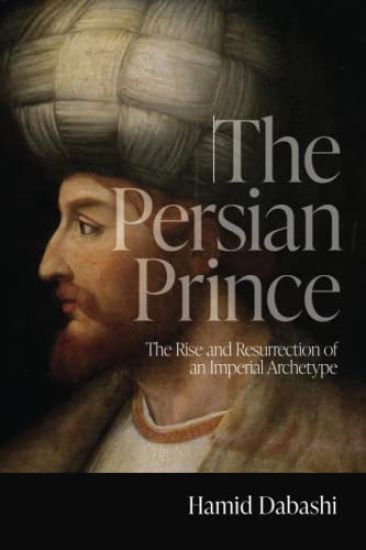
With its title borrowed from Machiavelli, The Persian Prince goes far beyond Machiavelli's wildest imagination as to how to rule the world. Hamid Dabashi articulates a bold new idea of the Persian Prince—a metaphor of political authority, a figurative ideal deeply rooted in the collective memories of multiple nations, and a literary construct that connected Muslim empires across time and space and continues to inform political debate today. Drawing on works from Classical Antiquity and the vast Persianate worlds from India to the Mediterranean, as well as the Hebrew Bible and European medieval mirrors for princes, Dabashi engages a diverse body of political thought to reveal the construction of the Persian Prince as a potent archetype. He traces this archetype through its varied historic gestations and finds it resurfacing in postcolonial political thought as a rebel, a prophet, a poet, and a nomad. Bringing poetics and politics together, Dabashi shows how this archetypal figure has long defined political authority throughout the wider Iranian and Islamic worlds. With meticulous attention to literary and poetic texts, moral and philosophical treatises, allegorical and anecdotal stories, sacred and secular evidence, visual and performing arts, histories of global empires and colonial conquests, this sweeping work offers a deeply learned, richly erudite, and transformative piece of critical thinking. As Dabashi shows, the Persian Prince remains the stuff of current debate across the Muslim and Persianate worlds, in contestations over the public domain and the collective will to power, and above all in the prospects of democratic institutions.
The Persian Prince

The Persian Prince

Hamid Dabashi

STANFORD UNIVERSITY PRESS
2023
sidottu
With its title borrowed from Machiavelli, The Persian Prince goes far beyond Machiavelli's wildest imagination as to how to rule the world. Hamid Dabashi articulates a bold new idea of the Persian Prince—a metaphor of political authority, a figurative ideal deeply rooted in the collective memories of multiple nations, and a literary construct that connected Muslim empires across time and space and continues to inform political debate today. Drawing on works from Classical Antiquity and the vast Persianate worlds from India to the Mediterranean, as well as the Hebrew Bible and European medieval mirrors for princes, Dabashi engages a diverse body of political thought to reveal the construction of the Persian Prince as a potent archetype. He traces this archetype through its varied historic gestations and finds it resurfacing in postcolonial political thought as a rebel, a prophet, a poet, and a nomad. Bringing poetics and politics together, Dabashi shows how this archetypal figure has long defined political authority throughout the wider Iranian and Islamic worlds. With meticulous attention to literary and poetic texts, moral and philosophical treatises, allegorical and anecdotal stories, sacred and secular evidence, visual and performing arts, histories of global empires and colonial conquests, this sweeping work offers a deeply learned, richly erudite, and transformative piece of critical thinking. As Dabashi shows, the Persian Prince remains the stuff of current debate across the Muslim and Persianate worlds, in contestations over the public domain and the collective will to power, and above all in the prospects of democratic institutions.
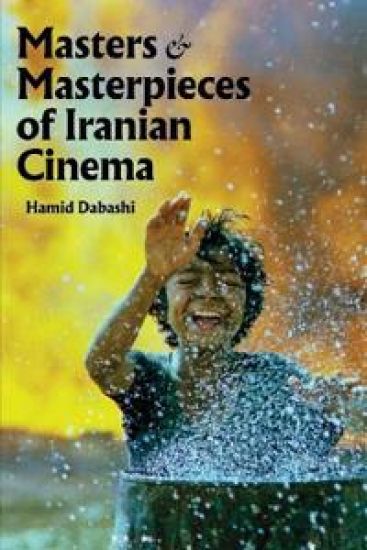
Masters and Masterpieces of Iranian Cinema

Masters and Masterpieces of Iranian Cinema

Hamid Dabashi

Mage Publishers
2023
pokkari
The rise of Iranian cinema to world prominence over the last few decades is one of the most fascinating cultural stories of our time. There is scarcely an international film festival anywhere that does not honor the aesthetic and political explorations of Iranian artists. Masters & Masterpieces of Iranian Cinema celebrates this remarkable emergence. It focuses on twelve of the most important Iranian filmmakers of the past half-century-among them, such pioneers as Forugh Farrokhzad, Dariush Mehrjui, Abbas Kiarostami, and Jafar Panahi. In his examination of their lives and their greatest works, Hamid Dabashi explains how, despite the censorship of both the Pahlavi monarchy and the Islamic Republic, the creativity of these filmmakers has transcended national and cultural borders. His account traces the ascendancy of Iranian cinema in modern Iranian intellectual history and also probes its links to Persian poetry, fiction, art, and philosophy.In Europe and in North America, in Asia and in Latin America, in Australia and Africa, the thematic and narrative richness of Iranian cinema has met with tremendous acclaim. Indeed, its particular modes of realism-building on such cinematic antecedents as Italian, French, and German neorealism-have become truly transnational, contributing a new visual vocabulary to filmmaking everywhere. Masters & Masterpieces of Iranian Cinema studies the role that prominent film festivals have played in fostering the global success of Iranian cinema, and investigates the reception of these films within Iran, an intriguing story in its own right. This is a book that will reward not only the scholar and the film aficionado but also anyone interested in the cultural history of modern Iran.
An Iranian Childhood

An Iranian Childhood

Hamid Dabashi

Cambridge University Press
2023
sidottu
Hamid Dabashi was born and raised in southern Iran in the 1950s and 1960s. During this time, his homeland was changed beyond recognition, from the 1953 coup d'état to the 1963 political protests and the beginning of the Marxist rebellions against the Shah in 1971. In this vibrant, unique and personal study, Dabashi recounts his experience of this defining period in modern Iranian history, deftly blending the personal with the political, the ordinary with the extraordinary. Lyrically written, he combines vivid childhood memories with careful reflection to explore the intersection of history and memory. The book draws upon a rich tapestry of themes and sources, including art, literature, and folklore. In doing so, Dabashi asserts the power and place of the knowing postcolonial subject. Redrawing the limits of modern literary historiography, he asks what it means to be a Muslim and an Iranian, and, indeed, what it is that forms the humanity of a person.
The Last Muslim Intellectual

The Last Muslim Intellectual

Hamid Dabashi

EDINBURGH UNIVERSITY PRESS
2022
nidottu
Explores the life and legacy of Jalal Al-e Ahmad (1923 69) arguably the most prominent Iranian public intellectual of his time A social and intellectual biography of Jalal Al-e Ahmad, a seminal Muslim public intellectual of the mid-20th century Places Al-e Ahmad's writing and activities alongside other influential anticolonial thinkers of his time, including Frantz Fanon, Aim C saire and Edward Said Chapters cover Jalal Al-e Ahmad's intellectual and political life; his relationship with his wife, the novelist Simin Daneshvar; his essays; his fiction; his travel writing; his translations; and his legacy In this social and intellectual biography, Hamid Dabashi contends that Jalal Al-e Ahmad was the last Muslim intellectual to have articulated a vision of Muslim worldly cosmopolitanism, before the militant Islamism of the last half a century degenerated into sectarian politics and intellectual alienation from the world at large. Dabashi places Al-e Ahmad beside other towering critical thinkers of his time, showing how he personified a state of Muslim anticolonial modernity that has now disappeared behind the smokescreen of sectarian politics. This unprecedented engagement with Al-e Ahmad's life and legacy is a prelude to what Dabashi calls a 'post-Islamist Liberation Theology'. The Last Muslim Intellectual expands the wide spectrum of anticolonial thinking beyond its established canonicity by adding a critical Muslim thinker to it an urgent task, if the future of Muslim critical thinking is to be considered in liberated terms beyond the dead-end of its current sectarian predicament.
Can Non-Europeans Think?

Can Non-Europeans Think?

Hamid Dabashi; Walter Mignolo

BLOOMSBURY PUBLISHING PLC
2022
nidottu
'In Can Non-Europeans Think? Dabashi takes his subtle but vigorous polemic to another level.'Pankaj MishraWhat happens to thinkers who operate outside the European philosophical pedigree? In this powerfully honed polemic, Hamid Dabashi argues that they are invariably marginalised, patronised and misrepresented.Challenging, pugnacious and stylish, Can Non-Europeans Think? forges a new perspective in postcolonial theory by examining how intellectual debate continues to reinforce a colonial regime of knowledge, albeit in a new guise.Based on years of scholarship and activism, this insightful collection of philosophical explorations is certain to unsettle and delight in equal measure.
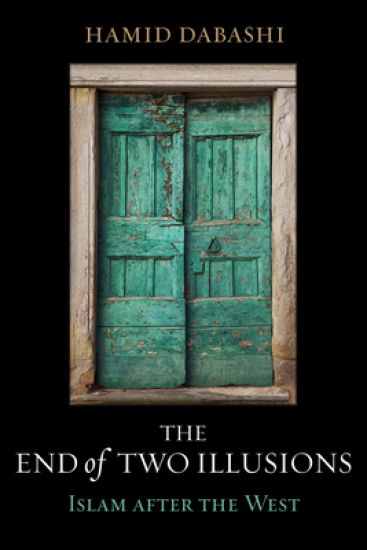
The End of Two Illusions

The End of Two Illusions

Hamid Dabashi

University of California Press
2022
sidottu
Dismantling the myths that divide Islam and the West, this cutting-edge work of critical thinking proposes new ways to reread Islamic and world histories. Extending from the front-page news coverage of our daily lives back into the deepest and most revelatory histories of the last two hundred years and earlier, Hamid Dabashi's The End of Two Illusions is a daring, provocative, and groundbreaking work that dismantles the most dangerous delusions manufactured between two vastly fetishized abstractions: "Islam" and "the West." With this book, Dabashi shows how the civilizational divides imagined between these two cosmic binaries have defined their entanglement—in ways that have nothing to do with the lived experiences of either Muslims or the diverse and changing communities scarcely held together by the myth of "the West." Through detailed historical and contemporary analysis, The End of Two Illusions untangles the motivations that produced this global fiction. Dabashi demonstrates how "the West" was an ideological commodity and civilizational mantra invented during the European Enlightenment, serving as an epicenter for the rise of globalized capitalist modernity. In turn, Orientalist ideologues went around the world manufacturing equally illusory abstractions in the form of inferior civilizations in India, China, Africa, Latin America, and the Islamic world. The result was the projection of "Islam and the West" as the prototype of a civilizational hostility that has given false explanations and flawed prognoses of our contemporary history, with weaponized Islamophobia on one side and militant Islamism on the other as its most palpable manifestations. Dabashi argues it is long past time to dismantle this dangerous liaison, expose and overcome its perilous delusions, and reimagine the world beyond its shimmering mirage. The End of Two Illusions is the most iconoclastic work of critical thought and scholarship to emerge in recent memory, clearing the way toward a far more liberating imaginative geography of the world we share.
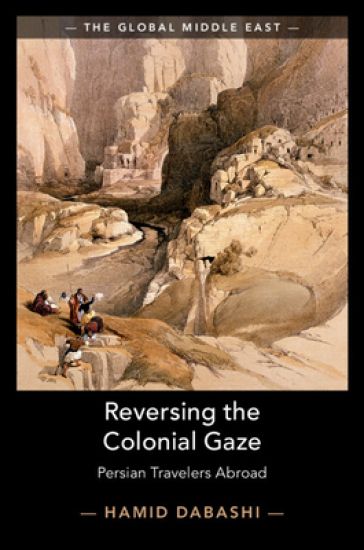
Reversing the Colonial Gaze

Reversing the Colonial Gaze

Hamid Dabashi

Cambridge University Press
2022
pokkari
Exploring the furthest reaches of the globe, Persian travelers from Iran and India travelled across Russian and Ottoman territories, to Asia, Africa, North and South America, Europe and beyond. Remapping the world through their travelogues, Reversing the Colonial Gaze offers a comprehensive and transformative analysis of the journeys of over a dozen of these nineteenth-century Persian travelers. By moving beyond the dominant Eurocentric perspectives on travel narratives, Hamid Dabashi works to reverse the colonial gaze which has thus far been cast upon these rich body of travelogues. His lyrical and engaging re-evaluation of these journeys, complimented by close-readings of seminal travelogues, challenges the systematic neglect of these narratives in scholarly literature. Opening up the entirety of these overlooked or abused travelogues, Dabashi reveals not a mere repetition of cliché accounts of Iranian or Muslim encounters with the West, but a path-breaking introduction to a constellation of revelatory travel narratives that re-imagine and reclaim the world beyond colonial borders.