Kirjojen hintavertailu. Mukana 12 390 323 kirjaa ja 12 kauppaa.

Kirjailija

Hamish P. D. Godfrey

Kirjat ja teokset yhdessä paikassa: 2 kirjaa, julkaisuja vuosilta 1995-2013, suosituimpien joukossa Family Support Programs and Rehabilitation. Vertaile teosten hintoja ja tarkista saatavuus suomalaisista kirjakaupoista.

2 kirjaa

Kirjojen julkaisuhaarukka 1995-2013.

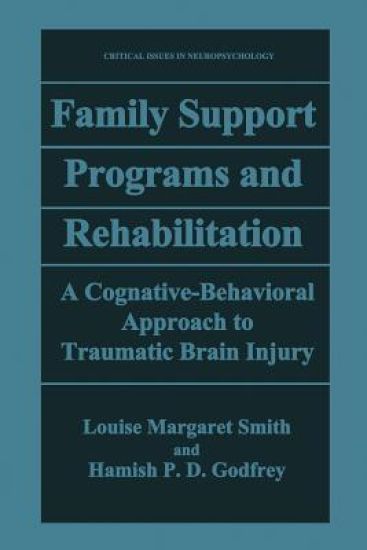
Family Support Programs and Rehabilitation

Family Support Programs and Rehabilitation

Louise Margaret Smith; Hamish P. D. Godfrey

Springer-Verlag New York Inc.
2013
nidottu
The permanent effects of traumatic brain injury (TBI) are not limited to the person who suffers the injury. People who care for the individual, particularly family members, suffer in various ways. Family members are often confused as to the behavioral and neuropsychological changes that they see in a brain-injured rela­ tive. They can become frustrated and angry when the individual does not return to premorbid levels of functioning. They can become tired and worn down from repeated problems in trying to manage the individual's difficulties while having only fragmented information regarding them. Drs. Smith and Godfrey have provided a useful service for family members by summarizing important neuropsychological changes associated with TBI and providing practical guidelines for coping with these problems. While the neuropsychological problems they describe are not completely understood, the authors provide a useful description of many of the neuro­ behavioral problems seen following TBI in young adults. They attempt to provide guidelines for family members that have practical utility in understanding and managing these patients. Theirs is a cognitive-behavioral approach that can have utility for this group of individuals. I applaud their efforts to provide something systematic and practical for family members.
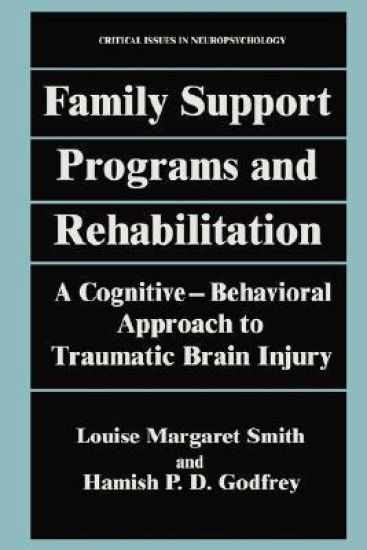
Family Support Programs and Rehabilitation

Family Support Programs and Rehabilitation

Louise Margaret Smith; Hamish P. D. Godfrey

Kluwer Academic/Plenum Publishers
1995
sidottu
The permanent effects of traumatic brain injury (TBI) are not limited to the person who suffers the injury. People who care for the individual, particularly family members, suffer in various ways. Family members are often confused as to the behavioral and neuropsychological changes that they see in a brain-injured rela­ tive. They can become frustrated and angry when the individual does not return to premorbid levels of functioning. They can become tired and worn down from repeated problems in trying to manage the individual's difficulties while having only fragmented information regarding them. Drs. Smith and Godfrey have provided a useful service for family members by summarizing important neuropsychological changes associated with TBI and providing practical guidelines for coping with these problems. While the neuropsychological problems they describe are not completely understood, the authors provide a useful description of many of the neuro­ behavioral problems seen following TBI in young adults. They attempt to provide guidelines for family members that have practical utility in understanding and managing these patients. Theirs is a cognitive-behavioral approach that can have utility for this group of individuals. I applaud their efforts to provide something systematic and practical for family members.