Kirjojen hintavertailu. Mukana 12 229 966 kirjaa ja 12 kauppaa.

Kirjailija

Hamza Walker

Kirjat ja teokset yhdessä paikassa: 12 kirjaa, julkaisuja vuosilta 1998-2025, suosituimpien joukossa Black is, Black Ain`t. Vertaile teosten hintoja ja tarkista saatavuus suomalaisista kirjakaupoista.

12 kirjaa

Kirjojen julkaisuhaarukka 1998-2025.

Black is, Black Ain`t

Black is, Black Ain`t

Huey Copeland; Darby English; Greg Foster–rice; Amy M. Mooney; Kimberly N. Pinder; Kimberly Pinder; Krista Thompson; Hamza Walker; Kenneth Warren

Renaissance Society at the University of Chicago
2013
sidottu
Taking its title from Ralph Ellison's Invisible Man, exhibition Black Is, Black Ain't (April 20 – June 8, 2008) explored a shift in the rhetoric of race from an earlier emphasis on inclusion to a present moment where racial identity is being simultaneously rejected and retained. Curated by the Renaissance Society's Associate Curator and Education Director Hamza Walker, the exhibition brought together works by twenty-seven black and non-black artists whose work collectively examines a moment where the cultural production of so-called "blackness" is concurrent with efforts to make race socially and politically irrelevant. The publication features essays by Huey Copeland, Darby English, Greg Foster-Rice, Amy M. Mooney, Kymberly N. Pinder, Krista Thompson, Hamza Walker, and Kenneth Warrren.

Hamza Walker

Hamza Walker

Hamza Walker

Renaissance Society at the University of Chicago
2025
sidottu
The collected exhibition essays of Hamza Walker, former director of education at the Renaissance Society. Hamza Walker was director of education at the Renaissance Society for twenty-one years, between 1994 and 2015. During that time, he wrote essays about almost every single exhibition, both those he curated and many others curated by Suzanne Ghez. These texts were published first in the Renaissance Society’s newsletters and then eventually on the exhibition posters, which were distributed far more widely. In the course of this workman-like writing in the service of the institution, Walker developed not only his distinctive personal writing style and a keen eye but also a theory of what museum education could be and do. In his writing, Walker draws on his art's historical knowledge but looks equally to current events (both minutely local and international), insisting on the mutual relevance and related nature of the two. In Walker’s own words, “If we’re going to live up to the idea that art is for everybody, it needs a set of wider reference points,” an emphasis that has arguably shaped the identity of the institution in turn. This book collects those essays together into a volume that celebrates Walker’s brilliant, joyful, and generous writing. It also serves as a lively record of two decades of the Renaissance Society’s exhibition programming and reflects the prevalent theories, issues, and fashions of the art world during that time, not to mention the events occurring in the wider world.
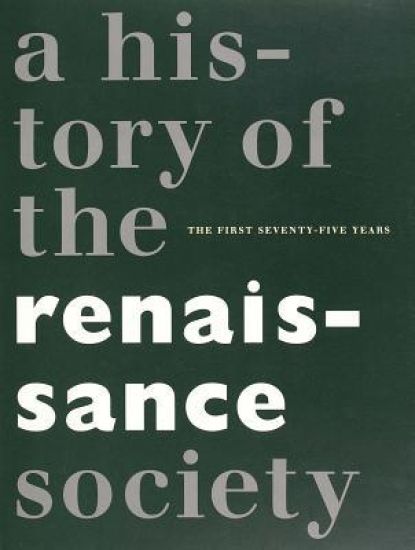
Centennial – A History of the Renaissance Society

Centennial – A History of the Renaissance Society

Susan M. Bielstein; Bruce Jenkins; Pamela M. Lee; Nina Möntmann; Liesl M. Olson; R.h. Quatman; Aoibheann Sweeney; Hamza Walker

Renaissance Society at the University of Chicago
2015
sidottu
This major publication considers the Renaissance Society’s first hundred years. The volume features contributions from Davarian L. Baldwin, Susan Bielstein, Bruce Jenkins, Pamela M. Lee, Nina Möntmann, Liesl Olson, R.H. Quaytman, Anne Rorimer, and Aoibheann Sweeney. It also includes an interview between Susanne Ghez, Solveig Øvstebø, and Hamza Walker, and a comprehensive timeline of the institution’s programming over 100 years.
Scott Short

Scott Short

Michelle Grabner; Hamza Walker

Renaissance Society at the University of Chicago
2010
nidottu
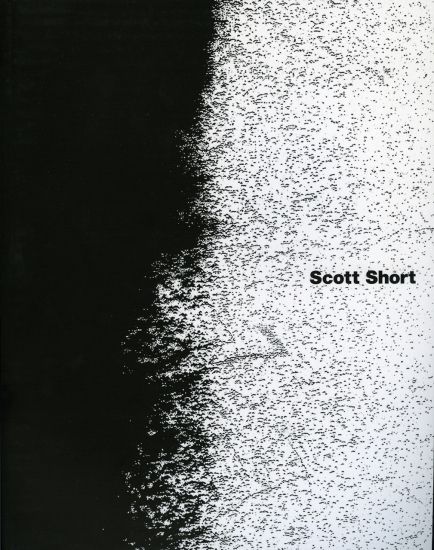
This catalogue accompanies the first solo museum exhibition of painter Scott Short. In Short's work notions of color and abstraction are boldly reinterpreted. His method of generating compositions is to make a black and white photocopy of a sheet of colored construction paper, and then makes a copy of a copy of a copy, until the result is hundreds of times removed from the original. Short then selects one of these many copies, enlarges it, and painstakingly copies it in paint on canvas. Despite its labor intensiveness, the procedural aspect of Short's paintings is subordinate to their effect. Visually, Short's paintings are Abstractions with a capital A. Once the photocopies have undergone the shift of scale and material that occurs when Short transcribes them as paintings, they become as a species of abstraction even Greenberg would acknowledge. The fact, however, that Short is dedicated to copying makes his painting the keepers of their own dialectic, in which roles become reversed. Although it is the photocopier that performs the creative role of abstracting, Short's mechanical manual labor allows the copy to become the original and the abstract to lay claim to being strictly representational. Michelle Grabner's essay explores the ideological intersections of copying, repetition, and manual dexterity in art practice. Hamza Walker's essay discusses how Short's practice nullifies the distinction between abstraction and figuration.
Helen Mirra – Sky–wreck

Helen Mirra – Sky–wreck

Jen Bervin; Ben Marcus; Hamza Walker

Renaissance Society at the University of Chicago
2002
nidottu
"Is a non-remote horizon always a concealment? If a portion of sky has been carved and set loose to rest upon land, is it the result of an illegal language spoken in the town?" Ben Marcus, from A Horizon Grammar A hybrid of artist's book and catalog, this unique publication, designed in collaboration with the artist, is divided into three separate books. One features photographs of Sky-wreck, Mirra's conceptually multi-layered, 2001 installation at the Renaissance Society, accompanied by an essay from Hamza Walker which explicates Sky-wreck'stangled mathematical, visual and poetic aspects, and how these interwoven forms of signification within the piece ultimately "question the ability for that which is unfathomable to assume representation." Another section contains reproductions of Mirra's earlier work, meditated on from a more personal standpoint by poet and friend of Mirra, Jen Bervin, with footnotes from Mirra herself. The third section is an intensely beautiful collaboration between Mirra and experimental fiction writer Ben Marcus, juxtaposing Mirra's exquisite working drawings for Sky-wreck with Marcus's surreal poetic response to them entitled A Horizon Grammar.
Catherine Sullivan – Five Economies (Big Hunt/ Little Hunt)

Catherine Sullivan – Five Economies (Big Hunt/ Little Hunt)

Russell Ferguson; Catherine Sullivan; Hamza Walker

Renaissance Society at the University of Chicago
2002
sidottu
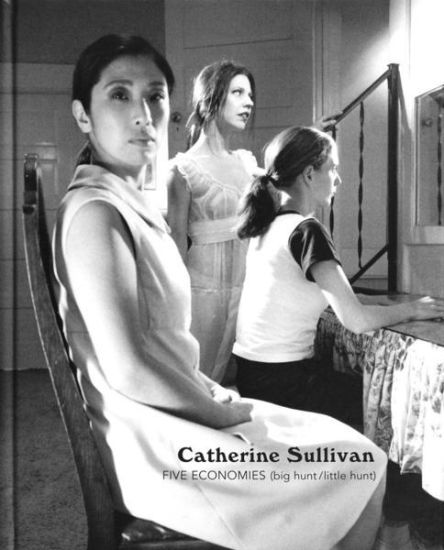
Los Angeles-based artist Catherine Sullivan creates radically hybrid works that combine performance, installation art, dance, traditional theatre and Hollywood cinema. Five Economies (big hunt), a five screen video installation, mixed and matched scenes and acting styles taken from The Miracle Worker, Marat/Sade, Persona, Tim and Whatever Happened To Baby Jane, as well as real life instances of virtuoso acting such as the story of Birdie Jo Hoaks, a 25 year old female who passed as a 12 year old boy in order to gain state social services. In black and white, and completely soundless, big hunt forces its audience to read drama and plot on the basis of the semiotics of gesture and mise-en-scene. This catalogue is illustrated by numerous video stills from Five Economies, and photographs of Gold Standard, the high-energy performance directed by Sullivan that took place at The Renaissance Society exhibition opening, which featured 6 pairs of actors all simultaneously acting the learning-to-eat-with-a-spoon scene between Helen and Annie from The Miracle Worker. Hamza Walker's essay discusses Five Economies' relationship to Modernist formalism and essentialism regarding media; Russell Ferguson and Sullivan talk about her working methods and the theories of acting and theatre that are the foundation of her practice. Published in conjunction with UCLA Hammer Museum
Dana Schutz

Dana Schutz

Hamza Walker; Dan Nadel; Lynne Tillman

PHAIDON PRESS LTD
2023
nidottu
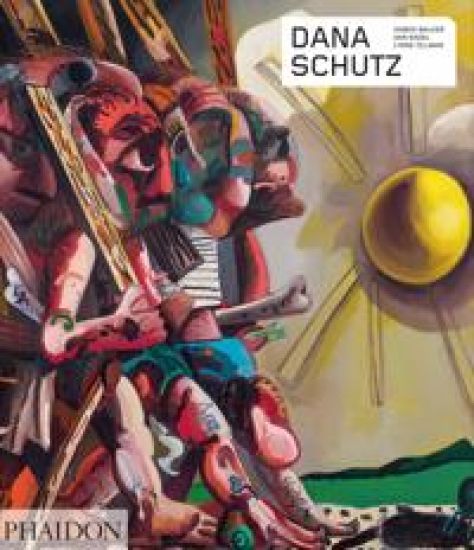
The first comprehensive monograph on one of today’s most innovative and successful painters - made in close collaboration with the artist Defined by bold brushstrokes, a dynamic use of color and imaginative compositions, the paintings of Dana Schutz are panoramic expanses that offer visions of humanity in all its complex facets. Her deeply subjective approach, untethered from realism, translates into images that seem to exist in a place that transcends time while celebrating the intrinsic qualities of her medium of choice with freedom and intelligence. As the artist herself stated, ‘I’m interested in painting as an affective place where the hierarchies of the world can be rearranged within the space of a painting.' This first comprehensive monograph on her work was created in close collaboration with the artist and features a number of never-before-seen paintings and drawings.
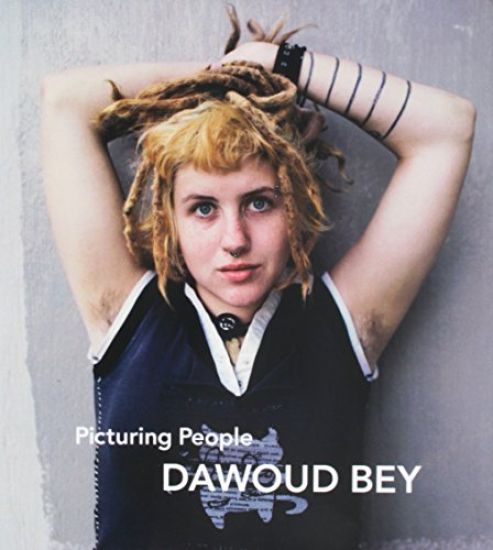
Dawoud Bey – Picturing People

Dawoud Bey – Picturing People

Julie Bernson; Arthur C. Danto; Hamza Walker; Dawoud Bey

Renaissance Society at the University of Chicago
2012
sidottu
Since 1975, photographer Dawoud Bey has developed a body of work distinguished for its commitment to portraiture as a means for reflecting social circumstances. Ranging from street encounters to studio portraits, Bey has investigated numerous photographic methods to find increased engagement with his subjects. The Renaissance Society exhibition this catalogue accompanies (May 13 – July 13, 2012) included selections from Bey's work spanning the thirty years from 1982 to the present. The exhibition offered a comprehensive look at Bey's oeuvre, and provided an opportunity to explore related subjects in art history and social discourse, such as the presentation of self, race, site, and the relationship between artist and subject. Includes essays by Arthur Danto and Julie Bernson as well as an interview between Bey and the Renaissance Society's Associate Curator and Director of Education, Hamza Walker.
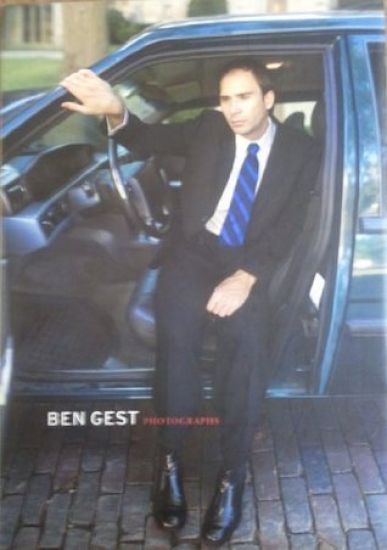
Ben Gest: Photographs

Ben Gest: Photographs

Catherine M. Sousloff; Hamza Walker

Renaissance Society at the University of Chicago
2007
sidottu
This catalogue contains full-page reproductions of the entire body of work presented in Gest's 2006 Renaissance Society exhibition. In this series, Gest captured his lone sitters at the chance interstices of deep reflection, when the self dwells in thought. The construction of the self as it happens before Gest's camera serves to question the construction of that self in reality. Gest uses digital photography to monumentalize photography's ability to capture such fleeting moments. Each photograph is seamlessly constructed from hundreds of digital images of the sitter and their surroundings. The photographs' initial straightforward appearance can only be maintained at a cursory glance. Gest's subtle and not so subtle exaggerations of proportion and perspective quickly betray the images as mannerist constructions. This makes Gest's work susceptible to the discourse of post-photography, which is dominated by the means rather than the ends of photography. Gest however is adamant that the means he employs should in no way be mistaken for their meaning, stating, "That the image is made and manipulated digitally is neither here nor there. Digital photography simply allows me to make the picture I want." In her essay, Catherine Sousloff, Professor of History of Art and Visual Culture at the University of California, Santa Cruz, analyzes Gest's work in relation to historical protraiture and the visual construction of modern subjectivities. The catalogue also includes the transcript of an interview between Ben Gest and Hamza Walker.
Moshekwa Langa

Moshekwa Langa

Elizabeth Janus; Hamza Walker

Renaissance Society at the University of Chicago
2002
nidottu
"Many things have happened to me, around me, and away from me. I do not remember them sequentially. I remember some of them. I am supposed to have a memory. I recollect certain things. But I have no memory, at least not in the conventional sense." - Moshekwa Langa This publication documents Langa's 1999 installations at The Renaissance Society and Centre d'Art Contemporain, Geneva. Langa, a native of South Africa currently residing in Amsterdam, works in no single medium; video, photography, drawing, painting and found-object installations are employed without hierarchy, his medium choices being more a matter of whatever is immediately at hand. His exhibitions evidence not only this freewheeling versatility, but also the artist's prolifigacy; he fills every available inch in the gallery spaces. This book's innovative design echoes the artist's collage aesthetic and spirit of generous excess. Like Langa's exhibitions, it is a visual candy store, so full of pleasures that it is hard to decide where to look first. In his catalogue essay, Walker interprets Langa's promiscuous mixing of media and his strategies of appropriation and fragmentation as a response to the conditions of belonging to a diaspora, reflecting the instability that comes from a radical change of place. Janus discusses Langa's efforts to come to terms with the established art world's expectation that an African artist deal with such political issues as post-colonialism, displacement and racism, and his resistance to that through the intensely personal and intimate character of his work. Published in conjunction with Centre d'Art Contemporain, Geneva.
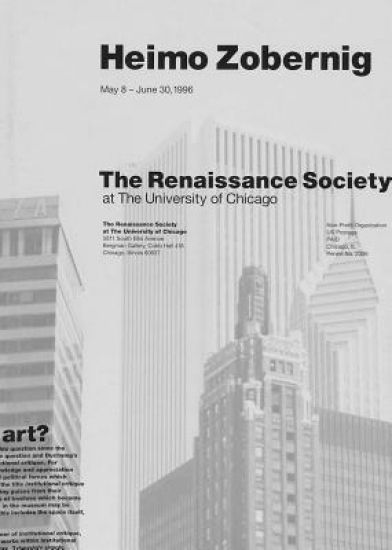
Heimo Zobernig

Heimo Zobernig

Hamza Walker

Renaissance Society at the University of Chicago
1998
nidottu
Austrian Heimo Zobernig's work intervenes, rearranges, recontextualizes, and down-right makes fun of the architecture of museum/gallery spaces so as to demystify its illusory potential and reinscribe it with self-referentiality. Zobernig is among several significant contemporary artists such as Michael Asher, General Idea, and Daniel Buren who have made it their mission to critique sites of modern art. In Zobernig's 1996 installation, the gallery walls from the Society's preceding exhibition were laid flat on the floor-a neat-handed figure/ground reversal turning support into sculpture. In another provocative turn, Zobernig brought the outside in to this altered gallery space via video - he had himself filmed cavorting arond the Renaissance Society hallway naked in front of walls that were painted video back-drop blue; this image was then super-imposed on footage shot while driving around Chicago. This informative and engaging book, designed by Zobernig, serves as a valuable pictorial document, and an insightful critical analysis of this important work. Walker's essay speaks to the challenge Zobernig's art poses for art history and the implications of that challenge for the future of art. In addition, the catalog features a transcript of the panel discussion: Planned Obsolescence, in which a group of critics, curators and architectural historians gathered to discuss how Zobernig's practice differs from, or further informs, practices that have made an art out of calling for an end of art.