Kirjojen hintavertailu. Mukana 12 390 323 kirjaa ja 12 kauppaa.

Kirjailija

Hannah Arendt

Kirjat ja teokset yhdessä paikassa: 131 kirjaa, julkaisuja vuosilta 1968-2026, suosituimpien joukossa Vita activa. Vertaile teosten hintoja ja tarkista saatavuus suomalaisista kirjakaupoista.

131 kirjaa

Kirjojen julkaisuhaarukka 1968-2026.

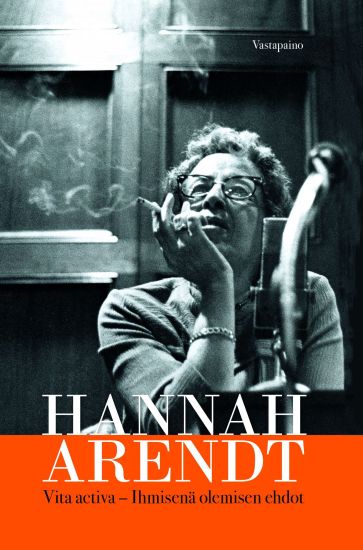
Vita activa

Vita activa

Hannah Arendt

VASTAPAINO
2025
nidottu
Hannah Arendt etsii "Vita activassa" (1958) filosofista tarkastelutapaa, joka tekisi oikeutta ihmiselämän erikoislaadulle. Hän ottaa etäisyyttä Platonista lähtevään ajatteluun, jossa filosofia eristäytyy omaan rauhaansa ja väheksyy ihmisten toimintaa, vita activaa. Antiikin maailma esikuvanaan Arendt nostaa keskeiseksi toiminnan alueeksi politiikan.Hänelle politiikka muodostaa julkisen areenan, jolla inhimillinen moninaisuus tulee esiin ja jalostuu vapaaksi toiminnaksi. Teos on intohimoinen poliittisen yhteisön ja elämäntavan puolustus suhteessasen autonomiaa uhkaavaan sosiaaliseen alueeseen ja sen ongelmiin. Tämä runsaasti keskustelua herättänyt puheenvuoro on Arendtin klassikoksi kohonnut filosofinen pääteos.Hannah Arendt (1906-1975) oli saksalaissyntyinen politiikan teoreetikko. Vuonna 1933 hän pakeni Saksasta Ranskaan ja vuonna 1941 Yhdysvaltoihin, missä hän toimi myöhemmin professorina.Hänen muita keskeisiä teoksiaan on "Totalitarismin synty" (1951, suomeksi 2013).
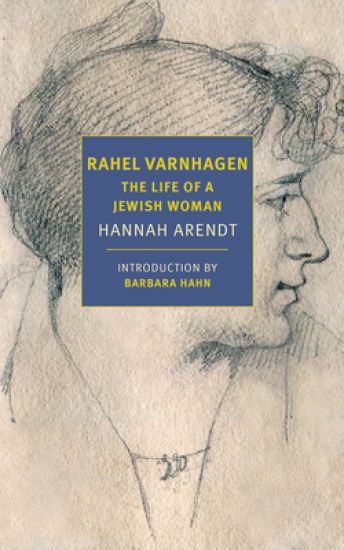
Rahel Varnhagen

Rahel Varnhagen

Hannah Arendt; Barbara Hahn

New York Review Books
2022
nidottu
A biography of a Jewish woman, a writer who hosted a literary and political salon in late eighteenth- and early nineteenth-century Germany, written by one of the twentieth century's most prominent intellectuals, Hannah Arendt. Rahel Varnhagen: The Life of a Jewish Woman was Hannah Arendt's first book, largely completed when she went into exile from Germany in 1933, though it would not be published until the 1950s. It is the biography of a remarkable, complicated, troubled, passionate woman, an important figure in German romanticism, the person who in a sense founded the Goethe cult that would become central to German cultural life in the nineteenth century, as well as someone who confronted with unusual determination and bore the burden of being both a woman in a man's world and an assimilated Jew in Germany. Rahel Levin Varnhagen was, Arendt writes, "neither beautiful nor attractive. . . and possessed no talents with which to employ her extraordinary intelligence and passionate originality." Arendt sets out to tell the story of Rahel's life as Rahel might have told it and, in doing so, to reveal the way in which intellectual and social assimilation works out in one person's destiny. On her deathbed Rahel is reported to have said, "The thing which all my life seemed to me the greatest shame, which was the misery and misfortune of my life--having been born a Jewess--this I should on no account now wish to have missed." Only because she had remained both a Jew and a pariah, Arendt observes, "did she find a place in the history of European humanity."
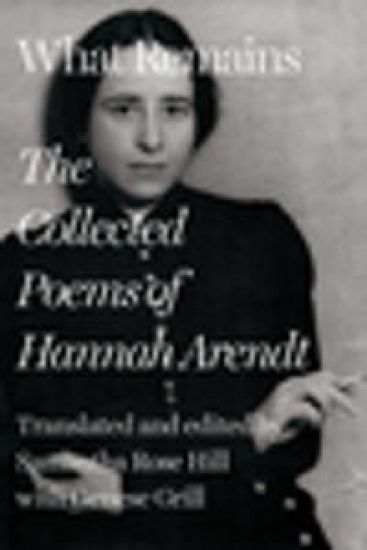
What Remains

What Remains

Hannah Arendt

W W NORTON CO LTD
2026
nidottu
Internationally renowned as one of the twentieth century’s foremost public intellectuals, Hannah Arendt was also intensely private. Though she often acknowledged that the language of poetry—especially that of Dickinson, Goethe, and Lowell—informed her work, only a few people knew that Arendt herself wrote poems. In fact, between 1923 and 1961, Arendt wrote seventy-four poems, many of them signposts in an otherwise unwritten autobiography. For nearly forty years after her death, these poems remained hidden among the archives of the Library of Congress, until 2011, when they were rediscovered by scholar and translator Samantha Rose Hill. Now, for the first time in English, Hill and Genese Grill present Arendt’s poems in chronological order, taking us from the zenith of the Weimar Republic to the Cold War, and from Marburg, Germany, to New York’s Upper West Side. Throughout, Arendt uses poetry to mark moments of joy, love, loss, and reflection. In “W. B.,” written in 1942, she remembers Walter Benjamin, who died near the French-Spanish border while attempting to flee the Nazis: “Gentle whispering melodies / Sound from the darkness. / We listen so we can let go.” So, too, she reflects on mutability and transience in 1946: “I know that the houses have fallen. / We entered the world in them, wonderfully sure, that they / were more durable than ourselves.” She tries to understand her place in the world: “Ironically foolish, / I’ve forgotten nothing, / I know the emptiness, / I know the burden, / I dance, I dance / In ironic splendor.” A gift to all readers of Arendt, this stunning, dual-language edition provides an unparalleled view into the inner sanctum of one of our most original thinkers.
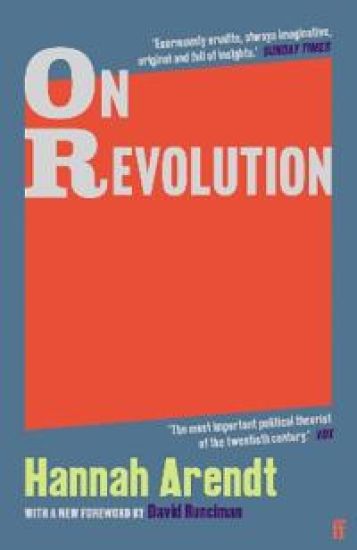
On Revolution

On Revolution

Hannah Arendt

FABER FABER
2026
nidottu
On Revolution is the great political thinker Hannah Arendt's classic exploration of a phenomenon that has radically reshaped the world. Exploring the eighteenth-century rebellions in America and France through to the explosive political upheavals of the twentieth-century, On Revolution is essential reading for anyone seeking to decipher the forces that have shaped our tumultuous age. This edition includes a foreword by David Runciman. 'More than any thinker it was Arendt who identified how movements of ideas, racial theories, people and methods . . . ultimately disfigured the twentieth century.' David Olusoga 'Enormously erudite, always imaginative, original and full of insights.' Sunday Times
Om mänskligheten i dystra tider : tankar om Lessing

Om mänskligheten i dystra tider : tankar om Lessing

Hannah Arendt; Anders Burman

Bokförlaget Faethon
2025
sidottu
När Hannah Arendt (1906–1975) mottog Lessingpriset 1959 höll hon ett tal som uppmärksammade Lessings tänkande utifrån upplysningens ideal om tolerans och humanism. Men hon kritiserade också dess samtida otillräcklighet utifrån andra världskrigets våld. Här presenteras talet i svensk översättning av Viktor Brylla och Charlotta Seiler Brylla. Idéhistorikern Anders Burman har skrivit ett efterord.
Våra ögon, vår värld : samlade dikter

Våra ögon, vår värld : samlade dikter

Hannah Arendt; Tora Lane; Marcia Sá Cavalcante Schuback

Bokförlaget Faethon
2025
sidottu
Hannah Arendt (1906–1975) är främst känd som filosof och samhällsteoretiker, men hon skrev under hela sitt liv också poesi. Här presenteras hennes samlade dikter mellan åren 1923 och 1961. De är översätta av Tora Lane och Marcia Sá Cavalcante Schuback.
Sobre Palestina / On Palestine
Una valiosa e in dita aportaci n de Hannah Arendt al conflicto entre Israel y Palestina. En 1944, la corriente sionista europea estaba a punto de lograr el objetivo de fundar su propio Estado en territorio palestino. Fueron muchos los intelectuales que participaron de este planteamiento, entre ellos Hannah Arendt, quien elabor un breve estudio acerca de la viabilidad del proyecto, posicion ndose a favor de la creaci n del Estado de Israel, aunque con ciertas reticencias: este asentamiento no deb a realizarse sin establecer las condiciones con claridad, debido al peligro de desembocar en una convivencia truncada y hostil. Advirti , adem s, de que Estados Unidos podr a aprovecharse de la situaci n para apropiarse del petr leo de la regi n. Sobre Palestina alberga una funesta premonici n que hab a permanecido in dita hasta hoy. Tanto en el pr logo como en el ep logo, el fil sofo Thomas Meyer da cuenta del contexto del manuscrito de la pensadora jud a y del porqu de que nunca se publicara, am n de las presiones recibidas por parte de los comit s de apoyo sionista. En este volumen tambi n se incorpora el memor ndum titulado "El problema de los refugiados palestinos", redactado por varios autores en 1958 -entre los que figura, a disgusto de ella, Hannah Arendt- y publicado por el Institute for Mediterranean Affairs, un estudio en forma de esclarecedor cat logo de cuestiones acerca del conflicto palestino, redactado diez a os despu s de que el Estado de Israel se hiciera realidad, del modo en que Arendt hab a temido y pronosticado. ENGLISH DESCRIPTION A valuable and unpublished contribution by Hannah Arendt to the Israeli-Palestinian conflict. In 1944, the European Zionist current was about to achieve the objective of founding its own State in Palestinian territory. Many intellectuals participated in its planning, among them Hannah Arendt, who elaborated a brief study about the viability of the project, leaning in favor of creating the State of Israel, though with certain reservations: this settlement should not be built without establishing clear conditions, due to the dangers that it could disembogue in a curtailed and hostile interaction. She also warned that the United States might try to take advantage of the situation to get hold of the region's oil. On Palestine harbors a fateful premonition that had been kept unpublished till today. In both the prologue and the epilogue, philosopher Thomas Meyer gives account of the context of the manuscript by this Jewish thinker and why it was never published, aside from the pressure by Zionist support committees. This volume also includes the memorandum entitled "The Problem of Palestinian Refugees," written by several authors in 1958--featuring, to her disgust, Hannah Arendt--and published by the Institute for Mediterranean Affairs, a study in the form of an enlightening catalogue of issues regarding the Palestinian conflict, written ten years after the State of Israel became a reality, in the way Arendt had feared and predicted.
Inimese olukord

Inimese olukord

Hannah Arendt

Tartu ülikooli kirjastus
2025
nidottu
"Inimese olukord" on Hannah Arendti vahest kõige kaugelenägelikum ja tähtsam raamat, mis pakub üldise tausta tema teistes teostes esitatud konkreetsematele mõtetele ühiskonnast ja vägivallast, vabadusest ja totalitaarsest türanniast. Jättes kõrvale kontemplatiivse vaimuelu valla, analüüsib Arendt siin nn aktiivse elu, vita activa tegevusi, jagades need kolmeks: töötamine ehk töörühmamine, mis kannab hoolt inimese igapäevaste kehaliste vajaduste rahuldamise eest kiireks tarbimiseks mõeldud saaduste tootmisega; valmistamine, mis loob püsivama väärtusega kasutusesemeid; ning tegutsemine ehk poliitiline tegevus - suurte sõnade ja tegude tegemine, mida antiikajal peeti ainsana avalikku valdkonda sobilikuks tegevuseks. Vaadeldes neid tegevuslaade suhetes privaatse ja avaliku sfääriga ning eri ühiskondade suhtumist nendesse läbi ajaloo, näitab Arendt, kuidas tõuseb esile sotsiaalsuse mõiste ja variseb kokku avalikkuse valdkond, kuidas tähendusliku tegevuse kadu põhjustab inimese enesest võõrandumist ning kuidas tehniline progress viib masstootmise tekkeni, kus varem eesmärgipärane ja mõtestatud valmistamisprotsess lagundatakse üksikoperatsioonideks ja omandab töörühmamise iseloomu, muundades ühiskonna raiskamismajanduseks - "töörühmamise ühiskonnaks, millel ei jätku küllalt tühja tööd, et rahul püsida". Arendti 20. sajandi keskpaigas esitatud mõttekäigud on osutunud paljuski prohvetlikuks ja annavad rikkalikult mõtteainet ka tänases maailmas.
Kærlighedsbegrebet hos Augustin

Kærlighedsbegrebet hos Augustin

Hannah Arendt

Forlaget Klim
2025
nidottu
Kærlighedsbegrebet hos Augustin - forsøg på en filosofisk fortolkning er titlen på Hannah Arendts doktorafhandling fra 1929, som aldrig tidligere har været oversat til dansk og som udkom på engelsk så sent som i 1996.Inspireret af sine to læremestre Martin Heidegger og Karl Jaspers tager Arendt for første gang livtag med de tre forskellige kærlighedsbegreber hos kirkefaderen Augustin, som senere skulle komme til at optræde gennem hele forfatterskabet.Især Augustins amor mundi, kærligheden til verden, blev meget central for Arendt, men også natalitetsbegrebet, menneskets fødthed, blev hos hende et kernebegreb om menneskets eksistens, som stammer fra læsningen af Augustin.Bogen er forsynet med efterskrift ved Niels Grønkjær.
Hannah Arendt: The Origins of Totalitarianism Expanded Edition (Loa #389)
A deluxe expanded edition of the masterpiece of political philosophy that transformed how the world thinks about fascism and authoritarianism Includes two fascinating chapters that were later cut and are available in no other edition In 1951, a monumental book by a relatively unknown German-Jewish migr addressed the terrifying new mode of political organization underlying the twin horrors of Stalinism and Nazism. Herself a refugee from Nazi persecution, Hannah Arendt sought, from her exile in New York City, to answer the unfathomable questions raised by the Soviet gulag and the Holocaust: How could there be such barbarism in the midst of civilization? How had governments exerted such absolute control over citizens, terrorizing them and enlisting them to commit atrocities on their behalf? Arendt's historical and cultural analyses extend to a thorough examination of nineteenth-century antisemitism in Europe, including a trenchant account of the Dreyfus Affair in France and brilliant insights into imperialism, racism, and their role in totalitarianism's rise in the 1920s and 1930s. Arendt contends that totalitarianism, as a political system, is now embedded in contemporary life and is, as she would later remark, "the central event of our world." Her clear-eyed warning that totalitarianism is not merely a historical episode but is rather a permanent feature of modernity and beyond--a danger never to be fully eradicated, and a continual temptation for anti-democratic demagogues--makes Arendt, a half-century after her death, a preeminent thinker and political philosopher for the twenty-first century. The Library of America edition of this indispensable and influential work, based on the final version she revised in her lifetime, also restores to print Arendt's "Concluding Remarks" to the 1951 first American edition and a chapter on the Soviet suppression of the Hungarian revolt of 1956, both of which were cut from later editions. The first annotated edition of Origins, the volume contains concise and thorough glosses on Arendt's many historical and cultural references, and its Chronology provides a detailed portrait of her remarkable life.
What Remains

What Remains

Hannah Arendt

WW NORTON CO
2025
sidottu
Internationally renowned as one of the twentieth century’s foremost public intellectuals, Hannah Arendt was also intensely private. Though she often acknowledged that the language of poetry—especially that of Dickinson, Goethe and Lowell—informed her work, only a few people knew that Arendt herself wrote poems. In fact, between 1923 and 1961, Arendt wrote seventy-four poems, many of them signposts in an otherwise unwritten autobiography. For nearly forty years after her death, these poems remained hidden among the archives of the Library of Congress, until 2011, when they were rediscovered by scholar and translator Samantha Rose Hill. Now, for the first time in English, Hill and Genese Grill present Arendt’s poems in chronological order, taking us from the zenith of the Weimar Republic to the Cold War, and from Marburg, Germany, to New York’s Upper West Side. Throughout, Arendt uses poetry to mark moments of joy, love, loss and reflection. In “W. B.,” written in 1942, she remembers Walter Benjamin, who died near the French-Spanish border while attempting to flee the Nazis: “Gentle whispering melodies / Sound from the darkness. / We listen so we can let go.” So, too, she reflects on mutability and transience in 1946: “I know that the houses have fallen. / We entered the world in them, wonderfully sure, that they / were more durable than ourselves.” She tries to understand her place in the world: “Ironically foolish, / I’ve forgotten nothing, / I know the emptiness, / I know the burden, / I dance, I dance / In ironic splendor.” A gift to all readers of Arendt, this stunning, dual-language edition provides an unparalleled view into the inner sanctum of one of our most original thinkers.
V samyj temnyj chas. Kak rozhdaetsja zhestokost?

V samyj temnyj chas. Kak rozhdaetsja zhestokost?

Hannah Arendt; Erich Fromm

Algoritm
2025
sidottu
- I vy dejstvitelno ne znali, chto proiskhodilo v Aushvitse? Ne zamechali nichego? - Net, my nichego ne znali, Vasha chest. My dazhe i ne smotreli v tu storonu. - Tak... znachit, vy znali, v kakuju storonu ne stoit smotret. Samymi strashnymi okhrannikami v kontslagere byli te, kto ne vynosil chelovecheskikh krikov. Oni zlilis iz-za togo, chto uzniki ne ponimajut, kakaja tjazhelaja rabota u nadziratelej i stremjatsja lish uslozhnit neizbezhnoe. Takikh bylo bolshinstvo: uchenye, aktery, uchitelja i obychnye ljudi. Kak veli sebja oni v samyj temnyj chas v istorii Germanii? Kak rozhdalsja demon fashizma i kak rabotaet logika genotsida? Na etot vopros otvechajut v svoikh ocherkakh dva vydajuschikhsja myslitelja, psikhologa i sotsiologa XX veka, na chju dolju vypala strashnaja uchast bezmolvnykh svidetelej samoj uzhasnoj tragedii XX veka.
On Civil Disobedience

On Civil Disobedience

Hannah Arendt; Henry David Thoreau; Roger Berkowitz

THE LIBRARY OF AMERICA
2024
nidottu
Together for the first time, classic essays on how and when to disobey the government from two of the greatest thinkers in our literature As we grapple with how to respond to emerging threats against democracy, Library of America brings together for the first time two seminal essays about the duties of citizenship and the imperatives of conscience. In "Resistance to Civil Government" (1849), Henry David Thoreau recounts the story of a night he spent in jail for refusing to pay poll taxes, which he believed supported the Mexican American War and the expansion of slavery. His larger aim was to articulate a view of individual conscience as a force in American politics. No writer has made a more persuasive case for obedience to a "higher law." In "Civil Disobedience" (1970), Hannah Arendt offers a stern rebuttal to Thoreau. For Arendt, Thoreau stands in willful opposition to the public and collective spirit that defines civil disobedience. Only through positive collective action and the promises we make to each other in a civil society can meaningful change occur. This deluxe paperback features an introduction by Roger Berkowitz, Founder and Academic Director of the Hannah Arendt Center for Politics and Humanities and Professor of Politics, Philosophy, and Human Rights at Bard College, who reflects on the tradition of civil disobedience and the future of American politics.
Ljudi v temnye vremena

Ljudi v temnye vremena

Hannah Arendt

Ad Marginem
2024
nidottu
Sbornik esse izvestnoj sotsialnoj myslitelnitsy, filosofa i politologa Khanny Arendt (1906-1975) o ee sovremennikakh, kotorym vypalo zhit v peremenchivom KHKh veke. Ego geroi - pisateli, filosofy, religioznye i politicheskie dejateli - otstaivali idealy gumanizma i tsennost istiny, neodnoznachno vosprinimajuschiesja v temnye vremena.