Kirjailija
Hannu Salmi
Kirjat ja teokset yhdessä paikassa: 18 kirjaa, julkaisuja vuosilta 2002-2025, suosituimpien joukossa Frans Leijon. Vertaile teosten hintoja ja tarkista saatavuus suomalaisista kirjakaupoista.
18 kirjaa
Kirjojen julkaisuhaarukka 2002-2025.
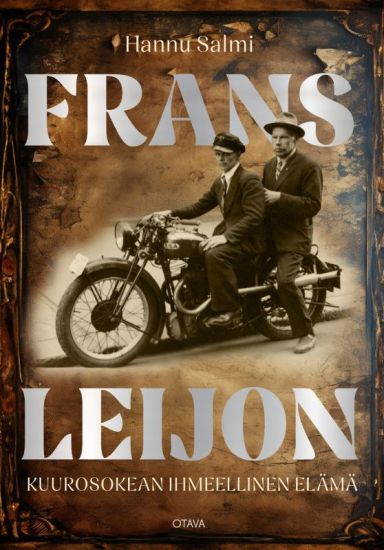
Palkitun tietokirjailijan koskettava tositarina kuurosokeasta isosedästään. Frans Leijon (1878-1947) menetti jo pienenä näkönsä ja kuulonsa. Poika unohti oppimansa sanat ja juoksi nelinkontin villilapsena, johon kukaan ei saanut yhteyttä.Kuin ihmeen kaupalla Frans pääsi Pietarsaaren kuurojenkouluun, jossa hän oppi viittomakieltä ja pistekirjoitusta. Hänestä tuli taitava käsityöläinen ja kuurojen yhteisön arvostettu jäsen. Hän osoitti rohkeudellaan, miten vastoinkäymiset voi voittaa.Hannu Salmi löysi Fransin tutkiessaan sukunsa historiaa. Rippikirjassa luki: ”Kuuromykkä ja sokea. Hyljätty.” Salmen teos Tunteiden palo oli Vuoden historiateos 2022 ja Finlandia-palkintoehdokas.
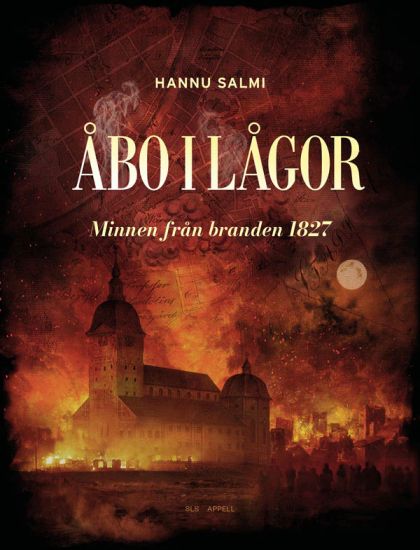
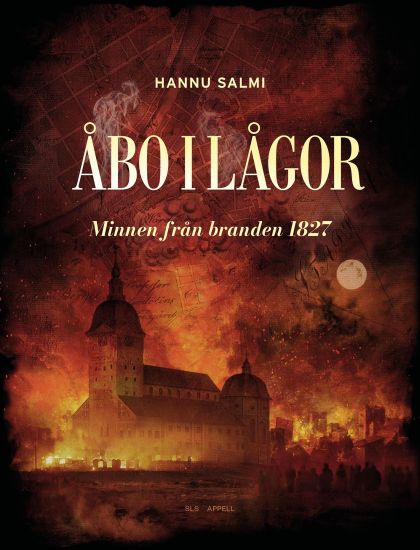
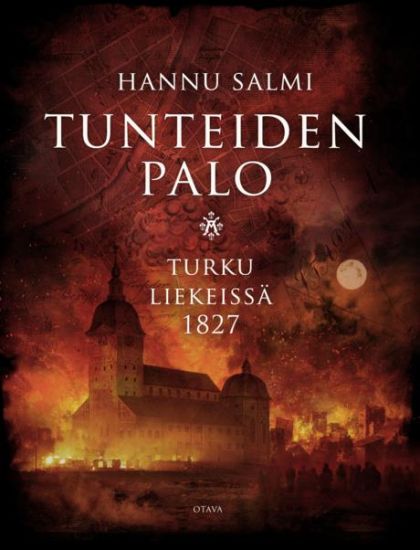
»Åbo existerar icke mer«, så rapporterade tidningarna – branden 1827 var en internationell nyhet. Tre fjärdedelar av staden förstördes och 11 000 människor blev hemlösa. Några nyckelpersoners öden vittnar om desperation och sorg, men även om värme och generositet. Ges ut i samarbete med Svenska litteratursällskapet i Finland.
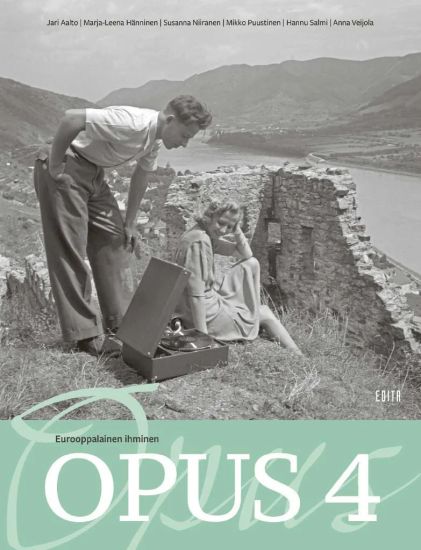
Opus 4
Jari Aalto; Marja-Leena Hänninen; Susanna Niiranen; Mikko Puustinen; Hannu Salmi; Anna Veijola
Sanoma Pro
2025
nidottu
Kirja käsittelee länsimaisen yhteiskunnallisen ajattelun, aatteiden, ihmisoikeuksien sekä kulttuurin ja taiteen kehittymistä antiikista nykypäivään. Taiteen, tieteen ja aatehistorian ilmiöitä tutkitaan oman aikansa eurooppalaisen maailmankuvan ilmentäjinä.Kirja on syntynyt opettajien ja historiantutkijoiden yhteistyönä. Opus 4 sisältää runsaasti erilaisia historiallista ajattelua kehittäviä lähdetehtäviä ja perehdyttää opiskelijan huolella lähteiden tulkintaan.Opus-sarja kehittää monipuolisesti opiskelijan historiallisen ajattelun taitoja. Sarjan aineistot ovat saatavilla sekä painettuina kirjoina että digitaalisina oppimateriaaleina.
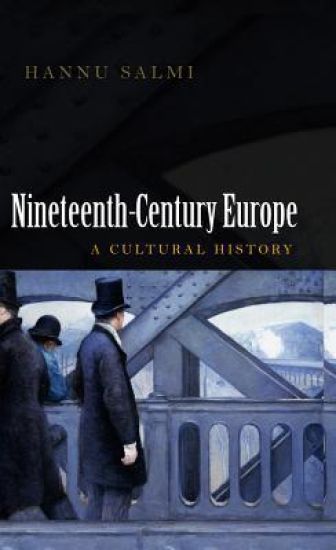
Nineteenth-Century Europe offers a much-needed concise and fresh look at European culture between the Great Revolution in France and the First World War. It encompasses all major themes of the period, from the rising nationalism of the early nineteenth century to the pessimistic views of fin de siècle. It is a lucid, fluent presentation that appeals to both students of history and culture and the general audience interested in European cultural history. The book attempts to see the culture of the nineteenth century in broad terms, integrating everyday ways of life into the story as mental, material and social practices. It also highlights ways of thinking, mentalities and emotions in order to construct a picture of this period of another kind, that goes beyond a story of “isms” or intellectual and artistic movements. Although the nineteenth century has often been described as a century of rising factory pipes and grey industrial cities, as a cradle of modern culture, the era has many faces. This book pays special attention to the experiences of contemporaries, from the fear for steaming engines to the longing for the pre-industrial past, from the idle calmness of bourgeois life to the awakening consumerism of the department stores, from curious exoticism to increasing xenophobia, from optimistic visions of future to the expectations of an approaching end. The century that is only a few generations away from us is strange and familiar at the same time – a bygone world that has in many ways influenced our present day world.
Åbo i lågor är en sann berättelse om den historiska storbranden i Åbo den 4 september 1827. Hur var det att plötsligt befinna sig mitt i ett framrusande eldhav? Och vakna upp till en stad i spillror? Hannu Salmi bygger upp sin bok kring stadsbornas känslor och upplevelser före, under och efter branden. Genom några nyckelpersoner skildrar han desperation, sorg och girighet men också empati och generositet. Salmi reflekterar särskilt över frågan om skuld och den ryktesspridning som tog fart efter branden. Till grund för boken ligger brev, dagböcker, memoarer, kartor, tidningar, tidskrifter, skillingtryck, bilder och dikter.Branden i Åbo förstörde tre fjärdedelar av stadens byggnader, också Åbo Akademi och akademins värdefulla bibliotek, och lämnade 11 000 mänskor hemlösa. Brandkatastrofen blev en av de första nyheterna från Finland som fick global spridning och väckte uppmärksamhet och medlidande runt om i världen.Minnet av Åbo brand har levt vidare genom personliga berättelser om de drabbades öden, och så småningom blivit ett kollektivt, kulturellt minne.
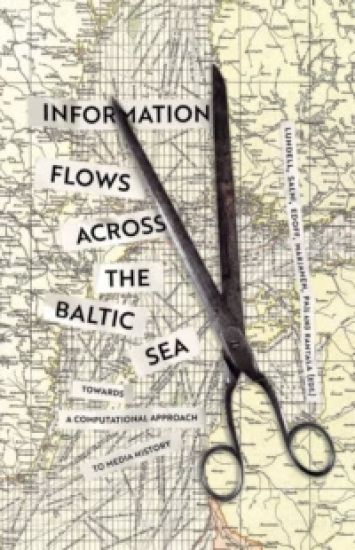
Information flows across the Baltic
Patrik Lundell; Hannu Salmi; Erik Edoff; Jani Marjanen; Petri Paju
Lunds universitet, Media-Tryck
2023
kartonkisidos
Today shared media content and virality represent significant phenomena, but they are not as unique to our current society as commonly assumed. More than a century before the internet, information circulated within a network of newspapers that borrowed texts from both nearby and distant sources. From the late eighteenth century to the early twentieth century, newspapers gradually gained greater significance as a technological medium. However, a fundamental yet often overlooked characteristic of these newspapers was their cut-and-paste nature, which facilitated the widespread dissemination of text items in time and space. Employing a computer-assisted methodology to identify chains of text reuse in over 7.5 million newspaper pages derived from 1629 distinct newspaper titles, Information Flows across the Baltic Sea introduces a comprehensive database of reused texts. It examines the types of content that traversed transnationally and those that remained local. By combining a digitally enhanced bird’s-eye view with meticulous close readings, the book widens our understanding of the cultural relations across the Baltic Sea.
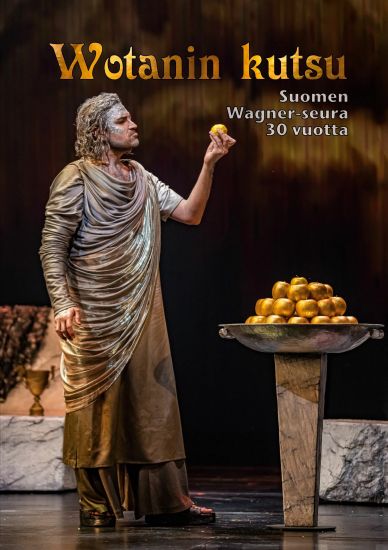
Wotanin kutsu on kaksiosainen Suomen Wagner-seura ry.:n 30 vuotis-juhlakirja.Ensimmäinen osa koostuu Hannu Salmen (FT) kirjoittamasta seuran historiikistä v 1991.- 2022 , liitteineen. Liitteistä selviää yksityiskohtaisesti seuran järjestämät jäsenmatkat kotimaahan ja ulkomaille. Näitä viime mainittuja on ehtinyt kertyä peräti 58 jäsenmatkaa. Sen lisäksi on jäsenille vuosittain välitetty lippuja Bayreuthin Wagner-juhlille Saksaan. Seuran järjestämät 30 vuoden jäsentilaisuudet on lueteltu 27-sivuisessa liitteessa 3. Kirjan toinen osa sivut 145-496 koostuu valituista artikkeleista, jotka on 30 vuoden ajan julkaistu seuran jäsenjulkaisussa Wagneriaani numerot 1-55. Liitteenä on kaikkien Wagneriaanien sisällysluettelo kansikuvineen.
Yves Montand in the USSR
Mila Oiva; Hannu Salmi; Bruce Johnson
Springer Nature Switzerland AG
2022
nidottu
This volume is the first book-length account of Yves Montand’s controversial tour of the Soviet Union at the turn of the years 1956/57. It traces the mixed messages of this internationally visible act of cultural diplomacy in the middle of the turbulent Cold War. It also provides an account of the celebrated French singer-actor’s controversial career, his dedication to music and to peace activism, as well as his widespread fandom in the USSR. The book describes the political background for the events of the year 1956, including the changing Soviet atmosphere after Stalin’s death, portrays the rising transnational stardom of Montand in the 1940s and 1950s, and explores the controversies aroused by his plan to visit Moscow after the Hungarian Uprising. The book pays particular attention to Montand’s reception in the USSR and his concert performances, drawing on unique archival material and oral history interviews, and analyses the documentary Yves Montand Sings (1957) released immediately after his visit.
Yves Montand in the USSR
Mila Oiva; Hannu Salmi; Bruce Johnson
Springer Nature Switzerland AG
2021
sidottu
This volume is the first book-length account of Yves Montand’s controversial tour of the Soviet Union at the turn of the years 1956/57. It traces the mixed messages of this internationally visible act of cultural diplomacy in the middle of the turbulent Cold War. It also provides an account of the celebrated French singer-actor’s controversial career, his dedication to music and to peace activism, as well as his widespread fandom in the USSR. The book describes the political background for the events of the year 1956, including the changing Soviet atmosphere after Stalin’s death, portrays the rising transnational stardom of Montand in the 1940s and 1950s, and explores the controversies aroused by his plan to visit Moscow after the Hungarian Uprising. The book pays particular attention to Montand’s reception in the USSR and his concert performances, drawing on unique archival material and oral history interviews, and analyses the documentary Yves Montand Sings (1957) released immediately after his visit.
Richard Wagner (1813–1883) has often been regarded as a symbol of "Germanness." Despite this view, few studies have been undertaken regarding his nationalistic thinking. Imagined Germany focuses on Wagner’s idea of Deutschtum, especially during the unification of Germany, 1864–1871. Salmi discusses how Wagner defined Germanness, what stereotypes, ideas, and sentiments he attached to it, and what kind of state could realize Wagner’s national ideals.
Wagner and Wagnerism in Nineteenth-Century Sweden, Finland, and the Baltic Provinces
Hannu Salmi
University of Rochester Press
2005
sidottu
An exploration of how Wagner's operas were performed and received in the theaters of Stockholm and other cities of the region. Wagner and Wagnerism in Nineteenth-Century Sweden, Finland, and the Baltic Provinces explores how Wagner's operas were performed and received in the theaters of Stockholm and other cities of the region and how excerpts fromthem were arranged for amateur performances in private homes. Wagner's music and his polemical writings aroused lively discussion around the Baltic, as they did everywhere else in the Western world. Thanks to detailed accounts innewspapers, journals, contemporary literature, and writings of music historians [including some by Sibelius's teacher and friend Martin Wegelius], we are privileged, in Hannu Salmi's book, to "listen in" on these debates, which often deal with crucial questions of national self-determination and of cultural independence from Europe. This text reveals the surprising extent to which music lovers and operagoers from the various countries, many of them women, traveled to Wagner's Bayreuth Festival to attend performances. It also reconstructs the imaginative and patient efforts by which confirmed Wagnerians established Wagner societies in order to promote an understanding of the composer's work. Each country, each city, each local composer and conductor shows a distinctive approach -- welcoming, resistant, or some of each -- to the challenge of Wagner. In the process, we see music history and cultural history in the making. Hannu Salmi is Professor of Cultural History at the University of Turku, author of Imagined Germany: Richard Wagner's National Utopia, and an editorial board member of wagnerspectrum.
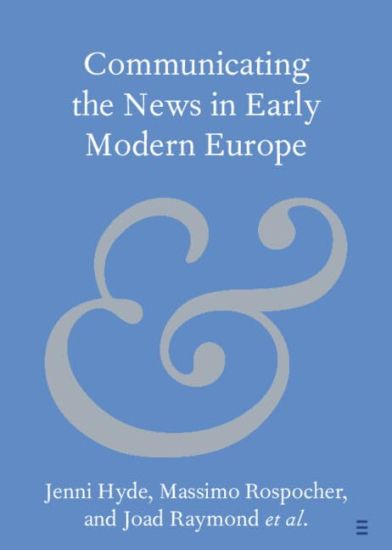
Communicating the News in Early Modern Europe
Jenni Hyde; Massimo Rospocher; Joad Raymond; Yann Ryan; Hannu Salmi; Alexandra Schäfer-Griebel
Cambridge University Press
2023
pokkari
This history of early modern news focuses on news itself rather than specific material forms. Centering on movement through different media, time, and place, it makes the case for a truly comparative, pan-European history of news. After the Introduction, the second section, News Moves, explores how we think about and research news culture and news communication, demonstrating movement is more important than static forms. The third, News Sings, focuses on news ballads, comparing actors, publics, music, and soundscapes of ballad singing in several European cities, highlighting the central role of immaterial elements, such as sound, music and voice. The fourth, News Counts, argues that seeing news the way a machine might read it—through its metadata—is one way of moving beyond form, allowing us to find surprising commonalities in news cultures which differ greatly in both time and place.
Digital history is an emerging field that draws on digital technology and computational methods. A global enterprise that invites scholars worldwide to join forces, it presents exciting and novel ways we might explore, understand and represent the past. Hannu Salmi provides the most compelling introduction to digital history to date. Beginning with an examination of the origins of the digital study of history, he goes on to discuss the question of how history exists in a digitized form. He introduces basic concepts and ideas in digital history, including databases and archives, interdisciplinarity and public engagement. Outlining the problems and methods in the study of big data, both textual and visual, particular attention is paid to the born-digital era: the contemporary age that exists primarily in digital form. What is Digital History? is essential reading for students of history and other humanities fields, as well as anyone interested in how digitization and digital cultures are transforming the study of history.
Tietokirjallisuuden Finlandia-ehdokas 2022 Turun paloa kuvaavassa tietokirjassa Tunteiden palo käsitellään suurpalon kauhuja sekä vaikutusta aikalaisten elämään. Hannu salmi kuvailee teoksessaan mukaansa tempaavalla tavalla Turun palon eläneiden kokemuksia ja tunteita, kuten epätoivoa, syyllisyyttä ja myötätuntoa. Teos on ehdolla vuoden 2022 Tietokirjallisuuden Finlandia-palkinnon saajaksi. Tutustu lukunäytteeseen » Elävästi kirjoitettu tosikertomus historiallisesta suuronnettomuudesta. Syyskuun 4. päivänä 1827 Turussa valloilleen päässyt tulimyrsky oli historian taitekohta ja aikalaisille ennennäkemätön järkytys. Vaikuttava kirja tempaisee lukijan aikamatkalle suurpalon kauhujen keskelle. Teos keskittyy Turun palon kokeneiden ihmisten kokemuksiin ja tunteisiin. Se kuvaa epätoivoa ja menetyksen musertavuutta mutta myös myötätuntoa ja auttamishalua onnettomuuden hetkellä. Kirja pohtii erityisesti kysymystä syyllisyydestä ja sitä, miten palon muisto elää yhä. Turun palosta tulee syksyllä kuluneeksi 195 vuotta. Tämä on ensimmäinen kattava tietoteos aiheesta sitten vuoden 1930.