Kirjojen hintavertailu. Mukana 12 595 353 kirjaa ja 12 kauppaa.

Kirjailija

Hans Boersma

Kirjat ja teokset yhdessä paikassa: 17 kirjaa, julkaisuja vuosilta 2003-2026, suosituimpien joukossa Friendship with Christ. Vertaile teosten hintoja ja tarkista saatavuus suomalaisista kirjakaupoista.

17 kirjaa

Kirjojen julkaisuhaarukka 2003-2026.

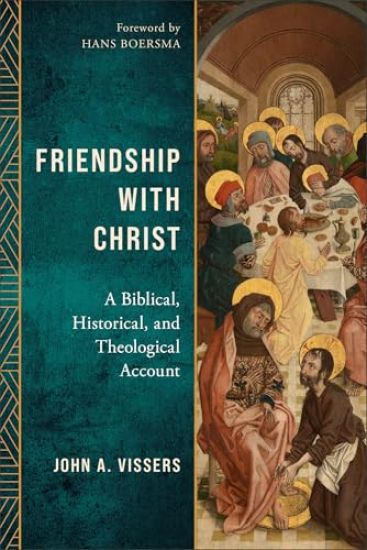
Friendship with Christ

Friendship with Christ

John A. Vissers; Hans Boersma

BAKER PUBLISHING GROUP
2026
nidottu
Friendship has the capacity to elevate our lives and make us better people. It plays an important role in our moral development, spiritual growth, and personal flourishing. This is true of friendship between humans, and it is also true of friendship with God in Christ. What did friendship with Christ mean for Christians in ages past, and what can it mean for us today? In Friendship with Christ, John Vissers offers a robust biblical, historical, and theological study of friendship with God in Christ. Rooted in the "friendship teaching" of John 15, this book draws on the threefold office of Christ as prophet, priest, and king to develop a theology of divine friendship against the backdrop of the biblical record and historical tradition. Friendship with Christ, Vissers argues, is a theological truth and experience that continues to provide consolation and hope in a secular age and a suffering world. With a foreword by Hans Boersma, this book shows that friendship with Christ has been central to the experience of the providential love of God throughout the church's history and that it still matters today. Friendship with Christ will appeal to professors and students of theology, Christology, and spiritual formation, as well as to pastors and church leaders.
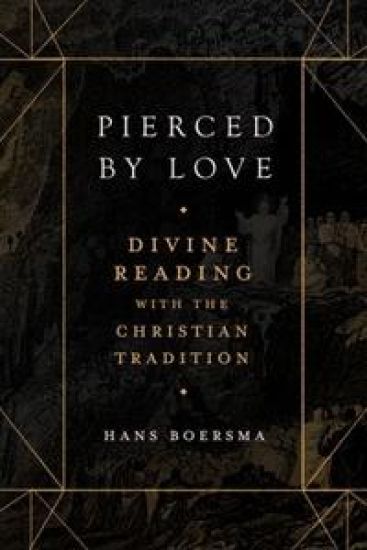
Pierced by Love – Divine Reading with the Christian Tradition
Holy Scripture requires holy reading. Encounter an ancient but fresh way of reading the Bible.Learn from Augustine, Anselm of Canterbury, Bernard of Clairvaux, and others.Experience a structured and attentive way to focus on Christ, listen to the Spirit, and rest in God's love.Christians read Scripture to encounter Christ and be conformed to his image. Jesus is the point of reading the Bible. But Scripture is no mere human text; it is God's living word. So how should we read it?For Christians throughout the centuries, the answer has been lectio divina--"divine reading." Lectio divina is a sacramental reading. It aims to take us more deeply into the life of God. Through practicing the four movements of lectio divina--attentive reading, extended meditation, prayerful reflection, and silent resting--we focus on Christ, listen to the Spirit, and rest in God's love. We no longer simply read the words of Scripture; instead, we read the face of God in the eternal Word.
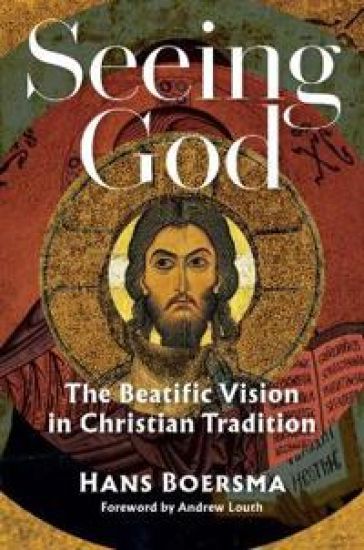
Seeing God

Seeing God

Hans Boersma; Andrew Louth

WILLIAM B EERDMANS PUBLISHING CO
2022
pokkari
Winner of the Christianity Today Book Award in Theology/EthicsTo see God is our heart's desire, our final purpose in life. But what does it mean to see God? And exactly how do we see God--with our physical eyes or with the mind's eye? In this informed study of the beatific vision, Hans Boersma focuses on "vision" as a living metaphor and shows how the vision of God is not just a future but a present reality. Seeing God is both a historical theology and a dogmatic articulation of the beatific vision--of how the invisible God becomes visible to us. In examining what Christian thinkers throughout history have written about the beatific vision, Boersma explores how God trains us to see his character by transforming our eyes and minds, highlighting continuity from this world to the next. Christ-centered, sacramental, and ecumenical, Boersma's work presents life as a never-ending journey toward seeing the face of God in Christ both here and in the world to come.
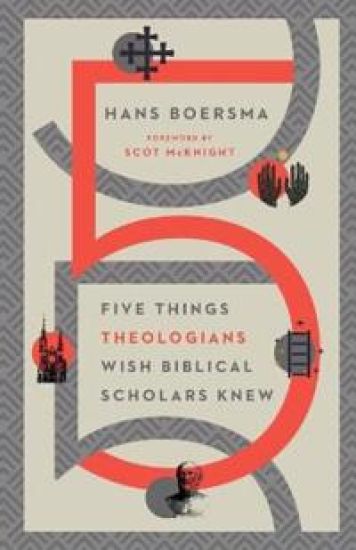
Five Things Theologians Wish Biblical Scholars Knew

Five Things Theologians Wish Biblical Scholars Knew

Hans Boersma; Scot McKnight

IVP Academic
2021
nidottu
The disciplines of theology and biblical studies should serve each other, and they should serve both the church and the academy together. But the relationship between them is often marked by misunderstandings, methodological differences, and cross-discipline tension. Theologian Hans Boersma here highlights five things he wishes biblical scholars knew about theology. In a companion volume, biblical scholar Scot McKnight reflects on five things he wishes theologians knew about biblical studies. With an irenic spirit as well as honesty about differences that remain, Boersma and McKnight seek to foster understanding between their disciplines through these books so they might once again collaborate with one another.
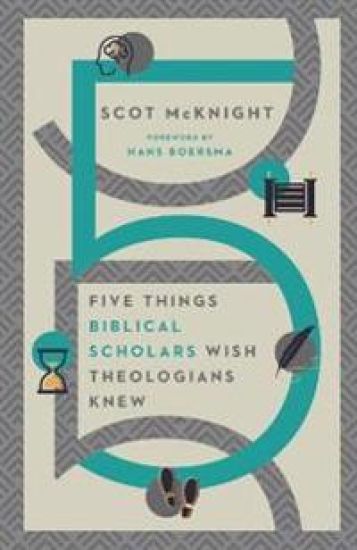
Five Things Biblical Scholars Wish Theologians Knew

Five Things Biblical Scholars Wish Theologians Knew

Scot McKnight; Hans Boersma

IVP Academic
2021
nidottu
The disciplines of biblical studies and theology should serve each other, and they should serve both the church and the academy together. But the relationship between them is often marked by misunderstandings, methodological differences, and cross-discipline tension. New Testament scholar Scot McKnight here highlights five things he wishes theologians knew about biblical studies. In a companion volume, theologian Hans Boersma reflects on five things he wishes biblical scholars knew about theology. With an irenic spirit as well as honesty about differences that remain, McKnight and Boersma seek to foster understanding between their disciplines through these books so they might once again collaborate with one another.
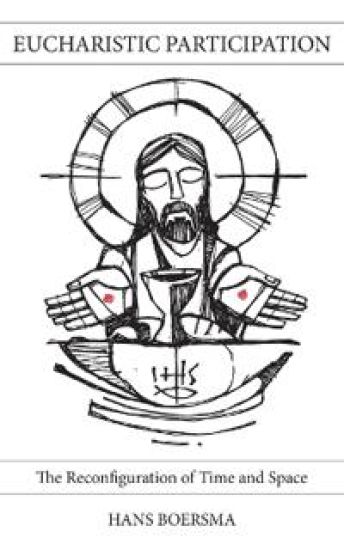
Eucharistic Participation

Eucharistic Participation

Hans Boersma

Regent College Publishing
2021
pokkari
Eucharistic Participation deals with the importance of the Eucharist, and in the process challenges Protestants (and especially evangelicals) to treat the Eucharist more seriously than they sometimes do.In particular, Boersma re-addresses the two issues of the Lord's Supper as sacrifice and as real presence. These were the two issues central to the Eucharistic debates of the Protestant Reformation. This booklet is written from an attitude of sympathy with the motivations and concerns of the Reformers. At the same time, it suggests that it is possible to get beyond the disagreements of the Reformation period. If we take seriously the notion of "participation"-the idea that in the Eucharistic celebration we share in Christ and in his work-we can affirm both "sacrificial" language and talk of "real presence"-while at the same time holding on to the all-sufficient and unique character of Christ's sacrifice.Participation, so Boersma argues, reconfigures our understanding of both time and space. If past, present, and future coincide in and through Christ, this means that what we do today in the Eucharist can participate in the unique sacrifice of Christ without undermining it. And if heaven and earth are reunited in and through Christ, this means that the heavenly reality of Christ's body can become really present in the celebration of the Eucharist. Serious ecumenical dialogue requires, therefore, that Protestants do justice to the theology of participation as they try to come to grips with the disagreements between Rome and the Reformation.
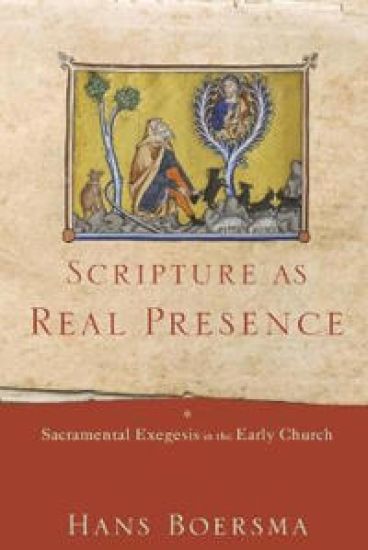
Scripture as Real Presence – Sacramental Exegesis in the Early Church

Scripture as Real Presence – Sacramental Exegesis in the Early Church

Hans Boersma

Baker Academic, Div of Baker Publishing Group
2018
nidottu
Christianity Today Book Award WinnerThis work argues that the heart of patristic exegesis is the attempt to find the sacramental reality (real presence) of Christ in the Old Testament Scriptures. Leading theologian Hans Boersma discusses numerous sermons and commentaries of the church fathers to show how they regarded Christ as the treasure hidden in the field of the Old Testament and explains that the church today can and should retrieve the sacramental reading of the early church. Combining detailed scholarly insight with clear, compelling prose, this book makes a unique contribution to contemporary interest in theological interpretation.
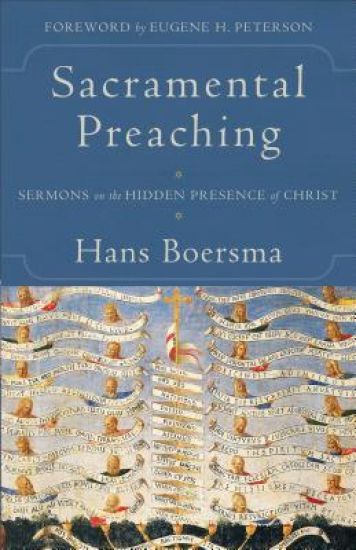
Sacramental Preaching – Sermons on the Hidden Presence of Christ

Sacramental Preaching – Sermons on the Hidden Presence of Christ

Hans Boersma; Eugene Peterson

Baker Academic, Div of Baker Publishing Group
2016
nidottu
Leading Scholar Offers a Theological Approach to PreachingThis primer on the ministry of preaching connects reading the Bible theologically with preparing and preaching sermons. Hans Boersma explains that exegesis involves looking beyond the historical and literal meaning of the text to the hidden sacramental reality of Christ himself, which enables us to reach the deepest meaning of the Scriptures. He provides models for theological sermons along with commentary on exegetical and homiletical method and explains that patristic exegesis is relevant for reading the Bible today. The book includes a foreword by Eugene H. Peterson.
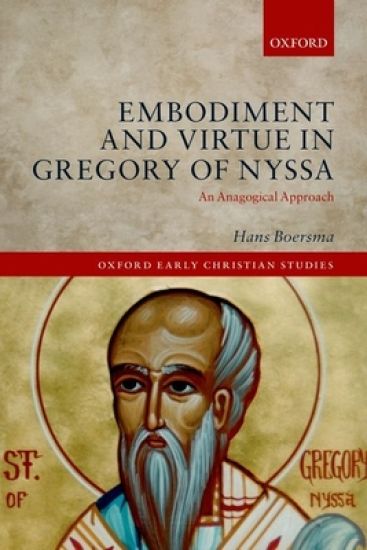
Embodiment and Virtue in Gregory of Nyssa

Embodiment and Virtue in Gregory of Nyssa

Hans Boersma

Oxford University Press
2015
nidottu
Embodiment in the theology of Gregory of Nyssa is a much-debated topic. Hans Boersma argues that this-worldly realities of time and space, which include embodiment, are not the focus of Gregory's theology. Instead, embodiment plays a distinctly subordinate role. The key to his theology, Boersma suggests, is anagogy, going upward in order to participate in the life of God. This book looks at a variety of topics connected to embodiment in Gregory's thought: time and space; allegory; gender, sexuality, and virginity; death and mourning; slavery, homelessness, and poverty; and the church as the body of Christ. In each instance, Boersma maintains, Gregory values embodiment only inasmuch as it enables us to go upward in the intellectual realm of the heavenly future. Boersma suggests that for Gregory embodiment and virtue serve the anagogical pursuit of otherworldly realities. Countering recent trends in scholarship that highlight Gregory's appreciation of the goodness of creation, this book argues that Gregory looks at embodiment as a means for human beings to grow in virtue and so to participate in the divine life. It is true that, as a Christian thinker, Gregory regards the creator-creature distinction as basic. But he also works with the distinction between spirit and matter. And Nyssen is convinced that in the hereafter the categories of time and space will disappear-while the human body will undergo an inconceivable transformation. This book, then, serves as a reminder of the profoundly otherworldly cast of Gregory's theology.
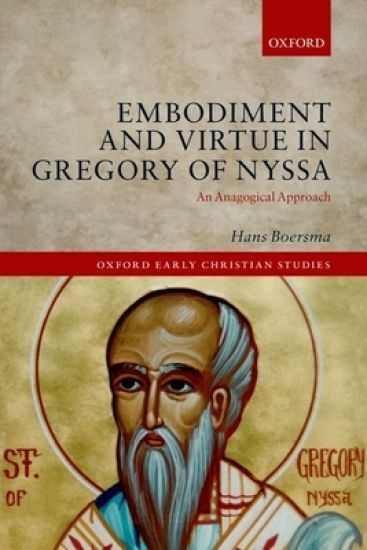
Embodiment and Virtue in Gregory of Nyssa

Embodiment and Virtue in Gregory of Nyssa

Hans Boersma

Oxford University Press
2013
sidottu
Embodiment in the theology of Gregory of Nyssa is a much-debated topic. Hans Boersma argues that this-worldly realities of time and space, which include embodiment, are not the focus of Gregory's theology. Instead, embodiment plays a distinctly subordinate role. The key to his theology, Boersma suggests, is anagogy, going upward in order to participate in the life of God. This book looks at a variety of topics connected to embodiment in Gregory's thought: time and space; allegory; gender, sexuality, and virginity; death and mourning; slavery, homelessness, and poverty; and the church as the body of Christ. In each instance, Boersma maintains, Gregory values embodiment only inasmuch as it enables us to go upward in the intellectual realm of the heavenly future. Boersma suggests that for Gregory embodiment and virtue serve the anagogical pursuit of otherworldly realities. Countering recent trends in scholarship that highlight Gregory's appreciation of the goodness of creation, this book argues that Gregory looks at embodiment as a means for human beings to grow in virtue and so to participate in the divine life. It is true that, as a Christian thinker, Gregory regards the creator-creature distinction as basic. But he also works with the distinction between spirit and matter. And Nyssen is convinced that in the hereafter the categories of time and space will disappear-while the human body will undergo an inconceivable transformation. This book, then, serves as a reminder of the profoundly otherworldly cast of Gregory's theology.
Nouvelle Théologie and Sacramental Ontology

Nouvelle Théologie and Sacramental Ontology

Hans Boersma

Oxford University Press
2012
nidottu
An in-depth study of nouvelle theologie and the ressourcement movement. Hans Boersma argues that a return to mystery was the movement's deepest motivation. He sets out the context for the early development of the movement prior to Vatican II and provides detailed analysis of its characteristic elements and thinkers.
Athanasius

Athanasius

Peter J. Leithart; Hans Boersma; Matthew Levering

Baker Academic, Div of Baker Publishing Group
2011
nidottu
This volume by a respected theologian offers fresh consideration of the work of famous fourth-century church father Athanasius, giving specific attention to his use of Scripture, his deployment of metaphysical categories, and the intersection between the two. Peter Leithart not only introduces Athanasius and his biblical theology but also puts Athanasius into dialogue with contemporary theologians.This volume launches the series Foundations of Theological Exegesis and Christian Spirituality. Edited by Hans Boersma and Matthew Levering, the series critically recovers patristic exegesis and interpretation for contemporary theology and spirituality. Each volume covers a specific church father and illuminates the exegesis that undergirds the Nicene tradition. The series contributes to the growing area of theological interpretation and will appeal to both evangelical and Catholic readers.
Heavenly Participation

Heavenly Participation

Hans Boersma

William B Eerdmans Publishing Co
2011
nidottu
Surveying the barriers that contemporary thinking has erected between the natural and the supernatural, between earth and heaven, Hans Boersma issues a wake-up call for Western Christianity. Both Catholics and evangelicals, he says, have moved too far away from a sacramental mindset, focusing more on the -here-and-now- than on the -then-and-there.- Yet, as Boersma points out, the teaching of Jesus, Paul, and St. Augustine -- indeed, of most of Scripture and the church fathers -- is profoundly otherworldly, much more concerned with heavenly participation than with earthly enjoyment. In Heavenly Participation Boersma draws on the wisdom of great Christian minds ancient and modern -- Irenaeus, Gregory of Nyssa, C. S. Lewis, Henri de Lubac, John Milbank, and many others. He urges Catholics and evangelicals alike to retrieve a sacramental worldview, to cultivate a greater awareness of eternal mysteries, to partake eagerly of the divine life that transcends and transforms all earthly realities.
Nouvelle Théologie and Sacramental Ontology

Nouvelle Théologie and Sacramental Ontology

Hans Boersma

Oxford University Press
2009
sidottu
In the decades leading up to the Second Vatican Council, the movement of nouvelle théologie caused great controversy in the Catholic Church and remains a subject of vigorous scholarly debate today. In Nouvelle théologie and Sacramental Ontology Hans Boersma argues that a return to mystery was the movement's deepest motivation. Countering the modern intellectualism of the neo-Thomist establishment, the nouvelle theologians were convinced that a ressourcement of the Church Fathers and of medieval theology would point the way to a sacramental reintegration of nature and the supernatural. In the context of the loss suffered by both Catholics and Protestants in the de-sacramentalizing of modernity, Boersma shows how the sacramental ontology of nouvelle théologie offers a solid entry-point into ecumenical dialogue. The volume begins by setting the historical context for nouvelle théologie with discussions of the influence of significant theologians and philosophers like Möhler, Blondel, Maréchal, and Rousselot. The exposition then moves to the writings of key thinkers of the ressourcement movement including de Lubac, Bouillard, Balthasar, Chenu, Daniélou, Charlier, and Congar. Boersma analyses the most characteristic elements of the movement: its reintegration of nature and the supernatural, its reintroduction of the spiritual interpretation of Scripture, its approach to Tradition as organically developing in history, and its communion ecclesiology that regarded the Church as sacrament of Christ. In each of these areas, Boersma demonstrates how the nouvelle theologians advocated a return to mystery by means of a sacramental ontology.
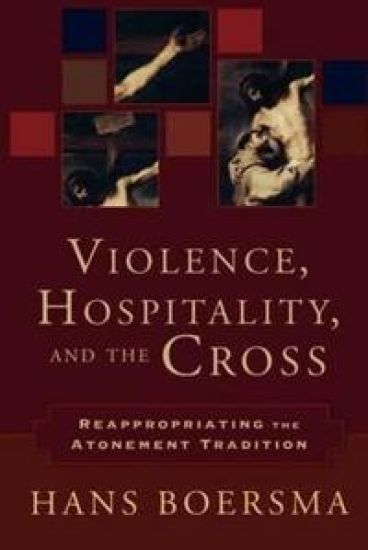
Violence, Hospitality, and the Cross – Reappropriating the Atonement Tradition

Violence, Hospitality, and the Cross – Reappropriating the Atonement Tradition

Hans Boersma

Baker Academic, Div of Baker Publishing Group
2006
nidottu
The cross is central to understanding Christian theology. But is it possible that our postmodern setting requires a new model of understanding the cross? Hans Boersma's Violence, Hospitality, and the Cross proposes an understanding of the atonement that is sensitive both to the Christian tradition and to the postmodern critiques of that tradition. His fresh approach draws on the rich resources of the Christian tradition in its portrayal of God's hospitality in Jesus Christ.