Kirjojen hintavertailu. Mukana 12 587 035 kirjaa ja 12 kauppaa.

Kirjailija

Hans-Jörg Rheinberger

Kirjat ja teokset yhdessä paikassa: 23 kirjaa, julkaisuja vuosilta 2010-2026, suosituimpien joukossa A Cultural History of Heredity. Vertaile teosten hintoja ja tarkista saatavuus suomalaisista kirjakaupoista.

Mukana myös kirjoitusasut: Hans-Jorg Rheinberger, Hans Jörg Rheinberger, Hans–jörg Rheinberger

23 kirjaa

Kirjojen julkaisuhaarukka 2010-2026.

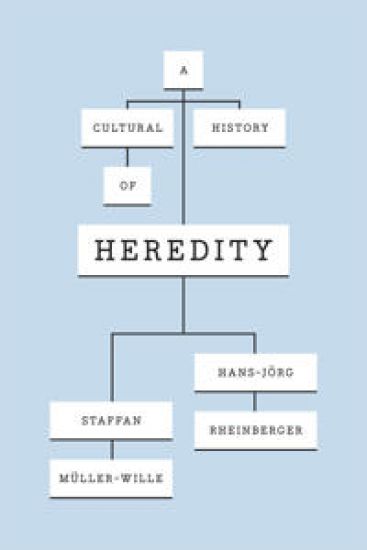
A Cultural History of Heredity

A Cultural History of Heredity

Staffan Muller-Wille; Hans-Jorg Rheinberger

University of Chicago Press
2014
nidottu
It was only around 1800 that heredity began to enter debates among physicians, breeders, and naturalists. Soon thereafter it evolved into one of the most fundamental concepts of biology. Here Staffan Muller-Wille and Hans-Jorg Rheinberger offer a succinct cultural history of the scientific concept of heredity. They outline the dramatic changes the idea has undergone since the early modern period and describe the political and technological developments that brought about these changes. Muller-Wille and Rheinberger begin with an account of premodern theories of generation, showing that these were concerned with the procreation of individuals rather than with hereditary transmission. The authors reveal that when hereditarian thinking first emerged, it did so in a variety of cultural domains, such as politics and law, medicine, natural history, breeding, and anthropology. Muller-Wille and Rheinberger then track theories of heredity from the late nineteenth century - when leading biologists considered it in light of growing societal concerns with race and eugenics - through the rise of classical and molecular genetics in the twentieth century, to today, as researchers apply sophisticated information technologies to understand heredity. The book concludes with a commentary on recent developments in genomics and synthetic biology as a new biotechnological regime.

A Cultural History of Heredity

A Cultural History of Heredity

Staffan Muller-Wille; Hans-Jorg Rheinberger

University of Chicago Press
2012
sidottu
It was only around 1800 that heredity began to enter debates among physicians, breeders, and naturalists. Soon thereafter it evolved into one of the most fundamental concepts of biology. Here Staffan Muller-Wille and Hans-Jorg Rheinberger offer a succinct cultural history of the scientific concept of heredity. They outline the dramatic changes the idea has undergone since the early modern period and describe the political and technological developments that brought about these changes. Muller-Wille and Rheinberger begin with an account of premodern theories of generation, showing that these were concerned with the procreation of individuals rather than with hereditary transmission. The authors reveal that when hereditarian thinking first emerged, it did so in a variety of cultural domains, such as politics and law, medicine, natural history, breeding, and anthropology. Muller-Wille and Rheinberger then track theories of heredity from the late nineteenth century - when leading biologists considered it in light of growing societal concerns with race and eugenics - through the rise of classical and molecular genetics in the twentieth century to today, as researchers apply sophisticated information technologies to understand heredity. What readers come to see from this exquisite history is why it took such a long time for heredity to become a prominent concept in the life sciences and why it gained such overwhelming importance in those sciences and the broader culture over the last two centuries.
In Touch: Encounters between Art and Research

In Touch: Encounters between Art and Research

Hans Jörg Rheinberger

Diaphanes AG
2026
nidottu
Considers the work of seven artists through the framework of art as research. The entanglements between science and art have always been multiple, even if they are not always readily noticeable. In this volume, historian and philosopher of science Hans-Jörg Rheinberger reflects on the work of seven different artists, apprehending artworks not as art-historical exegeses, but rather ongoing research processes with their own character and specificities, more akin to scientific experimentation.
Split and Splice

Split and Splice

Hans-Jörg Rheinberger

THE UNIVERSITY OF CHICAGO PRESS
2023
sidottu
An esteemed historian of science explores the diversity of scientific experimentation. The experiment has long been seen as a test bed for theory, but in Split and Splice, Hans-Jörg Rheinberger makes the case, instead, for treating experimentation as a creative practice. His latest book provides an innovative look at the experimental protocols and connections that have made the life sciences so productive. Delving into the materiality of the experiment, the first part of the book assesses traces, models, grafting, and note-taking—the conditions that give experiments structure and make discovery possible. The second section widens its focus from micro-level laboratory processes to the temporal, spatial, and narrative links between experimental systems. Rheinberger narrates with accessible examples, most of which are drawn from molecular biology, including from the author’s laboratory notebooks from his years researching ribosomes. A critical hit when it was released in Germany, Split and Splice describes a method that involves irregular results and hit-or-miss connections—not analysis, not synthesis, but the splitting and splicing that form a scientific experiment. Building on Rheinberger’s earlier writing about science and epistemology, this book is a major achievement by one of today’s most influential theorists of scientific practice.
Split and Splice

Split and Splice

Hans-Jörg Rheinberger

THE UNIVERSITY OF CHICAGO PRESS
2023
nidottu
An esteemed historian of science explores the diversity of scientific experimentation. The experiment has long been seen as a test bed for theory, but in Split and Splice, Hans-Jörg Rheinberger makes the case, instead, for treating experimentation as a creative practice. His latest book provides an innovative look at the experimental protocols and connections that have made the life sciences so productive. Delving into the materiality of the experiment, the first part of the book assesses traces, models, grafting, and note-taking—the conditions that give experiments structure and make discovery possible. The second section widens its focus from micro-level laboratory processes to the temporal, spatial, and narrative links between experimental systems. Rheinberger narrates with accessible examples, most of which are drawn from molecular biology, including from the author’s laboratory notebooks from his years researching ribosomes. A critical hit when it was released in Germany, Split and Splice describes a method that involves irregular results and hit-or-miss connections—not analysis, not synthesis, but the splitting and splicing that form a scientific experiment. Building on Rheinberger’s earlier writing about science and epistemology, this book is a major achievement by one of today’s most influential theorists of scientific practice.
Historische Epistemologie zur Einführung

Historische Epistemologie zur Einführung

Hans-Jörg Rheinberger

JUNIUS VERLAG GMBH
2022
nidottu
Wenn das 19. Jahrhundert in der Philosophie der Wissenschaften den Aufstieg des Positivismus erlebte, so begann das 20. Jahrhundert mit einer Krise des positivistischen Denkens, ohne dass zunächst eine Lösung oder gar Alternative in Sicht gewesen wäre. Erst allmählich entwickelte sich im Laufe des 20. Jahrhunderts ein komplexes, sozialhistorisch und denkhistorisch motiviertes Nachdenken über Wissenschaft, das in seinem Kern darin bestand, die Wissenschaftsphilosophie zu historisieren. Es entwickelten sich Formen einer historischen Epistemologie. Diese Bewegung muss in den breiteren Kontext der Dynamik der Wissenschaften und der sozialen und kulturellen Entwicklungen des 20. Jahrhunderts gestellt werden. In dieser Einführung werden Positionen vorgestellt, die in diesen Historisierungsprozess eingegriffen und ihn gestaltet haben.
Natures of Data – A Discussion between Biologists, Artists and Science Scholars

Natures of Data – A Discussion between Biologists, Artists and Science Scholars

Philipp Fischer; Gabriele Gramelsberger; Christoph Hoffmann; Hans Hofmann; Hans–jörg Rheinberger; Hannes Rickli

Diaphanes AG
2020
nidottu
Computer-based technologies for the production and analysis of data have been an integral part of biological research since the 1990s at the latest. This not only applies to genomics and its offshoots but also to less conspicuous subsections such as ecology. But little consideration has been given to how this new technology has changed research practically. How and when do data become questionable? To what extent does necessary infrastructure influence the research process? What status is given to software and algorithms in the production and analysis of data? These questions are discussed by the biologists Philipp Fischer and Hans Hofmann, the philosopher Gabriele Gramelsberger, the historian of science and biology Hans-Jörg Rheinberger, the science theorist Christoph Hoffmann, and the artist Hannes Rickli. The conditions of experimentation in the digital sphere are examined in four chapters—“Data,” “Software,” “Infrastructure,” and “in silico”—in which the different perspectives of the discussion partners complement one another. Rather than confirming any particular point of view, Natures of Data deepens understanding of the contemporary basis of biological research.
The Hand of the Engraver

The Hand of the Engraver

Hans-Jörg Rheinberger

State University of New York Press
2019
pokkari
A rich intellectual encounter, revolving around the hands of the experimenter and those of the artist, highlighting the relation between the sciences and the arts.This book is the first to explore in detail the encounter between Albert Flocon and Gaston Bachelard in postwar Paris. Bachelard was a philosopher and historian of science who was also involved in literary studies and poetics. Flocon was a student of the Bauhaus in Dessau, Germany, who specialized in copper engraving. Both deeply ingrained in the surrealist avant-garde movements, each acted at the frontiers of their respective métiers in exploring uncharted territory. Bachelard experienced the sciences of his time as constantly undergoing radical changes, and he wanted to create a historical epistemology that would live up to this experience. He saw the elementary gesture of the copper engraver-the hand of the engraver-as meeting the challenge of resistant and resilient matter in an exemplary fashion. Flocon was fascinated by Bachelard's unconventional approach to the sciences and his poetics. Together, their relationship interrogated and celebrated the interplay of hand and matter as it occurs in poetic writing, in the art of engraving, and in scientific experimentation. In the form of a double biography, Hans-Jörg Rheinberger succeeds in writing a lucid intellectual history and at the same time presents a fascinating illustrated reading of Flocon's copper engravings.
The Hand of the Engraver

The Hand of the Engraver

Hans-Jörg Rheinberger

State University of New York Press
2018
sidottu
A rich intellectual encounter, revolving around the hands of the experimenter and those of the artist, highlighting the relation between the sciences and the arts.This book is the first to explore in detail the encounter between Albert Flocon and Gaston Bachelard in postwar Paris. Bachelard was a philosopher and historian of science who was also involved in literary studies and poetics. Flocon was a student of the Bauhaus in Dessau, Germany, who specialized in copper engraving. Both deeply ingrained in the surrealist avant-garde movements, each acted at the frontiers of their respective métiers in exploring uncharted territory. Bachelard experienced the sciences of his time as constantly undergoing radical changes, and he wanted to create a historical epistemology that would live up to this experience. He saw the elementary gesture of the copper engraver-the hand of the engraver-as meeting the challenge of resistant and resilient matter in an exemplary fashion. Flocon was fascinated by Bachelard's unconventional approach to the sciences and his poetics. Together, their relationship interrogated and celebrated the interplay of hand and matter as it occurs in poetic writing, in the art of engraving, and in scientific experimentation. In the form of a double biography, Hans-Jörg Rheinberger succeeds in writing a lucid intellectual history and at the same time presents a fascinating illustrated reading of Flocon's copper engravings.
Pathological Realities

Pathological Realities

Mirko Grmek; Hans-Jörg Rheinberger

Fordham University Press
2018
pokkari
Mirko D. Grmek (1924-2000) is one of the most significant figures in the history of medicine, and has long been considered a pioneer of the field. The singular trajectory that took Grmek from Yugoslavia to the academic culture of post-war France placed him at the crossroads of different intellectual trends and made him an influential figure during the second half of the twentieth century. Yet, scholars have rarely attempted to articulate his distinctive vision of the history of science and medicine with all its tensions, contradictions, and ambiguities. This volume brings together and publishes for the first time in English a range of Grmek's writings, providing a portrait of his entire career as a historian of science and an engaged intellectual figure. Pathological Realities pieces together Grmek's scholarship that reveals the interconnections of diseases, societies, and medical theories. Straddling the sciences and the humanities, Grmek crafted significant new concepts and methods to engage with contemporary social problems such as wars, genocides and pandemics. Uniting some major strands of his published work that are still dispersed or simply unknown, this volume covers the deep epistemological changes in historical conceptions of disease as well as major advances within the life sciences and their historiography. Opening with a classic essay – "Preliminaries for a Historical Study of Diseases," this volume introduces Grmek's notions of "pathocenosis" and "emerging infections," illustrating them with historical and contemporary cases. Pathological Realities also showcases Grmek's pioneering approach to the history of science and medicine using laboratory notebooks as well as his original work on biological thought and the role of ideologies and myths in the history of science. The essays assembled here reveal Grmek's significant influence and continued relevance for current research in the history of medicine and biology, medical humanities, science studies, and the philosophy of science.
Pathological Realities

Pathological Realities

Mirko Grmek; Hans-Jörg Rheinberger

Fordham University Press
2018
sidottu
Mirko D. Grmek (1924-2000) is one of the most significant figures in the history of medicine, and has long been considered a pioneer of the field. The singular trajectory that took Grmek from Yugoslavia to the academic culture of post-war France placed him at the crossroads of different intellectual trends and made him an influential figure during the second half of the twentieth century. Yet, scholars have rarely attempted to articulate his distinctive vision of the history of science and medicine with all its tensions, contradictions, and ambiguities. This volume brings together and publishes for the first time in English a range of Grmek's writings, providing a portrait of his entire career as a historian of science and an engaged intellectual figure. Pathological Realities pieces together Grmek's scholarship that reveals the interconnections of diseases, societies, and medical theories. Straddling the sciences and the humanities, Grmek crafted significant new concepts and methods to engage with contemporary social problems such as wars, genocides and pandemics. Uniting some major strands of his published work that are still dispersed or simply unknown, this volume covers the deep epistemological changes in historical conceptions of disease as well as major advances within the life sciences and their historiography. Opening with a classic essay – "Preliminaries for a Historical Study of Diseases," this volume introduces Grmek's notions of "pathocenosis" and "emerging infections," illustrating them with historical and contemporary cases. Pathological Realities also showcases Grmek's pioneering approach to the history of science and medicine using laboratory notebooks as well as his original work on biological thought and the role of ideologies and myths in the history of science. The essays assembled here reveal Grmek's significant influence and continued relevance for current research in the history of medicine and biology, medical humanities, science studies, and the philosophy of science.
The Gene

The Gene

Hans-Jorg Rheinberger; Staffan Muller-Wille

University of Chicago Press
2018
nidottu
Few concepts played a more important role in twentieth-century life sciences than that of the gene. Yet at this moment, the field of genetics is undergoing radical conceptual transformation, and some scientists are questioning the very usefulness of the concept of the gene, arguing instead for more systemic perspectives. The time could not be better, therefore, for Hans-Jorg Rheinberger and Staffan Muller-Wille's magisterial history of the concept of the gene. Though the gene has long been the central organizing theme of biology, both conceptually and as an object of study, Rheinberger and Muller-Wille conclude that we have never even had a universally accepted, stable definition of it. Rather, the concept has been in continual flux a state that, they contend, is typical of historically important and productive scientific concepts. It is that very openness to change and manipulation, the authors argue, that made it so useful: its very mutability enabled it to be useful while the technologies and approaches used to study and theorize about it changed dramatically.
The Gene

The Gene

Hans-Jorg Rheinberger; Staffan Muller-Wille

University of Chicago Press
2018
sidottu
Few concepts played a more important role in twentieth-century life sciences than that of the gene. Yet at this moment, the field of genetics is undergoing radical conceptual transformation, and some scientists are questioning the very usefulness of the concept of the gene, arguing instead for more systemic perspectives. The time could not be better, therefore, for Hans-Jorg Rheinberger and Staffan Muller-Wille's magisterial history of the concept of the gene. Though the gene has long been the central organizing theme of biology, both conceptually and as an object of study, Rheinberger and Muller-Wille conclude that we have never even had a universally accepted, stable definition of it. Rather, the concept has been in continual flux a state that, they contend, is typical of historically important and productive scientific concepts. It is that very openness to change and manipulation, the authors argue, that made it so useful: its very mutability enabled it to be useful while the technologies and approaches used to study and theorize about it changed dramatically.
Systemes Experimentaux Et Choses Epistemiques

Systemes Experimentaux Et Choses Epistemiques

Hans-Jorg Rheinberger

Classiques Garnier
2017
nidottu
In just a few years, this book has taken its place among the classics of the history of science. The study is based on an account of the material apparatuses that twentieth-century scientists call "experimental systems." Using this concept as its point of departure, this work establishes an epistemology of modern experimentation.
An Epistemology of the Concrete

An Epistemology of the Concrete

Hans-Jörg Rheinberger

Duke University Press
2010
pokkari
An Epistemology of the Concrete brings together case studies and theoretical reflections on the history and epistemology of the life sciences by Hans-JÖrg Rheinberger, one of the world’s foremost philosophers of science. In these essays, he examines the history of experiments, concepts, model organisms, instruments, and the gamut of epistemological, institutional, political, and social factors that determine the actual course of the development of knowledge. Building on ideas from his influential book Toward a History of Epistemic Things, Rheinberger first considers ways of historicizing scientific knowledge, and then explores different configurations of genetic experimentation in the first half of the twentieth century and the interaction between apparatuses, experiments, and concept formation in molecular biology in the second half of the twentieth century. He delves into fundamental epistemological issues bearing on the relationship between instruments and objects of knowledge, laboratory preparations as a special class of epistemic objects, and the note-taking and write-up techniques used in research labs. He takes up topics ranging from the French “historical epistemologists” Gaston Bachelard and Georges Canguilhem to the liquid scintillation counter, a radioactivity measuring device that became a crucial tool for molecular biology and biomedicine in the 1960s and 1970s. Throughout An Epistemology of the Concrete, Rheinberger shows how assemblages-historical conjunctures-set the conditions for the emergence of epistemic novelty, and he conveys the fascination of scientific things: those organisms, spaces, apparatuses, and techniques that are transformed by research and that transform research in turn.