Kirjojen hintavertailu. Mukana 12 390 323 kirjaa ja 12 kauppaa.

Kirjailija

Hans-Peter Heilmann

Kirjat ja teokset yhdessä paikassa: 13 kirjaa, julkaisuja vuosilta 2008-2012, suosituimpien joukossa Radiation Therapy of Head and Neck Cancer. Vertaile teosten hintoja ja tarkista saatavuus suomalaisista kirjakaupoista.

13 kirjaa

Kirjojen julkaisuhaarukka 2008-2012.

Radiation Therapy of Head and Neck Cancer

Radiation Therapy of Head and Neck Cancer

Luther W. Brady; Hans-Peter Heilmann

Springer-Verlag Berlin and Heidelberg GmbH Co. K
2012
nidottu
The contemporary management of patients with cancers of the head and neck is under careful scrutiny and major changes are being introduced in order to improve the potenti­ al not only for long-term control but also for less in the way of disfiguring and distres­ sing complications associated with the treatment programs. In 1988, the American Cancer Society estimates that there will be 42400 new cases of malignant tumors of the head and neck diagnosed with 12 850 deaths. In general, the prognosis for patients with malignant tumors of the head and neck re­ gion depends upon the site of origin, the local and regional extent of the tumor, the Kar­ nofsky status of the patient as well as the patient's general medical condition. The poten­ tial for cure for early stage tumors is extremely high particularly for those lesions involving the vocal cord, oral cavity, and the anterior two-thirds of the tongue. Major advances have been made in the management of head and neck cancer by the innovative utilization of surgery with radiation therapy. Small tumors can be cured by ei­ ther surgery or radiation therapy with equally good results. However, far advanced tu­ mors are more complicated and more difficult to cure requiring combined, integrated, multimodal programs of management. Therefore, the previously general poor prognosis for advanced tumors is becoming better with more aggressive treatment regimens.
Gastrointestinal Cancer

Gastrointestinal Cancer

Luther W. Brady; Hans-Peter Heilmann

Springer-Verlag Berlin and Heidelberg GmbH Co. K
2012
nidottu
Primary malignant tumors of the gastrointestinal tract account for 23% of all invasive cancers and 24% of all the deaths in 1988. In the United States, the American Cancer Society estimates that there will be 227500 new cases of gastrointestinal malignancy di­ agnosed, with 122350 deaths. This includes 9800 new cases of carcinomas of the esopha­ gus, 24800 carcinomas of the stomach, 2500 new cases of malignant tumors of the small intestine, 105000 new cases of tumors of the large intestine, and 42000 new cases of car­ cinoma of the rectum, 14000 new cases involving the liver and biliary passages, 27000 new cases of carcinoma of the pancreas, and 2400 other unspecified digestive tract ma­ lignancies. This combined incidence is second only to the number of new cases of lung cancer. Bleeding from the gastrointestinal tract represents one of the earliest findings with re­ gard to malignancy of the gastrointestinal tract. In general, personal or family history of colon and rectal cancer, personal or family history of polyps in the colon or rectum, or inflammatory bowel disease are high risk factors with regard to tumors in these loca­ tions. Dietary behavior is also important in that a diet high in fat and/or low in fiber content may be a significant causative factor.
Radiation Exposure and Occupational Risks

Radiation Exposure and Occupational Risks

Luther W. Brady; Martin W. Donner; Hans-Peter Heilmann; Friedrich Heuck

Springer-Verlag Berlin and Heidelberg GmbH Co. K
2012
nidottu
The aim of radiation protection standards is to make the radiation workplace as safe as is humanly possible. The gradual evolution over the last 20 years has been towards a more precise definition of the limits for occupational exposure. These have been created not only in terms of short-term effects but also more importantly in terms of long-term risks involving such problems as the potential for carcinogenesis and genetic change. In the United States the National Committee for Radiation Protection has recom­ mended that 5 rems (50 mSv) should remain as the maximum permissible dose equiva­ lent for total body exposure. This would represent the sum of internal and external ex­ posure and should be regarded as the upper limit allowed. The community of radiation users is required to conduct its operations in such a man­ ner that the absolute value of the individual's dose equivalent in rems does not exceed his age in years. There should be additional limits for tissues and organs based on short­ term effects. Therefore, individual organs are limited to dose equivalents low enough to ensure that the dose threshold values are not exceeded.
Innovations in Radiation Oncology

Innovations in Radiation Oncology

Luther W. Brady; Hans-Peter Heilmann

Springer-Verlag Berlin and Heidelberg GmbH Co. K
2011
nidottu
The series "Medical Radiology - Diagnostic Imaging and Radiation Oncology" is the successor to the well known "Encyclopedia of Medical RadiologyjHandbuch der medizinischen Radiologie". This international handbook with its unique compila­ tion of data in more than fifty volumes lags behind the fast developing knowledge in radiology today. "Medical Radiology" brings the state of the art on special topics in a timely fashion. The first volume of the series was "Lung cancer", edited by Scarantino. This volume "Innovation in Radiation Oncology", edited by H.R. Withers and L.J. Peters, presents data on the development of new therapeutic strategies in different oncologic diseases. 57 authors wrote 32 chapters covering a broad range of topics. The innovations are at various levels of development, but were all chosen with the practicing radiation oncologist in mind. Perhaps not all of the innovations will survive the test of time, others have now become well established standard procedure in some centers. Also discussed is the assessment of the effectiveness of standard treat­ ment and how it effects the quality of a patient's survival. The contributions have been grouped into 9 broad sections as outlined in the table of contents. We think the second volume, as the whole series, will provide valuable reading for the general community of radiation oncologists.
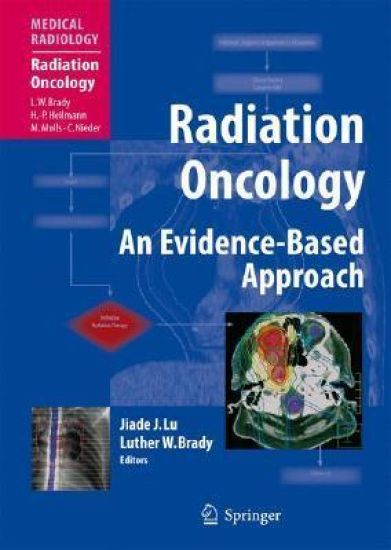
Radiation Oncology

Radiation Oncology

Luther W. Brady; Hans-Peter Heilmann; Michael Molls; Carsten Nieder

Springer-Verlag Berlin and Heidelberg GmbH Co. K
2010
nidottu
Radiation Oncology: An Evidence-Based Approach (ROEBA) is a reference book designed to enable radiation oncologists, including those in training, to make diagnostic and treatment decisions on the basis of the best available scientific evidence. Ease of use is ensured by a structured, reader-friendly format that offers rapid access to evidence-based recommendations. ROEBA’s orientation is entirely practical, in that the focus is solely on diagnostic/staging and treatment issues. Detailed diagnostic and therapeutic guidelines are provided for multidisciplinary cancer management as well as radiation therapy techniques. The evidence underlying each recommendation is clearly and concisely explained, and the strength of the recommendations and evidence is systemically graded. Furthermore, diagnostic and treatment algorithms are provided for the commonly diagnosed cancers. This ground-breaking text on radiation oncology is an essential tool for physicians in their daily clinical practice.
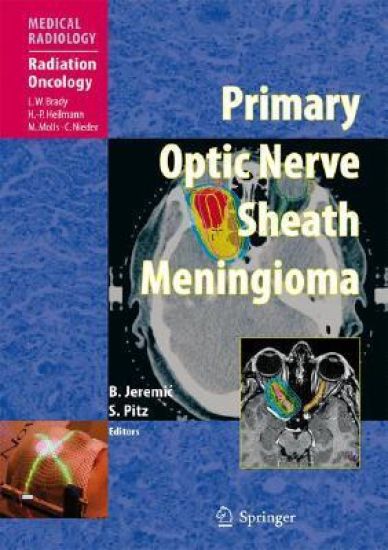
Primary Optic Nerve Sheath Meningioma

Primary Optic Nerve Sheath Meningioma

Luther W. Brady; Hans-Peter Heilmann; Michael Molls; Carsten Nieder

Springer-Verlag Berlin and Heidelberg GmbH Co. K
2010
nidottu
Optic nerve sheath meningioma (ONSM) is a rare tumour. Cases are usually separated into primary ONSM, which arises either intraorbitally or, less commonly, intracanalicularly, and secondary ONSM, which arises intracranially and subsequently invades the optic canal and orbit. This is the first book to cover all important aspects of the diagnosis and treatment of primary ONSM. After a general introduction, individual chapters discuss the clinical presentation, clinical examination and diagnosis, imaging, and histology. Treatment options are then addressed in detail, with special emphasis on external beam radiation therapy, and in particular stereotactic fractionated radiation therapy. The latter has recently produced consistently good results and is now considered the emerging treatment of choice for the vast majority of patients with primary ONSM. This well-illustrated book will prove invaluable to all practitioners who encounter primary ONSM in their clinical work.
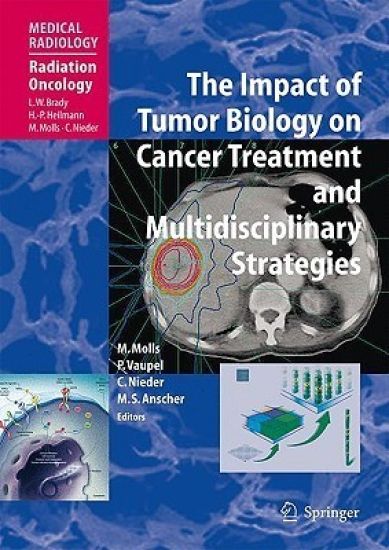
The Impact of Tumor Biology on Cancer Treatment and Multidisciplinary Strategies

The Impact of Tumor Biology on Cancer Treatment and Multidisciplinary Strategies

Luther W. Brady; Hans-Peter Heilmann; Michael Molls; Carsten Nieder

Springer-Verlag Berlin and Heidelberg GmbH Co. K
2010
nidottu
Te rapidly changing concepts in radiation oncology with the development of more precise - strumentation for delivery of radiation therapy and a greater emphasis on hypofractionation technologies require a very intimate knowledge of tumor biology and the infuence of various biologic factors on dose distribution within the tumor in terms of homogeneity as well as prev- tion of any late efects on normal tissue surrounding the tumor itself. Not only are these major factors in clinical practice but also the known factors of inhomogeneity of cancer cells, the impact of microenvironment in terms of radiation efect, and host factors make it mandatory to design therapeutic strategies to improve the outcome and to diminish any potential short-term or lo- term risks from the radiation therapy. Te authors have developed an outstanding text that deals with these strategies and how they would impact on established and emerging new technologies and treatment. Te context of the presentations within a multidisciplinary combined modality therapy program is incredibly - portant. In this volume, various topics are reviewed including tumor genesis, cell proliferation, - giogenesis, the physiologic characteristics of malignant tissues, invasion and adhesion, the route and role pursued in the development of metastasis, and the role of the human immune system in cancer prevention and development.
Cured II - LENT Cancer Survivorship Research And Education

Cured II - LENT Cancer Survivorship Research And Education

Luther W. Brady; Hans-Peter Heilmann; Michael Molls; Carsten Nieder

Springer-Verlag Berlin and Heidelberg GmbH Co. K
2010
nidottu
Multimodal treatment lies at the heart of the improvement in cancer cure rates. However, the more aggressive the treatment, the more adverse effects in normal tissues can be anticipated. Against this background, a major paradigm shift has taken place in that there is a new focus on cancer survivorship and quality of life: the life worth saving must be worth living. This volume is based on the CURED II conference held in May 2007, which was attended by scientists from many leading institutions. The volume comprises 18 chapters by leading experts who address a variety of important topics relating to late treatment effects, such as mechanisms and evolution of injury, risk factors, the role of screening, options for interventions, second malignancies, and prevention. It is hoped that it will assist the reader in understanding how to prevent and treat the long-term side-effects of irradiation, thus improving the quality of life of long-term survivors of cancer.
Functional Preservation and Quality of Life in Head and Neck Radiotherapy

Functional Preservation and Quality of Life in Head and Neck Radiotherapy

Luther W. Brady; Hans-Peter Heilmann; Michael Molls; Carsten Nieder

Springer-Verlag Berlin and Heidelberg GmbH Co. K
2010
nidottu
The emphasis on cancer management in the past was based primarily on control rates from multidisciplinary input in management. There has always been a recognition that one would like to achieve the best result with the least complication, but never has there been any major emphasis on evidence-based outcome studies, nor on functional preservation and quality of life. The authors of this book have dealt very effectively with the various tumor types in head and neck cancer with the experts in the ? eld of management. The contents range from epidemiology and treatment outcome, treatment techniques with the potential impact on the quality of life such as dysphagia, to the various options relative to high technology radiation therapy programs for mana- ment. The potential for improving form and function through surgical care as an integrated part of the program is dealt with very effectively as well as the potentials for chemotherapy and the use of targeted agents have on quality of life issues. The volume also addresses toxicity, quality of life, and techniques for prevention of adverse effects, as well as the potentials for rehabilitation and supportive care. The authors have clearly done an extraordinarily good job in addressing the mul- plicity of problems that impact upon the functional preservation and quality of life in head and neck radiation therapy. Philadelphia Luther W.
Functional Preservation and Quality of Life in Head and Neck Radiotherapy

Functional Preservation and Quality of Life in Head and Neck Radiotherapy

Luther W. Brady; Hans-Peter Heilmann; Michael Molls; Carsten Nieder

Springer-Verlag Berlin and Heidelberg GmbH Co. K
2009
sidottu
The emphasis on cancer management in the past was based primarily on control rates from multidisciplinary input in management. There has always been a recognition that one would like to achieve the best result with the least complication, but never has there been any major emphasis on evidence-based outcome studies, nor on functional preservation and quality of life. The authors of this book have dealt very effectively with the various tumor types in head and neck cancer with the experts in the ? eld of management. The contents range from epidemiology and treatment outcome, treatment techniques with the potential impact on the quality of life such as dysphagia, to the various options relative to high technology radiation therapy programs for mana- ment. The potential for improving form and function through surgical care as an integrated part of the program is dealt with very effectively as well as the potentials for chemotherapy and the use of targeted agents have on quality of life issues. The volume also addresses toxicity, quality of life, and techniques for prevention of adverse effects, as well as the potentials for rehabilitation and supportive care. The authors have clearly done an extraordinarily good job in addressing the mul- plicity of problems that impact upon the functional preservation and quality of life in head and neck radiation therapy. Philadelphia Luther W.
The Impact of Tumor Biology on Cancer Treatment and Multidisciplinary Strategies

The Impact of Tumor Biology on Cancer Treatment and Multidisciplinary Strategies

Luther W. Brady; Hans-Peter Heilmann; Michael Molls; Carsten Nieder

Springer-Verlag Berlin and Heidelberg GmbH Co. K
2009
sidottu
Te rapidly changing concepts in radiation oncology with the development of more precise - strumentation for delivery of radiation therapy and a greater emphasis on hypofractionation technologies require a very intimate knowledge of tumor biology and the infuence of various biologic factors on dose distribution within the tumor in terms of homogeneity as well as prev- tion of any late efects on normal tissue surrounding the tumor itself. Not only are these major factors in clinical practice but also the known factors of inhomogeneity of cancer cells, the impact of microenvironment in terms of radiation efect, and host factors make it mandatory to design therapeutic strategies to improve the outcome and to diminish any potential short-term or lo- term risks from the radiation therapy. Te authors have developed an outstanding text that deals with these strategies and how they would impact on established and emerging new technologies and treatment. Te context of the presentations within a multidisciplinary combined modality therapy program is incredibly - portant. In this volume, various topics are reviewed including tumor genesis, cell proliferation, - giogenesis, the physiologic characteristics of malignant tissues, invasion and adhesion, the route and role pursued in the development of metastasis, and the role of the human immune system in cancer prevention and development.
Radiation Oncology

Radiation Oncology

Luther W. Brady; Hans-Peter Heilmann; Michael Molls; Carsten Nieder

Springer-Verlag Berlin and Heidelberg GmbH Co. K
2008
sidottu
Radiation Oncology: An Evidence-Based Approach (ROEBA) is a reference book designed to enable radiation oncologists, including those in training, to make diagnostic and treatment decisions on the basis of the best available scientific evidence. Ease of use is ensured by a structured, reader-friendly format that offers rapid access to evidence-based recommendations. ROEBA’s orientation is entirely practical, in that the focus is solely on diagnostic/staging and treatment issues. Detailed diagnostic and therapeutic guidelines are provided for multidisciplinary cancer management as well as radiation therapy techniques. The evidence underlying each recommendation is clearly and concisely explained, and the strength of the recommendations and evidence is systemically graded. Furthermore, diagnostic and treatment algorithms are provided for the commonly diagnosed cancers. This ground-breaking text on radiation oncology is an essential tool for physicians in their daily clinical practice.
Primary Optic Nerve Sheath Meningioma

Primary Optic Nerve Sheath Meningioma

Luther W. Brady; Hans-Peter Heilmann; Michael Molls; Carsten Nieder

Springer-Verlag Berlin and Heidelberg GmbH Co. K
2008
sidottu
Optic nerve sheath meningioma (ONSM) is a rare tumour. Cases are usually separated into primary ONSM, which arises either intraorbitally or, less commonly, intracanalicularly, and secondary ONSM, which arises intracranially and subsequently invades the optic canal and orbit. This is the first book to cover all important aspects of the diagnosis and treatment of primary ONSM. After a general introduction, individual chapters discuss the clinical presentation, clinical examination and diagnosis, imaging, and histology. Treatment options are then addressed in detail, with special emphasis on external beam radiation therapy, and in particular stereotactic fractionated radiation therapy. The latter has recently produced consistently good results and is now considered the emerging treatment of choice for the vast majority of patients with primary ONSM. This well-illustrated book will prove invaluable to all practitioners who encounter primary ONSM in their clinical work.