Kirjojen hintavertailu. Mukana 12 246 130 kirjaa ja 12 kauppaa.

Kirjailija

Hansjörg Herr

Kirjat ja teokset yhdessä paikassa: 12 kirjaa, julkaisuja vuosilta 2011-2025, suosituimpien joukossa Inflation. Vertaile teosten hintoja ja tarkista saatavuus suomalaisista kirjakaupoista.

Mukana myös kirjoitusasut: Hansjorg Herr

12 kirjaa

Kirjojen julkaisuhaarukka 2011-2025.

The Resurgence of Inflation

The Resurgence of Inflation

Michael Heine; Hansjörg Herr

Springer International Publishing AG
2025
nidottu
In light of the resurgence of inflation in developed industrialised countries following a period of inordinately low inflation, this book analyses the causes and devastating effects of inflation by drawing lessons from the past. Focusing on the German hyperinflation of the 1920s and the inflationary waves of the 1970s, it examines the resulting economic crises and their influence on the subsequent periods of social and political turmoil, namely the fascism of the 1930s and the neoliberal revolution of the 1980s. Featuring five detailed case studies on inflationary waves in various countries in the 1970s, the book identifies economic policy errors of the past, seeking to prevent their recurrence. Offering empirical and theoretical insights alike, the authors present strategies for effectively combating inflation and deflation. In turn, the book assesses the complex ties between wage increases, income distribution, and price changes, ultimately providing valuable recommendations on how wage policy can be used to stabilise price level increases at a low level in a world characterised by diverse and extreme economic shocks.“The Resurgence of Inflation” fosters a vital discourse on wage and price dynamics, economic development and the role of trade unions, making it an essential read for policymakers, economists, and anyone seeking a deeper understanding of today’s economic challenges.
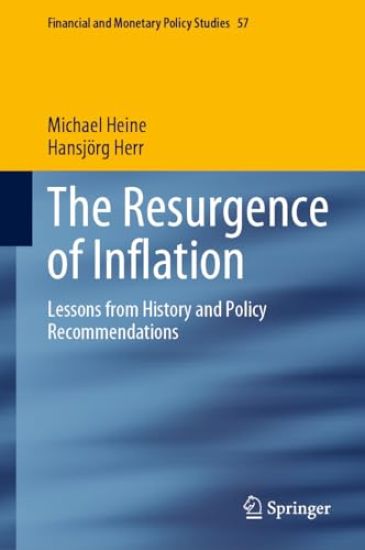
The Resurgence of Inflation

The Resurgence of Inflation

Michael Heine; Hansjörg Herr

Springer International Publishing AG
2024
sidottu
In light of the resurgence of inflation in developed industrialised countries following a period of inordinately low inflation, this book analyses the causes and devastating effects of inflation by drawing lessons from the past. Focusing on the German hyperinflation of the 1920s and the inflationary waves of the 1970s, it examines the resulting economic crises and their influence on the subsequent periods of social and political turmoil, namely the fascism of the 1930s and the neoliberal revolution of the 1980s. Featuring five detailed case studies on inflationary waves in various countries in the 1970s, the book identifies economic policy errors of the past, seeking to prevent their recurrence. Offering empirical and theoretical insights alike, the authors present strategies for effectively combating inflation and deflation. In turn, the book assesses the complex ties between wage increases, income distribution, and price changes, ultimately providing valuable recommendations on how wage policy can be used to stabilise price level increases at a low level in a world characterised by diverse and extreme economic shocks.“The Resurgence of Inflation” fosters a vital discourse on wage and price dynamics, economic development and the role of trade unions, making it an essential read for policymakers, economists, and anyone seeking a deeper understanding of today’s economic challenges.

The European Central Bank

The European Central Bank

Michael Heine; Hansjorg Herr

Agenda Publishing
2020
nidottu
The European Central Bank administers monetary policy for the eurozone and is tasked with maintaining price stability by keeping inflation below 2 per cent. This brief mandate belies the complexity of managing the monetary policy for the 19 member states of the euro, not to mention the political implications thereof. This book sets out the history, development and day-to-day workings of this key institutional pillar of the European Union. It assesses its work, independence, the policies and instruments at its disposal and the evolution of its role during, and after, the eurozone crisis of 2010. Incomplete monetary union, Germany's hegemonic ambitions and different economic policies from individual member countries are shown to pose formidable challenges to the ECB's macroeconomic management.
The European Central Bank

The European Central Bank

Michael Heine; Hansjorg Herr

Agenda Publishing
2020
sidottu
The European Central Bank administers monetary policy for the eurozone and is tasked with maintaining price stability by keeping inflation below 2 per cent. This brief mandate belies the complexity of managing the monetary policy for the 19 member states of the euro, not to mention the political implications thereof. This book sets out the history, development and day-to-day workings of this key institutional pillar of the European Union. It assesses its work, independence, the policies and instruments at its disposal and the evolution of its role during, and after, the eurozone crisis of 2010. Incomplete monetary union, Germany's hegemonic ambitions and different economic policies from individual member countries are shown to pose formidable challenges to the ECB's macroeconomic management.
The German Financial System and the Financial and Economic Crisis

The German Financial System and the Financial and Economic Crisis

Daniel Detzer; Nina Dodig; Trevor Evans; Eckhard Hein; Hansjörg Herr; Franz Josef Prante

Springer International Publishing AG
2018
nidottu
This book provides an up-to-date overview of the development of the German financial system, with a particular focus on financialization and the financial crisis, topics that have increasingly gained attention since the crisis and the discussion on the secular stagnation started. The authors of the book—economists who have conducted extensive research in this area—offer a perspective on the financial system in the context of its importance for the overall economic system. The book not only provides detailed insights into Germany’s financial system; it also takes a broader perspective on finance and connects it with current macroeconomic developments in Germany.
The German Financial System and the Financial and Economic Crisis

The German Financial System and the Financial and Economic Crisis

Daniel Detzer; Nina Dodig; Trevor Evans; Eckhard Hein; Hansjörg Herr; Franz Josef Prante

Springer International Publishing AG
2017
sidottu
This book provides an up-to-date overview of the development of the German financial system, with a particular focus on financialization and the financial crisis, topics that have increasingly gained attention since the crisis and the discussion on the secular stagnation started. The authors of the book—economists who have conducted extensive research in this area—offer a perspective on the financial system in the context of its importance for the overall economic system. The book not only provides detailed insights into Germany’s financial system; it also takes a broader perspective on finance and connects it with current macroeconomic developments in Germany.
Macroeconomic Policy Regimes in Western Industrial Countries

Macroeconomic Policy Regimes in Western Industrial Countries

Hansjörg Herr; Milka Kazandziska

Routledge
2014
nidottu
This book analyses how the economic crisis in the 1970s led to the erosion of the regulated type of capitalism that came to be in place after World War II, and paved the way to a Neoliberal Globalisation. Deep structural institutional changes especially in the field of financial markets, labour markets and the international economy became the basis for a liberal type of capitalism which included financial markets in a dominant role. The new neoliberal model fundamentally changed the conditions for all macroeconomic policies. In this book, these macroeconomic policy regimes are discussed on a theoretical level. Macroeconomic Policy Regimes in Western Industrial Countries explains how certain countries have created a more liberal and market-based type of capitalism. The emphasis throughout is on how understanding macroeconomic policies, and the institutional framework in which they operate, is vital to understanding the long-run dynamics of a capitalist economy. The policy regimes that are examined consist of changes in the financial system, monetary policy, fiscal policy, wage policy, and changes in distribution and foreign economic policy. The argument emerges that this deregulated type of capitalism is unacceptably unstable and is only preferable to a minority. Moving on from the finance-driven development of recent decades, the authors take a look at the need for fundamental reforms, including institutional reforms in the areas of national and international financial and labour markets. Case studies from the United States, the United Kingdom, Germany and Japan dating from the 1970s up to today provide the reader with clear examples and analysis of the development in question. This book will be of interest to postgraduates and researchers of economics and political science.
Volkswirtschaftslehre

Volkswirtschaftslehre

Michael Heine; Hansjörg Herr

de Gruyter Oldenbourg
2012
sidottu
Die besondere St rke dieses Lehrbuches ist es, die unterschiedlichen theoretischen Grundlagen verschiedener wirtschaftswissenschaftlicher und wirtschaftspolitischer Positionen klar und verst ndlich darzustellen. Eine Einf hrung besonders f r diejenigen, die sich f r die Zusammenh nge und die gesellschaftliche Bedeutung des Faches interessieren.
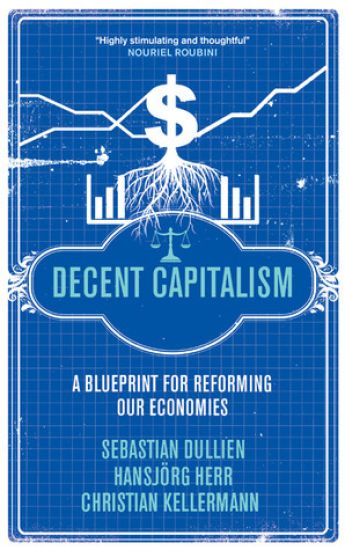
Decent Capitalism

Decent Capitalism

Sebastian Dullien; Hansjörg Herr; Christian Kellermann

Pluto Press
2011
sidottu
The recent crisis, created by finance capitalism, has brought us to the economic abyss. The excessive freedom of international markets has rapidly transformed into international panic, with states struggling to rescue and bail out a globalised financial sector. Reform is promised by our leaders, but in governments dominated by financial interests there is little hope of meaningful change. Decent Capitalism argues for a response that addresses capitalism’s systemic tendency towards crisis, a tendency which is completely absent from the mainstream debate. The authors develop a concept of a moderated capitalism that keeps its core strengths intact while reducing its inherent destructive political force in our societies. This book argues that reforming the capitalist system will have to be far more radical than the current political discourse suggests. Decent Capitalism is a concept and a slogan that will inspire political activists, trade unionists and policy makers to get behind a package of reforms that finally allows the majority to master capitalism.
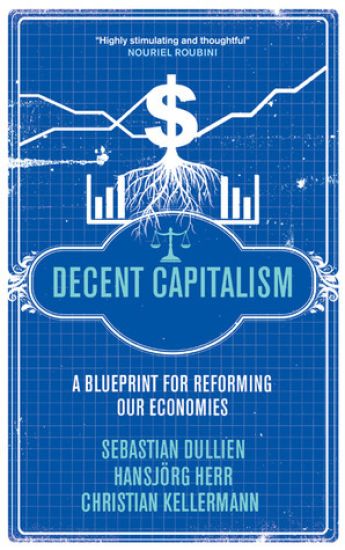
Decent Capitalism

Decent Capitalism

Sebastian Dullien; Hansjörg Herr; Christian Kellermann

PLUTO PRESS
2011
pokkari
The recent crisis, created by finance capitalism, has brought us to the economic abyss. The excessive freedom of international markets has rapidly transformed into international panic, with states struggling to rescue and bail out a globalised financial sector. Reform is promised by our leaders, but in governments dominated by financial interests there is little hope of meaningful change. Decent Capitalism argues for a response that addresses capitalism’s systemic tendency towards crisis, a tendency which is completely absent from the mainstream debate. The authors develop a concept of a moderated capitalism that keeps its core strengths intact while reducing its inherent destructive political force in our societies. This book argues that reforming the capitalist system will have to be far more radical than the current political discourse suggests. Decent Capitalism is a concept and a slogan that will inspire political activists, trade unionists and policy makers to get behind a package of reforms that finally allows the majority to master capitalism.
Macroeconomic Policy Regimes in Western Industrial Countries

Macroeconomic Policy Regimes in Western Industrial Countries

Hansjörg Herr; Milka Kazandziska

Routledge
2011
sidottu
This book analyses how the economic crisis in the 1970s led to the erosion of the regulated type of capitalism that came to be in place after World War II, and paved the way to a Neoliberal Globalisation. Deep structural institutional changes especially in the field of financial markets, labour markets and the international economy became the basis for a liberal type of capitalism which included financial markets in a dominant role. The new neoliberal model fundamentally changed the conditions for all macroeconomic policies. In this book, these macroeconomic policy regimes are discussed on a theoretical level. Macroeconomic Policy Regimes in Western Industrial Countries explains how certain countries have created a more liberal and market-based type of capitalism. The emphasis throughout is on how understanding macroeconomic policies, and the institutional framework in which they operate, is vital to understanding the long-run dynamics of a capitalist economy. The policy regimes that are examined consist of changes in the financial system, monetary policy, fiscal policy, wage policy, and changes in distribution and foreign economic policy. The argument emerges that this deregulated type of capitalism is unacceptably unstable and is only preferable to a minority. Moving on from the finance-driven development of recent decades, the authors take a look at the need for fundamental reforms, including institutional reforms in the areas of national and international financial and labour markets. Case studies from the United States, the United Kingdom, Germany and Japan dating from the 1970s up to today provide the reader with clear examples and analysis of the development in question. This book will be of interest to postgraduates and researchers of economics and political science.