
Kirjailija
Harald Haarmann
Kirjat ja teokset yhdessä paikassa: 33 kirjaa, julkaisuja vuosilta 1986-2025, suosituimpien joukossa Tonavan mysteeri. Vertaile teosten hintoja ja tarkista saatavuus suomalaisista kirjakaupoista.
33 kirjaa
Kirjojen julkaisuhaarukka 1986-2025.
Myth as Source of Knowledge in Early Western Thought: The Quest for Historiography, Science and Philosophy in Greek Antiquity
Harald Haarmann
Harrassowitz
2015
nidottu
The perception of intellectual life in Greek antiquity by the representatives of the European Enlightenment of the 18th century favoured the establishment of the cult of reason. Myth as a potential source of knowledge was disregarded: instead, the monopoly of truth-finding through pure rationalisation was asserted. This tendency, positing, as it did, reason in opposition to myth, did a signal disservice to the realities of intellectual life among the ancient Greeks. Nevertheless, these distortions of the Enlightenment have conditioned our approach to education and have led to our privileging of reason as a mode of enquiry right up to the present day. The ancient Greek intellectuals (i.e. the pre-Socratic philosophers, the early historiographers, philosophers of the classical age) did not set myth (mythos) and reason (logos) in opposition to each other. In fact, they benefited from both as differing modes of enquiry, each in its own right and possessing its own value. Plato, in his reasoning, was much concerned with the proper use of mythical narrative. In one of his dialogues, he even coined a new term for explaining how mythical topics and motifs should be exploited as a source of knowledge. This term is mythologia, and it first occurs in Plato's Republic (394b). The present study aims to offer a corrective to traditional cliches and received wisdom about intellectual life in ancient Greece. The work proposes, and aims to reconstruct, a mental landscape in which myth and reason connect and vividly interact, and in which the concepts of mythos and logos are intertwined in the terminological network of the ancient Greek language.
Contrary to a prevalent belief of the Western world, that democracy, agriculture, theater and the arts were the attainments of Classical Greek civilization, these were actually a Bronze Age fusion of earlier European concepts and Hellenic ingenuity. This work considers both the multicultural wellspring from which these ideas flowed and their ready assimilation by the Greeks, who embraced these hallmarks of civilization, and refined them to the level of sophistication that defines classical antiquity.
This book by renowned anthropologist Harald Haarmann illuminates the acquisition of knowledge, and the meanings underlying forms of knowledge, in a broad temporal scope, ranging from the Neolithic through the modern era. Spiritual knowledge is at the heart of this work, which views myth and religion encoded in Neolithic female figurines and revived in the contemporary "primitive" artwork of artists such as Constantin Brancusi and Henry Moore. Within such a framework, this study employs the knowledge and insights of the relatively new, and very important, interdisciplinary field of archaeomythology, which ties together information from archaeology, DNA studies, mythology, anthropology, classical studies, other ancient language studies, and linguistics. This study does so with a wealth of information in these fields, offering meaningful resolutions to many questions regarding antiquity, and shedding light upon several previously misunderstood phenomena, from the true function of Stonehenge (that its purpose was not astronomical), to the fact that there could not have been a mass movement of agriculturalists from Anatolia to Europe (this is a currently hotly contested issue), to important Eurasian religious beliefs and mythological motifs (with an excellent discussion of shamanism), to systems of writing (with a wonderful discourse upon ancient writing systems), religious expression, and mythology of the exceptionally significant cultures of Old Europe (Neolithic southeastern Europe). The book further discourses upon the legacy of this culture in Minoan and then Greek culture, Old European (pre-Indo-European) lexical items (that is, substrate vocabulary) in Greek, and finally the preservation of Neolithic spirituality in Modern Art. With this interdisciplinary approach, the study demonstrates that all of the subjects of this manuscript are interconnected, in a powerful wholeness. Ancient knowledge, Ancient know-how, Ancient reasoning is an unprecedented study that will appeal across many disciplines, including archaeology, mythology, anthropology, classical studies, ancient language studies, and linguistics. The book also includes many images that will prove helpful to the reader.
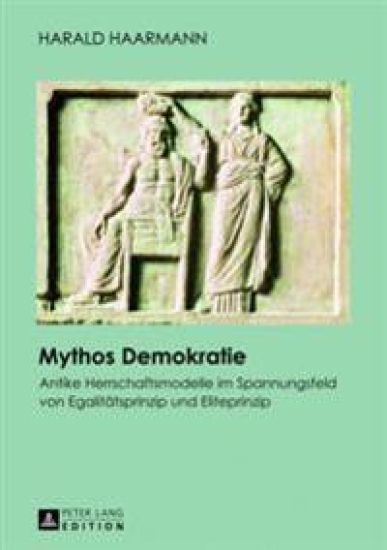
Demokratie ist das am weitesten verbreitete gesellschaftspolitische Modell in der Welt, und es wird lebhaft daruber diskutiert. Wir leben mit allerlei Vorstellungen von dem, was Demokratie ist oder sein koennte, und vieles davon ist mythisch verklart. Wir glauben zu wissen, dass die Griechen der Antike diese Herrschaftsform erfunden hatten. In diesem Buch wird der sprach- und begriffsgeschichtliche sowie allgemein kulturwissenschaftliche Nachweis gefuhrt, dass die Griechen viele Traditionen der vorgriechischen Bevoelkerung angenommen und fortgesetzt haben, und dazu gehoert auch das Prinzip der kommunalen Selbstverwaltung in den Dorfgemeinschaften (Demen). Die vorgriechischen Kulturen Sudosteuropas sind inzwischen recht gut erforscht, so dass heutzutage Vergleiche zwischen dem Gesellschaftsmodell Alteuropas und den Herrschaftsformen der griechischen Antike auf festem Grund stehen. Die Ursprunge der griechischen Demokratie sind in der vorgriechischen AEra zu suchen. Die griechische Demokratie des Athener Staates erlangte Vorbildcharakter und wurde in spateren Perioden als rekursives Modell erneuert. Die Erkenntnisse zu kulturhistorischen Langzeitwirkungen fordern zu einem Paradigmenwechsel fur die Antikenforschung heraus.


Ist Schwarz eine Farbe oder nur Kontrastgeber? Ist Schwarz ein einziger Farbton oder sind es mehrere? Sind Einstellungen zur Farbe Schwarz kulturell gepragt? Wenn man Schwarz sagt, meint man dann tatsachlich auch Schwarz? Es heisst, Schwarz ist die am wenigsten verstandene aller Farben. Insofern ist es eine besondere Herausforderung, die Sinngebung der Farbe Schwarz in den kulturhistorischen Landschaften der Welt auszuleuchten. Eben dies wird in dieser Studie angestrebt, wobei der Diskussion uber Farbmetaphorik besondere Aufmerksamkeit geschenkt wird. Hier werden Erkenntnisse der verschiedensten Fachdisziplinen ausgewertet - darunter der Kunstgeschichte, der Anthropologie, der Linguistik, der Forschung uber kulturelle Stereotypen und der Religionsgeschichte - und zu einer Gesamtschau verdichtet. Dieses Buch ist in einem verstandlichen Essaystil geschrieben und spricht damit den allgemein interessierten akademischen Leser an. Daruber hinaus eignet es sich nach seinem Inhalt und der Vielzahl an Quellenverweisen ebenso als Forschungsinstrument fur die verschiedensten Fachvertreter.
Die "toten" Sprachen leben weiter in unserem kulturellen Gedächtnis. Dem Altgrie-chischen und dem Lateinischen verdanken wir einen großen Teil unseres Kulturwortschatzes, dem Phönizischen die Alphabetschrift, und viele andere alte Sprachen wie das Althebräische, Sumerische, Akkadische und Sanskrit haben sich durch Werke der Weltliteratur unsterblich gemacht. Dieses Lexikon beschreibt in mehr als 100 Artikeln die wichtigsten untergegangenen Sprachen. Es informiert über Gebiete und Zeiträume ihrer Verbreitung, ihre Zugehörigkeit zu Sprachfamilien, Schriftsysteme, überlieferte Literatur sowie ihren Einfluß auf bis heute gesprochene Sprachen. Ein Register und Literaturhinweise runden diese kompetente Einführung ab.

Die Kleinsprachen Der Welt - Existenzbedrohung Und Ueberlebenschancen
Harald Haarmann
Peter Lang AG
2001
nidottu
Die Gefahrdung von Kleinsprachen ist eine Thematik, die uber den engeren fachlichen Rahmen der soziolinguistischen Forschung hinaus immer groessere Aufmerksamkeit auch in der Diskussion uber Menschenrechte, insbesondere uber die kulturellen wie politischen Rechte von Kleinvoelkern findet. Angesichts der Aktualitat der Existenzbedrohung vieler ethnischer Gruppen und ihrer Sprachen ist es verwunderlich, dass bisher eine Gesamtdokumentation uber diese Ethnosprachen, die es in allen Regionen der Welt gibt, ein Desiderat geblieben ist. Dies ist die erste umfassende Dokumentation ihrer Art, in der die oekologischen Existenzbedingungen kleiner Sprachen auf der Basis umfangreichen Datenmaterials untersucht werden. Die Zahl der Kleinsprachen der Welt, die nurmehr von jeweils 1.000 oder weniger Sprechern gesprochen werden, belauft sich auf fast 2.000. Viele dieser Sprachen sind gefahrdet und vom Aussterben bedroht. Andere wiederum sind trotz ihrer geringen Sprecherzahl relativ resistent gegen Assimilationsprozesse. Die Bedingungen der Existenzbedrohung und moegliche UEberlebenschancen auszuloten, ist Aufgabe dieser Studie.


The Contributions to the Sociology of Language series features publications dealing with sociolinguistic theory, methods, findings and applications. It addresses the study of language in society in its broadest sense, as a truly international and interdisciplinary field in which various approaches – theoretical and empirical – supplement and complement each other. The series invites the attention of scholars interested in language in society from a broad range of disciplines – anthropology, education, history, linguistics, political science, and sociology. To discuss your book idea or submit a proposal, please contact Natalie Fecher.
The Contributions to the Sociology of Language series features publications dealing with sociolinguistic theory, methods, findings and applications. It addresses the study of language in society in its broadest sense, as a truly international and interdisciplinary field in which various approaches – theoretical and empirical – supplement and complement each other. The series invites the attention of scholars interested in language in society from a broad range of disciplines – anthropology, education, history, linguistics, political science, and sociology. To discuss your book idea or submit a proposal, please contact Natalie Fecher.