Kirjojen hintavertailu. Mukana 12 595 353 kirjaa ja 12 kauppaa.

Kirjailija

Harlene Anderson

Kirjat ja teokset yhdessä paikassa: 3 kirjaa, julkaisuja vuosilta 1997-2008, suosituimpien joukossa The Appreciative Organization. Vertaile teosten hintoja ja tarkista saatavuus suomalaisista kirjakaupoista.

3 kirjaa

Kirjojen julkaisuhaarukka 1997-2008.

The Appreciative Organization

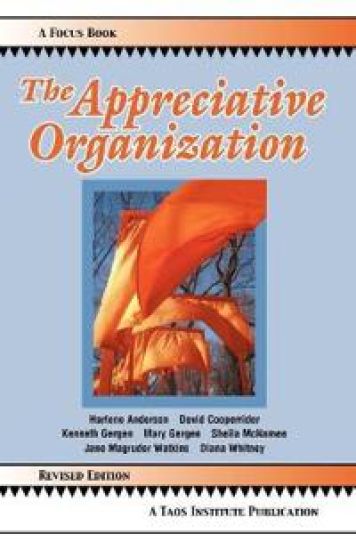
The Appreciative Organization

Harlene Anderson; David Cooperrider; Kenneth Gergen

Taos Institute Publications
2008
pokkari
In the original version of this book the founders of the Taos Institute pooled their substantial resources to create a vision of a powerful and humanly nourishing form of organization and to share practices for bringing this organization into being. Today, The Appreciative Organization has been revised and updated. Based on the authors' diverse experiences in organizational life, they are unanimous in their view that the appreciative construction of meaning is essential to the efficacy of an organization and the fulfillment of its participants. In clear and direct language, the volume treats the challenges of decision making, leadership, group functioning, personnel evaluation, and the relationship of the organization to its context. Bold ideas are developed, examples described, and multiple suggestions developed for creating the appreciative organization. The revised edition of the book builds upon the ideas, concepts and characteristics of the Appreciative Organization. Now included in the book is a section on helpful resources, a chapter on “valuation”, and much more. You will want to add this new “gem” to your personal library. This volume will be of special significance to consultants and organizational members who wish to see the key elements of appreciative inquiry realized in the everyday working of the organization.

Samtale, sprog og terapi

Samtale, sprog og terapi

Harlene Anderson

Gyldendal
2003
nidottu
Hvordan kan en psykoterapeut skabe den form for relation og samtale med en klient, som giver begge mulighed for kreativitet og forandring – selv når det tilsyneladende virker umuligt? I bogen Samtale, sprog og terapi trækker Harlene Anderson overraskende forbindelseslinjer mellem postmoderne teori og samarbejdsformer i klinisk praksis. I denne forståelsesramme betragtes menneskelige systemer som systemer for sprog og kommunikation, hvor klientens stemme har forrang, og hvor sproget er med til at udvikle og nyudvikle liv og relationer, som gør positive forandringer mulige. Med udgangspunkt i sine personlige erfaringer som kliniker og underviser og i klienternes erfaringer ligger Anderson på linje med de sociale tænkere, som udfordrer den velkendte psykoterapikultur, inklusive det teoretiske, praktiske, videnskabelige og uddannelsesmæssige fundament. Harlene Anderson udfordrer dikotomien ekspert/ikke-ekspert og de hierarkiske strukturer, der er knyttet til den. Hun hævder, at de vedtagne forudsætninger og praksis har mistet deres betydning i en verden præget af hastig forandring på det sociale område, og efterlyser i stedet en filosofi for terapi og en relation til klienter, som inviterer til samarbejde. Harlene Anderson er psykolog, ph.d. Hun er medstifter af Houston Galveston Institute og Taos Institute. Hun er bosat i Houston, Texas og arbejder internationalt med undervisning og konsulentarbejde. Oversat fra amerikansk efter Conversations, Language, and Possibilities – A Postmodern Approach to Therapy af Mikal Arboe.
Conversation, Language, And Possibilities

Conversation, Language, And Possibilities

Harlene Anderson

Basic Books
1997
sidottu
How can a therapist create the kind of relationship and conversation with a client that allows both to access their creativity and develop possibilities where none seemed to exist before? To answer this important question, Harlene Anderson invites us on a challenging, inspiring journey with an illuminating blend of postmodern theory and clinical narratives. We first meet a Swedish mother, whose experiences in therapy are wrought with frustration. The rest of the book is an answer to this mother's appeal, showing how therapists and clients can become conversational partners in a powerful process of transformation and change.Drawing on her experiences as a practitioner and teacher and on her clients' experiences of therapy, Harlene Anderson joins social thinkers who challenge the familiar culture of psychotherapy, including the foundations on which its theory, practice, research, and therapist education have been based. Anderson directly challenges the expert-nonexpert dichotomy and hierarchical structures that flow from it. She asserts that conventional premises and practices have lost their relevance in a world of rapid social transformation, and calls instead for a philosophy of therapy and a way of being in client relationships that invite collaboration. Conversation, Language, and Possibilities forges surprising links between postmodern theory and collabourative clinical practice. In this framework, human systems are viewed as systems of language and communication. Clients' voices are privileged. And language is generative in shaping,and reshaping,human life and relationships, creating potentials for positive change as infinite in variety and expression as the individuals who realize them.