Kirjojen hintavertailu. Mukana 12 657 676 kirjaa ja 12 kauppaa.

Kirjailija

Harold Bloom

Kirjat ja teokset yhdessä paikassa: 58 kirjaa, julkaisuja vuosilta 1971-2026, suosituimpien joukossa Native Son - Richard Wright. Vertaile teosten hintoja ja tarkista saatavuus suomalaisista kirjakaupoista.

58 kirjaa

Kirjojen julkaisuhaarukka 1971-2026.

Hur läsa och varför

Hur läsa och varför

Harold Bloom

Modernista
2018
sidottu
Klassisk introduktion till världslitteraturen»Underbar. Harold Bloom är en av de stora pedagogerna. Han skriver med passion om författarna han älskar och vars verk bejakar livet.« | John Banville, Irish Times I en tid när alla kan informera sig om vad som helst, men allt färre förmår koncentrera sig, framstår den lyckade läsningen av en riktig bok som en frälsning från världsplågan stress. För den legendariske amerikanske litteraturkritikern Harold Bloom är läsning ett sätt att finna harmoni men också mer än så. Snarare än information erbjuder den stora litteraturen vishet. Bloom, världsberömd för stora kritiska verk som The Anxiety of Influence [1973] och The Western Canon [1994], riktar här en vädjan till samtiden från en »desperat läsare«. Han inleder med att guida genom de stora genrerna poesi, roman, novell, drama och går sedan snabbt vidare till sina älsklingar: Williamarna Shakespeare och Blake, Emily Dickinson och andra, innan han introducerar sitt hemlands epik. Hur läsa och varför framstår som en allt riktigare och viktigare bok. I svensk översättning av Staffan Holmgren. HAROLD BLOOM, född 1930 i Bronx, New York, är en av vår tids mest erkända och omtalade litteraturkritiker, författare till kritiskt innovativa verk som The Anxiety of Influence [1973] och The Western Canon [1994] och översatt till fler än fyrtio språk. Bloom är professor i humaniora vid Yale University.
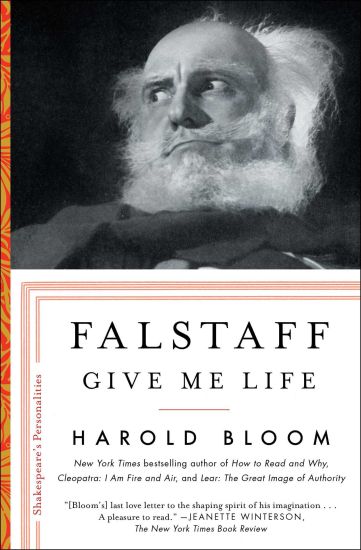
Falstaff: Give Me Life

Falstaff: Give Me Life

Harold Bloom

Scribner Book Company
2018
nidottu
From Harold Bloom, one of the greatest Shakespeare scholars of our time comes "a timely reminder of the power and possibility of words and] the last love letter to the shaping spirit of Bloom's imagination" (front page, The New York Times Book Review) and an intimate, wise, deeply compelling portrait of Falstaff--Shakespeare's greatest enduring and complex comedic characters. Falstaff is both a comic and tragic central protagonist in Shakespeare's three Henry plays: Henry IV, Parts One and Two, and Henry V. He is companion to Prince Hal (the future Henry V), who loves him, goads, him, teases him, indulges his vast appetites, and commits all sorts of mischief with him--some innocent, some cruel. Falstaff can be lewd, funny, careless of others, a bad creditor, an unreliable friend, and in the end, devastatingly reckless in his presumption of loyalty from the new King. Award-winning author and esteemed professor Harold Bloom writes about Falstaff with the deepest compassion and sympathy and also with unerring wisdom. He uses the relationship between Falstaff and Hal to explore the devastation of severed bonds and the heartbreak of betrayal. Just as we encounter one type of Anna Karenina or Jay Gatsby when we are young adults and another when we are middle-aged, Bloom writes about his own shifting understanding of Falstaff over the course of his lifetime. Ultimately we come away with a deeper appreciation of this profoundly complex character, and this "poignant work" (Publishers Weekly, starred review) as a whole becomes an extraordinarily moving argument for literature as a path to and a measure of our humanity. Bloom is mesmerizing in the classroom, wrestling with the often tragic choices Shakespeare's characters make. "In this first of five books about Shakespearean personalities, Bloom brings erudition and boundless enthusiasm" (Kirkus Reviews, starred review) and his exhilarating Falstaff invites us to look at a character as a flawed human who might live in our world.
Shakespeare and Me

Shakespeare and Me

Harold Bloom

Oneworld Publications
2016
pokkari
Why Shakespeare? What explains our continued fascination with his poems and plays? In Shakespeare and Me, Susannah Carson invites 38 actors, directors, scholars and writers to share stories of their own personal relationship with Shakespeare. We hear from Ralph Fiennes on interpreting Coriolanus for a modern filmic audience, James Earl Jones on reclaiming Othello as a tragic hero, Sir Ben Kingsley on communicating Shakespeare’s ideas through performance, Julie Taymor on turning Prospero into Prospera, Brian Cox on social conflict in Shakespeare’s time and ours, Germaine Greer on the playwright’s home life, Dame Harriet Walter on the complexity of his heroines, and Sir Antony Sher on feeling at home in Shakespeare’s language. Together they provide a fresh appreciation of Shakespeare’s works as a living legacy to be read, seen, performed, adapted, revised, wrestled with, and embraced.
The Daemon Knows

The Daemon Knows

Harold Bloom

Oxford University Press
2015
sidottu
Hailed as 'the indispensable critic' by The New York Review of Books, Harold Bloom has for decades been sharing with readers and students his genius and passion for understanding literature and explaining why it matters. In The Daemon Knows, he turns his attention to the writers of his own national literature in a book that is one of his most incisive and profoundly personal to date. Pairing Walt Whitman with Herman Melville, Ralph Waldo Emerson with Emily Dickinson, Nathaniel Hawthorne with Henry James, Mark Twain with Robert Frost, Wallace Stevens with T. S. Eliot, and William Faulkner with Hart Crane, Bloom places these writers' works in conversation with one another, exploring their relationship to the 'daemon'-the spark of genius or Orphic muse-in their creation, and helping us understand their writing with new immediacy and relevance. It is above all the intensity of their preoccupation with the sublime, Bloom suggests, that distinguishes these American writers from their European predecessors. A product of five years of writing and a lifetime of reading and scholarship, The Daemon Knows may be Bloom's most masterly book yet.
The Invention of Influence

The Invention of Influence

Peter Cole; Harold Bloom

New Directions Publishing Corporation
2014
nidottu
Peter Cole has been called "an inspired writer" (The Nation) and “one of the handful of authentic poets of his own American generation” (Harold Bloom). In this, his fourth book of poems, he presents a ramifying vision of human linkage. At the heart of the collection stands the stunning title poem, which brings us into the world of Victor Tausk, a maverick and tragic early disciple of Freud who wrote about one of his patients’ mental inventions — an "influence machine" that controlled his thoughts. In Cole’s symphonic poem, this machine becomes a haunting image for the ways in which tradition and the language of others shape so much of what we think and say. The shorter poems in this rich and surprising volume treat the dynamics of coupling, the curiously varied nature of perfection,the delights of the senses, the perils of poetic vocation, and more.
Frankenstein

Frankenstein

Mary Shelley; Harold Bloom

Signet
2013
pokkari
More than 200 years after it was first published, Mary Shelley's Frankenstein has stood the test of time as a gothic masterpiece--a classic work of horror that blurs the line between man and monster. "If I cannot inspire love, I will cause fear." For centuries, the story of Victor Frankenstein and the monster he created has held readers spellbound. On the surface, it is a novel of tense and steadily mounting dread. On a more profound level, it illuminates the triumph and tragedy of the human condition in its portrayal of a scientist who oversteps the bounds of conscience, and of a creature tortured by the solitude of a world in which he does not belong. A novel of almost hallucinatory intensity, Mary Shelley's Frankenstein represents one of the most striking flowerings of the Romantic imagination. With an Introduction by Douglas Clegg And an Afterword by Harold Bloom
The Shadow of a Great Rock

The Shadow of a Great Rock

Harold Bloom

Yale University Press
2012
pokkari
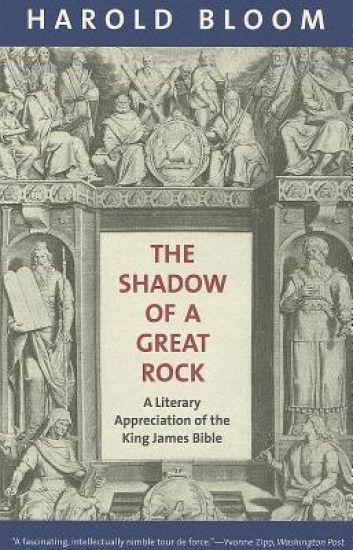
A richly insightful reading of the King James Bible as a literary masterwork, published for the text's 400-year anniversary The King James Bible stands at "the sublime summit of literature in English," sharing the honor only with Shakespeare, Harold Bloom contends in the opening pages of this illuminating literary tour. Distilling the insights acquired from a significant portion of his career as a brilliant critic and teacher, he offers readers at last the book he has been writing "all my long life," a magisterial and intimately perceptive reading of the King James Bible as a literary masterpiece.Bloom calls it an "inexplicable wonder" that a rather undistinguished group of writers could bring forth such a magnificent work of literature, and he credits William Tyndale as their fountainhead. Reading the King James Bible alongside Tyndale's Bible, the Geneva Bible, and the original Hebrew and Greek texts, Bloom highlights how the translators and editors improved upon—or, in some cases, diminished—the earlier versions. He invites readers to hear the baroque inventiveness in such sublime books as the Song of Songs, Ecclesiastes, and Job, and alerts us to the echoes of the King James Bible in works from the Romantic period to the present day. Throughout, Bloom makes an impassioned and convincing case for reading the King James Bible as literature, free from dogma and with an appreciation of its enduring aesthetic value.
The Fourth Dimension of a Poem

The Fourth Dimension of a Poem

M. H. Abrams; Harold Bloom

WW Norton Co
2012
sidottu
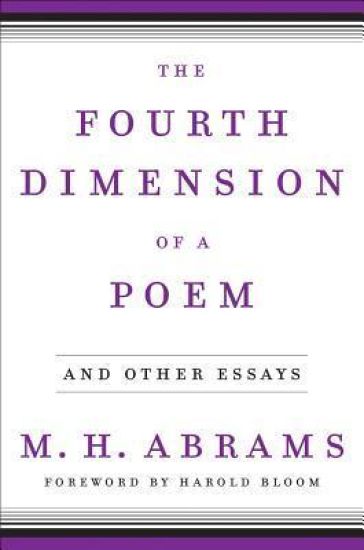
In the year of his one-hundredth birthday, preeminent literary critic, scholar, and teacher M. H. Abrams brings us a collection of nine new and recent essays that challenge the reader to think about poetry in new ways. In these essays, three of them never before published, Abrams engages afresh with pivotal figures in intellectual and literary history, among them Kant, Keats, and Hazlitt. The centerpiece of the volume is Abrams’s eloquent and incisive essay “The Fourth Dimension of a Poem” on the pleasure of reading poems aloud, accompanied by online recordings of Abrams’s revelatory readings of poems such as William Wordsworth’s “Surprised by Joy,” Alfred Tennyson’s “Here Sleeps the Crimson Petal,” and Ernest Dowson’s “Cynara.” The collection begins with a foreword by Abrams’s former student Harold Bloom.
Allegory

Allegory

Angus Fletcher; Harold Bloom

Princeton University Press
2012
pokkari
Anyone who has ever said one thing and meant another has spoken in the mode of allegory. The allegorical expression of ideas pervades literature, art, music, religion, politics, business, and advertising. But how does allegory really work and how should we understand it? For more than forty years, Angus Fletcher's classic book has provided an answer that is still unsurpassed for its comprehensiveness, brilliance, and eloquence. With a preface by Harold Bloom and a substantial new afterword by the author, this edition reintroduces this essential text to a new generation of students and scholars of literature and art. Allegory puts forward a basic theory of allegory as a symbolic mode, shows how it expresses fundamental emotional and cognitive drives, and relates it to a wide variety of aesthetic devices. Revealing the immense richness of the allegorical tradition, the book demonstrates how allegory works in literature and art, as well as everyday speech, sales pitches, and religious and political appeals. In his new afterword, Fletcher documents the rise of a disturbing new type of allegory--allegory without ideas.
The Anatomy of Influence

The Anatomy of Influence

Harold Bloom

Yale University Press
2012
pokkari
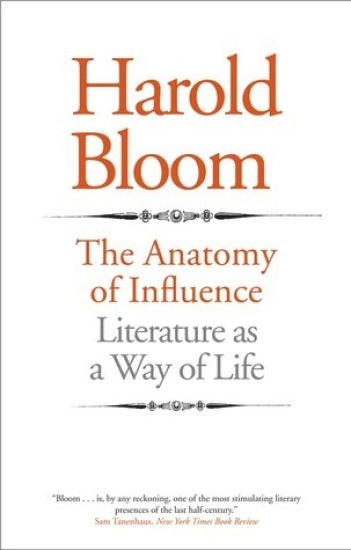
Our most revered critic returns to his signature theme "Literary criticism, as I attempt to practice it," writes Harold Bloom in The Anatomy of Influence, "is in the first place literary, that is to say, personal and passionate."For more than half a century, Bloom has shared his profound knowledge of the written word with students and readers. In this, his most comprehensive and accessible study of influence, Bloom leads us through the labyrinthine paths which link the writers and critics who have informed and inspired him for so many years. The result is "a critical self-portrait," a sustained meditation on a life lived with and through the great works of the Western canon: Why has influence been my lifelong obsessive concern? Why have certain writers found me and not others? What is the end of a literary life?Featuring extended analyses of Bloom's most cherished poets—Shakespeare, Whitman, and Crane—as well as inspired appreciations of Emerson, Tennyson, Browning, Yeats, Ashbery, and others, The Anatomy of Influence adapts Bloom's classic work The Anxiety of Influence to show us what great literature is, how it comes to be, and why it matters. Each chapter maps startling new literary connections that suddenly seem inevitable once Bloom has shown us how to listen and to read. A fierce and intimate appreciation of the art of literature on a scale that the author will not again attempt, TheAnatomy of Influence follows the sublime works it studies, inspiring the reader with a sense of something ever more about to be.
Till I End My Song

Till I End My Song

Harold Bloom

HarperPerennial
2012
nidottu
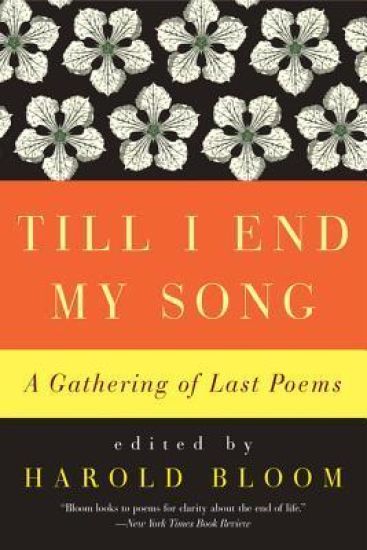
"By definition, all living poets are excluded from this book. Myself seventy-nine years of age, I grieve still for many of these poets who were my friends. But knowledge, not pathos, is my purpose in gathering this anthology. Lastness is a part of knowing". (Harold Bloom). From Harold Bloom, the foremost literary critic of our time, comes a delightful anthology of the final works of great poets. In "Till I End My Song", Bloom has meticulously curated the last poems of one hundred influential poets. These poems, sometimes the literal end and other times the imagined conclusion to a poetic career, offer a lens through which to contemplate the enduring nature of art and the inevitability of death. Bloom's selections highlight the work of the canonized poets T.S. Eliot, Alexander Pope, W.B. Yeats, Walt Whitman, Emily Dickinson, and William Shakespeare, but also revive interest in distinguished but long-neglected poets, such as Conrad Aiken, William Cowper, Edwin Arlington Robinson, George Meredith, and Louis MacNeice. An authoritative collection of last poems, "Till I End My Song" will reverberate long into the coming silence.
The Road

The Road

Harold Bloom

Facts On File Inc
2011
sidottu
Cormac McCarthy's jarring, dystopic vision of a father and son's fraught journey to an unknown destination earned him the Pulitzer Prize for Fiction in 2007. McCarthy peoples his bleak landscapes with individuals forced to renegotiate their own moral borders. The sparsity of the author's style creates a lyric tension with the bleak imagery and graphic realities that are part of this postapocalyptic world. In this new volume, critical excerpts explore this contemporary classic, and features include an annotated bibliography, an index, a list of characters from the work, and extensive summary and analysis, making this entry in the Bloom's Guides series a valuable addition.
Shakespeare

Shakespeare

Harold Bloom

HARPERCOLLINS PUBLISHERS
2008
nidottu
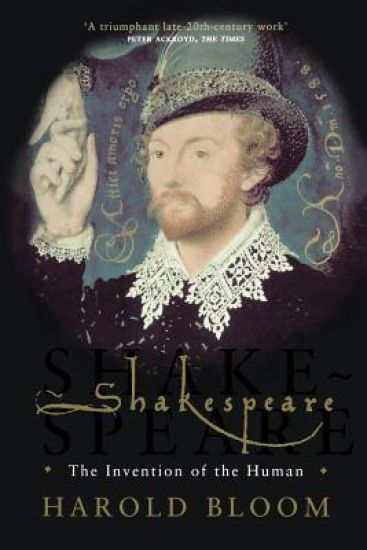
Harold Bloom, the doyen of American literary critics and author of The Western Canon, has spent a professional lifetime reading, writing about and teaching Shakespeare. In this magisterial interpretation, Bloom explains Shakespeare’s genius in a radical and provocative re-reading of the plays. How to understand Shakespeare, whose ability so far exceeds his predecessors and successors, whose genius has defied generations of critics’ explanations, whose work is of greater influence in the modern age even than the Bible? This book is a visionary summation of Harold Bloom’s reading of Shakespeare and in it he expounds a brilliant and far-reaching critical theory: that Shakespeare was, through his dramatic characters, the inventor of human personality as we have come to understand it. In short, Shakespeare invented our understanding of ourselves. He knows us better than we do: ‘The plays remain the outward limit of human achievement: aesthetically, cognitively, in certain ways morally, even spiritually. They abide beyond the end of the mind’s reach; we cannot catch up to them. Shakespeare will go on explaining us in part because he invented us… ’ In a chronological survey of each of the plays, Bloom explores the supra-human personalities of Shakespeare’s great protagonists: Hamlet, Lear, Falstaff, Rosalind, Juliet. They represent the apogee of Shakespeare’s art, that art which is Britain’s most powerful and dominant cultural contribution to the world, here vividly recovered by an inspired and wise scholar at the height of his powers.
The Best Poems of the English Language

The Best Poems of the English Language

Harold Bloom

HarperPerennial
2007
nidottu
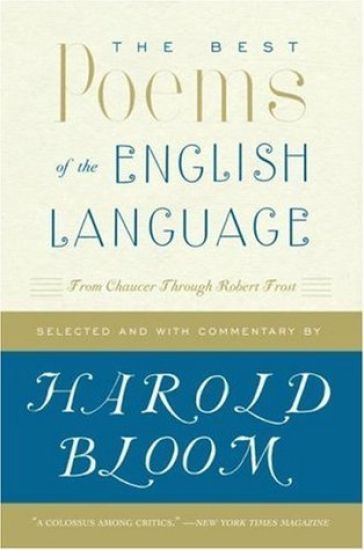
Almost all other poetry anthologies have been edited and annotated by a committee of scholars. This is entirely Bloom's selection with his own inimitable commentary. This comprehensive anthology attempts to give the common reader possession of six centuries of great British and American poetry. The book features a large introductory essay by Harold Bloom called "The Art of Reading Poetry," which presents his critical reflections of more than half a century devoted to the reading, teaching, and writing about the literary achievement he loves most. There are also headnotes by Harold Bloom to every poet in the volume as well as to the most important individual poems. Much more than any other anthology ever gathered, this book provides readers who desire the pleasures of a sublime art with very nearly everything they need in a single volume. It also is regarded by its editor as his final meditation upon all those who have formed his mind.
Knus de hellige sannheter

Knus de hellige sannheter

Harold Bloom

Cappelen Damm akademisk
2007
nidottu
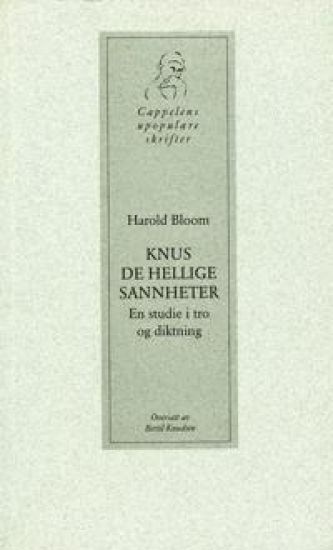
Boken er viet to sentrale temaer i kritikken av den vestlige kanon: det ene er forholdet mellom jødisk spiritualitet og det dikterisk sublime, det andre er forholdet mellom dikterisk originalitet og litterære verkers kanoniske status som "hellige sannheter".For litteraturvitere, teologer og idèhistorikere. Nr. 24 i Cappelens upopulære skrifter.
Kabbalah and Criticism

Kabbalah and Criticism

Harold Bloom

Continuum International Publishing Group Ltd.
2005
nidottu
While Bloom is appreciated for his originality, range and clarity, less notice has been taken of the remarkable unity that is displayed in his writings from the earlier studies on Shelley, Blake and Romanticism, up to A Map of Misreading. That unity is brilliantly highlighted in Kabbalah and Criticism. Providing a study of the Kabbalah itself, its great commentators, the 'revisionary ratios' they employed and of its significance as a model for contemporary criticism, Kabbalah and Criticism is an indispensable book for all students of literature as well as for all those who are fascinated by this singularly rich body of mystical writings.
Where Shall Wisdom Be Found?

Where Shall Wisdom Be Found?

Harold Bloom

Riverhead Books
2005
nidottu
Journeying from the Bible to twentieth-century writings, the distinguished literary critic and author of Shakespeare: The Invention of the Human explores the ways in which literature can transform and shape one's life, discussing such topics as the Book of Job and Ecclesiastes, Plato and Homer, St. Augustine, Freud and Proust, and more. Reprint.
Shakespeare's The Merchant of Venice

Shakespeare's The Merchant of Venice

Harold Bloom

Riverhead Books,U.S.
2005
pokkari
The award-winning author of Shakespeare: The Invention of the Human shares his incisive meditations and commentary on each of the great Shakespearean comedies, tragedies, and history plays in a series that also includes the full text of each play, with editorial revisions by the critic, in each volume.