Kirjojen hintavertailu. Mukana 12 390 323 kirjaa ja 12 kauppaa.

Kirjailija

Harold Nicolson

Kirjat ja teokset yhdessä paikassa: 28 kirjaa, julkaisuja vuosilta 1970-2026, suosituimpien joukossa Programme for Victory (Works of Harold J. Laski). Vertaile teosten hintoja ja tarkista saatavuus suomalaisista kirjakaupoista.

28 kirjaa

Kirjojen julkaisuhaarukka 1970-2026.

Programme for Victory (Works of Harold J. Laski)

Programme for Victory (Works of Harold J. Laski)

Harold J. Laski; Harold Nicolson; Herbert Read; W. M. Macmillan; Ellen Wilkinson; G. D. H. Cole

Routledge
2016
nidottu
Written two years after the commencement of the Second World War, the chapters in this book succinctly put forward the case for reorganizing the foundations of the social order, by rejecting capitalism and historical equilibrium, both in Europe and further afield in the British Empire, in favour of building a Socialist civilization.
Programme for Victory (Works of Harold J. Laski)

Programme for Victory (Works of Harold J. Laski)

Harold J. Laski; Harold Nicolson; Herbert Read; W. M. Macmillan; Ellen Wilkinson; G. D. H. Cole

Routledge
2014
sidottu
Written two years after the commencement of the Second World War, the chapters in this book succinctly put forward the case for reorganizing the foundations of the social order, by rejecting capitalism and historical equilibrium, both in Europe and further afield in the British Empire, in favour of building a Socialist civilization.
English Men Or Letters Swinburne

English Men Or Letters Swinburne

Harold Nicolson

Hassell Street Press
2021
sidottu
This work has been selected by scholars as being culturally important and is part of the knowledge base of civilization as we know it.This work is in the public domain in the United States of America, and possibly other nations. Within the United States, you may freely copy and distribute this work, as no entity (individual or corporate) has a copyright on the body of the work.Scholars believe, and we concur, that this work is important enough to be preserved, reproduced, and made generally available to the public. To ensure a quality reading experience, this work has been proofread and republished using a format that seamlessly blends the original graphical elements with text in an easy-to-read typeface.We appreciate your support of the preservation process, and thank you for being an important part of keeping this knowledge alive and relevant.
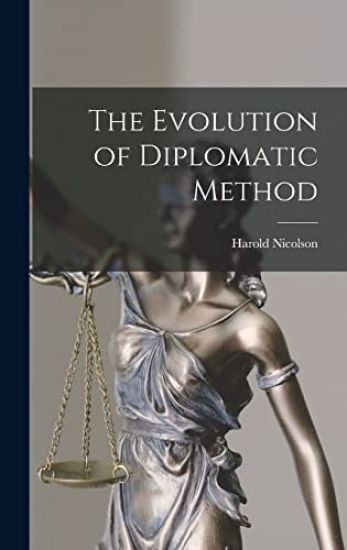
The Evolution of Diplomatic Method

The Evolution of Diplomatic Method

Harold Nicolson

Hassell Street Press
2021
sidottu
This work has been selected by scholars as being culturally important and is part of the knowledge base of civilization as we know it.This work is in the public domain in the United States of America, and possibly other nations. Within the United States, you may freely copy and distribute this work, as no entity (individual or corporate) has a copyright on the body of the work.Scholars believe, and we concur, that this work is important enough to be preserved, reproduced, and made generally available to the public. To ensure a quality reading experience, this work has been proofread and republished using a format that seamlessly blends the original graphical elements with text in an easy-to-read typeface.We appreciate your support of the preservation process, and thank you for being an important part of keeping this knowledge alive and relevant.
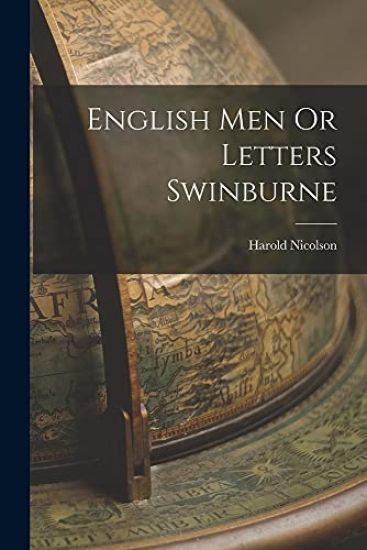
English Men Or Letters Swinburne

English Men Or Letters Swinburne

Harold Nicolson

Hassell Street Press
2021
nidottu
This work has been selected by scholars as being culturally important and is part of the knowledge base of civilization as we know it.This work is in the public domain in the United States of America, and possibly other nations. Within the United States, you may freely copy and distribute this work, as no entity (individual or corporate) has a copyright on the body of the work.Scholars believe, and we concur, that this work is important enough to be preserved, reproduced, and made generally available to the public. To ensure a quality reading experience, this work has been proofread and republished using a format that seamlessly blends the original graphical elements with text in an easy-to-read typeface.We appreciate your support of the preservation process, and thank you for being an important part of keeping this knowledge alive and relevant.
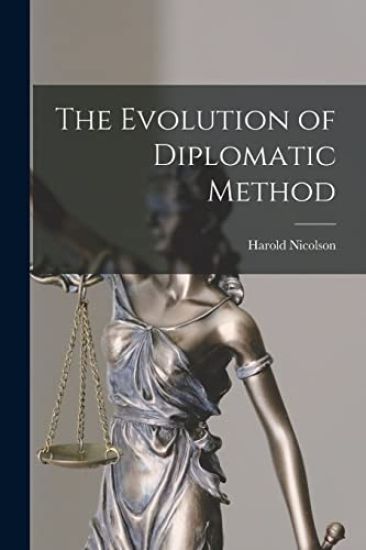
The Evolution of Diplomatic Method

The Evolution of Diplomatic Method

Harold Nicolson

Hassell Street Press
2021
nidottu
This work has been selected by scholars as being culturally important and is part of the knowledge base of civilization as we know it.This work is in the public domain in the United States of America, and possibly other nations. Within the United States, you may freely copy and distribute this work, as no entity (individual or corporate) has a copyright on the body of the work.Scholars believe, and we concur, that this work is important enough to be preserved, reproduced, and made generally available to the public. To ensure a quality reading experience, this work has been proofread and republished using a format that seamlessly blends the original graphical elements with text in an easy-to-read typeface.We appreciate your support of the preservation process, and thank you for being an important part of keeping this knowledge alive and relevant.
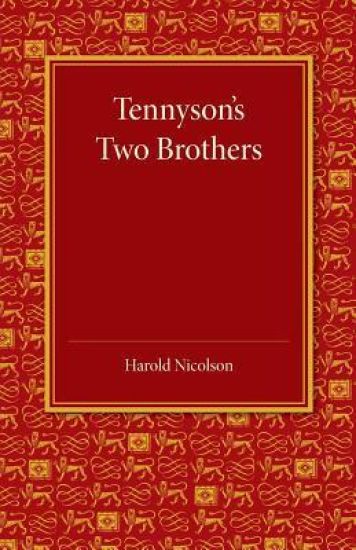
Tennyson's Two Brothers

Tennyson's Two Brothers

Harold Nicolson

Cambridge University Press
2014
pokkari
Originally published in 1947, this book contains the text of the 1947 Leslie Stephen Lecture, delivered by Vita Sackville-West's ex-husband Harold Nicolson on the fate of Tennyson's two brothers Frederick and Charles. This book will be of value to anyone with an interest in Tennyson's life and family.
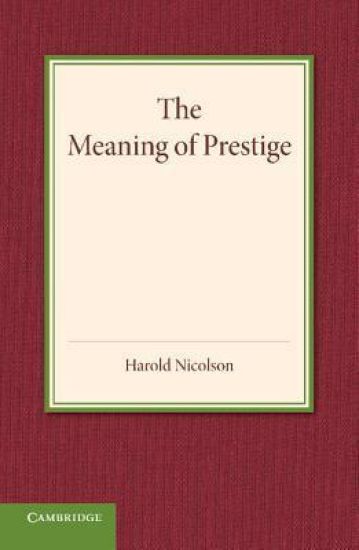
The Meaning of Prestige

The Meaning of Prestige

Harold Nicolson

Cambridge University Press
2014
pokkari
Originally published in 1937, this volume contains the text of the Rede Lecture for that year, delivered by Vita Sackville-West's ex-husband Harold Nicolson. This book will be of value to anyone with an interest in the history of British diplomacy and British nationalism.
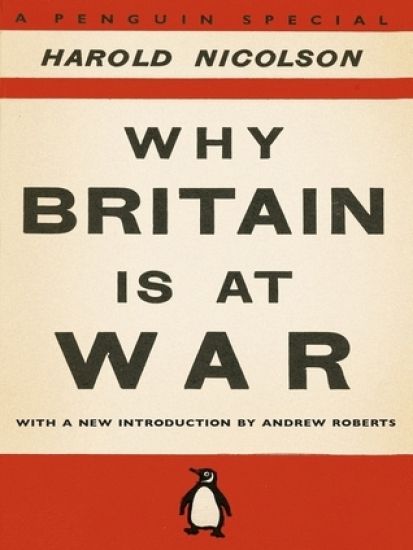
Why Britain is at War

Why Britain is at War

Harold Nicolson

Penguin Books Ltd
2010
nidottu
"If we in Great Britain are resolute and wise there will emerge from this catastrophe something which may well give hope to the world" First published in 1939 as a Penguin Special, this is the original best-selling account of why Britain went to war with Germany. In simple terms it describes the stages of Adolf Hitler's ruthless pursuit for power, identifies his methods of deception and false diplomacy, and details his terrifying use of force that rendered peaceful negotiation increasingly difficult, and finally impossible. Shining a light on Hitler's early life and character, Harold Nicolson reveals the dictator's political theories in Mein Kampf, and explains the strategies he adopted in seizing the Rhineland, Austria, Czechoslovakia and later Poland. Written with clarity and insight, and read widely by soldiers during World War II, the final message of hope and peace is as relevant today as it was in 1939.This facsimile edition includes a new introduction by Andrew Roberts, best-selling author of The Storm of War; Masters and Commanders and Hitler and Churchill: Secrets of Leadership.
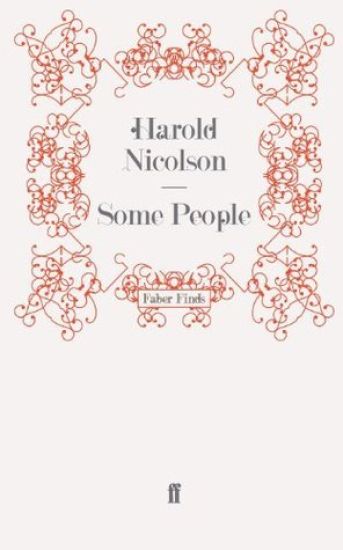
Some People

Some People

Harold Nicolson

Faber Faber
2010
pokkari
On the face of it, bracketing Harold Nicolson and Vladimir Nabokov seems unexpected but the latter paid a remarkable tribute to Some People. When speaking to Harold Nicolson's son, Nigel, he confessed that all his life he had been fighting against the influence of Some People.' The style of that book is like a drug', he said. The critic and biographer, Stacy Schiff, has also admitted 'Some People has exerted more influence than I care to admit. I would reread it any day of the week.'Ever since first publication in 1927 it has been attracting this sort of praise. It is an unusual book comprising nine chapters each one being a sort of character sketch: Miss Plimsoll; J. D. Marstock; Lambert Orme; The Marquis de Chaumont; Jeanne de Henaut; Titty; Professor Malone; Arketall; Miriam Codd. The author himself writes, a little disingenuously, 'Many of the following sketches are purely imaginary. Such truths as they may contain are only half-truths.' In fact, it would be difficult to point to one, other than Miriam Codd, that was 'purely imaginary', some were composite portraits, others skilful amalgams of divers traits from a variety of different people, and others much more overtly drawn from one real-life figure, for example Lambert Orme clearly represents Ronald Firbank, and Arketall Lord Curzon's bibulous valet. There is nothing else quite like Some People and in its own playful way is beyond category. To be tedious for a moment, we have to call it fiction but are then immediately thrown by Virginia Woolf's deft summary, 'He lies in wait for his own absurdities as artfully as theirs. Indeed by the end of the book we realize that the figure which has been most completely and most subtly displayed is that of the author . . . It is thus, he would seem to say, in the mirrors of our friends that we chiefly live.' Fiction? Biography? Autobiography? - the category doesn't matter, the result is spellbinding however you choose to read it.
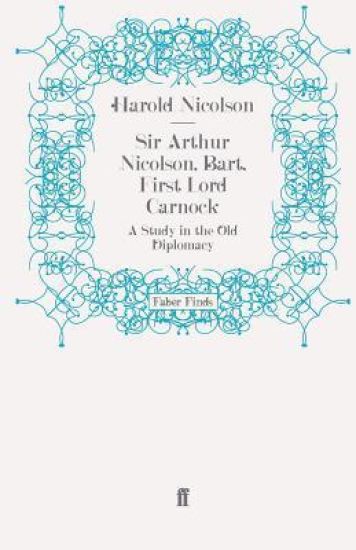
Sir Arthur Nicolson, Bart, First Lord Carnock
Without exaggeration this can be said to be two books in one: it is both a biography of Harold Nicolson's father and a history of British diplomacy from the late nineteenth-century until the middle of the First World War. Described as 'the quintessential diplomat' Sir Arthur's various postings took in Berlin, Peking, Athens, Teheran, Budapest, Constantinople, Madrid and St Petersburg. During his career his instincts mutated from pro-German and hating France and Russia, into a stage of wanting to make friends with those two countries and hating Germany. Harold Nicolson has an interesting and brave hypothesis regarding the First World War making a distinction between its origin and its causes. Regarding the former, in the words of his biographer James Lees-Milne, 'Harold maintained that from the years 1900 to 1914 we, compared to the Germans, had a clean sheet, whereas regarding the latter, say from the year 1500 to 1900 our sheet was very black indeed. Our Elizabethans behaved worse than the Kaiser's imperialists. And when the Kaiser's imperialists in the last two decades of the nineteenth-century developed predatory instincts in Africa, they met from us ''pained and patronising surprise.'' Harold with justice and a good deal of courage blamed Great Britain for the causes and Germany for the origin of the great conflict.' Harold Nicolson always considered this to be his best book and its universally favourable reception supports that with the Times Literary Supplement observing that as a biography it was composed in the new intimate fashion introduced by Lytton Strachey. As has been said though, it was more than a biography, it was a history, and a most fascinating one, of the period leading up to the Great War.
Curzon: The Last Phase, 1919-1925

Curzon: The Last Phase, 1919-1925

Harold Nicolson

Faber Faber
2010
pokkari
In Harold Nicolson's own words 'This study of Lord Curzon represents the third volume of a trilogy on British diplomacy covering the years from 1870 to 1924. The first volume of that trilogy was a biography entitled Lord Carnock: A Study in the Old Diplomacy. The second volume was a critical survey of the Paris conference called Peacemaking, 1919.' All three volumes are reissued in Faber Finds.Curzon himself, not a modest man it must be admitted, rated highly the work of his final years. In his 'Literary Testament' dictated only a few hours before his death he said, 'As to my work as Foreign Secretary from 1918 to 1924 - a period of unparalleled difficulty in international affairs and of great personal worry and sometimes tribulation . . . - I court the fullest publicity as to my conduct in those anxious years and can imagine no better justification than the publication of any or all the telegrams, despatches, minutes and records of interviews for which I was responsible.'Some of the chapter headings alone remind us of what an eventful period it was: Armistice, The Eastern Question, Smyrna, Persia, Egypt, Reparation, Chanak and Lausanne. It is perhaps a pity that Harold Nicolson didn't write the official biography of Lord Curzon (he was a candidate) but what we have here is a work that is, in the words of David Gilmour, another biographer of Curzon, 'acute, jaunty, readable and sympathetic.'
Peacemaking, 1919

Peacemaking, 1919

Harold Nicolson

Faber Faber
2009
nidottu
'Of all branches of human endeavour, diplomacy is the most protean.' That is how Harold Nicolson begins this book. It is an apt opening. The Paris Conference of 1919, attended by thirty-two nations, had the supremely challenging task of attempting to bring about a lasting peace after the global catastrophe of the Great War. Harold Nicolson was a member of the British delegation. His book is in two parts. In the first he provides an account of the conference, in the second his diary covering his six month stint. There is a piquant counterpoise between the two. Of his diary he writes, 'I should wish it to be read as people read the reminiscences of a subaltern in the trenches. There is the same distrust of headquarters; the same irritation against the staff-officer who interrupts; the same belief that one's own sector is the centre of the battle-front; the same conviction that one is, with great nobility of soul, winning the war quite single-handed.' The diary ends with prophetic disillusionment, 'To bed, sick of life.'As a first-hand account of one of the most important events shaping the modern world this book remains a classic.
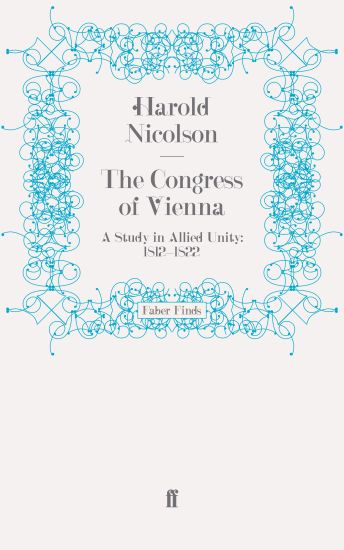
The Congress of Vienna

The Congress of Vienna

Harold Nicolson

Faber Faber
2009
nidottu
Harold Nicolson was well qualified to write this book. His father, Sir Arthur Nicolson, was a diplomat as he himself was in early adulthood being a member of the British delegation to the Paris Peace Conference of 1919 as well as serving in other capacities.A later historian of the Congress, Adam Zamoyski, has described it in the following way: 'The reconstruction of Europe at the Congress of Vienna is probably the most seminal episode in modern history.' Harold Nicolson's classic account written piquantly just after the Second World War is memorable not just for its adroit grasp of the many complex issues but also for its numerous vivid character sketches of the principal peacemakers: Alexander I of Russia, Metternich, Talleyrand, Castlereagh and others are brought brilliantly to life.'Mr Nicolson has written a vivid, entertaining and penetrating book about an episode in nineteenth-century history with which has gifts and his own education most particularly qualified him to deal. Moreover he often makes valuable generalisations. . . In a short review it is impossible to convey by quotation those qualities which will make it eagerly sought after: its vivid portraits and scenes from the past: its clear analysis of political situations as they arise; its shrewd comments on the characters of the men who dealt with them.' Desmond MacCarthy, Sunday Times Faber Finds is reissuing all of Harold Nicolson's works of diplomatic history: The Congress of Vienna: A Study in Allied Unity, 1812 - 1822; Lord Carnock: A Study in Old Diplomacy: Peacemaking, 1919 and Curzon: The Last Phase, 1919 - 1925.