Kirjojen hintavertailu. Mukana 12 322 404 kirjaa ja 12 kauppaa.

Kirjailija

Harper-Scott J. P. E.

Kirjat ja teokset yhdessä paikassa: 3 kirjaa, julkaisuja vuosilta 2006-2012, suosituimpien joukossa The Quilting Points of Musical Modernism. Vertaile teosten hintoja ja tarkista saatavuus suomalaisista kirjakaupoista.

3 kirjaa

Kirjojen julkaisuhaarukka 2006-2012.

The Quilting Points of Musical Modernism

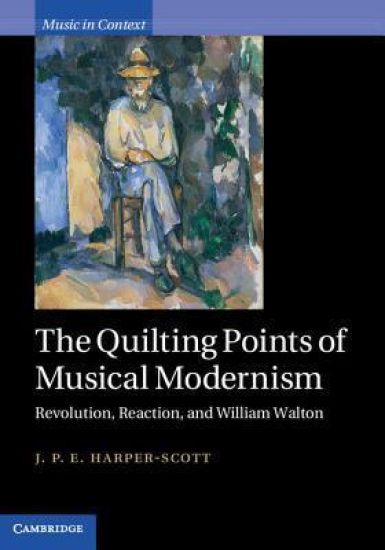
The Quilting Points of Musical Modernism

Harper-Scott J. P. E.

Cambridge University Press
2012
sidottu
Modernism is both a contested aesthetic category and a powerful political statement. Modernist music was condemned as degenerate by the Nazis and forcibly replaced by socialist realism under the Soviets. Sympathetic philosophers and critics have interpreted it as a vital intellectual defence against totalitarianism, yet some American critics consider it elitist, undemocratic and even unnatural. Drawing extensively on the philosophy of Heidegger and Badiou, The Quilting Points of Musical Modernism proposes a new dialectical theory of faithful, reactive and obscure subjective responses to musical modernism, which embraces all the music of Western modernity. This systematic definition of musical modernism introduces readers to theory by Badiou, Žižek and Agamben. Basing his analyses on the music of William Walton, Harper-Scott explores connections between the revolutionary politics of the nineteenth and twentieth centuries and responses to the event of modernism in order to challenge accepted narratives of music history in the twentieth century.
Edward Elgar, Modernist

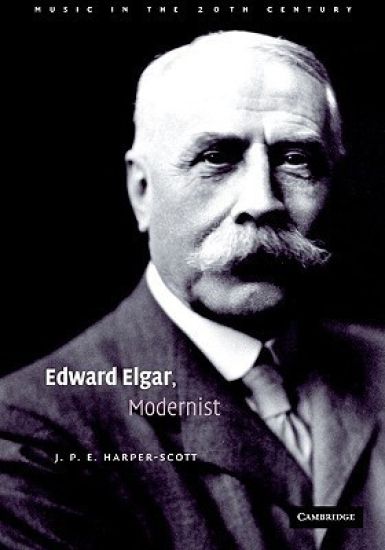
Edward Elgar, Modernist

Harper-Scott J. P. E.

Cambridge University Press
2009
pokkari
The first full-length analytical study of Edward Elgar's music, this book argues that Elgar was a modernist composer, and that his music constitutes a pessimistic twentieth-century assessment of the nature of human being. Focusing on Elgar's music rather than his life, Harper-Scott blends the hermeneutic and existential philosophy of Martin Heidegger with music-analytical methods derived from Heinrich Schenker and James Hepokoski. In the course of engaging with debates centred on duotonality in musical structures, sonata deformations, meaning in music, the nature of tragedy, and the quest narrative, the book rejects poststructuralist and literary-theoretical interpretations of music, radically interprets Schenkerian theory, and tentatively outlines a new space - a Heideggerian 'clearing' - in which music of all periods can be understood to operate, be experienced and be understood. The book includes a detailed glossary which provides the reader with clear definitions of important and difficult terms.
Edward Elgar, Modernist

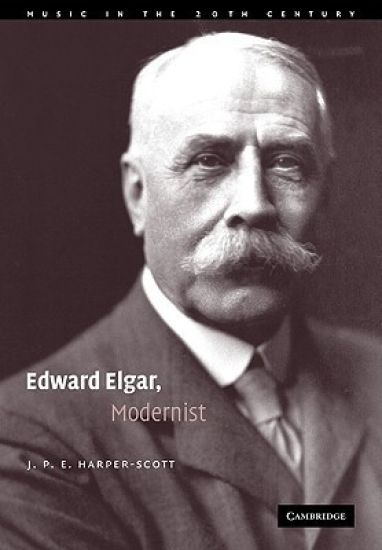
Edward Elgar, Modernist

Harper-Scott J. P. E.

Cambridge University Press
2006
sidottu
The first full-length analytical study of Edward Elgar's music, this book argues that Elgar was a modernist composer, and that his music constitutes a pessimistic twentieth-century assessment of the nature of human being. Focusing on Elgar's music rather than his life, Harper-Scott blends the hermeneutic and existential philosophy of Martin Heidegger with music-analytical methods derived from Heinrich Schenker and James Hepokoski. In the course of engaging with debates centred on duotonality in musical structures, sonata deformations, meaning in music, the nature of tragedy, and the quest narrative, the book rejects poststructuralist and literary-theoretical interpretations of music, radically interprets Schenkerian theory, and tentatively outlines a new space - a Heideggerian 'clearing' - in which music of all periods can be understood to operate, be experienced and be understood. The book includes a detailed glossary which provides the reader with clear definitions of important and difficult terms.