Kirjojen hintavertailu. Mukana 12 390 323 kirjaa ja 12 kauppaa.

Kirjailija

Harry Brighouse

Kirjat ja teokset yhdessä paikassa: 11 kirjaa, julkaisuja vuosilta 2004-2021, suosituimpien joukossa Educational Goods. Vertaile teosten hintoja ja tarkista saatavuus suomalaisista kirjakaupoista.

11 kirjaa

Kirjojen julkaisuhaarukka 2004-2021.

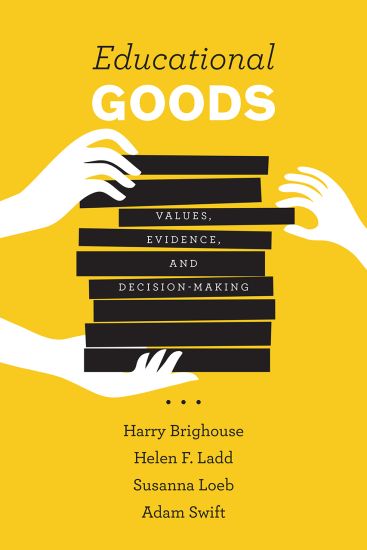
Educational Goods

Educational Goods

Harry Brighouse; Helen F. Ladd; Susanna Loeb; Adam Swift

University of Chicago Press
2018
nidottu
We spend a lot of time arguing about how schools might be improved. But we rarely take a step back to ask what we as a society should be looking for from education what exactly should those who make decisions be trying to achieve? In Educational Goods, two philosophers and two social scientists address this very question. They begin by broadening the language for talking about educational policy: "educational goods" are the knowledge, skills, and attitudes that children develop for their own benefit and that of others; "childhood goods" are the valuable experiences and freedoms that make childhood a distinct phase of life. Balancing those, and understanding that not all of them can be measured through traditional methods, is a key first step. From there, they show how to think clearly about how those goods are distributed and propose a method for combining values and evidence to reach decisions. They conclude by showing the method in action, offering detailed accounts of how it might be applied in school finance, accountability, and choice. The result is a reimagining of our decision making about schools, one that will sharpen our thinking on familiar debates and push us toward better outcomes.
Educational Goods

Educational Goods

Harry Brighouse; Helen F. Ladd; Susanna Loeb; Adam Swift

University of Chicago Press
2018
sidottu
We spend a lot of time arguing about how schools might be improved. But we rarely take a step back to ask what we as a society should be looking for from education what exactly should those who make decisions be trying to achieve? In Educational Goods, two philosophers and two social scientists address this very question. They begin by broadening the language for talking about educational policy: "educational goods" are the knowledge, skills, and attitudes that children develop for their own benefit and that of others; "childhood goods" are the valuable experiences and freedoms that make childhood a distinct phase of life. Balancing those, and understanding that not all of them can be measured through traditional methods, is a key first step. From there, they show how to think clearly about how those goods are distributed and propose a method for combining values and evidence to reach decisions. They conclude by showing the method in action, offering detailed accounts of how it might be applied in school finance, accountability, and choice. The result is a reimagining of our decision making about schools, one that will sharpen our thinking on familiar debates and push us toward better outcomes.
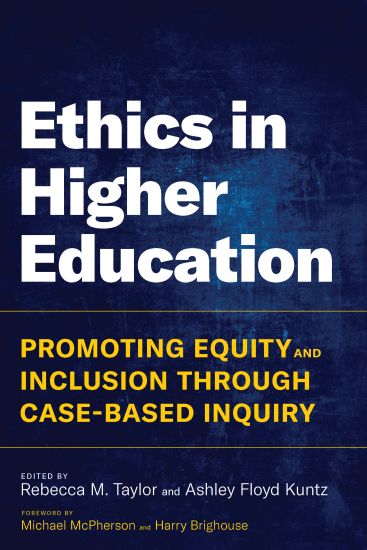
Ethics in Higher Education

Ethics in Higher Education

Harry Brighouse; Michael McPherson

Harvard Educational Publishing Group
2021
nidottu
In this thought-provoking volume, editors Rebecca M. Taylor and Ashley Floyd Kuntz invite readers to explore the many facets of on-campus ethical dilemmas and the careful, nuanced decision-making processes required to address them. Taylor and Kuntz demonstrate how to apply collaborative, multidisciplinary, philosophical inquiry to deeply complex issues. They present seven normative case studies focusing on a variety of campus quandaries, from urgent matters such as Title IX violations and free speech in social media policy, to long-simmering concerns such as admissions and access and the future of historically Black colleges and universities. The editors then bring together a diverse group of scholars and practitioners with a broad array of disciplinary and personal backgrounds to offer their commentary and insight on the cases. Leaders in higher education are under immense pressure to respond to campus crises quickly, to quell controversy, and to avoid the backlash of public scrutiny in an ever-shifting sociopolitical terrain. Yet, in tension with such pressures, adequate responses to these dilemmas require leaders to make ethical, contextual choices that effectively foster inclusion, respect individual and institutional freedoms, and promote equity. Expanding the scope of inquiry, the contributors challenge underlying assumptions, raise points that had been omitted from the original cases, and imagine alternative solutions. Ethics in Higher Education appeals to readers to do the same, in the interest of advancing ethical decision-making on campuses.
Debating Education

Debating Education

Harry Brighouse; David Schmidtz

Oxford University Press Inc
2019
nidottu
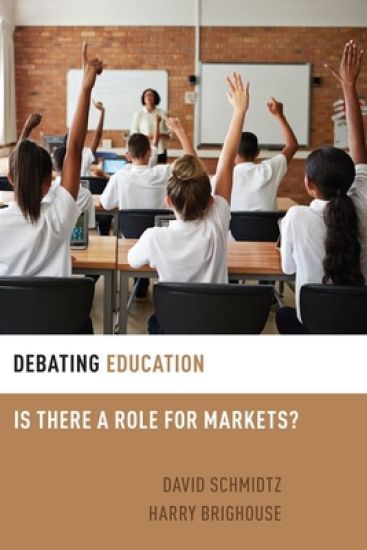
Debating Education puts two leading scholars in conversation with each other on the subject of education-specifically, what role, if any, markets should play in policy reform. David Schmidtz and Harry Brighouse each advance nuanced arguments and respond to each other, presenting contrasting views on education as a public good. Schmidtz argues on behalf of a market-driven approach, making the case that educational opportunities do not need to be equal in order to be good. The ideal of education is not equally preparing students to win a race but maximally preparing each student to make a contribution. Harry Brighouse instead focuses on inequality, particularly the unequal distribution of rewards. He argues that justice requires prioritizing the prospects of the bottom 30% of the population, whose life prospects are much worse than justice would demand, given the current wealth of society. The moral imperative of education should be to improve this group's range of opportunities. Brighouse expresses serious skepticism that market mechanisms are capable of this task, due to imperfections in educational markets, a lack of appropriate regulations, political influence, and other systemic obstacles. At its heart, Debating Education is concerned with the nature, function, and legitimate scope of voluntary exchange as a form of social relation, and how education raises concerns that are not at issue when it comes to trading relationships between consenting adults. It will appeal to scholars and students of ethics alike, specifically those who study political philosophy, philosophy of education, as well as individuals interested in educational and public policy.
Debating Education

Debating Education

Harry Brighouse; David Schmidtz

Oxford University Press Inc
2019
sidottu
Debating Education puts two leading scholars in conversation with each other on the subject of education-specifically, what role, if any, markets should play in policy reform. David Schmidtz and Harry Brighouse each advance nuanced arguments and respond to each other, presenting contrasting views on education as a public good. Schmidtz argues on behalf of a market-driven approach, making the case that educational opportunities do not need to be equal in order to be good. The ideal of education is not equally preparing students to win a race but maximally preparing each student to make a contribution. Harry Brighouse instead focuses on inequality, particularly the unequal distribution of rewards. He argues that justice requires prioritizing the prospects of the bottom 30% of the population, whose life prospects are much worse than justice would demand, given the current wealth of society. The moral imperative of education should be to improve this group's range of opportunities. Brighouse expresses serious skepticism that market mechanisms are capable of this task, due to imperfections in educational markets, a lack of appropriate regulations, political influence, and other systemic obstacles. At its heart, Debating Education is concerned with the nature, function, and legitimate scope of voluntary exchange as a form of social relation, and how education raises concerns that are not at issue when it comes to trading relationships between consenting adults. It will appeal to scholars and students of ethics alike, specifically those who study political philosophy, philosophy of education, as well as individuals interested in educational and public policy.
Family Values

Family Values

Harry Brighouse; Adam Swift

Princeton University Press
2016
pokkari
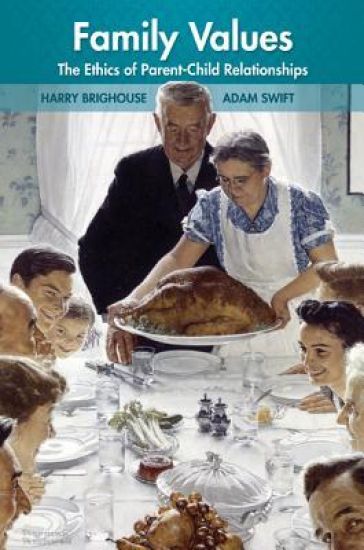
The family is hotly contested ideological terrain. Some defend the traditional two-parent heterosexual family while others welcome its demise. Opinions vary about how much control parents should have over their children's upbringing. Family Values provides a major new theoretical account of the morality and politics of the family, telling us why the family is valuable, who has the right to parent, and what rights parents should--and should not--have over their children. Harry Brighouse and Adam Swift argue that parent-child relationships produce the "familial relationship goods" that people need to flourish. Children's healthy development depends on intimate relationships with authoritative adults, while the distinctive joys and challenges of parenting are part of a fulfilling life for adults. Yet the relationships that make these goods possible have little to do with biology, and do not require the extensive rights that parents currently enjoy. Challenging some of our most commonly held beliefs about the family, Brighouse and Swift explain why a child's interest in autonomy severely limits parents' right to shape their children's values, and why parents have no fundamental right to confer wealth or advantage on their children. Family Values reaffirms the vital importance of the family as a social institution while challenging its role in the reproduction of social inequality and carefully balancing the interests of parents and children.
Educational Equality

Educational Equality

Harry Brighouse; Kenneth R. Howe; James Tooley

Continuum Publishing Corporation
2010
nidottu
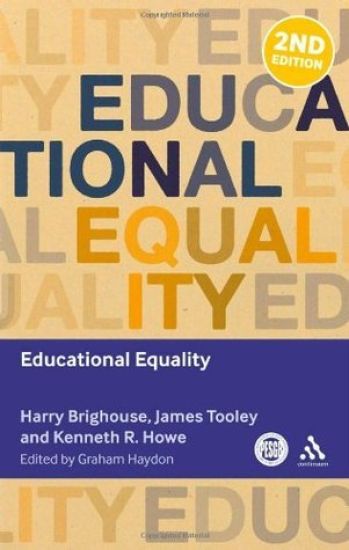
This title considers the philosophical debates surrounding equality and education. "Educational Equality and the New Selective Schooling" by Harry Brighouse was initially published by the Philosophy of Education Society of Great Britain in 2000. In this new edition, Brighouse has updated his argument, Kenneth R Howe and James Tooley have contributed counter-arguments and Graham Haydon has provided a foreword and afterword drawing the debates together. The issues debated in this new edition of 'Educational Equality" include: What is Educational Equality? Why Does Educational Equality Matter? And is Educational Equality Possible? "Educational Equality" raises issues which will be of interest to all involved in educational equality, including teachers, policy makers and educationalists. This innovative series is addressed to practitioners and policy-makers. It highlights the critical perspectives that philosophy can bring to bear on current education policy and provides a lively discussion of the issues. It aims to stimulate debate and to contribute to better informed educational initiatives.
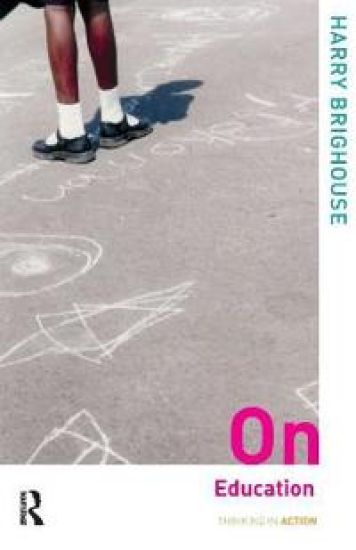
On Education

On Education

Harry Brighouse

Routledge
2005
nidottu
What is education for? Should it produce workers or educate future citizens? Is there a place for faith schools - and should patriotism be taught? In this compelling and controversial book, Harry Brighouse takes on all these urgent questions and more. He argues that children share four fundamental interests: the ability to make their own judgements about what values to adopt; acquiring the skills that will enable them to become economically self-sufficient as adults; being exposed to a range of activities and experiences that will enable them to flourish in their personal lives; and developing a sense of justice. He criticises sharply those who place the interests of the economy before those of children, and assesses the arguments for and against the controversial issues of faith schools and the teaching of patriotism.Clearly argued but provocative, On Education draws on recent examples from Britain and North America as well as famous thinkers on education such as Aristotle and John Locke. It is essential reading for anyone interested in the present state of education and its future.
On Education

On Education

Harry Brighouse

Routledge
2005
sidottu
What is education for? Should it produce workers or educate future citizens? Is there a place for faith schools - and should patriotism be taught? In this compelling and controversial book, Harry Brighouse takes on all these urgent questions and more. He argues that children share four fundamental interests: the ability to make their own judgements about what values to adopt; acquiring the skills that will enable them to become economically self-sufficient as adults; being exposed to a range of activities and experiences that will enable them to flourish in their personal lives; and developing a sense of justice. He criticises sharply those who place the interests of the economy before those of children, and assesses the arguments for and against the controversial issues of faith schools and the teaching of patriotism.Clearly argued but provocative, On Education draws on recent examples from Britain and North America as well as famous thinkers on education such as Aristotle and John Locke. It is essential reading for anyone interested in the present state of education and its future.
Justice

Justice

Harry Brighouse

Polity Press
2004
nidottu
Justice is a concise and accessible introduction to the central theories of justice in contemporary political theory. The book aims to provide readers with a clear understanding of the theories and the main objections to them, as well as showing how these theories engage with one another. It offers detailed accounts of John Rawls’s theory of justice as fairness; the alternative ‘capabilities approach’ developed by Nobel-prize winning economist Amartya Sen; the libertarian theories of Milton Friedman and Robert Nozick; the ‘group-rights’ based theory of Will Kymlicka; and Nancy Fraser’s theory of participatory parity. The book also includes extensive discussions of the nature and purpose of political theorizing, and it asks whether theories of justice should take only social institutions as their subject, or should also comment on personal motivations and behaviour.
Justice

Justice

Harry Brighouse

Polity Press
2004
sidottu
Justice is a concise and accessible introduction to the central theories of justice in contemporary political theory. The book aims to provide readers with a clear understanding of the theories and the main objections to them, as well as showing how these theories engage with one another. It offers detailed accounts of John Rawls’s theory of justice as fairness; the alternative ‘capabilities approach’ developed by Nobel-prize winning economist Amartya Sen; the libertarian theories of Milton Friedman and Robert Nozick; the ‘group-rights’ based theory of Will Kymlicka; and Nancy Fraser’s theory of participatory parity. The book also includes extensive discussions of the nature and purpose of political theorizing, and it asks whether theories of justice should take only social institutions as their subject, or should also comment on personal motivations and behaviour.