Kirjojen hintavertailu. Mukana 12 595 353 kirjaa ja 12 kauppaa.

Kirjailija

Harry G. Lang

Kirjat ja teokset yhdessä paikassa: 8 kirjaa, julkaisuja vuosilta 1994-2021, suosituimpien joukossa Moments of Truth: Robert R. Davila, the Story of a Deaf Leader. Vertaile teosten hintoja ja tarkista saatavuus suomalaisista kirjakaupoista.

8 kirjaa

Kirjojen julkaisuhaarukka 1994-2021.

A Phone of Our Own – The Deaf Insurrection Against Ma Bell
In 1964, of the more than 85 million telephones in the United States and Canada, less than one percent were used regularly by deaf people. If they didn't ask their hearing neighbors for help, they depended upon their hearing children, some as young as three years old, to act as intermediaries for business calls or medical consultations. In that same year, three enterprising deaf men, Robert H. Weitbrecht, James C. Marsters, and Andrew Saks, started the process that led to deaf people around the world having an affordable phone system that they could use. Weitbrecht, a successful physicist with the Stanford Research Institute, had been experimenting with a teletypewriter (TTY) used with shortwave radios. When Marsters, a prominent deaf orthodontist, met Weitbrecht and saw his TTY, he immediately suggested the possibility of resolving deaf people's decades-long struggle to have access to telecommunications without relying totally upon hearing people as go-betweens. Andrew Saks brought his business acumen to the group, which soon set to work overcoming the daunting problems they faced. Harry G. Lang's A Phone of Our Own: The Deaf Insurrection Against Ma Bell tells how these three men collaborated to solve the technical difficulties of developing a coupling device for TTYs that would translate sounds into discernible letters. More remarkably, and with the help of an expanding corps of Deaf advocates, they successfully assaulted the American Telephone and Telegraph Company (AT&T), which in its efforts to protect its monopoly, smashed old TTYs to keep them from being used for potentially competitive purposes. The Federal Communications Commission (FCC) also resisted efforts to build a telephone system for deaf people that was available, affordable, portable, and fully accessible. Lang recounts in vivid terms how many other Deaf individuals and groups from all walks of life joined Weitbrecht, Marsters, and Saks against these forces. A Phone of Our Own is an entertaining and engrossing story of how they fought and won, and changed the world for the better for deaf people everywhere.
Fighting in the Shadows

Fighting in the Shadows

Harry G. Lang

Gallaudet University Press,U.S.
2017
sidottu
This visually rich volume presents Harry G. Lang's groundbreaking study of deaf people's experiences in the Civil War. Based on meticulous archival research, Fighting in the Shadows reveals the stories of both ordinary and extraordinary deaf soldiers and civilians who lived during this transformative period in American history. Lang documents the participation of deaf soldiers in the war, whose personal tests of fortitude and perseverance have not been previously explored. There were also many deaf people in noncombat roles whose stories have not yet been told clerks and cooks, nurses and spies, tradespeople supporting the armies, farmers supplying food to soldiers, and landowners who assisted (or resisted) troops during battles. Deaf writers, diarists, and artists documented the war. Even deaf children contributed actively to the war efforts. Lang pieces together hundreds of stories, accompanied by numerous historical images, to reveal a powerful new perspective on the Civil War. These soldiers and civilians were not "disabled" by their deafness.On the contrary, despite the marginalization and paternalism they experienced in society, they were able to apply their skills and knowledge to support the causes in which they ardently believed. Fighting in the Shadows is a story of how deaf civilians and soldiers put aside personal concerns about deafness, in spite of the discrimination they faced daily, in order to pursue a cause larger than themselves. Yet their stories have remained in the shadows, leaving most Americans, hearing and deaf, largely unaware of the deaf people who made significant contributions to the events that changed the course of our nation's history. This book provides new insights into Deaf history as well as into mainstream interpretations of the Civil War.
Teaching from the Heart and Soul

Teaching from the Heart and Soul

Harry G. Lang

Gallaudet University Press,U.S.
2007
nidottu
The Sixth Volume in the Deaf Lives SeriesRobert F. Panara lost his hearing from spinal meningitis in 1931 at the age of ten. However, he could read and write, and with his friends' help, Bob (as he was known), made it through high school. His new solitude created a new passion - reading, reading, and reading. The stage was set for the emergence of one of the great deaf educators in modern time, a life fully captured in Harry G. Lang's Teaching from the Heart and Soul: The Robert F. Panara Story. Bob Panara's many achievements began after his discovery of Gallaudet College in the 1940s. There, he wrote "The Significance of the Reading Problem," which first expressed his belief that teaching "comes from the heart and soul." The article secured him his first job at the New York School for the Deaf in White Plains. Bob returned to teach at Gallaudet College from 1948 until 1965, when he left to help found the National Technical Institute for the Deaf (NTID) and the National Theatre of the Deaf (NTD) -- all in the same year. He continued to expand arts and literature at NTID until his retirement in 1987. Bob Panara's genius resides in the people he inspired with his vivacious teaching style. He believed ardently in involving students, that they should "be the book." Former students tell story after story about his fabulous interpretations of drama and poetry, a legacy confirmed by his own story in Teaching from the Heart and Soul.
Educating Deaf Students

Educating Deaf Students

Marc Marschark; Harry G. Lang; John A. Albertini

Oxford University Press Inc
2006
nidottu
Over the past decade there has been a significant increase in interest from educators and the general public about deafness, special education, and the development of children with special needs. The education of deaf children in the United States has been seen as a remarkable success story around the world, even while it continues to engender domestic debate. In Educating Deaf Students: From Research to Practice, Marc Marschark, Harry G. Lang, and John A. Albertini set aside the politics, rhetoric, and confusion that often accompany discussions of deaf education. Instead they offer an accessible evaluation of the research literature on the needs and strengths of deaf children and on the methods that have been used-successfully and unsuccessfully-to teach both deaf and hearing children. The authors lay out the common assumptions that have driven deaf education for many years, revealing some of them to be based on questionable methods, conclusions, or interpretations, while others have been lost in the cacophony of alternative educational philosophies. They accompany their historical consideration of how this came to pass with an evaluation of the legal and social conditions surrounding deaf education today. By evaluating what we know, what we do not know, and what we thought we knew about learning among deaf children, the authors provide parents, teachers, and administrators valuable new insights into educating deaf students and others with special needs.
Deaf Persons in the Arts and Sciences

Deaf Persons in the Arts and Sciences

Harry G. Lang; Bonnie Meath-Lang

Greenwood Press
1995
sidottu
Over the past 30 years, the number of deaf persons studying in colleges and universities has increased from several hundred to more than 12,000. Yet, attitudinal barriers continue to make it difficult for deaf people to enter some fields. This volume provides detailed biographical entries on 150 outstanding deaf individuals, highlighting their contributions to the arts and sciences. It includes several Nobel Prize laureate scientists, an Academy Award winning actress, poets, writers, world-class dancers, and a cadre of painters and sculptors. Some individuals are included for their leadership in education or politics or because they were the first deaf person to hold certain positions. Emphasis is on the subjects' contributions to the arts and the sciences, and particular attention is paid to how being deaf influenced their world view and personal direction. The volume includes many newly-discovered accomplished deaf people, and an appendix listing provides information on additional artists, writers, and scientists of note.
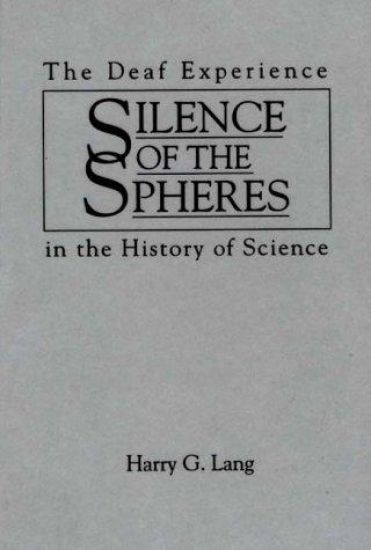
Silence of the Spheres

Silence of the Spheres

Harry G. Lang

Greenwood Press
1994
sidottu
Prior to the publication of this book, there has been a complete absence of literature on the contributions of deaf men and women in science. Written by a deaf scientist, this book is one of the few syntheses of the issues facing deaf people in a particular field of professional endeavor. Because of the highly invisible nature of deafness, much of the information presented by Lang will be new to readers. His research represents six years of archival search among the historical documents of the deaf communities of Europe, Canada, and the United States. The prominent role that deaf scientists have played in history becomes apparent through Lang's presentation of the accomplishments of these talented and determined men and women. The study of deaf scientists is part of the study of other marginalized groups, and finds parallels in African American and women's studies. The issues surrounding technological development, eugenics, and disabilities in general are several of the important themes of this work.