Kirjojen hintavertailu. Mukana 12 390 323 kirjaa ja 12 kauppaa.

Kirjailija

Harry P. Hatry

Kirjat ja teokset yhdessä paikassa: 16 kirjaa, julkaisuja vuosilta 1983-2015, suosituimpien joukossa Review of Private Approaches for Delivery of Public Services. Vertaile teosten hintoja ja tarkista saatavuus suomalaisista kirjakaupoista.

Mukana myös kirjoitusasut: Harry P Hatry

16 kirjaa

Kirjojen julkaisuhaarukka 1983-2015.

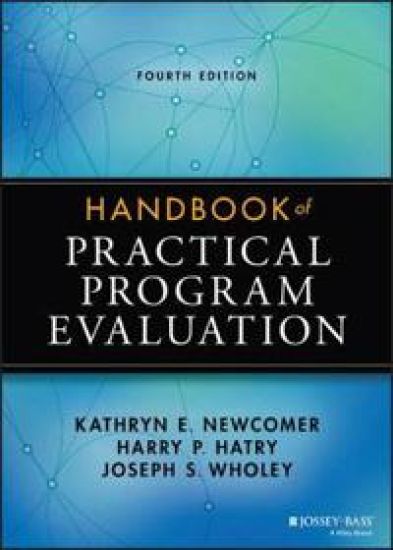
Handbook of Practical Program Evaluation

Handbook of Practical Program Evaluation

Kathryn E. Newcomer; Harry P. Hatry; Joseph S. Wholey

John Wiley Sons Inc
2015
sidottu
The leading program evaluation reference, updated with the latest tools and techniques The Handbook of Practical Program Evaluation provides tools for managers and evaluators to address questions about the performance of public and nonprofit programs. Neatly integrating authoritative, high-level information with practicality and readability, this guide gives you the tools and processes you need to analyze your program's operations and outcomes more accurately. This new fourth edition has been thoroughly updated and revised, with new coverage of the latest evaluation methods, including: Culturally responsive evaluationAdopting designs and tools to evaluate multi-service community change programsUsing role playing to collect dataUsing cognitive interviewing to pre-test surveysCoding qualitative data You'll discover robust analysis methods that produce a more accurate picture of program results, and learn how to trace causality back to the source to see how much of the outcome can be directly attributed to the program. Written by award-winning experts at the top of the field, this book also contains contributions from the leading evaluation authorities among academics and practitioners to provide the most comprehensive, up-to-date reference on the topic. Valid and reliable data constitute the bedrock of accurate analysis, and since funding relies more heavily on program analysis than ever before, you cannot afford to rely on weak or outdated methods. This book gives you expert insight and leading edge tools that help you paint a more accurate picture of your program's processes and results, including: Obtaining valid, reliable, and credible performance dataEngaging and working with stakeholders to design valuable evaluations and performance monitoring systemsAssessing program outcomes and tracing desired outcomes to program activitiesProviding robust analyses of both quantitative and qualitative data Governmental bodies, foundations, individual donors, and other funding bodies are increasingly demanding information on the use of program funds and program results. The Handbook of Practical Program Evaluation shows you how to collect and present valid and reliable data about programs.
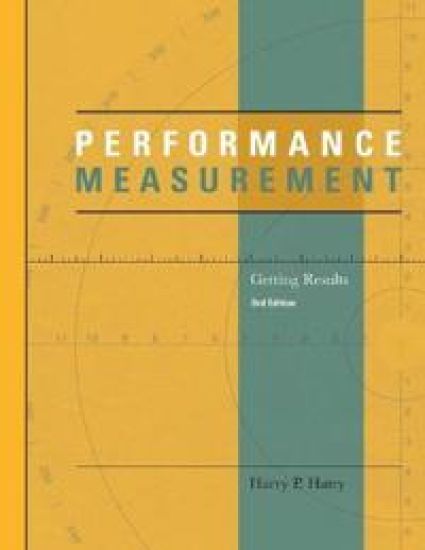
Performance Measurement

Performance Measurement

Harry P Hatry

Urban Institute Press,U.S.
2007
nidottu
Long before reinventing government came into vogue, the Urban Institute pioneered methods for government and human services agencies to measure the performance of their programs. This comprehensive guidebook synthesizes more than two decades of Harry Hatry's groundbreaking work. It covers every component of the performance measurement process, from identifying the program’s mission, objectives, customers, and trackable outcomes to finding the best indicators for each outcome, the sources of data, and how to collect them. Hatry explains how to select indicator breakouts and benchmarks for comparison to actual values, and describes numerous uses for performance information. Since the publication of the first edition in 1999, the use of performance measurement has exploded at all levels of U.S. government, in nonprofit agencies, and around the world. The new edition has been revised and expanded to address recent developments in the field, including the increased availability of computer technology in collecting and presenting information, the movement to use outcome data to improve services, and the quality control issues that have emerged as data collection has increased. It is an indispensable handbook for newcomers and an important resource for experienced managers looking to improve their use of outcome data.
Implementing School-based Management

Implementing School-based Management

Harry P. Hatry; Elaine Morley; Brenda Ashford; Timothy Wyatt

Urban Institute Press,U.S.
1993
nidottu
This report presents the findings and recommendations of an examination of the implementation of a major form of school decentralisation in the USA. Based on 19 case studies,it covers such issues as: decentralising the budget; personnel decisions; site councils; communication; and training.
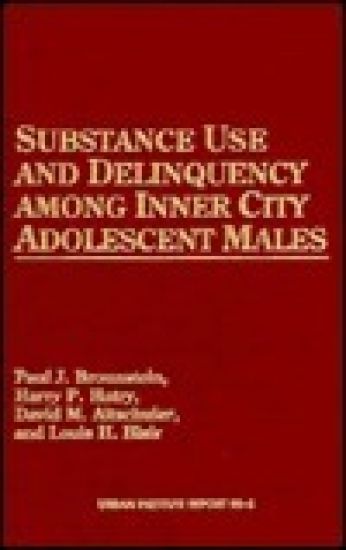
Substance Use and Delinquency Among Inner City Adolescent Males

Substance Use and Delinquency Among Inner City Adolescent Males

Paul J. Brounstein; Harry P. Hatry; David M. Altschuler; Louis H. Blair

Urban Institute Press,U.S.
1990
sidottu
This text identifies the characteristics that differentiate drug-involved youth from youth who have stayed away from drugs, and, incorporating suggestions from adolescents themselves, makes recommendations about how drug prevention and intervention efforts by schools, families, the media, and community organizations can be improved. The 1988 study is based on interviews by trained minority interviewers of 387 minority male adolescents of ninth and tenth grade age who lived in economically distressed sections of the District of Columbia. A major finding was that adolescents who sold but did not use drugs differ in important respects from users, whether or not they sell. The authors recommend that intervention strategies, be tailored to the different groups.
Substance Use and Delinquency Among Inner City Adolescent Males

Substance Use and Delinquency Among Inner City Adolescent Males

Paul J. Brounstein; Harry P. Hatry; David M. Altschuler; Louis H. Blair

Urban Institute Press,U.S.
1990
nidottu
This text identifies the characteristics that differentiate drug-involved youth from youth who have stayed away from drugs, and, incorporating suggestions from adolescents themselves, makes recommendations about how drug prevention and intervention efforts by schools, families, the media, and community organizations can be improved. The 1988 study is based on interviews by trained minority interviewers of 387 minority male adolescents of ninth and tenth grade age who lived in economically distressed sections of the District of Columbia. A major finding was that adolescents who sold but did not use drugs differ in important respects from users, whether or not they sell. The authors recommend that intervention strategies, be tailored to the different groups.