Kirjojen hintavertailu. Mukana 12 390 323 kirjaa ja 12 kauppaa.

Kirjailija

Harry T. Lawless

Kirjat ja teokset yhdessä paikassa: 4 kirjaa, julkaisuja vuosilta 2010-2016, suosituimpien joukossa Laboratory Exercises for Sensory Evaluation. Vertaile teosten hintoja ja tarkista saatavuus suomalaisista kirjakaupoista.

4 kirjaa

Kirjojen julkaisuhaarukka 2010-2016.

Sensory Evaluation of Food

Sensory Evaluation of Food

Harry T. Lawless; Hildegarde Heymann

Springer-Verlag New York Inc.
2016
nidottu
The ?eld of sensory science has grown exponentially since the publication of the p- vious version of this work. Fifteen years ago the journal Food Quality and Preference was fairly new. Now it holds an eminent position as a venue for research on sensory test methods (among many other topics). Hundreds of articles relevant to sensory testing have appeared in that and in other journals such as the Journal of Sensory Studies. Knowledge of the intricate cellular processes in chemoreception, as well as their genetic basis, has undergone nothing less than a revolution, culminating in the award of the Nobel Prize to Buck and Axel in 2004 for their discovery of the olfactory receptor gene super family. Advances in statistical methodology have accelerated as well. Sensometrics meetings are now vigorous and well-attended annual events. Ideas like Thurstonian modeling were not widely embraced 15 years ago, but now seem to be part of the everyday thought process of many sensory scientists. And yet, some things stay the same. Sensory testing will always involve human participants. Humans are tough measuring instruments to work with. They come with varying degrees of acumen, training, experiences, differing genetic equipment, sensory capabilities, and of course, different preferences. Human foibles and their associated error variance will continue to place a limitation on sensory tests and actionable results. Reducing, controlling, partitioning, and explaining error variance are all at the heart of good test methods and practices.
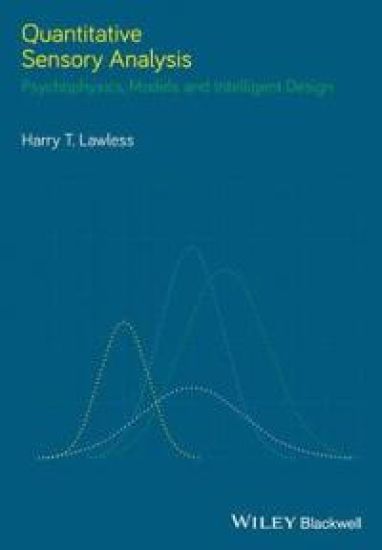
Quantitative Sensory Analysis

Quantitative Sensory Analysis

Harry T. Lawless

John Wiley Sons Inc
2013
sidottu
Sensory evaluation is a scientific discipline used to evoke, measure, analyse and interpret responses to products perceived through the senses of sight, smell, touch, taste and hearing. It is used to reveal insights into the way in which sensory properties drive consumer acceptance and behaviour, and to design products that best deliver what the consumer wants. It is also used at a more fundamental level to provide a wider understanding of the mechanisms involved in sensory perception and consumer behaviour. Quantitative Sensory Analysis is an in-depth and unique treatment of the quantitative basis of sensory testing, enabling scientists in the food, cosmetics and personal care product industries to gain objective insights into consumer preference data – vital for informed new product development. Written by a globally-recognised learer in the field, this book is suitable for industrial sensory evaluation practitioners, sensory scientists, advanced undergraduate and graduate students in sensory evaluation and sensometricians.
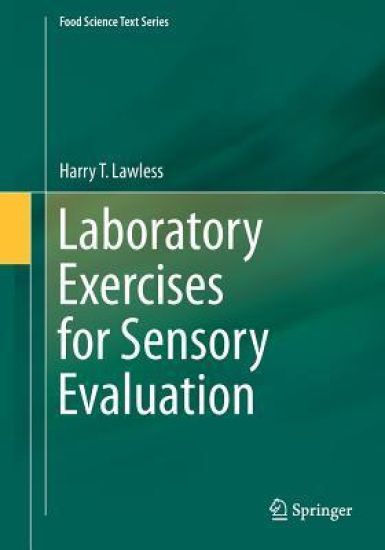
Laboratory Exercises for Sensory Evaluation

Laboratory Exercises for Sensory Evaluation

Harry T. Lawless

Springer-Verlag New York Inc.
2012
nidottu
Laboratory exercises are a necessary part of science education. They enable students to better understand the principles discussed in lectures, and provide them with hands-on experience of the practical aspects of scientific research. The purpose of this book is to provide students and instructors with a time-tested set of lab exercises that illustrate the common sensory tests and/or sensory principles used in evaluation of foods, beverages and consumer products. The appendices will also include a set of simple problem sets that can be used to teach and reinforce basic statistical tests. Approximately twenty years ago the Sensory Evaluation Division of the Institute of Food Technologists sponsored the preparation of a set of exercises titled “Guidelines for Laboratory Exercises for a Course in Sensory Evaluation of Foods,” edited by one of the co-authors (Heymann). This book will provide additional materials from the second author (Lawless), as well as other instructors, in a uniform format that can be easily adopted for course use. Most importantly, the lab exercises will complement the flagship textbook in the field, Sensory Evaluation of Foods: Principles and Practices, 2E, also by Lawless and Heymann and published by Springer. Possible course adoption of the main text along with the lab manual should enhance the sales of these materials.
Sensory Evaluation of Food

Sensory Evaluation of Food

Harry T. Lawless; Hildegarde Heymann

Springer-Verlag New York Inc.
2010
sidottu
The ?eld of sensory science has grown exponentially since the publication of the p- vious version of this work. Fifteen years ago the journal Food Quality and Preference was fairly new. Now it holds an eminent position as a venue for research on sensory test methods (among many other topics). Hundreds of articles relevant to sensory testing have appeared in that and in other journals such as the Journal of Sensory Studies. Knowledge of the intricate cellular processes in chemoreception, as well as their genetic basis, has undergone nothing less than a revolution, culminating in the award of the Nobel Prize to Buck and Axel in 2004 for their discovery of the olfactory receptor gene super family. Advances in statistical methodology have accelerated as well. Sensometrics meetings are now vigorous and well-attended annual events. Ideas like Thurstonian modeling were not widely embraced 15 years ago, but now seem to be part of the everyday thought process of many sensory scientists. And yet, some things stay the same. Sensory testing will always involve human participants. Humans are tough measuring instruments to work with. They come with varying degrees of acumen, training, experiences, differing genetic equipment, sensory capabilities, and of course, different preferences. Human foibles and their associated error variance will continue to place a limitation on sensory tests and actionable results. Reducing, controlling, partitioning, and explaining error variance are all at the heart of good test methods and practices.