Kirjojen hintavertailu. Mukana 12 203 960 kirjaa ja 12 kauppaa.

Kirjailija

Harry W. Greene

Kirjat ja teokset yhdessä paikassa: 14 kirjaa, julkaisuja vuosilta 2000-2023, suosituimpien joukossa Tracks and Shadows. Vertaile teosten hintoja ja tarkista saatavuus suomalaisista kirjakaupoista.

14 kirjaa

Kirjojen julkaisuhaarukka 2000-2023.

Tracks and Shadows

Tracks and Shadows

Harry W. Greene

University of California Press
2016
pokkari
Intellectually rich, intensely personal, and beautifully written, Tracks and Shadows is both an absorbing autobiography of a celebrated field biologist and a celebration of beauty in nature. Harry W. Greene, award-winning author of Snakes: The Evolution of Mystery in Nature, delves into the poetry of field biology, showing how nature eases our existential quandaries. More than a memoir, the book is about the wonder of snakes, the beauty of studying and understanding natural history, and the importance of sharing the love of nature with humanity. Greene begins with his youthful curiosity about the natural world and moves to his stints as a mortician's assistant, ambulance driver, and army medic. In detailing his academic career, he describes how his work led him to believe that nature's most profound lessons lurk in hard-won details. He discusses the nuts and bolts of field research and teaching, contrasts the emotional impact of hot dry habitats with hot wet ones, imparts the basics of snake biology, and introduces the great explorers Charles Darwin and Alfred Russel Wallace. He reflects on friendship and happiness, tackles notions like anthropomorphism and wilderness, and argues that organisms remain the core of biology, science plays key roles in conservation, and natural history offers an enlightened form of contentment.
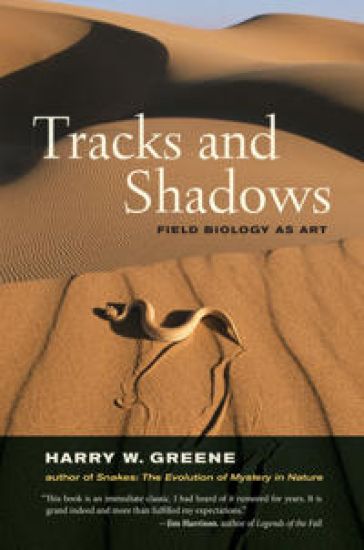
Tracks and Shadows

Tracks and Shadows

Harry W. Greene

University of California Press
2013
sidottu
Intellectually rich, intensely personal, and beautifully written, Tracks and Shadows is both an absorbing autobiography of a celebrated field biologist and a celebration of beauty in nature. Harry W. Greene, award-winning author of Snakes: The Evolution of Mystery in Nature delves into the poetry of field biology, showing how nature eases our existential quandaries. More than a memoir, the book is about the wonder of snakes, the beauty of studying and understanding natural history, and the importance of sharing the love of nature with humanity. Greene begins with his youthful curiosity about the natural world and moves to his stints as a mortician's assistant, ambulance driver, and army medic. In detailing his academic career, he describes how his work led him to believe that nature's most profound lessons lurk in hard-won details. He discusses the nuts and bolts of field research and teaching, contrasts the emotional impact of hot dry habitats with hot wet ones, imparts the basics of snake biology, and introduces the great explorers Charles Darwin and Alfred Russel Wallace. He reflects on friendship and happiness, tackles notions like anthropomorphism and wilderness, and argues that organisms remain the core of biology, science plays key roles in conservation, and natural history offers an enlightened form of contentment.
Grass

Grass

Joe C. Truett; Harry W. Greene

University of California Press
2009
sidottu
Part autobiography, part philosophical rumination, this evocative conservation odyssey explores the deep affinities between humans and our original habitat: grasslands. In a richly drawn, anecdotally driven narrative, Joe C. Truett, a grasslands ecologist who writes with a flair for language, traces the evolutionary, historical, and cultural forces that have reshaped North American rangelands over the past two centuries. He introduces an intriguing cast of characters - wildlife and grasslands biologists, archaeologists, ranchers, and petroleum geologists - to illuminate a wide range of related topics: our love affair with turf and how it manifests in lawns and sports, the ecological and economic dimensions of ranching, the glory of cowboy culture, grasslands and restoration ecology, and more. His book ultimately provides the background against which we can envision a new paradigm for restoring rangeland ecosystems-and a new paradigm for envisioning a more sustainable future.
Armadillos to Ziziphus

Armadillos to Ziziphus

David M. Hillis; Harry W. Greene

UNIVERSITY OF TEXAS PRESS
2023
sidottu
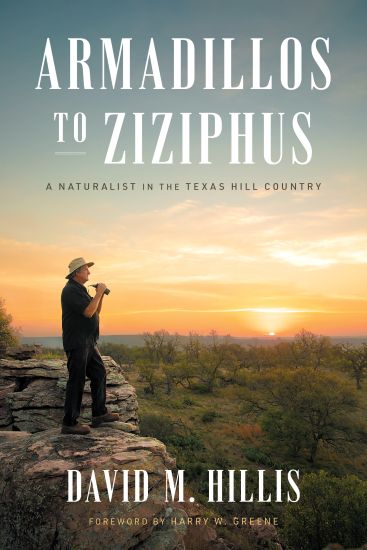
A collection of essays on the ecology, biodiversity, and restoration of the Texas Hill Country. For most of five decades, evolutionary biologist David Hillis has studied the biodiversity of the Texas Hill Country. Since the 1990s, he has worked to restore the natural beauty and diversity of his Mason County ranch, the Double Helix. In his excursions around his ranch and across the Edwards Plateau, Hillis came to realize how little most people know about the plants and animals around them or their importance to our everyday lives. He began thinking about how natural history is connected to our enjoyment of life, especially in a place as beautiful and beloved as the Hill Country, which, not coincidentally, happens to be one of the most biodiverse parts of Texas. Featuring short nontechnical essays accompanied by vivid color photos, Armadillos to Ziziphus is a charming and casual introduction to the environment of the region. Whether walking the pasture with his Longhorn cattle, explaining the ecological significance of microscopic organisms in springtime mud puddles, or marveling at the local Ziziphus (aka Lotebush, a spiny shrub), Hillis guides first-time visitors and long-term residents alike in an appreciation for the Hill Country’s natural beauty and diversity.
Serendipity

Serendipity

James A. Estes; Harry W. Greene

University of California Press
2020
pokkari
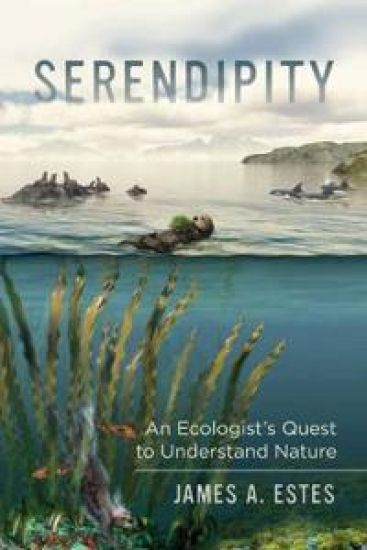
"Many of the findings in the book . . . are classics of ecology. . . . A rare and delightful insight into timely science."—Jane Lubchenco, Nature "Estes's refreshing narrative deftly weaves rigorous science with personal reflection to create an absorbing and introspective read that is equal parts memoir, ecological textbook, and motivational guidebook for young ecologists."—Science To newly minted biologist James Estes, the sea otters he was studying in the leafy kelp forests off the coast of Alaska appeared to have an unbalanced relationship with their greater environment. Gorging themselves on the sea urchins that grazed among the kelp, these small charismatic mammals seemed to give little back in return. But as Estes dug deeper, he unearthed a far more complex relationship between the otter and its underwater environment, discovering that otters play a critical role in driving positive ecosystem dynamics. While teasing out the connective threads, he began to question our assumptions about ecological relationships. These questions would ultimately inspire a lifelong quest to better understand the surprising complexity of our natural world and the unexpected ways we discover it. Serendipity tells the story of James Estes’s life as a naturalist and the concepts that have driven his interest in researching the ecological role of top-level predators. Using the relationships between sea otters, kelp, and sea urchins as a touchstone, Estes retraces his investigations of numerous other species, ecosystems, and ecological processes in an attempt to discover why ecologists can learn so many details about the systems in which they work and yet understand so little about the broader processes that influence these systems. Part memoir, part natural history, and deeply inquisitive, Serendipity will entertain and inform readers as it raises thoughtful questions about our relationship with the natural world.
A Sea of Glass

A Sea of Glass

Drew Harvell; Harry W. Greene

University of California Press
2019
pokkari
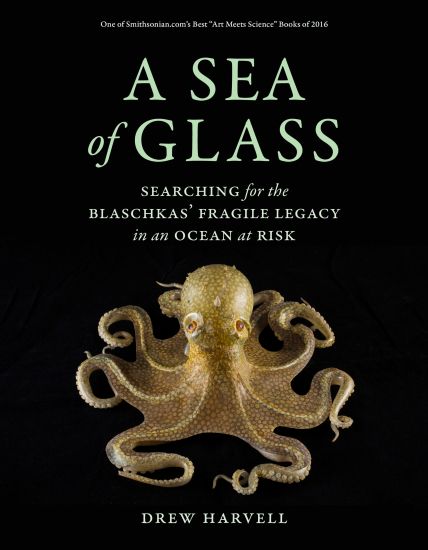
"The author makes an eloquent plea for marine biodiversity conservation."—Library Journal"Harvell seems to channel the devotion that motivated the Blaschkas."—The Guardian Winner of the 2016 National Outdoor Book Award, Environment Category It started with a glass octopus. Dusty, broken, and all but forgotten, it caught Drew Harvell’s eye. Fashioned in intricate detail by the father-son glassmaking team of Leopold and Rudolf Blaschka, the octopus belonged to a menagerie of unusual marine creatures that had been packed away for decades in a storage unit. More than 150 years earlier, the Blaschkas had been captivated by marine invertebrates and spun their likenesses into glass, documenting the life of oceans untouched by climate change and human impacts. Inspired by the Blaschkas’ uncanny replicas, Harvell set out in search of their living counterparts. In A Sea of Glass, she recounts this journey of a lifetime, taking readers along as she dives beneath the ocean's surface to a rarely seen world, revealing the surprising and unusual biology of some of the most ancient animals on the tree of life. On the way, we glimpse a century of change in our ocean ecosystems and learn which of the living matches for the Blaschkas’ creations are, indeed, as fragile as glass. Drew Harvell and the Blaschka menagerie are the subjects of the documentary Fragile Legacy, which won the Best Short Film award at the 2015 Blue Ocean Film Festival & Conservation Summit. Learn more about the film and check out the trailer here.
Cane Toad Wars

Cane Toad Wars

Rick Shine; Harry W. Greene

University of California Press
2018
sidottu
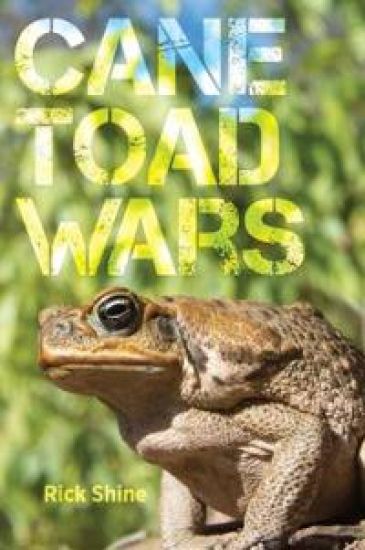
In 1935, an Australian government agency imported 101 specimens of the Central and South American Cane Toad in an attempt to manage insects that were decimating sugar-cane harvests. In Australia the Cane Toad adapted and evolved with abandon, voraciously consuming native wildlife and killing predators with its lethal skin toxin. Today, hundreds of millions of Cane Toads have spread across the northern part of Australia and continue to move westward. The humble Cane Toad has become a national villain. Cane Toad Wars chronicles the work of intrepid scientist Rick Shine, who has been documenting the toad’s ecological impact in Australia and seeking to buffer it. Despite predictions of devastation in the wake of advancing toad hordes, the author’s research reveals a more complex and nuanced story. A firsthand account of a perplexing ecological problem and an important exploration of how we measure evolutionary change and ecological resilience, this book makes an effective case for the value of long-term natural history research in informing conservation practice.
Serendipity

Serendipity

James A. Estes; Harry W. Greene

University of California Press
2016
sidottu
To newly minted biologist James Estes, the sea otters he was studying in the leafy kelp forests off the coast of Alaska appeared to have an unbalanced relationship with their greater environment. Gorging themselves on the sea urchins that grazed among the kelp, these small charismatic mammals seemed to give little back in return. But as Estes dug deeper, he unearthed a far more complex relationship between the otter and its underwater environment, discovering that otters play a critical role in driving positive ecosystem dynamics. While teasing out the connective threads, he began to question our assumptions about ecological relationships. These questions would ultimately inspire a lifelong quest to better understand the surprising complexity of our natural world and the unexpected ways we discover it. Serendipity tells the story of James Estes' life as a naturalist and the concepts that have driven his interest in researching the ecological role of top-level predators. Using the relationships between sea otters, kelp, and sea urchins as a touchstone, Estes retraces his investigations of numerous other species, ecosystems, and ecological processes in an attempt to discover why ecologists can learn so many details about the systems in which they work and yet understand so little about the broader processes that influence these systems. Part memoir, part natural history, and deeply inquisitive, Serendipity will entertain and inform readers as it raises thoughtful questions about our relationship with the natural world.
Schlangen

Schlangen

Harry W. Greene

Springer Basel
2014
nidottu
Dieses Buch handelt von den faszinierenden und gleichzeitig gefürchtetsten Geschöpfen, die die Natur hervorgebracht hat. Seit jeher haben Menschen Schlangen mit Neugier und Angst, aber auch mit Ehrfurcht und Abscheu betrachtet. Schlangen bedeuten extreme Gefahr, Ungewissheit, jedoch auch wertvolle Nahrung. In vielen Kulturen symbolisieren sie besonders Positives: Fruchtbarkeit, Verjüngung, auch Frieden oder Heilung. Das Buch ist in drei Teile gegliedert. Im ersten geht es um die Klassifikation und die allgemeine Biologie von Schlangen. Teil II gibt einen Überblick über alle wichtigen systematischen Gruppen der Serpentes. Im dritten und abschliessenden Teil sind Evolution und Biogeographie von Schlangen das Thema. Harry W. Greene und die Photographen Michael und Patricia Fogden führen Wissenschaft und Kunst zusammen, um dem Leser die Schönheit und Faszination dieser Tiere zu vermitteln. Herausgekommen ist so eine einzigartige Lektüre für interessierte Laien sowie für Biologen, Herpetologen und Terrarianer.
Lizards in an Evolutionary Tree

Lizards in an Evolutionary Tree

Jonathan Losos; Harry W. Greene

University of California Press
2011
pokkari
Adaptive radiation, which results when a single ancestral species gives rise to many descendants, each adapted to a different part of the environment, is possibly the single most important source of biological diversity in the living world. One of the best-studied examples involves Caribbean Anolis lizards. With about 400 species, Anolis has played an important role in the development of ecological theory and has become a model system exemplifying the integration of ecological, evolutionary, and behavioral studies to understand evolutionary diversification. This major work, written by one of the best-known investigators of Anolis, reviews and synthesizes an immense literature. Jonathan B. Losos illustrates how different scientific approaches to the questions of adaptation and diversification can be integrated and examines evolutionary and ecological questions of interest to a broad range of biologists.
Twilight of the Mammoths

Twilight of the Mammoths

Paul S. Martin; Harry W. Greene

University of California Press
2007
pokkari
As recently as 11,000 years ago - 'near time' to geologists - mammoths, mastodons, gomphotheres, ground sloths, giant armadillos, native camels and horses, the dire wolf, and many other large mammals roamed North America. In what has become one of science's greatest riddles, these large animals vanished in North and South America around the time humans arrived at the end of the last great ice age. Part paleontological adventure and part memoir, "Twilight of the Mammoths" presents in detail internationally renowned paleoecologist Paul Martin's widely discussed and debated 'overkill' hypothesis to explain these mysterious megafauna extinctions. Taking us from Rampart Cave in the Grand Canyon, where he finds himself 'chest deep in sloth dung', to other important fossil sites in Arizona and Chile, Martin's engaging book, written for a wide audience, uncovers our rich evolutionary legacy and shows why he has come to believe that the earliest Americans literally hunted these animals to death. As he discusses the discoveries that brought him to this hypothesis, Martin relates many colorful stories and gives a rich overview of the field of paleontology as well as his own fascinating career. He explores the ramifications of the overkill hypothesis for similar extinctions worldwide and examines other explanations for the extinctions, including climate change. Martin's visionary thinking about our missing megafauna offers inspiration and a challenge for today's conservation efforts as he speculates on what we might do to remedy this situation - both in our thinking about what is 'natural' and in the natural world itself.
American Bison

American Bison

Dale F. Lott; Harry W. Greene

University of California Press
2002
pokkari
A behavioral ecologist details the history of the American bison, covering such topics as bison physiology, conservation efforts, and the relationship of bison to neighbors including badgers, wolves, prairie dogs, and coyotes.
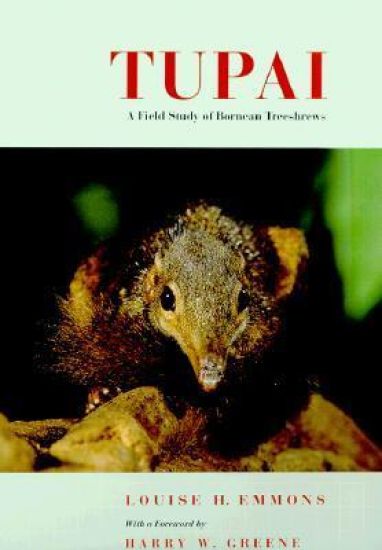
Tupai

Tupai

Louise H. Emmons; Harry W. Greene

University of California Press
2000
pokkari
Treeshrews suffer from chronic mistaken identity: they are not shrews, and most are not found in trees. These squirrel-sized, brownish mammals with large, dark, lashless eyes were at one time thought to be primates. Even though most scientists now believe them to belong in their own mammalian order, Scandentia, they still are thought to resemble some of the earliest mammals, which lived alongside the dinosaurs. This book describes the results of the first comparative study of the ecology of treeshrews in the wild. Noted tropical mammalogist Louise H. Emmons conducted this pathbreaking study in the rainforests of Borneo as she tracked and observed six species of treeshrews. Emmons meticulously describes their habitat, diet, nesting habits, home range, activity patterns, social behavior, and many other facets of their lives. She also discusses a particularly interesting aspect of treeshrews: their enigmatic parental care system, which is unique among mammals.
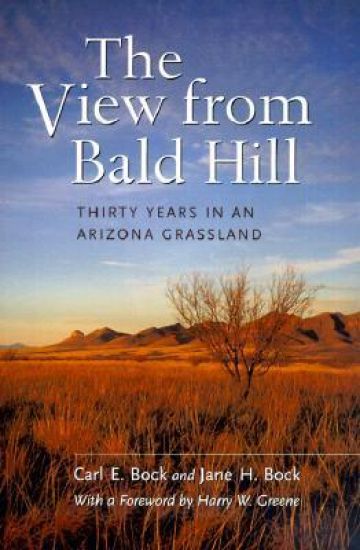
The View from Bald Hill

The View from Bald Hill

Carl E. Bock; Jane H. Bock; Harry W. Greene

University of California Press
2000
pokkari
In 1540 Francisco Vasquez de Coronado introduced the first domestic livestock to the American Southwest. Over the subsequent four centuries, cattle, horses, and sheep have created a massive ecological experiment on these arid grasslands, changing them in ways we can never know with certainty. The Appleton-Whittell Research Ranch in the high desert of southeastern Arizona is an 8,000-acre sanctuary where grazing has been banned since 1968. In this spirited account of thirty years of research at the ranch, Carl and Jane Bock summarize the results of their fieldwork, which was aimed at understanding the dynamics of grasslands in the absence of livestock. The View from Bald Hill provides an intimate look at the natural history of this unique site and illuminates many issues pertaining to the protection and restoration of our nation's grasslands.