Kirjojen hintavertailu. Mukana 12 595 353 kirjaa ja 12 kauppaa.

Kirjailija

Harvey C. Mansfield

Kirjat ja teokset yhdessä paikassa: 10 kirjaa, julkaisuja vuosilta 1989-2025, suosituimpien joukossa Aristotle. Vertaile teosten hintoja ja tarkista saatavuus suomalaisista kirjakaupoista.

10 kirjaa

Kirjojen julkaisuhaarukka 1989-2025.

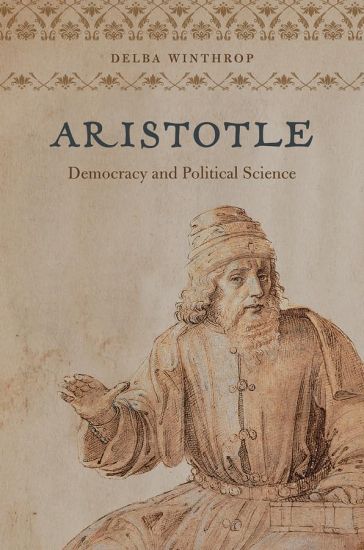
Aristotle

Aristotle

Delba Winthrop; Harvey C. Mansfield

THE UNIVERSITY OF CHICAGO PRESS
2025
nidottu
A thought-provoking exploration of assertiveness within Aristotle’s work and how it affects democratic functioning. Today, democracy is seen as the best or even the only legitimate form of govern­ment. With this book, Delba Winthrop punctures this complacency and takes up the chal­lenge of justifying democracy through Aristotle’s political science. In Aristotle’s time and in ours, democrats want inclu­siveness; they want above all to include everyone as a part of a whole. But what makes a whole? This is a question for both politics and philosophy, and Winthrop shows that Aristotle pursues the answer in the Politics. She uncovers in his political science the insights philoso­phy brings to politics and, especially, the insights politics brings to philosophy. Through her appreciation of this dual purpose and her skilled execution of her argument, Winthrop makes profound discoveries. Central to politics, she main­tains, is the quality of assertiveness—the kind of speech that demands to be heard. Aristotle, she shows for the first time, carries assertive speech into philosophy, where human reason claims its due as a contribution to the universe. Political science has the high role of teaching ordinary folk about democracy and what sustains it. This posthumous publication is more than an honor to Delba Winthrop’s memory. It is a gift to partisans of democ­racy, advocates of justice, and students of Aristotle.
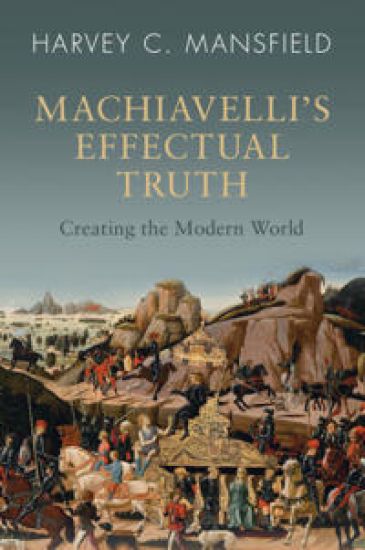
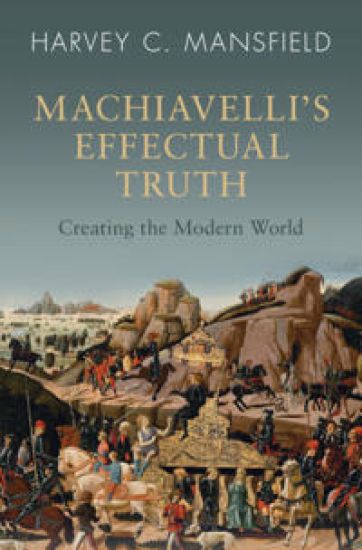
Machiavelli's Effectual Truth

Machiavelli's Effectual Truth

Harvey C. Mansfield

Cambridge University Press
2023
pokkari
Machiavelli is said to be a Renaissance thinker, yet in a notable phrase he invented, 'the effectual truth,' he attacked the high-sounding humanism typical of the Renaissance, while mounting a conspiracy against the classical and Christian values of his time. In Machiavelli's Effectual Truth this overlooked phrase is studied and explained for the first time. The upshot of 'effectual truth' for any individual is to not depend on anyone or anything outside yourself to keep you free and secure. Mansfield argues that this phrase reveals Machiavelli's approach to modern science, with its focus on the efficient cause and concern for fact. He inquires into the effect Machiavelli expected from his own writings, who believed his philosophy would have an effect that future philosophers could not ignore. His plan, according to Mansfield, was to bring about a desired effect and thus to create his own future and ours.
Machiavelli's Effectual Truth

Machiavelli's Effectual Truth

Harvey C. Mansfield

Cambridge University Press
2023
sidottu
Machiavelli is said to be a Renaissance thinker, yet in a notable phrase he invented, 'the effectual truth,' he attacked the high-sounding humanism typical of the Renaissance, while mounting a conspiracy against the classical and Christian values of his time. In Machiavelli's Effectual Truth this overlooked phrase is studied and explained for the first time. The upshot of 'effectual truth' for any individual is to not depend on anyone or anything outside yourself to keep you free and secure. Mansfield argues that this phrase reveals Machiavelli's approach to modern science, with its focus on the efficient cause and concern for fact. He inquires into the effect Machiavelli expected from his own writings, who believed his philosophy would have an effect that future philosophers could not ignore. His plan, according to Mansfield, was to bring about a desired effect and thus to create his own future and ours.
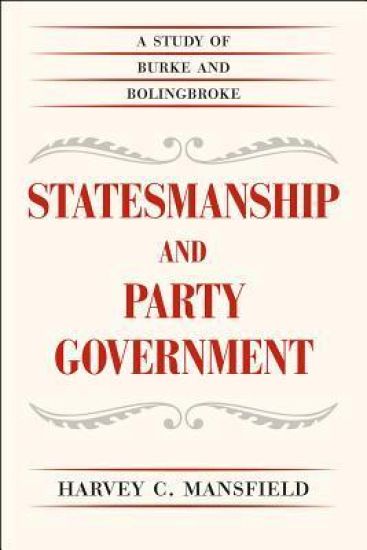
Statesmanship and Party Government

Statesmanship and Party Government

Harvey C. Mansfield

University of Chicago Press
2013
nidottu
In this incisive look at early modern views of party politics, Harvey C. Mansfield examines the pamphlet war between Edmund Burke and the followers of Henry St. John, First Viscount Bolingbroke during the mid-eighteenth century. In response to works by Bolingbroke published posthumously, Burke created his most eloquent advocacy of the party system. Taking an interdisciplinary approach to the material, Mansfield shows that present-day parties must be understood in the light of the history of party government. The complicated organization and the public actions of modern parties are the result, he contends, and not the cause of a great change in opinion about parties. Mansfield points out that while parties have always existed, the party government that we know today is possible only because parties are now considered respectable. In Burke's day, however, they were thought by detractors to be a cancer in a free polity. Burke, however, was an early champion of the party system in Britain and made his arguments with a clear-eyed realism. In "Statesmanship and Party Government", Mansfield provides a skillful evaluation of Burke's writings and sheds light on present-day party politics.
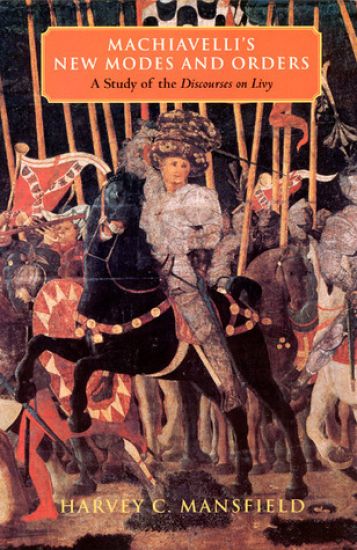
Machiavelli's New Modes and Orders

Machiavelli's New Modes and Orders

Harvey C. Mansfield

University of Chicago Press
2001
nidottu
Machiavelli's New Modes and Orders is the only full-length interpretive study on Machiavelli's controversial and ambiguous work, Discourses on Livy. These discourses, considered by some to be Machiavelli's most important work, are thoroughly explained in a chapter-by-chapter commentary by Harvey C. Mansfield, one of the world's foremost interpreters of this remarkable philosopher.Mansfield's aim is to discern Machiavelli's intention in writing the book: he argues that Machiavelli wanted to introduce new modes and orders in political philosophy in order to make himself the founder of modern politics. Mansfield maintains that Machiavelli deliberately concealed part of his intentions so that only the most perceptive reader could see beneath the surface of the text and understand the whole of his book. Previously out of print, Mansfield's penetrating study brings to light the hidden thoughts lurking in the details of the Discourses on Livy to inform and challenge its readers at every step along the way.
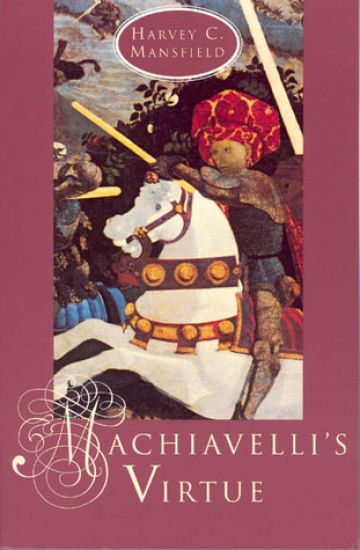
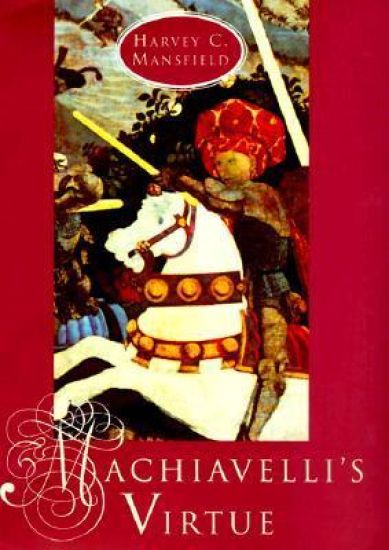
Machiavelli's Virtue

Machiavelli's Virtue

Harvey C. Mansfield

University of Chicago Press
1998
nidottu
Uniting thirty years of authoritative scholarship by a master of textual detail, Machiavelli's Virtue is a comprehensive statement on the founder of modern politics. Harvey Mansfield reveals the role of sects in Machiavelli's politics, his advice on how to rule indirectly, and the ultimately partisan character of his project, and shows him to be the founder of such modern and diverse institutions as the impersonal state and the energetic executive. Accessible and elegant, this groundbreaking interpretation explains the puzzles and reveals the ambition of Machiavelli's thought."The book brings together essays that have mapped [Mansfield's] paths of reflection over the past thirty years. . . . The ground, one would think, is ancient and familiar, but Mansfield manages to draw out some understandings, or recognitions, jarringly new."—Hadley Arkes, New Criterion"Mansfield's book more than rewards the close reading it demands."—Colin Walters, Washington Times"[A] masterly new book on the Renaissance courtier, statesman and political philosopher. . . . Mansfield seeks to rescue Machiavelli from liberalism's anodyne rehabilitation."—Roger Kimball, The Wall Street Journal
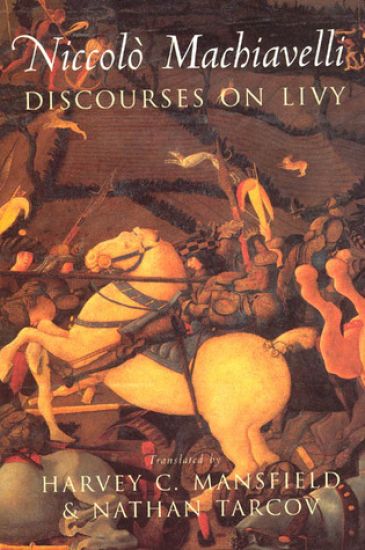
Discourses on Livy

Discourses on Livy

Niccolò Machiavelli; Harvey C. Mansfield; Nathan Tarcov

University of Chicago Press
1998
nidottu
Discourses on Livy is the founding document of modern republicanism, and Harvey C. Mansfield and Nathan Tarcov have provided the definitive English translation of this classic work. Faithful to the original Italian text, properly attentive to Machiavelli's idiom and subtlety of thought, it is eminently readable. With a substantial introduction, extensive explanatory notes, a glossary of key words, and an annotated index, the Discourses reveals Machiavelli's radical vision of a new science of politics, a vision of "new modes and orders" that continue to shape the modern ethos. "[Machiavelli] found in Livy the means to inspire scholars for five centuries. Within the Discourses, often hidden and sometimes unintended by their author, lie the seeds of modern political thought. . . . [Mansfield and Tarcov's] translation is careful and idiomatic."—Peter Stothard, The Times"Translated with painstaking accuracy—but also great readability."—Weekly Standard"A model of contemporary scholarship and a brave effort at Machiavelli translation that allows the great Florentine to speak in his own voice."—Choice
Machiavelli's Virtue

Machiavelli's Virtue

Harvey C. Mansfield

University of Chicago Press
1996
sidottu
Uniting 30 years of authoritative scholarship by a master of textual detail, "Machiavelli's Virtue" is a comprehensive statement on the founder of modern politics. Harvey C. Mansfield begins by analyzing Machiavelli's radical concept of virtue. Rejecting customary morality, Machiavelli teaches that the prince must set his own terms for politics and morality in the state. Mansfield argues that Machiavelli intended to rule the world through his thought; as a prince without a state, his subjects were the princes who followed his writings on founding and ruling. Mansfield explores the importance of sects in Machiavelli's politics, his endorsement of indirect government, and the ultimately nonrepublican character of his thought. Following the method of Leo Strauss, he takes up Machiavelli's individual works as wholes and shows how his innovations remain disturbingly relevant for modern politics. Interpretation explains the puzzles and reveals the ambition of Machiavelli's thought.
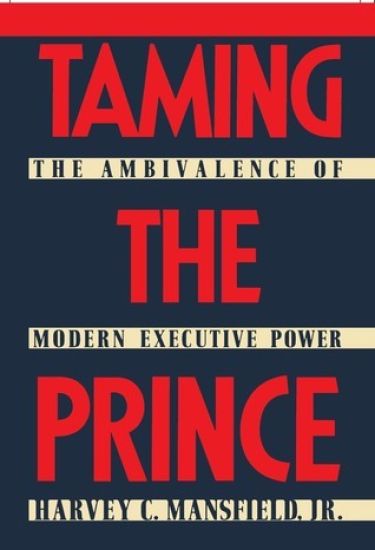
Taming the Prince

Taming the Prince

Harvey C. Mansfield

The Free Press
1989
pokkari
Harvey C. Mansfield analyzes the development of executive power, including its concept, purpose, and philosophical influence.Striving to bring clarity to the purpose and need for modern executive power, Taming the Prince discusses the philosophical influences of executive power and considers the role of the executive in business and politics. “A sparkling, incisive historical and philosophical study of executive power. The right place to begin.” – Aaron Wildavsky, Professor of Political Science and Public Policy, University of California, Berkeley