
Kirjailija
Harvey Cox
Kirjat ja teokset yhdessä paikassa: 14 kirjaa, julkaisuja vuosilta 1969-2025, suosituimpien joukossa A New Heaven:. Vertaile teosten hintoja ja tarkista saatavuus suomalaisista kirjakaupoista.
14 kirjaa
Kirjojen julkaisuhaarukka 1969-2025.
Harvey Cox is one of America's great public theologians of the past fifty years. In many bestselling books he has written on matters of religion and faith for a popular audience, including on secularism and belief, world religions, Jewish-Christian dialogue, liberation theology, Pentecostalism, Jesus, and biblical interpretation. In his new book he explores the question that underlies all religion: what is the point of life that ends in death? What are the different ways we think about the afterlife? What are we actually talking about when we talk about heaven? Interestingly, this is not a subject of great preoccupation in the Gospels. Jesus was concerned primarily with the Kingdom of God--about conforming the present world to the values and principles of God's love and justice. How this has gravitated toward concern with "life after death" is one of the topics covered here. Cox draws on personal stories, including his youthful work as an assistant his uncle, an undertaker, approaches to death in other cultures and religions; and his own reflections on mortality.
Harvey Cox is one of America's great public theologians of the past fifty years. In many bestselling books he has written on matters of religion and faith for a popular audience, including on secularism and belief, world religions, Jewish-Christian dialogue, liberation theology, Pentecostalism, Jesus, and biblical interpretation. In his new book he explores the question that underlies all religion: what is the point of life that ends in death? What are the different ways we think about the afterlife? What are we actually talking about when we talk about heaven? Interestingly, this is not a subject of great preoccupation in the Gospels. Jesus was concerned primarily with the Kingdom of God--about conforming the present world to the values and principles of God's love and justice. How this has gravitated toward concern with "life after death" is one of the topics covered here. Cox draws on personal stories, including his youthful work as an assistant his uncle, an undertaker, approaches to death in other cultures and religions; and his own reflections on mortality.
“Essential and thoroughly engaging…Harvey Cox’s ingenious sense of how market theology has developed a scripture, a liturgy, and sophisticated apologetics allow us to see old challenges in a remarkably fresh light.”—E. J. Dionne, Jr.We have fallen in thrall to the theology of supply and demand. According to its acolytes, the Market is omniscient, omnipotent, and omnipresent. It can raise nations and ruin households, and comes complete with its own doctrines, prophets, and evangelical zeal. Harvey Cox brings this theology out of the shadows, demonstrating that the way the world economy operates is shaped by a global system of values that can be best understood as a religion.Drawing on biblical sources and the work of social scientists, Cox points to many parallels between the development of Christianity and the Market economy. It is only by understanding how the Market reached its “divine” status that can we hope to restore it to its proper place as servant of humanity.“Cox argues that…we are now imprisoned by the dictates of a false god that we ourselves have created. We need to break free and reclaim our humanity.”—Forbes“Cox clears the space for a new generation of Christians to begin to develop a more public and egalitarian politics.”—The Nation
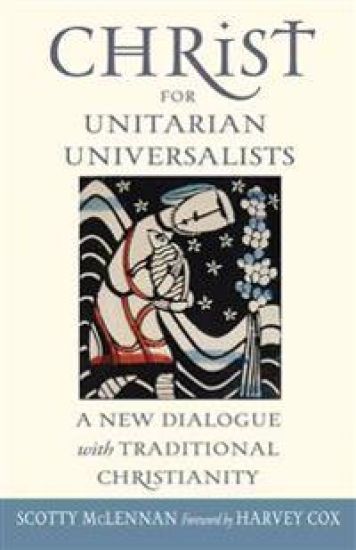
CHRIST FOR UNITARIAN UNIVERSALISTS is an engaging and thoughtful inquiry into Christianity for Unitarian Universalists and other spiritual seekers - including sceptics, non-religious people, liberal Christians and those who consider themselves "spiritual but not religious." The book has several purposes. The first is to present Christ in an understandable and compelling way to the increasing number of people who do not consider themselves Christian. The second is to present liberal and progressive Christians with the non-dogmatic way that Unitarian Universalists have viewed Christ through the Bible and personal experience. And the third is to promote active dialogue between non-Christians and the nearly 80% of Americans who identify themselves as Christian. CHRIST FOR UNITARIAN UNIVERSALISTS addresses frank questions with integrity and intellectual honesty, yet, also, presents a sincere and genuine sense of love as embodied in Jesus that is so heartfelt, so unconditional and so revolutionary that it will take your breath away.
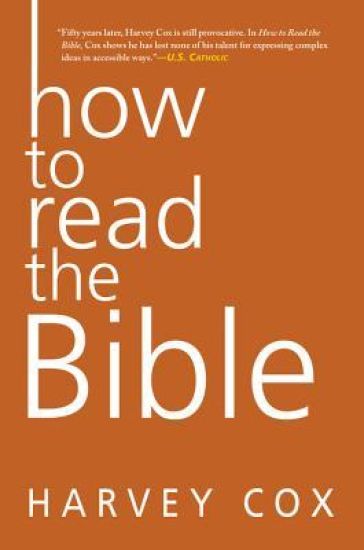
Renowned religion expert and Harvard Divinity School professor Harvey Cox deepens our experience of the Bible, revealing the three primary ways we read it, why each is important, and how we can integrate these approaches for a richer understanding and appreciation of key texts throughout the Old and New Testaments.The Bible is the heart of devotional practice, a source of guidance and inspiration rich with insightful life lessons. On the other side of the spectrum, academics have studied the Bible using scientific analysis to examine its historical significance and meaning. The gap between these readings has resulted in a schism with far-reaching implications: Without historical context, ordinary people are left to interpret the Bible literally, while academic readings overlook the deeply personal connections established in church pews, choir benches, and backyard study groups.In How To Read the Bible, Cox explores three different lenses commonly used to bring the Bible into focus: Literary as narrative stories of family conflict, stirring heroism, and moral dilemmas; History as classic texts with academic and theological applications; Activism as a source of dialogue and engagement to be shared and applied to our lives.By bringing these together, Cox shows the Bible in all its rich diversity and meaning and offers us a contemporary activist version that wrestles with issues of feminism, war, homosexuality, and race. The result is a living resource that is perpetually evolving as our understanding changes and deepens from generation to generation."
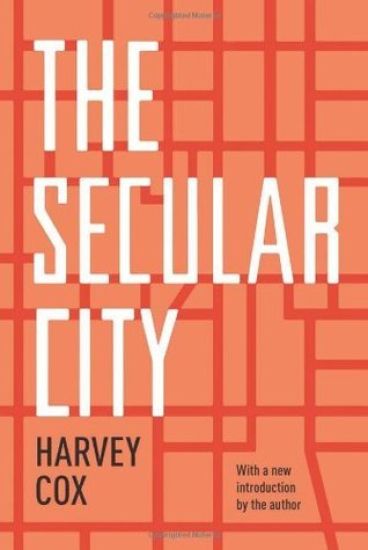
Since its initial publication in 1965, The Secular City has been hailed as a classic for its nuanced exploration of the relationships among the rise of urban civilization, the decline of hierarchical, institutional religion, and the place of the secular within society. Now, half a century later, this international best seller remains as relevant as when it first appeared. The book's arguments--that secularity has a positive effect on institutions, that the city can be a space where people of all faiths fulfill their potential, and that God is present in both the secular and formal religious realms--still resonate with readers of all backgrounds. For this brand-new edition, Harvey Cox provides a substantial and updated introduction. He reflects on the book's initial stunning success in an age of political and religious upheaval and makes the case for its enduring relevance at a time when the debates that The Secular City helped ignite have caught fire once again.
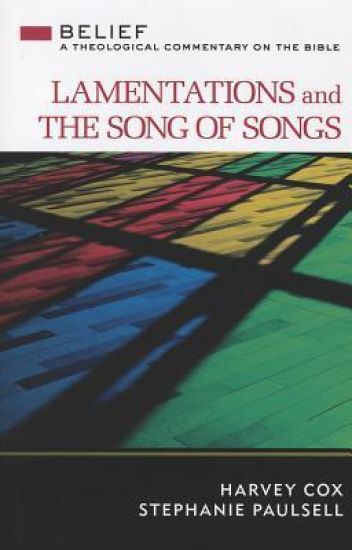
Lamentations and Song of Songs
Harvey Cox; Stephanie Paulsell
Westminster/John Knox Press,U.S.
2012
sidottu
This latest volume in the popular Belief series considers two very different types of biblical writings and two very timely subjects—violence and sex within the context of Scripture.Well-known theologian Harvey Cox draws on a wide array of sources in his commentary on Lamentations— including poetry, novels, films, paintings, and photography—to offer a contemporary theological reading that is provocative and sure to stir numerous theological reflections and responses.The biblical book of Song of Songs has historically been seen as a book pointing to Christ's love for the church and has been interpreted in allegorical ways. Yet, it is unique in the canon for its use of erotic poetry, celebrating the human body and human love in graphic terms. Author Stephanie Paulsell suggests that the Song can still have profound meaning for us, teaching us "to love not only what we can see shining on the surface but also those depths of the other which are out of our reach."

A prominent theologian takes a new look at the stories of Jesus from a modern perspective to demonstrate how his parables and teachings can bridge the gap between the ancient and modern world to serve as contemporary guidelines for leading a moral life, explaining how to extrapolate answers for such issues as civil rights, aging, and teenage drug use. Reprint.
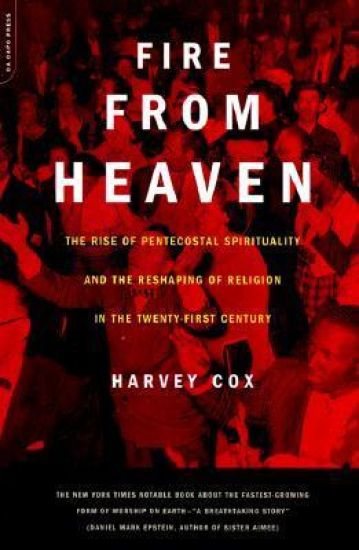
It was born a scant ninety-five years ago in a rundown warehouse on Azusa Street in Los Angeles. For days the religious-revival service there went on and on-and within a week the Los Angeles Times was reporting on a "weird babble" coming from the building. Believers were "speaking in tongues," the way they did at the first Pentecost recorded in the Bible?and a pentecostal movement was created that would, by the start of the twenty-first century, attract over 400 million followers worldwide. Harvey Cox has traveled the globe to visit and worship with pentecostal congregations on four continents, and he has written a dynamic, provocative history of this explosion of spirituality?a movement that represents no less than a tidal change in what religion is and what it means to people.
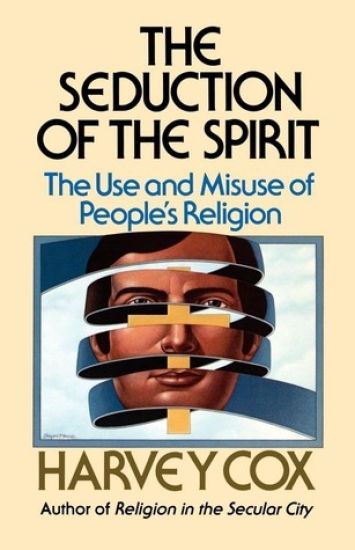
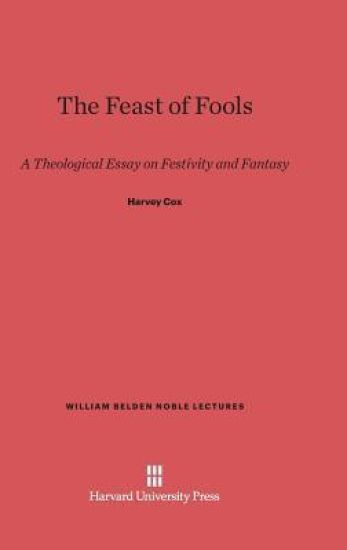
In this fascinating interpretation of contemporary culture and theology, Harvey Cox examines both the loss and reemergence of festivity and fantasy in Western civilization. He evaluates both processes from a theological perspective, defining festivity as the capacity for genuine revelry and joyous celebration and defining fantasy as the faculty for envisioning radically alternative life situations. He asserts that both are absolutely vital to contemporary human life and faith; both are a precondition for genuine social transformation. In a success and money-oriented society we need a rebirth of unapologetically unproductive festivity and expressive celebration. In an age that has quarantined parody and separated politics from imagination, we need a renaissance of social fantasy. It has been said over and over again that affluent Western man has been gaining the whole world while losing his soul. In the face of this Mr. Cox affirms the possibility and necessity of a resurgence of hope, celebration, liberation, and experimentation. The medieval Feast of Fools, from which he has taken his title, symbolizes both the problem and the process. Centuries ago it provided an opportunity for the choirboy to play bishop and for serious townsfolk to mock the stately rituals of church and court. The eventual disappearance of the custom in the sixteenth century, unlamented if not welcomed by those in authority, illustrates the concerns of this provocative and controversial essay. Mr. Cox does not propose that a medieval practice should be revived, but he does argue for a rebirth in our own cultural idiom of what was right and good about the Feast of Fools. It is likely that this book will become significant in wide circles. It speaks directly to such contemporary movements as the theology of hope, the rapidly disappearing radical theology, and the theology of culture. For many it will provide a new perspective on the renewal of religious life and the secular search for religious experience. For others it will function as a window into the experimental laboratories of the so-called "underground church." For everyone it is a refreshing encounter with a wholly new set of perceptive observations about the problems that plague us.