Kirjojen hintavertailu. Mukana 12 595 353 kirjaa ja 12 kauppaa.

Kirjailija

Harvey J. Graff

Kirjat ja teokset yhdessä paikassa: 11 kirjaa, julkaisuja vuosilta 1987-2026, suosituimpien joukossa Education for Citizenship or Disciplining for Civility?: The Contradictions of the Private in the Public Land-Grant University: The Example of the Ohi. Vertaile teosten hintoja ja tarkista saatavuus suomalaisista kirjakaupoista.

Mukana myös kirjoitusasut: Harvey J Graff

11 kirjaa

Kirjojen julkaisuhaarukka 1987-2026.

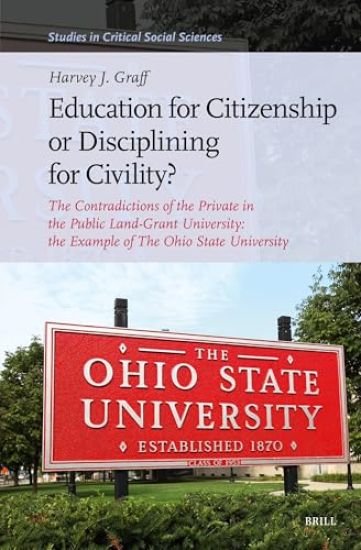
Education for Citizenship or Disciplining for Civility?: The Contradictions of the Private in the Public Land-Grant University: The Example of the Ohi
Myths and misconceptions dominate our understanding of higher education and especially public higher education. They mislead all parties including students and citizens. This book is an original and urgently needed critical reinterpretation of the history of public higher education focusing on the contradictions and conflicts of the private in the public and shareholders versus stakeholders. Education for Citizenship or Disciplining for Civility? focuses on the major example of The Ohio State University, a very large and prominent 150-year-old American public land-grant university that is known more for its football teams than for its academic excellence. This book presents a new understanding of the limits and the importance of the public--in history, theory, civics, and operation.
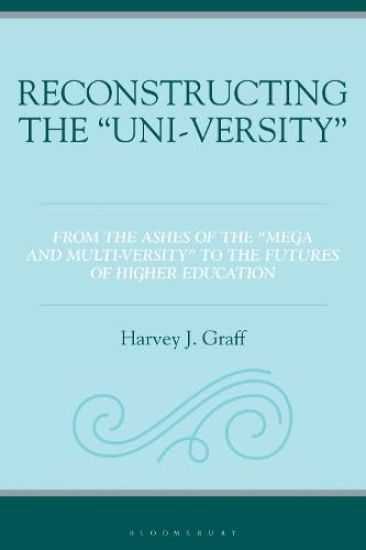
Reconstructing the "Uni-Versity": From the Ashes of the Mega- And Multi-Versity to the Futures of Higher Education
Slogans, myths, and isolated anecdotes are inadequate substitutes for documented history and contextual understanding. Literature on the history of higher education is dominated by ahistorical and contextually ignorant slogans. Seldom acknowledged, in discussions of the "decline" or "failure" of the modern university, is 1) how long it has been going on (at least since the 1960s); and 2) universities' own complicity in this long, complicated, and contradictory process. Myths intertwine inseparably with slogans to echo yet another "lost cause." Our collective, as well as individual, pasts provide essential lessons if we know how to read and learn from them. More complicated is imagining a plausible better future for universities. In Reconstructing the "Uni-veristy" From the Ashes of the "Mega- and Multi-versity" to New Futures of Higher Education, Harvey J. Graff, bringing experience from over 50 years as a professor, provides an accurate history of higher education, redefining the issues and terms to establish a new agenda.
My Life with Literacy

My Life with Literacy

Harvey J Graff

University Press of Colorado
2025
nidottu
Calling My Life With Literacy a "new intersectionality," Harvey J. Graff explores both overarching and underlying patterns that connected his development and lived experience from childhood to and through his retirement from the academy. He considers the inextricable interconnections of personal experiences and relationships; the political, broadly defined to include life-shaping contexts and historical events, influences, values, commitments, and experiences; the social, intellectual, and political dimensions of academics and scholarship--a life of learning and using literacy and literacies; and the circumstances of living in six major cities and studying and then teaching in five universities. Graff's pioneering scholarship in the history of literacy and literacy studies provides both the frame and the foundation for his work in the history of children and youth; the history of cities; higher education past, present, and future; and interdisciplinarity itself.
Searching for Literacy

Searching for Literacy

Harvey J. Graff

Springer Nature Switzerland AG
2023
nidottu
This book provides a critical account of the development of questions, approaches, methods, and understandings of literacy within and across disciplines and interdisciplines. It provides a critique of literacy studies, including the New Literacy Studies. This book completes a series that the author began in the 1970s. It criticizes and revises the New Literacy Studies and how we think about literacy generally. It is a revisionist study which argues that literacy and literacy studies are historical developments and must be understood in those terms to comprehend their profound impact on our traditions of thinking about and understanding literacy, and how we study it. Graff argues that literacy studies in its academic, institutional, and policy forums, but also in popular parlance, has lost its critical foundations, and this hinders efforts to promote literacy. He examines literacy over time and across linguistics; anthropology; psychology; reading and writing across modes of communication and comprehension; “new” literacies across digital, visual, performance, numerical, and scientific domains; and history. He underscores the value of new directions of negotiation and translation. This book will interest scholars and students in the many fields that constitute literacy studies across the humanities, social sciences, education, and beyond.
Searching for Literacy

Searching for Literacy

Harvey J. Graff

Springer Nature Switzerland AG
2022
sidottu
This book provides a critical account of the development of questions, approaches, methods, and understandings of literacy within and across disciplines and interdisciplines. It provides a critique of literacy studies, including the New Literacy Studies. This book completes a series that the author began in the 1970s. It criticizes and revises the New Literacy Studies and how we think about literacy generally. It is a revisionist study which argues that literacy and literacy studies are historical developments and must be understood in those terms to comprehend their profound impact on our traditions of thinking about and understanding literacy, and how we study it. Graff argues that literacy studies in its academic, institutional, and policy forums, but also in popular parlance, has lost its critical foundations, and this hinders efforts to promote literacy. He examines literacy over time and across linguistics; anthropology; psychology; reading and writing across modes of communication and comprehension; “new” literacies across digital, visual, performance, numerical, and scientific domains; and history. He underscores the value of new directions of negotiation and translation. This book will interest scholars and students in the many fields that constitute literacy studies across the humanities, social sciences, education, and beyond.
Undisciplining Knowledge

Undisciplining Knowledge

Harvey J. Graff

Johns Hopkins University Press
2017
pokkari
Interdisciplinarity-or the interrelationships among distinct fields, disciplines, or branches of knowledge in pursuit of new answers to pressing problems-is one of the most contested topics in higher education today. Some see it as a way to break down the silos of academic departments and foster creative interchange, while others view it as a destructive force that will diminish academic quality and destroy the university as we know it. In Undisciplining Knowledge, acclaimed scholar Harvey J. Graff presents readers with the first comparative and critical history of interdisciplinary initiatives in the modern university. Arranged chronologically, the book tells the engaging story of how various academic fields both embraced and fought off efforts to share knowledge with other scholars. It is a story of myths, exaggerations, and misunderstandings, on all sides. Touching on a wide variety of disciplines-including genetic biology, sociology, the humanities, communications, social relations, operations research, cognitive science, materials science, nanotechnology, cultural studies, literacy studies, and biosciences-the book examines the ideals, theories, and practices of interdisciplinarity through comparative case studies. Graff interweaves this narrative with a social, institutional, and intellectual history of interdisciplinary efforts over the 140 years of the modern university, focusing on both its implementation and evolution while exploring substantial differences in definitions, goals, institutional locations, and modes of organization across different areas of focus. Scholars across the disciplines, specialists in higher education, administrators, and interested readers will find the book's multiple perspectives and practical advice on building and operating-and avoiding fallacies and errors-in interdisciplinary research and education invaluable.
Undisciplining Knowledge

Undisciplining Knowledge

Harvey J. Graff

Johns Hopkins University Press
2015
sidottu
Interdisciplinarity-or the interrelationships among distinct fields, disciplines, or branches of knowledge in pursuit of new answers to pressing problems-is one of the most contested topics in higher education today. Some see it as a way to break down the silos of academic departments and foster creative interchange, while others view it as a destructive force that will diminish academic quality and destroy the university as we know it. In Undisciplining Knowledge, acclaimed scholar Harvey J. Graff presents readers with the first comparative and critical history of interdisciplinary initiatives in the modern university. Arranged chronologically, the book tells the engaging story of how various academic fields both embraced and fought off efforts to share knowledge with other scholars. It is a story of myths, exaggerations, and misunderstandings, on all sides. Touching on a wide variety of disciplines-including genetic biology, sociology, the humanities, communications, social relations, operations research, cognitive science, materials science, nanotechnology, cultural studies, literacy studies, and biosciences-the book examines the ideals, theories, and practices of interdisciplinarity through comparative case studies. Graff interweaves this narrative with a social, institutional, and intellectual history of interdisciplinary efforts over the 140 years of the modern university, focusing on both its implementation and evolution while exploring substantial differences in definitions, goals, institutional locations, and modes of organization across different areas of focus. Scholars across the disciplines, specialists in higher education, administrators, and interested readers will find the book's multiple perspectives and practical advice on building and operating-and avoiding fallacies and errors-in interdisciplinary research and education invaluable.
The Dallas Myth

The Dallas Myth

Harvey J. Graff

University of Minnesota Press
2010
nidottu
The ninth largest city in the United States, Dallas is exceptional among American cities for the claims of its elites and boosters that it is a "city with no limits" and a "city with no history." Home to the Dallas Cowboys, self-styled as "America's Team," setting for the television series that glamorized its values of self-invention and success, and site of the assassination of John F. Kennedy, Dallas looms disproportionately large in the American imagination. Yet it lacks an identity of its own.In The Dallas Myth, Harvey J. Graff presents a novel interpretation of a city that has proudly declared its freedom from the past. He scrutinizes the city's origin myth and its governance ideology, known as the "Dallas Way," looking at how these elements have shaped Dallas and served to limit democratic participation and exacerbate inequality. Advancing beyond a traditional historical perspective, Graff proposes an original, integrative understanding of the city's urban fabric and offers an explicit critique of the reactionary political foundations of modern Dallas: its tolerance for right-wing political violence, the endemic racism and xenophobia, and a planning model that privileges growth and monumental architecture at the expense of the environment and social justice.Revealing the power of myths that have defined the city for so long, Graff presents a new interpretation of Dallas that both deepens our understanding of America's urban landscape and enables its residents to envision a more equitable, humane, and democratic future for all.
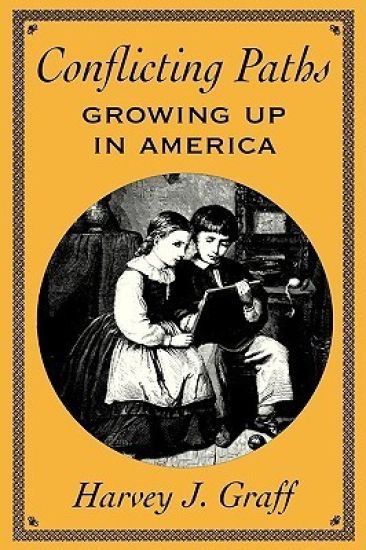
Conflicting Paths

Conflicting Paths

Harvey J. Graff

Harvard University Press
1997
nidottu
We grow up--so simple, it just seems to happen--and yet there are endless variations in the way we do it. What part does culture play in the process? How much do politics and economics have to do with it? As the nation has matured, have the ways people grow up changed too? This book traces the many paths to adulthood that Americans have pursued over time. Spanning more than two centuries of intense transformation in the lives of individuals and the life of a nation, Conflicting Paths is an innovative history of growing up in America.Harvey J. Graff, a distinguished social historian, mines more than five hundred personal narratives for what they can tell us about the passage from childhood to maturity. Drawing on diaries, memoirs, autobiographies, and letters, he builds a penetrating, complex, firsthand account of how childhood, adolescence, and youth have been experienced and understood--as functions of familial and social relations, as products of biology and physiology, and as cultural and political constructs. These first-person testimonies cross the lines of time and space, gender and class, ethnicity, age, and race. In these individual stories and the larger story they constitute, Graff exposes the way social change--including institutional developments and shifting attitudes, expectations, and policy--and personal experience intertwine in the process of growing up. Together, these narratives form a challenging, subtle guide to historical experiences and to the epochal remaking of growing up.The most socially inclusive and historically extensive of any such research, Graff's work constitutes an important chapter in the story of the family, the formation of modern society, and the complex interweaving of young people, tradition, and change.
The Labyrinths of Literacy

The Labyrinths of Literacy

Harvey J. Graff

University of Pittsburgh Press
1995
nidottu
This is a collection of essays by one of the pioneers of revisionist approaches to the history of literacy in North America and Europe. It offers controversial views on the relation of literacy to society, questioning the importance and function of literacy in the development of society today.
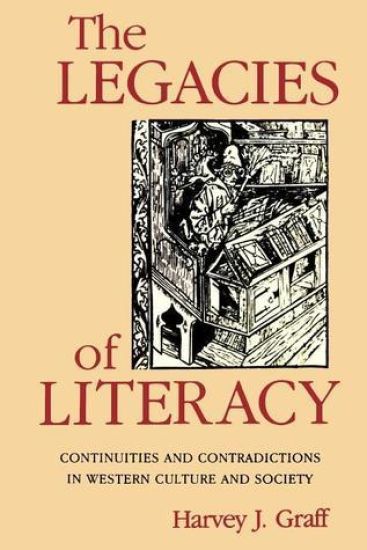
The Legacies of Literacy

The Legacies of Literacy

Harvey J. Graff

Indiana University Press
1987
pokkari
"This book will be a monumental contribution to the topic and a staple of scholarship for decades." —Michael B. Katz "A remarkable volume of critical synthesis and passionate revisionism." —Journal of Economic History ". . . ambitious and stimulating . . . required reading not only for social historians but also for policy-makers and activists." —Histoire Sociale "Clearly an important book . . . marks a significant point in the history of literacy studies." —History of Education Quarterly "A stimulating challenge to traditional assumptions and scholarly commonplaces." —Journal of Communication