
Kirjailija
Harvey Pekar
Kirjat ja teokset yhdessä paikassa: 7 kirjaa, julkaisuja vuosilta 1993-2014, suosituimpien joukossa FDR and the New Deal for Beginners. Vertaile teosten hintoja ja tarkista saatavuus suomalaisista kirjakaupoista.
7 kirjaa
Kirjojen julkaisuhaarukka 1993-2014.

In Not the Israel My Parents Promised Me, one of the final graphic memoirs from the man who defined the genre, Pekar explores what it means to be Jewish and what Israel means to the Jews. Over the course of a single day in his hometown of Cleveland, Ohio, Pekar and the illustrator JT Waldman wrestle with the mythologies passed down to them. Combining his increasing disillusionment with Israel with an account of the Jewish people since biblical times, Pekar, aided by Waldman's protean art, weaves a personal and historical odyssey of uncommon power. Plainspoken and empathetic, Pekar had no patience for injustice and prejudice, and he arrives at the firm belief that all peoples should be held to the same universal standards of decency, fairness, and democracy. With an epilogue written by Joyce Brabner, Not the Israel My Parents Promised Me is an essential book for fans of Pekar and anyone interested in the past and future of the Jewish state.
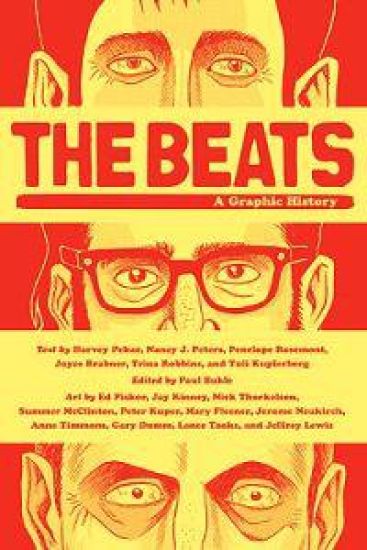
In The Beats: A Graphic History, those who were mad to live have come back to life through artwork as vibrant as the Beat movement itself. Told by the comic legend Harvey Pekar, his frequent artistic collaborator Ed Piskor, and a range of artists and writers, including the feminist comic creator Trina Robbins and the Mad magazine artist Peter Kuper, The Beats takes us on a wild tour of a generation that, in the face of mainstream American conformity and conservatism, became known for its determined uprootedness, aggressive addictions, and startling creativity and experimentation. What began among a small circle of friends in New York and San Francisco during the late 1940s and early 1950s laid the groundwork for a literary explosion, and this striking anthology captures the storied era in all its incarnations--from the Benzedrine-fueled antics of Kerouac, Ginsberg, and Burroughs to the painting sessions of Jay DeFeo's disheveled studio, from the jazz hipsters to the beatnik chicks, from Chicago's College of Complexes to San Francisco's famed City Lights bookstore. Snapshots of lesser-known poets and writers sit alongside frank and compelling looks at the Beats' most recognizable faces. What emerges is a brilliant collage of--and tribute to--a generation, in a form and style that is as original as its subject.
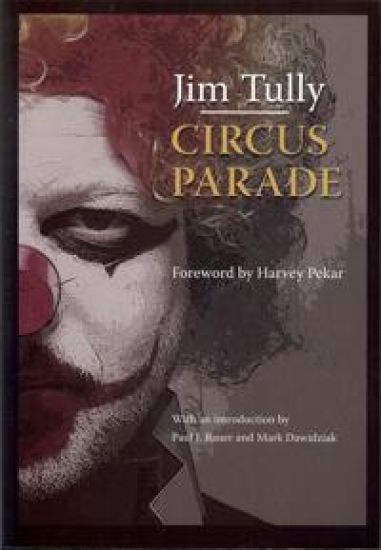
A facsimile reprint of this classic tale of the seamier side of circus life"Jim Tully was one of the fine American novelists to emerge in the 1920s and '30s. He gained this position with intelligence, sensitivity, and hard work. . . . No matter how crazily violent or fantastic his stories are, readers accept them as nonfiction. Tully makes the improbable seem true."—from the foreword by Harvey PekarJim Tully was an American writer who enjoyed critical acclaim and commercial success in the 1920s and '30s. A former circus laborer, hobo, and professional boxer, his rags-to-riches career may qualify him as the greatest long shot in American literature.Following the death of his mother, Tully was sent from his home in St. Marys, Ohio, to an orphanage in Cincinnati. After his time at the orphanage, the young Tully spent six years as a vagabond, riding the rails and working for a small circus. He left the road and settled in Kent, Ohio, in 1907, working odd jobs while focusing on his new interest—writing. After getting a few pieces published in local papers, Tully returned to the road in 1912, eventually settling for good in Hollywood. He worked for Charlie Chaplin and later became one of the first reporters to cover Hollywood. His honest depictions of film stars and directors earned him the reputation as the most feared man in Hollywood. In addition to the celebrity pieces, Tully wrote numerous books, including Circus Parade (1927).Based on his time as a circus laborer, Circus Parade presents the sordid side of small-time circus life. Tully's use of fast-paced vignettes and unforgettable characters made this book one of his most successful, both commercially and critically. Among the cast is Cameron, the shifty circus owner; Lila, the lonely four-hundred-pound strong woman; and Blackie, an amoral drug addict.This is by no means a romantic story about a boy joining the circus. Tully knows too well its seamier side. Instead, he paints a picture of life at the edges—earthy, wolfish, and brutal. Fans of Jack London, Jack Kerouac, John Steinbeck, Charles Bukowski, and hard-boiled writers of the 1930s will find a kindred spirit in Jim Tully.
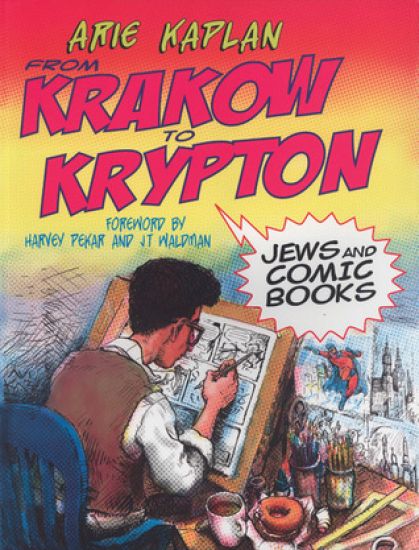
From Krakow to Krypton
Arie Kaplan; JT Waldman; Harvey Pekar
Jewish Publication Society
2008
pokkari
Jews created the first comic book, the first graphic novel, the first comic book convention, the first comic book specialty store, and they helped create the underground comics (or "Comix") movement of the late '60s and early '70s. Many of the creators of the most famous comic books, such as Superman, Spiderman, X-Men, and Batman, as well as the founders of MAD magazine, were Jewish. From Krakow to Krypton: Jews and Comic Books tells their stories and demonstrates how they brought a uniquely Jewish perspective to their work and to the comics industry as a whole. Over-sized and in full color, From Krakow to Krypton is filled with sidebars, cartoon bubbles, comic book graphics, original design sketches, and photographs. It is a visually stunning and exhilarating history.
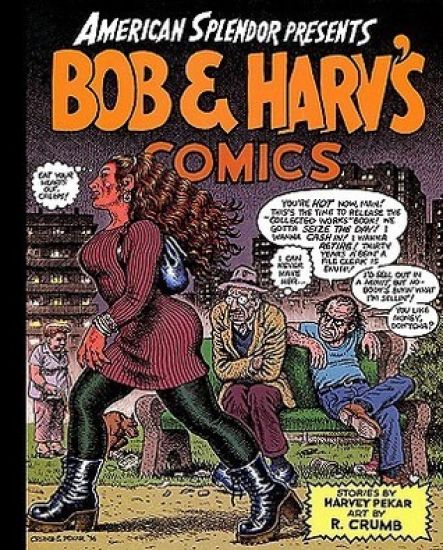
A collection of comics portraying stories from Pekar's life
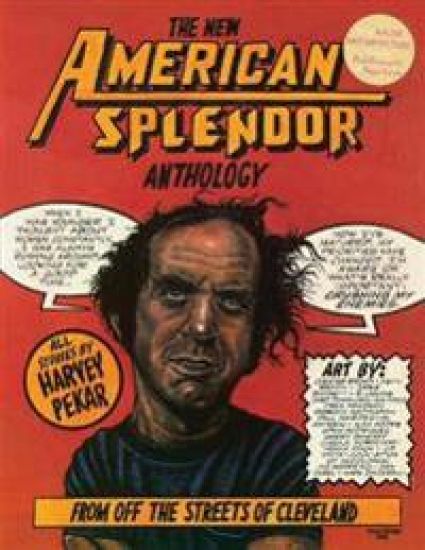
American Splendor is the series that sparked a revolution in comics and brought graphic novels to the attention of post-adolescent readers everywhere. Here is the best of American Splendor and other comics by Harvey Pekar, including never-before-seen material.