Kirjojen hintavertailu. Mukana 12 595 353 kirjaa ja 12 kauppaa.

Kirjailija

Harvinder Singh

Kirjat ja teokset yhdessä paikassa: 28 kirjaa, julkaisuja vuosilta 2016-2026, suosituimpien joukossa Management von Tiefbissen. Vertaile teosten hintoja ja tarkista saatavuus suomalaisista kirjakaupoista.

28 kirjaa

Kirjojen julkaisuhaarukka 2016-2026.

Structural Materials

Structural Materials

Harvinder Singh

SPRINGER VERLAG, SINGAPORE
2022
nidottu
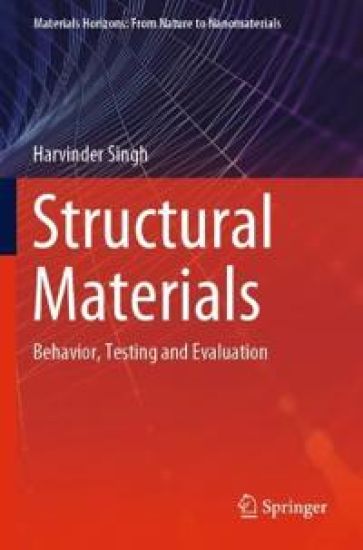
This book discusses the properties, characterization procedures, and analysis techniques of various structural materials. It presents the latest design considerations and uses of engineering materials as well as theories for fully understanding them through numerous worked mathematical examples. The book gradually builds the concept of materials and the principles of material classifications and their response to different physical disturbances, and finally, about the selection methods based upon the test results of the standard methods to choose appropriate materials for various engineering applications. The principles and related theories predicting the response of different structural materials are introduced in a concise and logical manner. A number of illustrations and examples are also given in all chapters for the help of potential readers. The book will be useful for practicing engineers, researchers, and students in the area of civil engineering, especially structural engineering and allied fields.
Structural Materials

Structural Materials

Harvinder Singh

Springer Verlag, Singapore
2021
sidottu
This book discusses the properties, characterization procedures, and analysis techniques of various structural materials. It presents the latest design considerations and uses of engineering materials as well as theories for fully understanding them through numerous worked mathematical examples. The book gradually builds the concept of materials and the principles of material classifications and their response to different physical disturbances, and finally, about the selection methods based upon the test results of the standard methods to choose appropriate materials for various engineering applications. The principles and related theories predicting the response of different structural materials are introduced in a concise and logical manner. A number of illustrations and examples are also given in all chapters for the help of potential readers. The book will be useful for practicing engineers, researchers, and students in the area of civil engineering, especially structural engineering and allied fields.
Friction Stir Welding and Processing

Friction Stir Welding and Processing

Harvinder Singh; Rajdeep Singh

LAP Lambert Academic Publishing
2018
pokkari
Friction stir welding (FSW) is a relatively new solid-state joining process. This joining technique is energy efficient, environment friendly, and versatile. In particular, it can be used to join high-strength aerospace aluminum alloys and other metallic alloys that are hard to weld by conventional fusion welding. FSW is considered to be the most significant development in metal joining in a decade. Recently, friction stir processing (FSP) was developed for microstructural modification of metallic materials. In this review article, the current state of understanding and development of the FSW and FSP are addressed. Particular emphasis has been given to: (a) mechanisms responsible for the formation of welds and microstructural refinement, and (b) effects of FSW/FSP parameters on resultant microstructure and final mechanical properties. While the bulk of the information is related to aluminum alloys, important results are now available for other metals and alloys. At this stage, the technology diffusion has significantly outpaced the fundamental understanding of microstructural evolution and microstructure-property relationships.
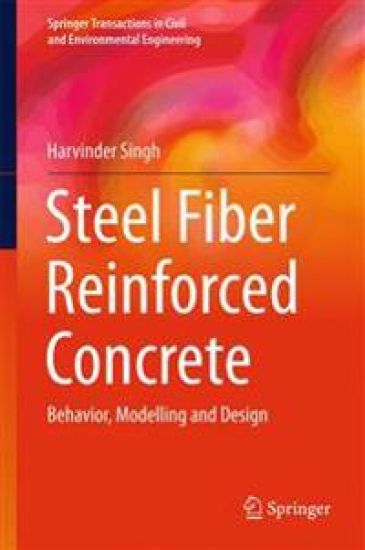
Steel Fiber Reinforced Concrete

Steel Fiber Reinforced Concrete

Harvinder Singh

Springer Verlag, Singapore
2018
nidottu
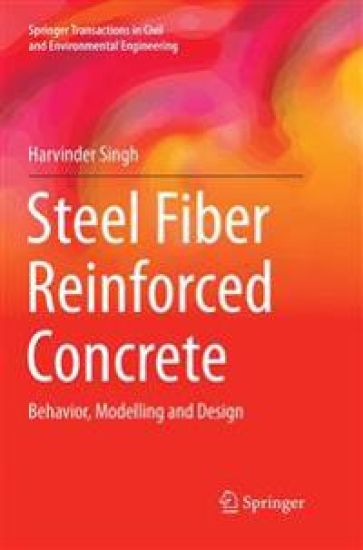
This book discusses design aspects of steel fiber-reinforced concrete (SFRC) members, including the behavior of the SFRC and its modeling. It also examines the effect of various parameters governing the response of SFRC members in detail. Unlike other publications available in the form of guidelines, which mainly describe design methods based on experimental results, it describes the basic concepts and principles of designing structural members using SFRC as a structural material, predominantly subjected to flexure and shear. Although applications to special structures, such as bridges, retaining walls, tanks and silos are not specifically covered, the fundamental design concepts remain the same and can easily be extended to these elements. It introduces the principles and related theories for predicting the role of steel fibers in reinforcing concrete members concisely and logically, and presents various material models to predict the response of SFRC members in detail. These are thengradually extended to develop an analytical flexural model for the analysis and design of SFRC members. The lack of such a discussion is a major hindrance to the adoption of SFRC as a structural material in routine design practice. This book helps users appraise the role of fiber as reinforcement in concrete members used alone and/or along with conventional rebars. Applications to singly and doubly reinforced beams and slabs are illustrated with examples, using both SFRC and conventional reinforced concrete as a structural material. The influence of the addition of steel fibers on various mechanical properties of the SFRC members is discussed in detail, which is invaluable in helping designers and engineers create optimum designs. Lastly, it describes the generally accepted methods for specifying the steel fibers at the site along with the SFRC mixing methods, storage and transport and explains in detail methods to validate the adopted design. This book is useful to practicing engineers, researchers, and students.
Steel Fiber Reinforced Concrete

Steel Fiber Reinforced Concrete

Harvinder Singh

Springer Verlag, Singapore
2016
sidottu
This book discusses design aspects of steel fiber-reinforced concrete (SFRC) members, including the behavior of the SFRC and its modeling. It also examines the effect of various parameters governing the response of SFRC members in detail. Unlike other publications available in the form of guidelines, which mainly describe design methods based on experimental results, it describes the basic concepts and principles of designing structural members using SFRC as a structural material, predominantly subjected to flexure and shear. Although applications to special structures, such as bridges, retaining walls, tanks and silos are not specifically covered, the fundamental design concepts remain the same and can easily be extended to these elements. It introduces the principles and related theories for predicting the role of steel fibers in reinforcing concrete members concisely and logically, and presents various material models to predict the response of SFRC members in detail. These are thengradually extended to develop an analytical flexural model for the analysis and design of SFRC members. The lack of such a discussion is a major hindrance to the adoption of SFRC as a structural material in routine design practice. This book helps users appraise the role of fiber as reinforcement in concrete members used alone and/or along with conventional rebars. Applications to singly and doubly reinforced beams and slabs are illustrated with examples, using both SFRC and conventional reinforced concrete as a structural material. The influence of the addition of steel fibers on various mechanical properties of the SFRC members is discussed in detail, which is invaluable in helping designers and engineers create optimum designs. Lastly, it describes the generally accepted methods for specifying the steel fibers at the site along with the SFRC mixing methods, storage and transport and explains in detail methods to validate the adopted design. This book is useful to practicing engineers, researchers, and students.