Kirjojen hintavertailu. Mukana 12 595 353 kirjaa ja 12 kauppaa.

Kirjailija

Hattie John

Kirjat ja teokset yhdessä paikassa: 10 kirjaa, julkaisuja vuosilta 2008-2019, suosituimpien joukossa Visible Learning. Vertaile teosten hintoja ja tarkista saatavuus suomalaisista kirjakaupoista.

10 kirjaa

Kirjojen julkaisuhaarukka 2008-2019.

Becoming an Assessment-Capable Visible Learner, Grades 6-12, Level 1: Teacher's Guide

Becoming an Assessment-Capable Visible Learner, Grades 6-12, Level 1: Teacher's Guide

Douglas Fisher; Nancy Frey; Hattie John; Karen T. Flories

Corwin Press Inc
2019
kierre
Agency, self-regulation, motivation, for far too long we’ve chased these outcomes without a plan. But now this: a Teacher’s Guide for the most important curriculum of all—teaching learners how to learn. Douglas Fisher and Nancy Frey deliver, with coauthors John Hattie and Karen Flories, the lessons and tools you need to teach students to thrive using the tenets of Visible Learning. With 15 focus lessons, you help students to build the skills to become assessment capable: setting learning goals, measuring against success criteria, soliciting feedback, and more. These lessons along with many practical templates correlate with the companion Learner’s Notebook.
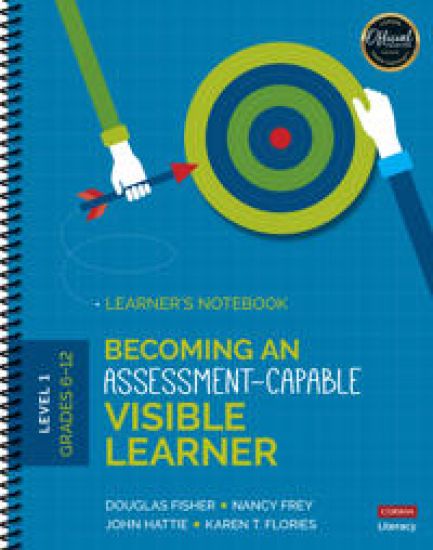
Becoming an Assessment-Capable Visible Learner, Grades 6-12, Level 1: Learner's Notebook

Becoming an Assessment-Capable Visible Learner, Grades 6-12, Level 1: Learner's Notebook

Douglas Fisher; Nancy Frey; Hattie John; Karen T. Flories

Corwin Press Inc
2019
kierre
Continue the Journey of Visible Learning With Your Students The power of Visible Learning is simple yet transforming: Help students understand how to learn, and they can become their own teachers. These notebooks are the first of their kind to continue the Journey of Visible Learning by helping students monitor their own progress. With an emphasis on developing and strengthening foundational metacognitive skills, the notebooks guide students to understand what they’re learning, why they’re learning it, and the strategies they need along the way. Designed to be used with the Becoming a Visible Learner Teacher’s Guide, and structured to support a year’s worth of learning, this resource gives you an actionable framework for bringing Visible Learning success to every student in your classroom. Learner’s notebooks can be purchased as a Becoming a Visible Learner, Grades 6–12, Level 1 Classroom Set which includes 20 Learner’s Notebooks and a Teacher’s Guide designed specifically for grades 6–12. Additional Learner’s Notebooks, Grades 6–12, Level 1 are available in packs of 10.
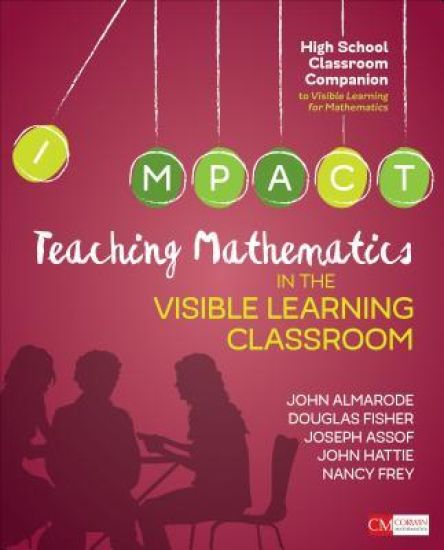
Teaching Mathematics in the Visible Learning Classroom, High School

Teaching Mathematics in the Visible Learning Classroom, High School

Almarode John T.; Douglas Fisher; Joseph Assof; Hattie John; Nancy Frey

SAGE Publications Inc
2018
nidottu
In high-impact mathematics instruction, it's not only what works, but when. This hands-on sequel to Visible Learning for Mathematics puts visible learning strategies in action in high school classrooms to help teachers leverage the most effective teaching practices at the most effective time to meet the surface, deep, and transfer learning needs of every student.
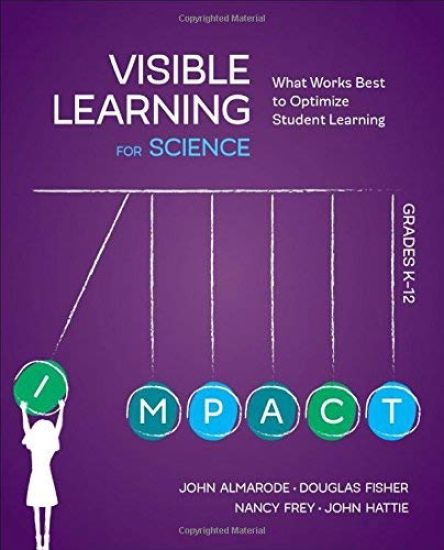
Visible Learning for Science, Grades K-12

Visible Learning for Science, Grades K-12

Almarode John T.; Douglas Fisher; Nancy Frey; Hattie John

Corwin Press Inc
2018
nidottu
In Visible Learning for Science, the authors reveal that it's not about which strategy to use, but when to use it, and plot a vital K-12 framework for choosing the right approach at the right time, depending on where students are within the three phases of learning: surface, deep, and transfer. Synthesizing state-of-the-art science instruction and assessment with over fifteen years of John Hattie's cornerstone educational research, this framework for maximum learning spans the range of topics in the life and physical sciences. Employing classroom examples from all grade levels, the authors empower teachers to plan, develop, and implement high-impact instruction for each phase of the learning cycle.
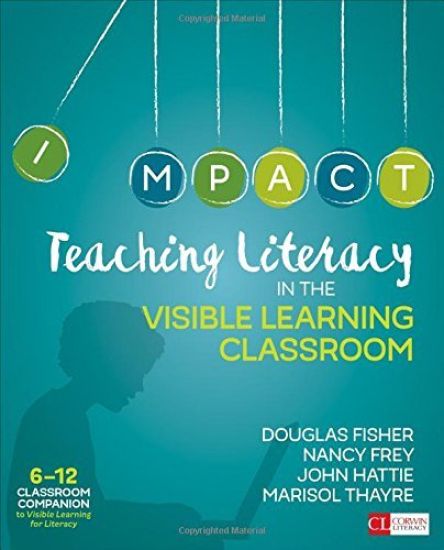
Teaching Literacy in the Visible Learning Classroom, Grades 6-12

Teaching Literacy in the Visible Learning Classroom, Grades 6-12

Douglas Fisher; Frey Nancy; Hattie John; Thayre Marisol C.

Corwin Press Inc
2017
nidottu
In this sequel to their bestseller Visible Learning for Literacy, Douglas Fisher, Nancy Frey, and John Hattie help teachers to inspire students by sharing structures and tools that have high-impact on learning, and insights on which stage of learning they have that high impact. With Teaching Literacy in the Visible Learning Classroom, students will go from surface to deep to transfer learning. It's all about using the most effective practices - and knowing WHEN those practices are best leveraged to maximize student learning.
Teaching Literacy in the Visible Learning Classroom, Grades K-5

Teaching Literacy in the Visible Learning Classroom, Grades K-5

Douglas Fisher; Nancy Frey; Hattie John

Corwin Press Inc
2017
nidottu
Visible Learning schools, districts and teachers will benefit greatly from this highly practical resource with ready-to-go lessons that will aid them as they transition from learning about VL, to implementing and practicing these principals in their ELA classroom teaching. In each chapter, the authors also profile three teachers of various grade levels and locations who have worked to make learning visible for their students and have impacted learning in significant ways.
Visible Learning for Literacy, Grades K-12

Visible Learning for Literacy, Grades K-12

Douglas Fisher; Nancy Frey; Hattie John

Corwin Press Inc
2016
nidottu
"Every student deserves a great teacher, not by chance, but by design" — Douglas Fisher, Nancy Frey, & John Hattie What if someone slipped you a piece of paper listing the literacy practices that ensure students demonstrate more than a year’s worth of learning for a year spent in school? Would you keep the paper or throw it away? We think you’d keep it. And that’s precisely why acclaimed educators Douglas Fisher, Nancy Frey, and John Hattie wrote Visible Learning for Literacy. They know teachers will want to apply Hattie’s head-turning synthesis of more than 15 years of research involving millions of students, which he used to identify the instructional routines that have the biggest impact on student learning. These practices are "visible" for teachers and students to see, because their purpose has been made clear, they are implemented at the right moment in a student’s learning, and their effect is tangible. Yes, the "aha" moments made visible by design. With their trademark clarity and command of the research, and dozens of classroom scenarios to make it all replicable, these authors apply Hattie’s research, and show you: How to use the right approach at the right time, so that you can more intentionally design classroom experiences that hit the surface, deep, and transfer phases of learning, and more expertly see when a student is ready to dive from surface to deep.Which routines are most effective at specific phases of learning, including word sorts, concept mapping, close reading, annotating, discussion, formative assessment, feedback, collaborative learning, reciprocal teaching, and many more. Why the 8 mind frames for teachers apply so well to curriculum planning and can inspire you to be a change agent in students’ lives—and part of a faculty that embraces the idea that visible teaching is a continual evaluation of one’s impact on student’s learning.
Visible Learning for Teachers

Visible Learning for Teachers

Hattie John

Routledge
2011
nidottu
In November 2008, John Hattie’s ground-breaking book Visible Learning synthesised the results of more than fifteen years research involving millions of students and represented the biggest ever collection of evidence-based research into what actually works in schools to improve learning. Visible Learning for Teachers takes the next step and brings those ground breaking concepts to a completely new audience. Written for students, pre-service and in-service teachers, it explains how to apply the principles of Visible Learning to any classroom anywhere in the world. The author offers concise and user-friendly summaries of the most successful interventions and offers practical step-by-step guidance to the successful implementation of visible learning and visible teaching in the classroom. This book: links the biggest ever research project on teaching strategies to practical classroom implementation champions both teacher and student perspectives and contains step by step guidance including lesson preparation, interpreting learning and feedback during the lesson and post lesson follow up offers checklists, exercises, case studies and best practice scenarios to assist in raising achievement includes whole school checklists and advice for school leaders on facilitating visible learning in their institution now includes additional meta-analyses bringing the total cited within the research to over 900 comprehensively covers numerous areas of learning activity including pupil motivation, curriculum, meta-cognitive strategies, behaviour, teaching strategies, and classroom management. Visible Learning for Teachers is a must read for any student or teacher who wants an evidence based answer to the question; ‘how do we maximise achievement in our schools?’
Visible Learning

Visible Learning

Hattie John

Routledge
2008
nidottu
This unique and ground-breaking book is the result of 15 years research and synthesises over 800 meta-analyses on the influences on achievement in school-aged students. It builds a story about the power of teachers, feedback, and a model of learning and understanding. The research involves many millions of students and represents the largest ever evidence based research into what actually works in schools to improve learning. Areas covered include the influence of the student, home, school, curricula, teacher, and teaching strategies. A model of teaching and learning is developed based on the notion of visible teaching and visible learning. A major message is that what works best for students is similar to what works best for teachers – an attention to setting challenging learning intentions, being clear about what success means, and an attention to learning strategies for developing conceptual understanding about what teachers and students know and understand. Although the current evidence based fad has turned into a debate about test scores, this book is about using evidence to build and defend a model of teaching and learning. A major contribution is a fascinating benchmark/dashboard for comparing many innovations in teaching and schools.