Kirjojen hintavertailu. Mukana 12 292 463 kirjaa ja 12 kauppaa.

Kirjailija

Haun Saussy

Kirjat ja teokset yhdessä paikassa: 8 kirjaa, julkaisuja vuosilta 2014-2024, suosituimpien joukossa Introducing Comparative Literature. Vertaile teosten hintoja ja tarkista saatavuus suomalaisista kirjakaupoista.

8 kirjaa

Kirjojen julkaisuhaarukka 2014-2024.

The Making of Barbarians

The Making of Barbarians

Haun Saussy

PRINCETON UNIVERSITY PRESS
2024
pokkari
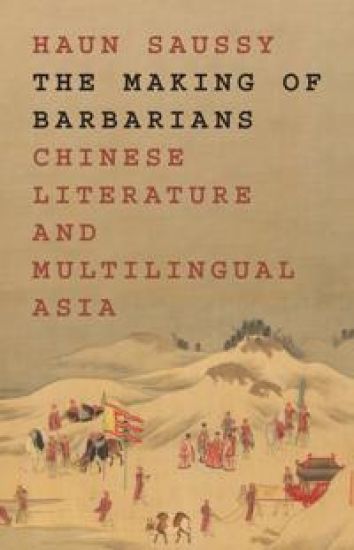
A groundbreaking account of translation and identity in the Chinese literary tradition before 1850—with important ramifications for todayDebates on the canon, multiculturalism, and world literature often take Eurocentrism as the target of their critique. But literature is a universe with many centers, and one of them is China. The Making of Barbarians offers an account of world literature in which China, as center, produces its own margins. Here Sinologist and comparatist Haun Saussy investigates the meanings of literary translation, adaptation, and appropriation on the boundaries of China long before it came into sustained contact with the West.When scholars talk about comparative literature in Asia, they tend to focus on translation between European languages and Chinese, Korean, and Japanese, as practiced since about 1900. In contrast, Saussy focuses on the period before 1850, when the translation of foreign works into Chinese was rare because Chinese literary tradition overshadowed those around it.The Making of Barbarians looks closely at literary works that were translated into Chinese from foreign languages or resulted from contact with alien peoples. The book explores why translation was such an undervalued practice in premodern China, and how this vast and prestigious culture dealt with those outside it before a new group of foreigners—Europeans—appeared on the horizon.
The Making of Barbarians

The Making of Barbarians

Haun Saussy

PRINCETON UNIVERSITY PRESS
2022
sidottu
A groundbreaking account of translation and identity in the Chinese literary tradition before 1850—with important ramifications for todayDebates on the canon, multiculturalism, and world literature often take Eurocentrism as the target of their critique. But literature is a universe with many centers, and one of them is China. The Making of Barbarians offers an account of world literature in which China, as center, produces its own margins. Here Sinologist and comparatist Haun Saussy investigates the meanings of literary translation, adaptation, and appropriation on the boundaries of China long before it came into sustained contact with the West.When scholars talk about comparative literature in Asia, they tend to focus on translation between European languages and Chinese, Korean, and Japanese, as practiced since about 1900. In contrast, Saussy focuses on the period before 1850, when the translation of foreign works into Chinese was rare because Chinese literary tradition overshadowed those around it.The Making of Barbarians looks closely at literary works that were translated into Chinese from foreign languages or resulted from contact with alien peoples. The book explores why translation was such an undervalued practice in premodern China, and how this vast and prestigious culture dealt with those outside it before a new group of foreigners—Europeans—appeared on the horizon.
Cathay

Cathay

Ezra Pound; Haun Saussy

Fordham University Press
2020
pokkari
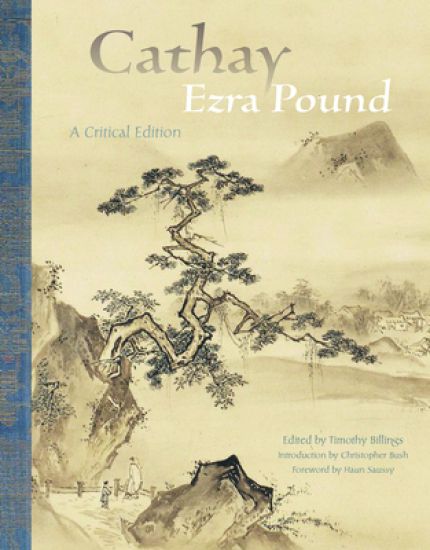
Finalist, Pegasus Award for Poetry Criticism Ezra Pound's Cathay (1915) is a masterpiece both of modernism and of world literature. The muscular precision of images that mark Pound's translations helped establish a modern style for American literature, at the same time creating a thirst for classical Chinese poetry in English. Pound's dynamic free-verse translations in a modern idiom formed the basis for T.S. Eliot's famous claim that Pound was the "inventor of Chinese poetry for our time." Yet Pound achieved this feat without knowing any Chinese, relying instead on word-for-word "cribs" left by the Orientalist Ernest Fenollosa, whose notebooks reveal a remarkable story of sustained cultural exchange. This fully annotated critical edition focuses on Pound's astonishing translations without forgetting that the original Chinese poems are masterpieces in their own right. On the one hand, the presentation of all that went into the final Cathay makes it possible for the first time to appreciate the magnitude and the nuances of Pound's poetic art. At the same time, by bringing the final text together with the Chinese and Old English poems it claims to translate, as well as the manuscript traces of Pound's Japanese and American interlocutors, the volume also recovers practices of poetic circulation, resituating a Modernist classic as a work of world literature. The Pound text and its intertexts are presented with care, clarity, and visual elegance. By providing the first accurate and unabridged transcriptions of Fenollosa's notebooks, along with carefully edited Chinese texts, the volume makes it possible to trace the movements of poetic ideas and poetic expression as they veer toward and away from Pound's creations. In supplying the full Fenollosa texts, the volume overturns decades of scholarship that has mystified Pound's translation process as a kind of "clairvoyance," displaying instead the impressive amount of sinological learning preserved in Fenollosa's hard-to-read notebooks and by detailing every deviation from the probable sense of the originals. The edition also supplies exhaustive historical, critical, and textual notes, clarifying points that have sometimes lent obscurity to Pound's poems and making the process of translation visible even for readers with no knowledge of Chinese. Cathay: A Critical Edition includes the original fourteen Chinese translations as well as Pound's unique version of "The Seafarer," which is fully annotated alongside its Anglo-Saxon source. Also included are Pound's fifteen additional Chinese translations from Lustra and other contemporary publications, his essay "Chinese Poetry" (1919), a substantial textual Introduction, and original essays by Christopher Bush and Haun Saussy on international modernism, the mediation of Japan, and translation. The meticulous treatment and analysis of the texts for this landmark edition will forever change how readers view Pound's "Chinese" poems. In addition to discoveries that permanently alter the scholarly record and force us to revise a number of critical commonplaces, the critical apparatus allows readers to make fresh discoveries by making available the specific networks through which poetic expression moved among hands, languages, and media. Ultimately, this edition not only enables us more fully to appreciate a canonical work of Modernism but also resituates the art of Pound's translations by recovering the historical circulations that went into the making of a multiply authored and intrinsically hybrid masterpiece.
Translation as Citation

Translation as Citation

Haun Saussy

Oxford University Press
2017
sidottu
This volume examines translation from many different angles: it explores how translations change the languages in which they occur, how works introduced from other languages become part of the consciousness of native speakers, and what strategies translators must use to secure acceptance for foreign works. Haun Saussy argues that translation doesn't amount to the composition, in one language, of statements equivalent to statements previously made in another language. Rather, translation works with elements of the language and culture in which it arrives, often reconfiguring them irreversibly: it creates, with a fine disregard for precedent, loan-words, calques, forced metaphors, forged pasts, imaginary relationships, and dialogues of the dead. Creativity, in this form of writing, usually considered merely reproductive, is the subject of this book. The volume takes the history of translation in China, from around 150 CE to the modern period, as its source of case studies. When the first proponents of Buddhism arrived in China, creativity was forced upon them: a vocabulary adequate to their purpose had yet to be invented. A Chinese Buddhist textual corpus took shape over centuries despite the near-absence of bilingual speakers. One basis of this translating activity was the rewriting of existing Chinese philosophical texts, and especially the most exorbitant of all these, the collection of dialogues, fables, and paradoxes known as the Zhuangzi. The Zhuangzi also furnished a linguistic basis for Chinese Christianity when the Jesuit missionary Matteo Ricci arrived in the later part of the Ming dynasty and allowed his friends and associates to frame his teachings in the language of early Daoism. It would function as well when Xu Zhimo translated from The Flowers of Evil in the 1920s. The chance but overdetermined encounter of Zhuangzi and Baudelaire yielded a 'strange music' that retroactively echoes through two millennia of Chinese translation, outlining a new understanding of the translator's craft that cuts across the dividing lines of current theories and critiques of translation.
The Ethnography of Rhythm

The Ethnography of Rhythm

Haun Saussy

Fordham University Press
2016
pokkari
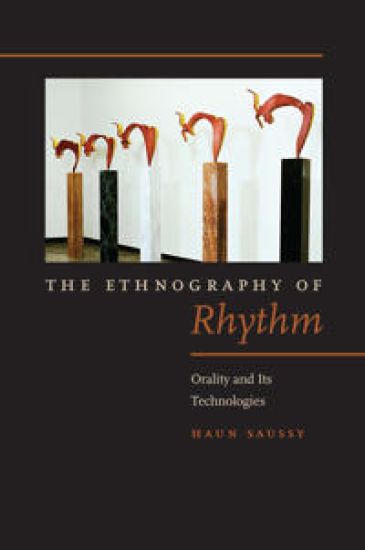
Winner of the Modern Language Association's Aldo and Jeanne Scaglione Prize for Comparative Literary Studies Who speaks? The author as producer, the contingency of the text, intertextuality, the "device"—core ideas of modern literary theory—were all pioneered in the shadow of oral literature. Authorless, loosely dated, and variable, oral texts have always posed a challenge to critical interpretation. When it began to be thought that culturally significant texts—starting with Homer and the Bible—had emerged from an oral tradition, assumptions on how to read these texts were greatly perturbed. Through readings that range from ancient Greece, Rome, and China to the Cold War imaginary, The Ethnography of Rhythm situates the study of oral traditions in the contentious space of nineteenth- and twentieth-century thinking about language, mind, and culture. It also demonstrates the role of technologies in framing this category of poetic creation. By making possible a new understanding of Maussian "techniques of the body" as belonging to the domain of Derridean "arche-writing," Haun Saussy shows how oral tradition is a means of inscription in its own right, rather than an antecedent made obsolete by the written word or other media and data-storage devices.
The Ethnography of Rhythm

The Ethnography of Rhythm

Haun Saussy

Fordham University Press
2016
sidottu
Winner of the Modern Language Association's Aldo and Jeanne Scaglione Prize for Comparative Literary Studies Who speaks? The author as producer, the contingency of the text, intertextuality, the "device"—core ideas of modern literary theory—were all pioneered in the shadow of oral literature. Authorless, loosely dated, and variable, oral texts have always posed a challenge to critical interpretation. When it began to be thought that culturally significant texts—starting with Homer and the Bible—had emerged from an oral tradition, assumptions on how to read these texts were greatly perturbed. Through readings that range from ancient Greece, Rome, and China to the Cold War imaginary, The Ethnography of Rhythm situates the study of oral traditions in the contentious space of nineteenth- and twentieth-century thinking about language, mind, and culture. It also demonstrates the role of technologies in framing this category of poetic creation. By making possible a new understanding of Maussian "techniques of the body" as belonging to the domain of Derridean "arche-writing," Haun Saussy shows how oral tradition is a means of inscription in its own right, rather than an antecedent made obsolete by the written word or other media and data-storage devices.
Introducing Comparative Literature

Introducing Comparative Literature

César Domínguez; Haun Saussy; Darío Villanueva

Routledge
2014
nidottu
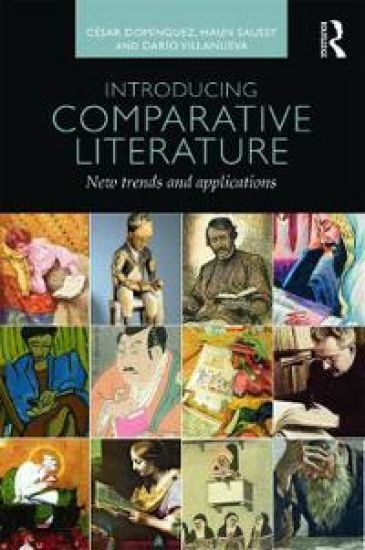
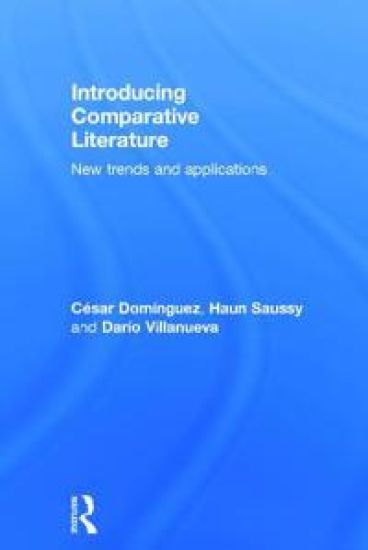
Introducing Comparative Literature is a comprehensive guide to the field offering clear, concise information alongside useful analysis and examples. It frames the introduction within recent theoretical debates and shifts in the discipline whilst also addressing the history of the field and its practical application. Looking at Comparative Literature within the context of globalization, cosmopolitanism and post or transnationalism, the book also offers engagement and comparison with other visual media such as cinema and e-literature. The first four chapters address the broad theoretical issues within the field such as ‘interliterary theory’, decoloniality, and world literature, while the next four are more applied, looking at themes, translation, literary history and comparison with other arts. This engaging guide also contains a glossary of terms and concepts as well as a detailed guide to further reading.
Introducing Comparative Literature

Introducing Comparative Literature

César Domínguez; Haun Saussy; Darío Villanueva

Routledge
2014
sidottu
Introducing Comparative Literature is a comprehensive guide to the field offering clear, concise information alongside useful analysis and examples. It frames the introduction within recent theoretical debates and shifts in the discipline whilst also addressing the history of the field and its practical application. Looking at Comparative Literature within the context of globalization, cosmopolitanism and post or transnationalism, the book also offers engagement and comparison with other visual media such as cinema and e-literature. The first four chapters address the broad theoretical issues within the field such as ‘interliterary theory’, decoloniality, and world literature, while the next four are more applied, looking at themes, translation, literary history and comparison with other arts. This engaging guide also contains a glossary of terms and concepts as well as a detailed guide to further reading.