

Kirjailija
Haydn Washington
Kirjat ja teokset yhdessä paikassa: 14 kirjaa, julkaisuja vuosilta 2011-2022, suosituimpien joukossa Kinship Poems. Vertaile teosten hintoja ja tarkista saatavuus suomalaisista kirjakaupoista.
14 kirjaa
Kirjojen julkaisuhaarukka 2011-2022.
Ecoreciprocity is a book that fills a gap in environmental literature - on the need to give back to Nature. Many First Nations peoples knew this truth, that Nature's gifts must be returned if we are to live sustainably. We do this by gratitude, listening, wonder and a duty of care towards life.
The culmination of over three decades of writing by environmental scientist and writer Haydn Washington, this book examines the global environmental crisis and its solutions.Many of us know that something is wrong with our world, that it is wounded. At the same time, we often don’t know why things have gone wrong – or what can be done. Framing the discussion around three central predicaments – the ecological, the social, and the economic – Washington provides background as to why each of these are in crisis and presents steps that individuals can personally take to heal the world. Urging the reader to accept the reality of our problems, he explores practical solutions for change such as the transition to renewable energy, rejection of climate denial and the championing of appropriate technology, as well as a readjustment in ethical approaches. The book also contains 19 ‘solution boxes’ by distinguished environmental scholars.With a focus on positive, personal solutions, this book is an essential read for students and scholars of environmental science and environmental philosophy, and for all those keen to heal the world and contribute towards a sustainable future.
The culmination of over three decades of writing by environmental scientist and writer Haydn Washington, this book examines the global environmental crisis and its solutions.Many of us know that something is wrong with our world, that it is wounded. At the same time, we often don’t know why things have gone wrong – or what can be done. Framing the discussion around three central predicaments – the ecological, the social, and the economic – Washington provides background as to why each of these are in crisis and presents steps that individuals can personally take to heal the world. Urging the reader to accept the reality of our problems, he explores practical solutions for change such as the transition to renewable energy, rejection of climate denial and the championing of appropriate technology, as well as a readjustment in ethical approaches. The book also contains 19 ‘solution boxes’ by distinguished environmental scholars.With a focus on positive, personal solutions, this book is an essential read for students and scholars of environmental science and environmental philosophy, and for all those keen to heal the world and contribute towards a sustainable future.
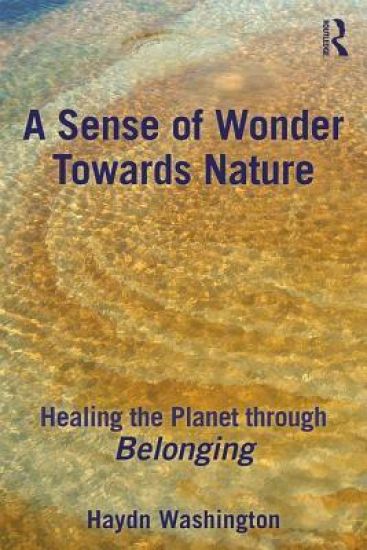
Environmental scientist and writer Haydn Washington argues that we will not solve the environmental crisis unless we change our worldview and ethics, and to do so we must rejuvenate our sense of wonder at nature.This book focuses on humanity’s relation with nature, and the sense of wonder and belonging common to indigenous cultures and children everywhere. Drawing on events in the author’s own four decades working to protect wild places, and the current literature on wonder, it examines what a sense of wonder is, what it has been called in different cultures, and our high points of wonder at nature. It also looks at the ‘Great Divide’ in worldview between anthropocentrism and ecocentrism, and considers the problem of anthropocentric theory in academia, arguing that the focus should instead be on harmony with nature. The book concludes with an examination of why wonder has become buried in Western society and considers ways in which it can be revived, including rituals and education. It also considers how wonder helps humanity to become ‘whole’. The final chapter presents the road back to wonder and how wonder towards nature can be restored in Western society.This book will be of great interest to environmental scientists, conservation biologists, environmental philosophers and ecological ethicists, as well as environmentalists, educators, eco-psychologists, and students looking at sustainability, deep ecology, and environmental philosophy and ethics.

Environmental scientist and writer Haydn Washington argues that we will not solve the environmental crisis unless we change our worldview and ethics, and to do so we must rejuvenate our sense of wonder at nature.This book focuses on humanity’s relation with nature, and the sense of wonder and belonging common to indigenous cultures and children everywhere. Drawing on events in the author’s own four decades working to protect wild places, and the current literature on wonder, it examines what a sense of wonder is, what it has been called in different cultures, and our high points of wonder at nature. It also looks at the ‘Great Divide’ in worldview between anthropocentrism and ecocentrism, and considers the problem of anthropocentric theory in academia, arguing that the focus should instead be on harmony with nature. The book concludes with an examination of why wonder has become buried in Western society and considers ways in which it can be revived, including rituals and education. It also considers how wonder helps humanity to become ‘whole’. The final chapter presents the road back to wonder and how wonder towards nature can be restored in Western society.This book will be of great interest to environmental scientists, conservation biologists, environmental philosophers and ecological ethicists, as well as environmentalists, educators, eco-psychologists, and students looking at sustainability, deep ecology, and environmental philosophy and ethics.

What is sustainability? Much has been said about the terms ‘sustainability’ and ‘sustainable development’ over the last few decades, but they have become buried under academic jargon. This book is one of the first that aims to demystify sustainability so that the layperson can understand the key issues, questions and values involved. Accessible and engaging, the book examines the ‘old’ sustainability of the past and looks to the future, considering how economic, ecological and social sustainability should be defined if we are to solve the entwined environmental, economic and social crises. It considers if meaningful sustainability is the same as a ‘sustainable development’ based on endless growth, examining the difficult but central issues of overpopulation and overconsumption that drive unsustainability. The book also explores the central role played by society’s worldview and ethics, along with humanity’s most dangerous characteristic – denial. Finally, it looks to the future, discussing the ‘appropriate’ technology needed for sustainability, and suggesting nine key solutions. This book provides a much-needed comprehensive discussion of what sustainability means for students, policy makers and all those interested in a sustainable future.
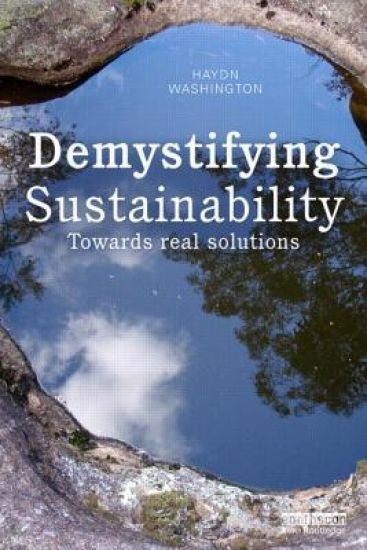
What is sustainability? Much has been said about the terms ‘sustainability’ and ‘sustainable development’ over the last few decades, but they have become buried under academic jargon. This book is one of the first that aims to demystify sustainability so that the layperson can understand the key issues, questions and values involved. Accessible and engaging, the book examines the ‘old’ sustainability of the past and looks to the future, considering how economic, ecological and social sustainability should be defined if we are to solve the entwined environmental, economic and social crises. It considers if meaningful sustainability is the same as a ‘sustainable development’ based on endless growth, examining the difficult but central issues of overpopulation and overconsumption that drive unsustainability. The book also explores the central role played by society’s worldview and ethics, along with humanity’s most dangerous characteristic – denial. Finally, it looks to the future, discussing the ‘appropriate’ technology needed for sustainability, and suggesting nine key solutions. This book provides a much-needed comprehensive discussion of what sustainability means for students, policy makers and all those interested in a sustainable future.

Humanity is dependent on Nature to survive, yet our society largely acts as if this is not the case. The energy that powers our very cells, the nutrients that make up our bodies, the ecosystem services that clean our water and air; these are all provided by the Nature from which we have evolved and of which we are a part. This book examines why we deny or ignore this dependence and what we can do differently to help solve the environmental crisis. Written in an accessible and engaging style, Haydn Washington provides an excellent overview of humanity’s relationship with Nature. The book looks at energy flow, nutrient cycling, ecosystem services, ecosystem collapse as well as exploring our psychological and spiritual dependency on nature. It also examines anthropocentrism and denial as causes of our unwillingness to respect our inherent dependence on the natural environment. The book concludes by bringing these issues together and providing a framework for solutions to the environmental crisis.
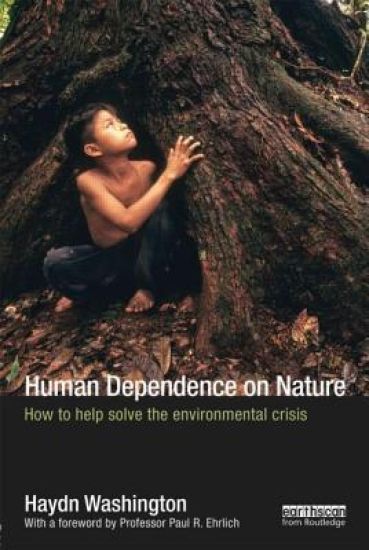
Humanity is dependent on Nature to survive, yet our society largely acts as if this is not the case. The energy that powers our very cells, the nutrients that make up our bodies, the ecosystem services that clean our water and air; these are all provided by the Nature from which we have evolved and of which we are a part. This book examines why we deny or ignore this dependence and what we can do differently to help solve the environmental crisis. Written in an accessible and engaging style, Haydn Washington provides an excellent overview of humanity’s relationship with Nature. The book looks at energy flow, nutrient cycling, ecosystem services, ecosystem collapse as well as exploring our psychological and spiritual dependency on nature. It also examines anthropocentrism and denial as causes of our unwillingness to respect our inherent dependence on the natural environment. The book concludes by bringing these issues together and providing a framework for solutions to the environmental crisis.
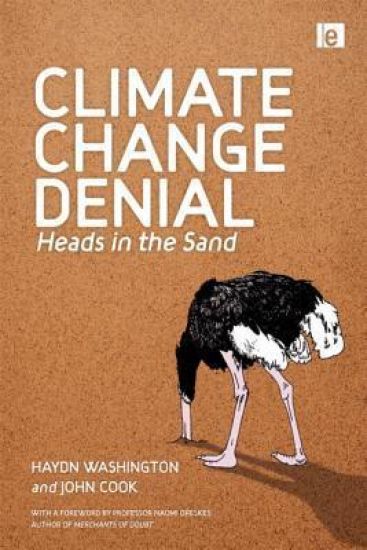
Humans have always used denial. When we are afraid, guilty, confused, or when something interferes with our self-image, we tend to deny it. Yet denial is a delusion. When it impacts on the health of oneself, or society, or the world it becomes a pathology. Climate change denial is such a case. Paradoxically, as the climate science has become more certain, denial about the issue has increased. The paradox lies in the denial. There is a denial industry funded by the fossil fuel companies that literally denies the science, and seeks to confuse the public. There is denial within governments, where spin-doctors use 'weasel words' to pretend they are taking action. However there is also denial within most of us, the citizenry. We let denial prosper and we resist the science. Climate Change Denial explains the social science behind denial. It contains a detailed examination of the principal climate change denial arguments, from attacks on the integrity of scientists, to impossible expectations of proof and certainty to the cherry picking of data. Climate change can be solved – but only when we cease to deny that it exists. This book shows how we can break through denial, accept reality, and thus solve the climate crisis. It will engage scientists, university students, climate change activists as well as the general public seeking to roll back denial and act.

Humans have always used denial. When we are afraid, guilty, confused, or when something interferes with our self-image, we tend to deny it. Yet denial is a delusion. When it impacts on the health of oneself, or society, or the world it becomes a pathology. Climate change denial is such a case. Paradoxically, as the climate science has become more certain, denial about the issue has increased. The paradox lies in the denial. There is a denial industry funded by the fossil fuel companies that literally denies the science, and seeks to confuse the public. There is denial within governments, where spin-doctors use 'weasel words' to pretend they are taking action. However there is also denial within most of us, the citizenry. We let denial prosper and we resist the science. Climate Change Denial explains the social science behind denial. It contains a detailed examination of the principal climate change denial arguments, from attacks on the integrity of scientists, to impossible expectations of proof and certainty to the cherry picking of data. Climate change can be solved – but only when we cease to deny that it exists. This book shows how we can break through denial, accept reality, and thus solve the climate crisis. It will engage scientists, university students, climate change activists as well as the general public seeking to roll back denial and act.