Kirjojen hintavertailu. Mukana 12 595 353 kirjaa ja 12 kauppaa.

Kirjailija

Hazel Roberts

Kirjat ja teokset yhdessä paikassa: 3 kirjaa, julkaisuja vuosilta 1981-2009, suosituimpien joukossa A Bibliography of Higher Education in Canada Supplement 1981 / Bibliographie De L'enseignement Supérieur Au Canada Supplément 1981. Vertaile teosten hintoja ja tarkista saatavuus suomalaisista kirjakaupoista.

3 kirjaa

Kirjojen julkaisuhaarukka 1981-2009.

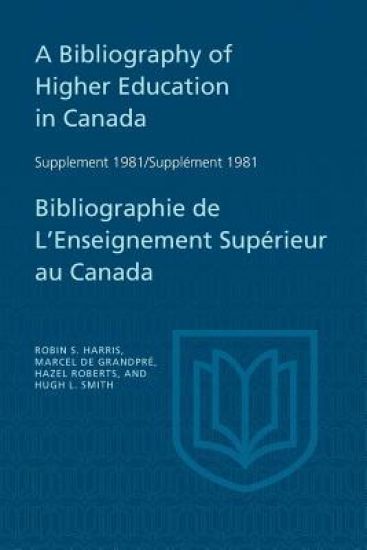
A Bibliography of Higher Education in Canada Supplement 1981 / Bibliographie De L'enseignement Supérieur Au Canada Supplément 1981
The 1981 Supplement adds more than 3000 entries to the approximately 10,500 listed in the original volume and in the 1965 and 1971 Supplements. Like its predecessors, this volume provides a full list of the secondary sources related to Canadian higher education – books, articles, theses ,dissertations, and reports published from 1971 to 1980. The reporting, arrangement of entries, and overall organization of the material remains the same as in the 1971 Supplement.
Improving Disabled Students' Learning

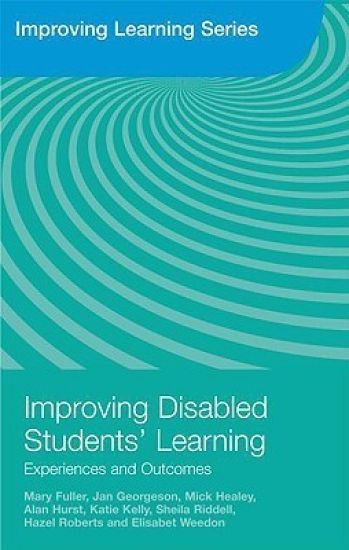
Improving Disabled Students' Learning

Mary Fuller; Jan Georgeson; Mick Healey; Alan Hurst; Katie Kelly; Sheila Riddell; Hazel Roberts; Elisabet Weedon

Routledge
2009
nidottu
How do disabled students feel about their time at university? What practices and policies work and what challenges do they encounter? How do they view staff and those providing learning support? This book sets out to show how disabled students experience university life today. The current generation of students is the first to move through university after the enactment of the Disability Discrimination Act, which placed responsibility on universities to create an inclusive environment for disabled students. The research on which the book is based focuses on a selected group of students with a variety of impairments, as they progress through their degree courses. On the way they encounter different styles of teaching and approaches to learning and assessment. The diversity of their views is reflected in the issues they raise: negotiating identities, dealing with transitions, encountering divergent and sometimes confusing teaching and assessment.Improving Disabled Students’ Learning goes on to ask university staff how they experience these new demands to widen participation and create more inclusive learning climates. It explores their perspectives on their roles in a changing university sector. Offering insights into the workings of universities, as seen by their central participants, its findings will be of great interest to all practitioners who teach and support disabled students, as well as campaigners for an end to discrimination. Crucially, it foregrounds the views of disabled students themselves, giving rise to a complex, contradictory and always fascinating picture of university life from students whose voices are not always heard.
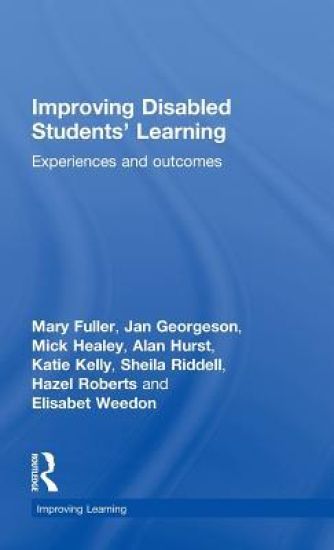
Improving Disabled Students' Learning

Improving Disabled Students' Learning

Mary Fuller; Jan Georgeson; Mick Healey; Alan Hurst; Katie Kelly; Sheila Riddell; Hazel Roberts; Elisabet Weedon

Routledge
2009
sidottu
How do disabled students feel about their time at university? What practices and policies work and what challenges do they encounter? How do they view staff and those providing learning support? This book sets out to show how disabled students experience university life today. The current generation of students is the first to move through university after the enactment of the Disability Discrimination Act, which placed responsibility on universities to create an inclusive environment for disabled students. The research on which the book is based focuses on a selected group of students with a variety of impairments, as they progress through their degree courses. On the way they encounter different styles of teaching and approaches to learning and assessment. The diversity of their views is reflected in the issues they raise: negotiating identities, dealing with transitions, encountering divergent and sometimes confusing teaching and assessment.Improving Disabled Students’ Learning goes on to ask university staff how they experience these new demands to widen participation and create more inclusive learning climates. It explores their perspectives on their roles in a changing university sector. Offering insights into the workings of universities, as seen by their central participants, its findings will be of great interest to all practitioners who teach and support disabled students, as well as campaigners for an end to discrimination. Crucially, it foregrounds the views of disabled students themselves, giving rise to a complex, contradictory and always fascinating picture of university life from students whose voices are not always heard.