Kirjojen hintavertailu. Mukana 12 152 606 kirjaa ja 12 kauppaa.

Kirjailija

Heather Hendershot

Kirjat ja teokset yhdessä paikassa: 8 kirjaa, julkaisuja vuosilta 1999-2025, suosituimpien joukossa Nashville. Vertaile teosten hintoja ja tarkista saatavuus suomalaisista kirjakaupoista.

8 kirjaa

Kirjojen julkaisuhaarukka 1999-2025.

Nashville

Nashville

Heather Hendershot

BLOOMSBURY PUBLISHING PLC
2025
nidottu
Robert Altman’s Nashville (1975) is simultaneously an intimate film about interpersonal connection and disconnection, and a sprawling, meandering portrait of American societal exhaustion in the wake of Vietnam, Watergate and a spate of political assassinations. Despite its pessimistic, satirical viewpoint, the film suggests a carefully guarded optimism: ‘life may be a one-way street’, but one has no choice but to ‘keep a’ goin’.Heather Hendershot places Nashville in the context of the New Hollywood of the 1970s, which offered a post-censorship anti-hero, the perennial loser. Embracing the new pessimism, Altman’s work fits with those of contemporaries such as Martin Scorsese and Peter Bogdanovich, but it also stands apart for its innovative sound design, improvisatory drive, and loose genre commitments.Through a close reading of the five days over which the film takes place, Hendershot unpacks both its political dynamics and the characters’ interrelationships and motivations. She highlights Nashville’s criticism of the suffering of its female characters, an engagement that springs from Joan Tewkesbury’s screenplay, Altman’s sensitivity to gendered exploitation (here, if not in all of his pictures), and the role the performers themselves played by improvising and scripting some of their own material.
When the News Broke

When the News Broke

Heather Hendershot

THE UNIVERSITY OF CHICAGO PRESS
2024
nidottu
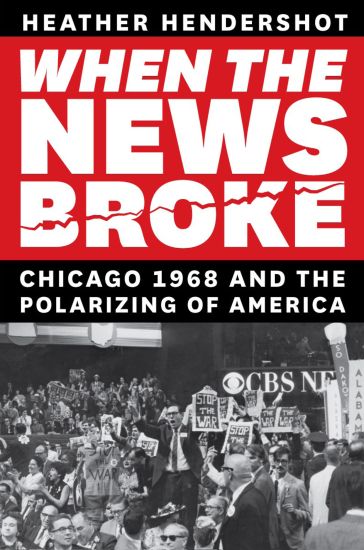
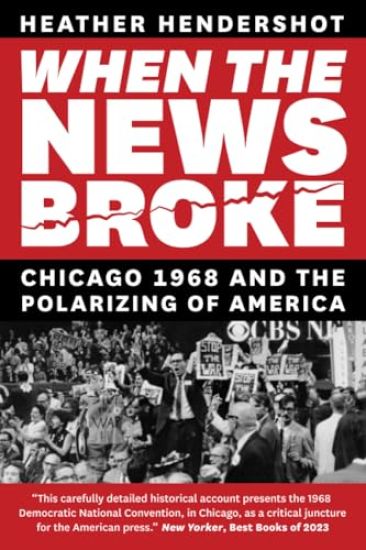
A riveting, blow-by-blow account of how the network broadcasts of the 1968 Democratic convention shattered faith in American media. “The whole world is watching!” cried protestors at the 1968 Democratic convention as Chicago police beat them in the streets. When some of that violence was then aired on network television, another kind of hell broke loose. Some viewers were stunned and outraged; others thought the protestors deserved what they got. No one—least of all Chicago mayor Richard J. Daley—was happy with how the networks handled it. In When the News Broke, Heather Hendershot revisits TV coverage of those four chaotic days in 1968—not only the violence in the streets but also the tumultuous convention itself, where Black citizens and others forcefully challenged southern delegations that had excluded them, anti-Vietnam delegates sought to change the party’s policy on the war, and journalists and delegates alike were bullied by both Daley’s security forces and party leaders. Ultimately, Hendershot reveals the convention as a pivotal moment in American political history, when a distorted notion of “liberal media bias” became mainstreamed and nationalized. At the same time, she celebrates the values of the network news professionals who strived for fairness and accuracy. Despite their efforts, however, Chicago proved to be a turning point in the public’s trust in national news sources. Since those critical days, the political Right in the United States has amplified distrust of TV news, to the point where even the truest and most clearly documented stories can be deemed “fake.” As Hendershot demonstrates, it doesn’t matter whether the “whole world is watching” if people don’t believe what they see.
When the News Broke

When the News Broke

Heather Hendershot

THE UNIVERSITY OF CHICAGO PRESS
2023
sidottu
A riveting, blow-by-blow account of how the network broadcasts of the 1968 Democratic convention shattered faith in American media. “The whole world is watching!” cried protestors at the 1968 Democratic convention as Chicago police beat them in the streets. When some of that violence was then aired on network television, another kind of hell broke loose. Some viewers were stunned and outraged; others thought the protestors deserved what they got. No one—least of all Chicago mayor Richard J. Daley—was happy with how the networks handled it. In When the News Broke, Heather Hendershot revisits TV coverage of those four chaotic days in 1968—not only the violence in the streets but also the tumultuous convention itself, where Black citizens and others forcefully challenged southern delegations that had excluded them, anti-Vietnam delegates sought to change the party’s policy on the war, and journalists and delegates alike were bullied by both Daley’s security forces and party leaders. Ultimately, Hendershot reveals the convention as a pivotal moment in American political history, when a distorted notion of “liberal media bias” became mainstreamed and nationalized. At the same time, she celebrates the values of the network news professionals who strived for fairness and accuracy. Despite their efforts, however, Chicago proved to be a turning point in the public’s trust in national news sources. Since those critical days, the political Right in the United States has amplified distrust of TV news, to the point where even the truest and most clearly documented stories can be deemed “fake.” As Hendershot demonstrates, it doesn’t matter whether the “whole world is watching” if people don’t believe what they see.
What's Fair on the Air?

What's Fair on the Air?

Heather Hendershot

University of Chicago Press
2011
sidottu
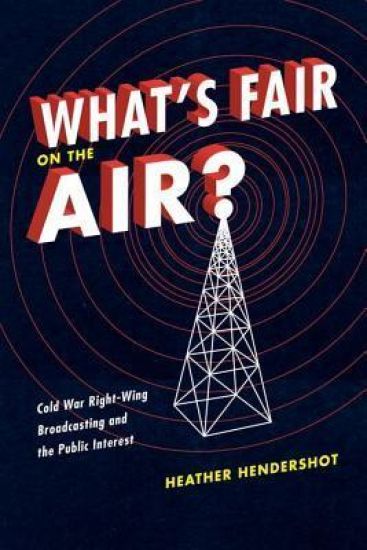
The rise of right-wing broadcasting during the Cold War has been mostly forgotten today. But in the 1950s and '60s you could turn on your radio any time of the day and listen to diatribes against communism, civil rights, the United Nations, fluoridation, federal income tax, Social Security, or JFK, as well as hosannas praising Barry Goldwater and Jesus Christ. Half a century before the rise of Rush Limbaugh and Glenn Beck, these broadcasters bucked the FCC's public interest mandate and created an alternate universe of right-wing political coverage, anticommunist sermons, and pro-business bluster. A lively look back at this formative era, "What's Fair on the Air?" charts the rise and fall of four of the most prominent right-wing broadcasters: H.L. Hunt, Dan Smoot, Carl McIntire, and Billy James Hargis. By the 1970s, all four had been hamstrung by the Internal Revenue Service, the FCC's Fairness Doctrine, and the rise of a more effective conservative movement. But before losing their battle for the airwaves, Heather Hendershot reveals, they purveyed ideological notions that would eventually triumph, creating a potent brew of religion, politics, and dedication to free-market economics that paved the way for the rise of Ronald Reagan, the Moral Majority, Fox News, and the Tea Party.
What's Fair on the Air?

What's Fair on the Air?

Heather Hendershot

University of Chicago Press
2011
nidottu
The rise of right-wing broadcasting during the Cold War has been mostly forgotten today. But in the 1950s and '60s you could turn on your radio any time of the day and listen to diatribes against communism, civil rights, the United Nations, fluoridation, federal income tax, Social Security, or JFK, as well as hosannas praising Barry Gold-water and Jesus Christ. Half a century before the rise of Rush Limbaugh and Glenn Beck, these broadcasters bucked the FCC's public interest mandate and created an alternate universe of right-wing political coverage, anticommunist sermons, and pro-business bluster. A lively look back at this formative era, "What's Fair on the Air?" charts the rise and fall of four of the most prominent right-wing broadcasters: H.L. Hunt, Dan Smoot, Carl McIntire, and Billy James Hargis. By the 1970s, all four had been hamstrung by the Internal Revenue Service, the FCC's Fairness Doctrine, and the rise of a more effective conservative movement. But before losing their battle for the airwaves, Heather Hendershot reveals, they purveyed ideological notions that would eventually triumph, creating a potent brew of religion, politics, and dedication to free-market economics that paved the way for the rise of Ronald Reagan, the Moral Majority, Fox News, and the Tea Party.
Shaking the World for Jesus

Shaking the World for Jesus

Heather Hendershot

University of Chicago Press
2004
sidottu
In 1999, the Reverend Jerry Falwell outed Tinky-Winky, the purple character from TV's Teletubbies. Events such as this reinforced in many quarters the idea of evangelicals as reactionary, out of touch, and just plain paranoid. But reducing evangelicals to such caricatures does not help us understand their true spiritual and political agendas and the means they use to advance them. Shaking the World for Jesus gets beyond the sensationalism of the evangelical movement and considers how it has effectively targeted Americans since the 1970s. Thousands of products that promote the Christian faith are sold to millions of consumers each year through the Web, mail order catalogs, and even national chains such as Kmart and Wal-Mart. Heather Hendershot explores in this book the vast industry of film, video, magazines, and kitsch that evangelicals use to spread their message. Focusing on the center of conservative evangelical culture - the white, middle-class Americans who can afford to buy "Christian lifestyle" products - she examines the industrial history of evangelical media, the curious subtleties of the products themselves, and their success in the religious and secular marketplace. To garner a wider audience, Hendershot argues, evangelicals have had to temper their message. But in so doing, they have painted themselves into a corner. In the postwar years, evangelical media wore the message of salvation on its sleeve, but as the evangelical media industry has grown, its most popular products have become those with heavily diluted Christian messages. In the eyes of many followers, the evangelicals who purvey such products are considered sellouts - hucksters more interested in making money than spreading the word of God.
Saturday Morning Censors

Saturday Morning Censors

Heather Hendershot

Duke University Press
1999
pokkari
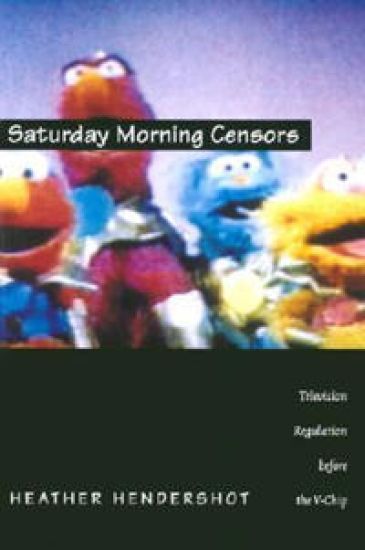
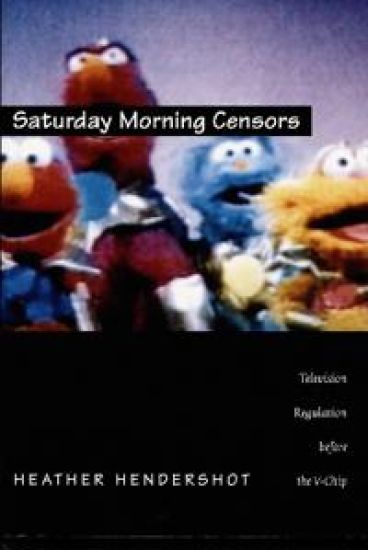
Many parents, politicians, and activists agree that there’s too much violence and not enough education on children’s television. Current solutions range from the legislative (the Children’s Television Act of 1990) to the technological (the V-chip). Saturday Morning Censors examines the history of adults’ attempts to safeguard children from the violence, sexism, racism, and commercialism on television since the 1950s. By focusing on what censorship and regulation are and how they work-rather than on whether they should exist-Heather Hendershot shows how adults use these processes to reinforce their own ideas about childhood innocence.Drawing on archival studio material, interviews with censors and animators, and social science research, Hendershot analyzes media activist strategies, sexism and racism at the level of cartoon manufacture, and the product-linked cartoons of the 1980s, such as Strawberry Shortcake and Transformers. But in order to more fully examine adult reception of children’s TV, she also discusses “good” programs like Sesame Street and Fat Albert and the Cosby Kids. Providing valuable historical context for debates surrounding such current issues as the V-chip and the banning of Power Rangers toys in elementary schools, Saturday Morning Censors demonstrates how censorship can reveal more fears than it hides.Saturday Morning Censors will appeal to educators, parents, and media activists, as well as to those in cultural studies, television studies, gender studies, and American social history.
Saturday Morning Censors

Saturday Morning Censors

Heather Hendershot

Duke University Press
1999
sidottu
Many parents, politicians, and activists agree that there’s too much violence and not enough education on children’s television. Current solutions range from the legislative (the Children’s Television Act of 1990) to the technological (the V-chip). Saturday Morning Censors examines the history of adults’ attempts to safeguard children from the violence, sexism, racism, and commercialism on television since the 1950s. By focusing on what censorship and regulation are and how they work-rather than on whether they should exist-Heather Hendershot shows how adults use these processes to reinforce their own ideas about childhood innocence.Drawing on archival studio material, interviews with censors and animators, and social science research, Hendershot analyzes media activist strategies, sexism and racism at the level of cartoon manufacture, and the product-linked cartoons of the 1980s, such as Strawberry Shortcake and Transformers. But in order to more fully examine adult reception of children’s TV, she also discusses “good” programs like Sesame Street and Fat Albert and the Cosby Kids. Providing valuable historical context for debates surrounding such current issues as the V-chip and the banning of Power Rangers toys in elementary schools, Saturday Morning Censors demonstrates how censorship can reveal more fears than it hides.Saturday Morning Censors will appeal to educators, parents, and media activists, as well as to those in cultural studies, television studies, gender studies, and American social history.