Kirjojen hintavertailu. Mukana 12 595 353 kirjaa ja 12 kauppaa.

Kirjailija

Heather Marie Stur

Kirjat ja teokset yhdessä paikassa: 5 kirjaa, julkaisuja vuosilta 2011-2023, suosituimpien joukossa 21 Days to Baghdad. Vertaile teosten hintoja ja tarkista saatavuus suomalaisista kirjakaupoista.

5 kirjaa

Kirjojen julkaisuhaarukka 2011-2023.

21 Days to Baghdad

21 Days to Baghdad

Heather Marie Stur

BLOOMSBURY PUBLISHING PLC
2023
sidottu
An authoritative military history of the U.S. Army’s 3rd Infantry Division in Operation Iraqi Freedom, describing the 2003 invasion of Iraq, the siege and fall of Baghdad, and the nation-building mission that followed.In 21 Days to Baghdad, historian Dr. Heather Stur describes the commitment of the division to Kuwait, the invasion of Iraq and the three weeks of violent desert conflicts on the way to Baghdad before the siege and battle for the city itself, and the “thunder runs” that saw its fall to U.S. forces. She then details the complex security mission that required the soldiers and their commanders to convince Iraqi citizens that the U.S. was there to help them, while at the same time they continued fighting Saddam Hussein’s elite Republican Guard, paramilitary forces, and terrorists. This new history is based on exclusive, extensive interviews with General Buford “Buff” Blount, the U.S. Army two-star general who led the 3rd Infantry Division. His years of experience in the Middle East led him to question the recall of his division from Iraq at the end of 2003 and its replacement by a less experienced unit. President George W. Bush and Secretary of Defense Donald Rumsfeld did not believe that peacekeeping and humanitarian assistance were worthwhile uses of a conventional combat force like the 3rd Infantry Division. The division had destroyed Hussein’s government. Mission accomplished, or so Bush and Rumsfeld thought. 21 Days to Baghdad illustrates the long reach of the U.S. military, the limitations of nation building in the wake of war, and the tensions between policymakers in Washington, DC, and troops on the ground over the purpose and conduct of the U.S. invasion of Iraq.
Saigon at War

Saigon at War

Heather Marie Stur

Cambridge University Press
2020
sidottu
During South Vietnam's brief life as a nation, it exhibited glimmers of democracy through citizen activism and a dynamic press. South Vietnamese activists, intellectuals, students, and professionals had multiple visions for Vietnam's future as an independent nation. Some were anticommunists, while others supported the National Liberation Front and Hanoi. In the midst of war, South Vietnam represented the hope and chaos of decolonization and nation building during the Cold War. U.S. Embassy officers, State Department observers, and military advisers sought to cultivate a base of support for the Saigon government among local intellectuals and youth, but government arrests and imprisonment of political dissidents, along with continued war, made it difficult for some South Vietnamese activists to trust the Saigon regime. Meanwhile, South Vietnamese diplomats, including anticommunist students and young people who defected from North Vietnam, travelled throughout the world in efforts to drum up international support for South Vietnam. Drawing largely on Vietnamese language sources, Heather Stur demonstrates that the conflict in Vietnam was really three wars: the political war in Saigon, the military war, and the war for international public opinion.
Saigon at War

Saigon at War

Heather Marie Stur

Cambridge University Press
2020
pokkari
During South Vietnam's brief life as a nation, it exhibited glimmers of democracy through citizen activism and a dynamic press. South Vietnamese activists, intellectuals, students, and professionals had multiple visions for Vietnam's future as an independent nation. Some were anticommunists, while others supported the National Liberation Front and Hanoi. In the midst of war, South Vietnam represented the hope and chaos of decolonization and nation building during the Cold War. U.S. Embassy officers, State Department observers, and military advisers sought to cultivate a base of support for the Saigon government among local intellectuals and youth, but government arrests and imprisonment of political dissidents, along with continued war, made it difficult for some South Vietnamese activists to trust the Saigon regime. Meanwhile, South Vietnamese diplomats, including anticommunist students and young people who defected from North Vietnam, travelled throughout the world in efforts to drum up international support for South Vietnam. Drawing largely on Vietnamese language sources, Heather Stur demonstrates that the conflict in Vietnam was really three wars: the political war in Saigon, the military war, and the war for international public opinion.
Beyond Combat

Beyond Combat

Heather Marie Stur

Cambridge University Press
2011
pokkari
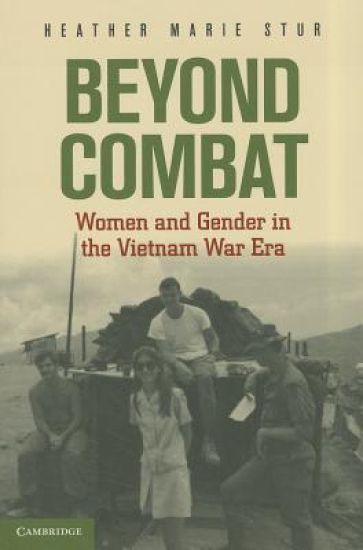
Beyond Combat investigates how the Vietnam War both reinforced and challenged the gender roles that were key components of American Cold War ideology. Refocusing attention onto women and gender paints a more complex and accurate picture of the war's far-reaching impact beyond the battlefields. Encounters between Americans and Vietnamese were shaped by a cluster of intertwined images used to make sense of and justify American intervention and use of force in Vietnam. These images included the girl next door, a wholesome reminder of why the United States was committed to defeating Communism, and the treacherous and mysterious 'dragon lady', who served as a metaphor for Vietnamese women and South Vietnam. Heather Stur also examines the ways in which ideas about masculinity shaped the American GI experience in Vietnam and, ultimately, how some American men and women returned from Vietnam to challenge homefront gender norms.
Beyond Combat

Beyond Combat

Heather Marie Stur

Cambridge University Press
2011
sidottu
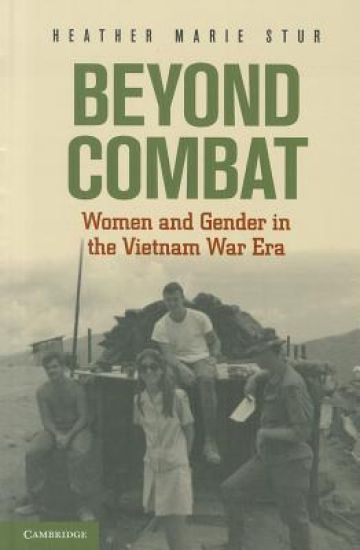
Beyond Combat investigates how the Vietnam War both reinforced and challenged the gender roles that were key components of American Cold War ideology. Refocusing attention onto women and gender paints a more complex and accurate picture of the war's far-reaching impact beyond the battlefields. Encounters between Americans and Vietnamese were shaped by a cluster of intertwined images used to make sense of and justify American intervention and use of force in Vietnam. These images included the girl next door, a wholesome reminder of why the United States was committed to defeating Communism, and the treacherous and mysterious 'dragon lady', who served as a metaphor for Vietnamese women and South Vietnam. Heather Stur also examines the ways in which ideas about masculinity shaped the American GI experience in Vietnam and, ultimately, how some American men and women returned from Vietnam to challenge homefront gender norms.