Kirjojen hintavertailu. Mukana 12 595 353 kirjaa ja 12 kauppaa.

Kirjailija

Heather Selma Gregg

Kirjat ja teokset yhdessä paikassa: 4 kirjaa, julkaisuja vuosilta 2005-2018, suosituimpien joukossa Building the Nation. Vertaile teosten hintoja ja tarkista saatavuus suomalaisista kirjakaupoista.

4 kirjaa

Kirjojen julkaisuhaarukka 2005-2018.

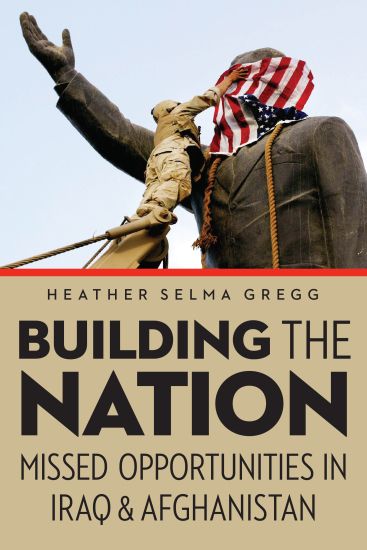
Building the Nation

Building the Nation

Heather Selma Gregg

Potomac Books Inc
2018
sidottu
Building the Nation draws from foreign-policy reports and interviews with U.S. military officers to investigate recent U.S.-led efforts to “nation-build” in Iraq and Afghanistan. Heather Selma Gregg argues that efforts to nation-build in both countries focused more on what should be called state-building, or how to establish a government, rule of law, security forces, and a viable economy. Considerably less attention was paid to what might truly be called nation-building-the process of developing a sense of shared identity, purpose, and destiny among a population within a state’s borders and popular support for the state and its government. According to Gregg, efforts to stabilize states in the modern world require two key factors largely overlooked in Iraq and Afghanistan: popular involvement in the process of rebuilding the state that gives the population ownership of the process and its results and efforts to foster and strengthen national unity. Gregg offers a hypothetical look at how the United States and its allies could have used a population-centric approach to build viable states in Iraq and Afghanistan, focusing on initiatives that would have given the population buy-in and agency. Moving forward, Gregg proposes a six-step program for state and nation-building in the twenty-first century, stressing that these efforts are as much about how state-building is done as they are about specific goals or programs.

The Path to Salvation

The Path to Salvation

Heather Selma Gregg

Potomac Books Inc
2014
sidottu
In the wake of 9/11, policy analysts, journalists, and academics have tried to make sense of the rise of militant Islam, particularly its role as a motivating and legitimating force for violence against the United States. The general perception is that Islam is more violence-prone than other religions and that scripture and beliefs within the faith, such as the doctrines of jihad and martyrdom, demonstrate the inherently violent nature of Islam. Here, however, Heather Selma Gregg draws comparisons across religious traditions to investigate common causes of religious violence. The author sets side-by-side examples of current and historic Islamic violence with similar acts by Christian, Jewish, Buddhist, and Hindu adherents. Based on her findings, Gregg challenges the assumption that religious violence stems from a faith's scriptures. Instead, Gregg argues that religious violence is the result of interpretations of a religion's beliefs and scriptures. Interpretations calling for violence in the name of a faith are the product of individuals, but it is important to understand the conditions under which these violent interpretations of a religion occur. These conditions must be considered by identifying who is interpreting the religion and by what authority; the social, political, and economic circumstances surrounding these violent interpretations; and the believability of these interpretations by members of religious communities.
After Saddam

After Saddam

Nora Bensahel; Olga Oliker; Keith Crane; Richard R. Brennan; Heather Selma Gregg; Thomas Sullivan; Andrew Rathmell

RAND
2008
pokkari
This monograph examines prewar planning efforts for the reconstruction of postwar Iraq. It then examines the role of U.S. military forces after major combat officially ended on May 1, 2003, through June 2004. Finally, it examines civilian efforts at reconstruction, focusing on the activities of the Coalition Provisional Authority and its efforts to rebuild structures of governance, security forces, economic policy, and essential services.
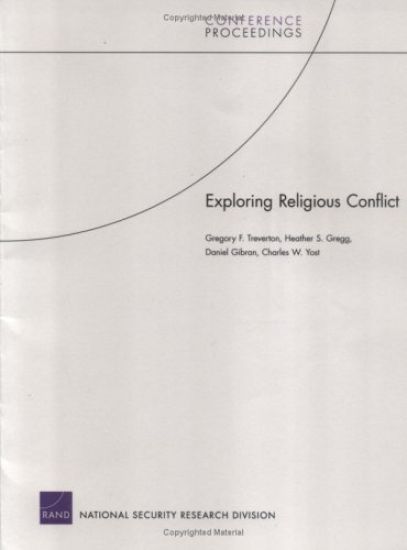
Exploring Religious Conflict

Exploring Religious Conflict

Gregory Treverton; Heather Selma Gregg; Daniel Gibran; Charles W. Yost

RAND
2005
pokkari
Reports the results of a workshop bringing together intelligence analysts and experts on religion to address religious motivations for violence. Reports the result of a workshop that brought together intelligence analysts and experts on religion with the goal of providing background and a frame of reference for assessing religious motivations in international politics and discovering what causes religiously rooted violence and how states have sought to take advantage of or contain religious violence-with emphasis on radical Islam.