Kirjojen hintavertailu. Mukana 12 657 676 kirjaa ja 12 kauppaa.

Kirjailija

Heinz D. Kurz

Kirjat ja teokset yhdessä paikassa: 14 kirjaa, julkaisuja vuosilta 1995-2023, suosituimpien joukossa Understanding 'Classical' Economics. Vertaile teosten hintoja ja tarkista saatavuus suomalaisista kirjakaupoista.

Mukana myös kirjoitusasut: Heinz D Kurz

14 kirjaa

Kirjojen julkaisuhaarukka 1995-2023.

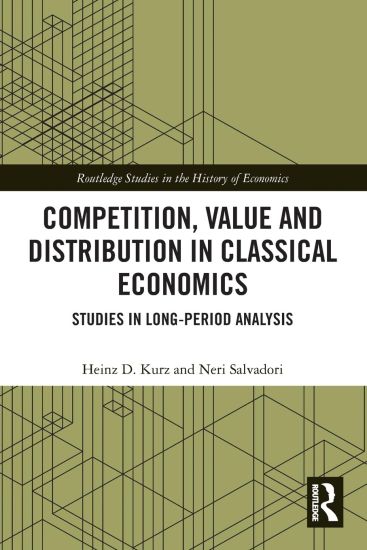
Competition, Value and Distribution in Classical Economics

Competition, Value and Distribution in Classical Economics

Heinz D. Kurz; Neri Salvadori

TAYLOR FRANCIS LTD
2023
nidottu
Drawing in particular on the work of Sraffa, Smith, Ricardo and Marx, the essays in this volume explore the characteristic features of the Classical economists’ approach to economic problems, and the renewal of interest in that approach in modern times.In recent years, new material has been made available on both Sraffa and Marx which have made new insights and interpretations possible. The release of Sraffa’s hitherto unpublished papers and correspondence has led to reconsideration of doctrinal questions such as to what extent Sraffa built upon, or deviated from the analyses of Adam Smith, David Ricardo and other representatives of the classical British school and Karl Marx. A major theme is also to what extent we can today, equipped with Sraffa's insights and analytical tools, re-interpret and develop ideas of classical authors, which they could present only in primitive forms, on technological progress, exhaustible resources and other contemporary issues. On Marx, the publication of the MEGA2 edition of the works, papers and correspondence of Marx and Engels also gives rise to a reconsideration of this relationship, given Marx's disenchantment with some of his own work and return to ideas advocated by Ricardo, especially as regards the long-term tendency of the rate of profits. Finally, the classical notion of competition and monopoly deserve to be scrutinized carefully again and frequent misinterpretations in the literature refuted.This volume is vital reading for scholars of classical economics, Marx and Sraffa, and the history of economic thought more broadly. It also deals with issues in the areas of machinery and technical progress, joint production, and economic development and growth.
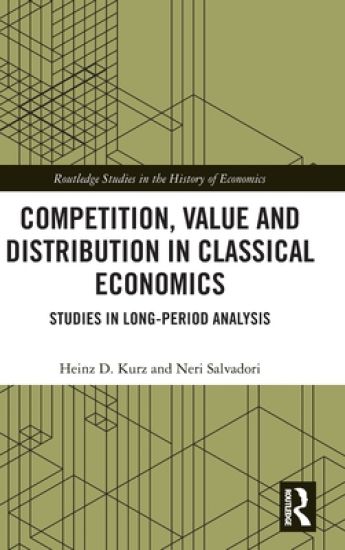
Competition, Value and Distribution in Classical Economics

Competition, Value and Distribution in Classical Economics

Heinz D. Kurz; Neri Salvadori

Routledge
2022
sidottu
Drawing in particular on the work of Sraffa, Smith, Ricardo and Marx, the essays in this volume explore the characteristic features of the Classical economists’ approach to economic problems, and the renewal of interest in that approach in modern times.In recent years, new material has been made available on both Sraffa and Marx which have made new insights and interpretations possible. The release of Sraffa’s hitherto unpublished papers and correspondence has led to reconsideration of doctrinal questions such as to what extent Sraffa built upon, or deviated from the analyses of Adam Smith, David Ricardo and other representatives of the classical British school and Karl Marx. A major theme is also to what extent we can today, equipped with Sraffa's insights and analytical tools, re-interpret and develop ideas of classical authors, which they could present only in primitive forms, on technological progress, exhaustible resources and other contemporary issues. On Marx, the publication of the MEGA2 edition of the works, papers and correspondence of Marx and Engels also gives rise to a reconsideration of this relationship, given Marx's disenchantment with some of his own work and return to ideas advocated by Ricardo, especially as regards the long-term tendency of the rate of profits. Finally, the classical notion of competition and monopoly deserve to be scrutinized carefully again and frequent misinterpretations in the literature refuted.This volume is vital reading for scholars of classical economics, Marx and Sraffa, and the history of economic thought more broadly. It also deals with issues in the areas of machinery and technical progress, joint production, and economic development and growth.
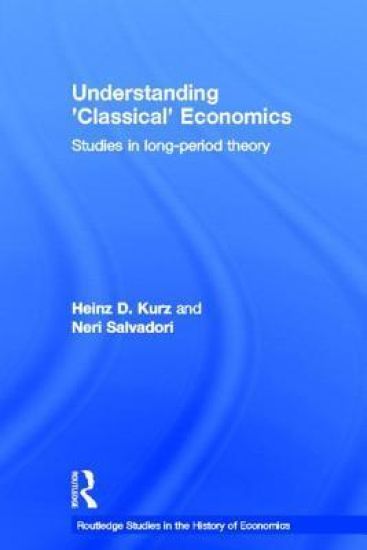
Understanding 'Classical' Economics

Understanding 'Classical' Economics

Heinz D. Kurz; Neri Salvadori

Routledge
2014
nidottu
The 'classical' approach to economic problems, which can be traced back to Adam Smith and David Ricardo, has seen a remarkable revival in recent years. The essays in this collection argue that this approach holds the key to an explanation of important present day economic phenomena. Focusing on the analytical potentialities of classical economics, the contributors illustrate how an important element of understanding its approach consists of developing and using its explanatory power.
Understanding 'Classical' Economics

Understanding 'Classical' Economics

Heinz D. Kurz; Neri Salvadori

Routledge
1997
sidottu
The 'classical' approach to economic problems, which can be traced back to Adam Smith and David Ricardo, has seen a remarkable revival in recent years. The essays in this collection argue that this approach holds the key to an explanation of important present day economic phenomena. Focusing on the analytical potentialities of classical economics, the contributors illustrate how an important element of understanding its approach consists of developing and using its explanatory power.
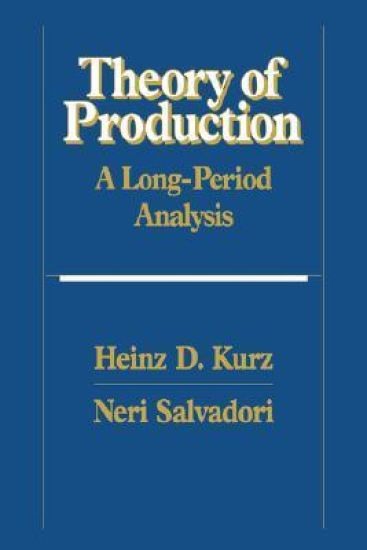
Theory of Production

Theory of Production

Heinz D. Kurz; Neri Salvadori

Cambridge University Press
1997
pokkari
This compelling book contains a comprehensive analytical treatment of the theory of production in a long-period framework. Although the authors take a ‘Classical’ approach to their subject, the scope of investigation and methods employed should interest all economic theorists. Professors Kurz and Salvadori explore economic systems that are characterised by a particular kind of primary input in the production process, such as different kinds of labour and natural resources. These systems and the corresponding prices can be understood to reflect characteristic features of a capitalist market economy in an ideal way: they express the pure logic of the relationship between value and distribution in an economic system. Specific chapters deal with prices and income distribution, economic growth, joint production, fixed capital, scarce natural resources (both renewable and exhaustible), and heterogeneous labour. The historical origins of the concepts used are also discussed in considerable detail.
Theory of Production

Theory of Production

Heinz D. Kurz; Neri Salvadori

Cambridge University Press
1995
sidottu
This compelling book contains a comprehensive analytical treatment of the theory of production in a long-period framework. Although the authors take a ‘Classical’ approach to their subject, the scope of investigation and methods employed should interest all economic theorists. Professors Kurz and Salvadori explore economic systems that are characterised by a particular kind of primary input in the production process, such as different kinds of labour and natural resources. These systems and the corresponding prices can be understood to reflect characteristic features of a capitalist market economy in an ideal way: they express the pure logic of the relationship between value and distribution in an economic system. Specific chapters deal with prices and income distribution, economic growth, joint production, fixed capital, scarce natural resources (both renewable and exhaustible), and heterogeneous labour. The historical origins of the concepts used are also discussed in considerable detail.
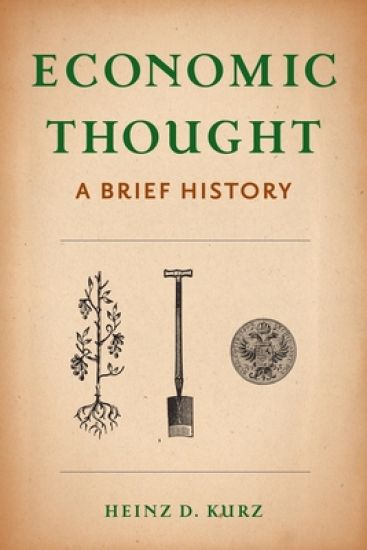
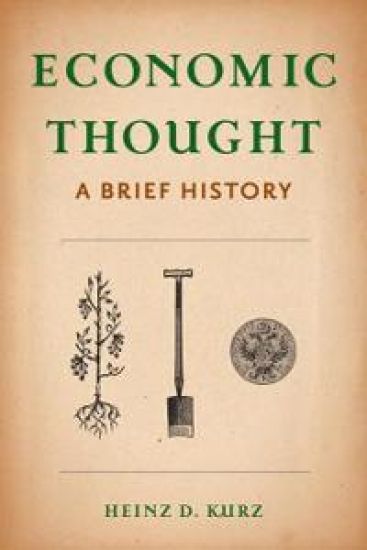
Economic Thought

Economic Thought

Heinz D Kurz

Columbia University Press
2017
pokkari
In this concise yet comprehensive history, Heinz D. Kurz traces the long arc of economic thought from its emergence in ancient Greece to its systematic presentation among the classical thinkers of the late eighteenth and early nineteenth centuries to the influential work of scholars such as Paul Samuelson and Kenneth J. Arrow. With a keen eye for how economic insights are acquired, lost, and reborn, Kurz focuses on the dynamic individuals who give old ideas new life and the historical events that provoke different approaches and theories. Over the course of this journey, Kurz explains what Adam Smith meant by the "invisible hand"; how Karl Marx's "law of motion" works in capitalist economies; the roots of the Austrian economists' emphasis on the problems of information, incomplete knowledge, and uncertainty; John Maynard Keynes's principle of effective demand and economic stabilization; and the insights and challenges offered by growth theory, welfare economics, game theory, and more. He concludes with a deft summation of world economists' major concerns today and their critical relation to world events.
Economic Thought

Economic Thought

Heinz D Kurz

Columbia University Press
2016
sidottu
In this concise yet comprehensive history, Heinz D. Kurz traces the long arc of economic thought from its emergence in ancient Greece to its systematic presentation among the classical thinkers of the late eighteenth and early nineteenth centuries to the influential work of scholars such as Paul Samuelson and Kenneth J. Arrow. With a keen eye for how economic insights are acquired, lost, and reborn, Kurz focuses on the dynamic individuals who give old ideas new life and the historical events that provoke different approaches and theories. Over the course of this journey, Kurz explains what Adam Smith meant by the "invisible hand"; how Karl Marx's "law of motion" works in capitalist economies; the roots of the Austrian economists' emphasis on the problems of information, incomplete knowledge, and uncertainty; John Maynard Keynes's principle of effective demand and economic stabilization; and the insights and challenges offered by growth theory, welfare economics, game theory, and more. He concludes with a deft summation of world economists' major concerns today and their critical relation to world events.
Innovation, Knowledge and Growth

Innovation, Knowledge and Growth

Heinz D. Kurz

Routledge
2013
nidottu
This book deals with the prime movers of socio-economic development, innovations and technical change, their origins, forms and effects. It contains a set of closely related chapters, some of which have been previously published as papers in scholarly journals
Innovation, Knowledge and Growth

Innovation, Knowledge and Growth

Heinz D. Kurz

Routledge
2011
sidottu
This book deals with the prime movers of socio-economic development, innovations and technical change, their origins, forms and effects. It contains a set of closely related chapters, some of which have been previously published as papers in scholarly journals
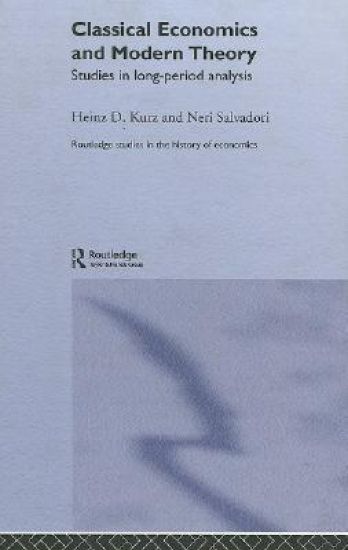
Classical Economics and Modern Theory

Classical Economics and Modern Theory

Heinz D. Kurz; Neri Salvadori

Routledge
2006
nidottu
In this thought-provoking book, well known economists Kurz and Salvadori cover original findings and new vistas on old problems. They cover:alternative interpretations of classical economistsnew growth theorythe relationship between Sraffian theory and Von Neumannthe treatment of capital in neoclassical long-period theory.Incorporating cutting-edge research and new work, this book will be of great interest to those working in the field of the history of economic thought.
Classical Economics and Modern Theory

Classical Economics and Modern Theory

Heinz D. Kurz; Neri Salvadori

Routledge
2003
sidottu
In this thought-provoking book, well known economists Kurz and Salvadori cover original findings and new vistas on old problems. They cover:alternative interpretations of classical economistsnew growth theorythe relationship between Sraffian theory and Von Neumannthe treatment of capital in neoclassical long-period theory.Incorporating cutting-edge research and new work, this book will be of great interest to those working in the field of the history of economic thought.
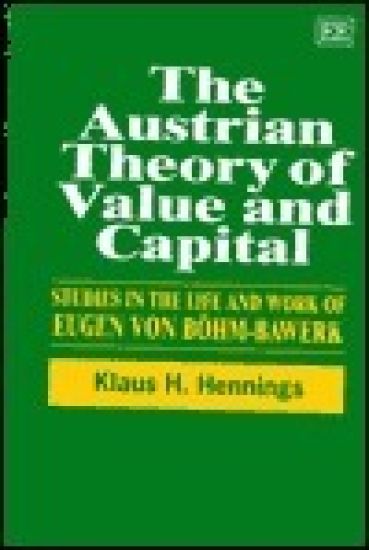
The Austrian Theory of Value and Capital

The Austrian Theory of Value and Capital

Klaus H. Hennings; Heinz D. Kurz

Edward Elgar Publishing Ltd
1997
sidottu
The Austrian Theory of Value and Capital provides a meticulous account of Eugen von Bohm-Bawerk's life, his theory of value, capital and interest within the context of 19th century German economic thought and the development of neoclassical economic theory.This book provides an insight into Bohm-Bawerk's intellectual development, his political leanings and personal background, including a wealth of previously unknown facts. The study also considers the development of economic thought in the 19th century in Germany and Austria. It critically analyses the work and contribution of Bohm-Bawerk and concludes that his analysis belongs to traditional 19th century German economic thought. Closely related to this is the clarification made by the author of what is genuinely 'Austrian' in the 'Austrian theory of value and distribution'. To complement the study of Bohm-Bawerk, the book also contains the first English translation of his letters to Knut Wicksell.This book will be of interest to economic theorists, those interested in Austrian economics and the history of economic thought and economic historians.