Kirjojen hintavertailu. Mukana 12 595 353 kirjaa ja 12 kauppaa.

Kirjailija

Helen Beebee

Kirjat ja teokset yhdessä paikassa: 6 kirjaa, julkaisuja vuosilta 2006-2019, suosituimpien joukossa Metaphysics: The Key Concepts. Vertaile teosten hintoja ja tarkista saatavuus suomalaisista kirjakaupoista.

6 kirjaa

Kirjojen julkaisuhaarukka 2006-2019.

Philosophy

Philosophy

Helen Beebee; Michael Rush

Polity Press
2019
nidottu
We constantly disagree with each other on issues of fundamental importance. Does God exist? Should the latest scientific findings be trusted? Are there innate psychological differences between men and women? In four lively chapters, Beebee and Rush explain philosophy’s role in addressing such questions. They consider what it means to be human, how we should engage in public debate, philosophy’s relationship with science and religion, and the nature of our moral choices. Far from being only an abstract endeavour, philosophy engages with issues on a practical level, and philosophers draw inspiration from real-life situations. At its core, philosophy is about how to live and how to make sense of the world we inhabit. It is a set of tools and techniques for clearly and systematically considering our arguments and uncovering our hidden assumptions, which helps us to make more informed choices about what to believe and how to act. Philosophy is everywhere, and open to everyone.
Philosophy

Philosophy

Helen Beebee; Michael Rush

Polity Press
2019
sidottu
We constantly disagree with each other on issues of fundamental importance. Does God exist? Should the latest scientific findings be trusted? Are there innate psychological differences between men and women? In four lively chapters, Beebee and Rush explain philosophy’s role in addressing such questions. They consider what it means to be human, how we should engage in public debate, philosophy’s relationship with science and religion, and the nature of our moral choices. Far from being only an abstract endeavour, philosophy engages with issues on a practical level, and philosophers draw inspiration from real-life situations. At its core, philosophy is about how to live and how to make sense of the world we inhabit. It is a set of tools and techniques for clearly and systematically considering our arguments and uncovering our hidden assumptions, which helps us to make more informed choices about what to believe and how to act. Philosophy is everywhere, and open to everyone.
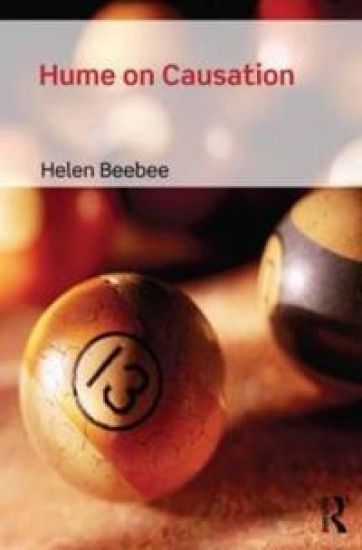
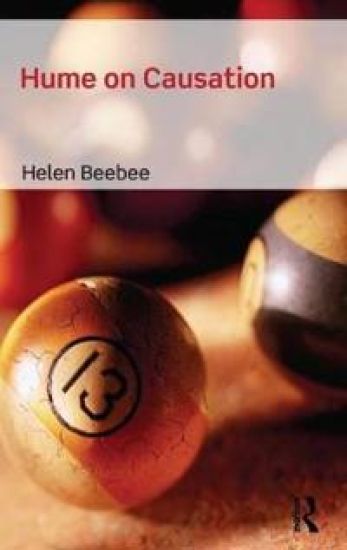
Hume on Causation

Hume on Causation

Helen Beebee

Routledge
2011
nidottu
Hume is traditionally credited with inventing the ‘regularity theory’ of causation, according to which the causal relation between two events consists merely in the fact that events of the first kind are always followed by events of the second kind. Hume is also traditionally credited with two other, hugely influential positions: the view that the world appears to us as a world of unconnected events, and inductive scepticism: the view that the ‘problem of induction’, the problem of providing a justification for inference from observed to unobserved regularities, is insoluble. Hume on Causation is the first major work dedicated to Hume’s views on causation in over fifteen years, and it argues that Hume does not subscribe to any of these three views. It places Hume’s interest in causation within the context of his theory of the mind and his theory of causal reasoning, arguing that Hume’s conception of causation derives from his conception of the nature of the inference from causes to effects.
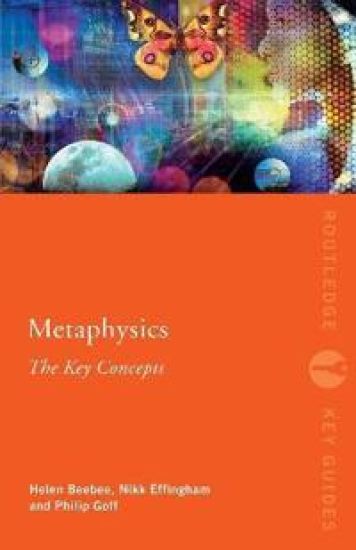
Metaphysics: The Key Concepts

Metaphysics: The Key Concepts

Nikk Effingham; Helen Beebee; Philip Goff

Routledge
2010
sidottu
‘Informative, accessible, and fun to read— this is an excellent reference guide for undergraduates and anyone wanting an introduction to the fundamental issues of metaphysics. I know of no other resource like it.’– Meghan Griffith, Davidson College, USA'Marvellous! This book provides the very best place to start for students wanting to take the first step into understanding metaphysics.Undergraduates would do well to buy it and consult it regularly. The quality and clarity of the material are consistently high.' – Chris Daly, University of Manchester, UKEver wondered about Gunk, Brains in a Vat or Frankfurt’s Nefarious Neurosurgeon?With complete explanations of these terms and more, Metaphysics: The Key Concepts is an accessible and engaging introduction to the most widely studied and challenging concepts in metaphysics. The authors clearly and lucidly define and discuss key terms and concepts, under the themes of:timeparticulars & universalsrealism & antirealismfree willpersonal identitycausation and laws.Arranged in an easy to use A-Z format, each concept is explored and illustrated with engaging and memorable examples, and accompanied by an up-to-date guide to further reading. Fully cross-referenced throughout, this remarkable reference guide is essential reading for students of philosophy and all those interested in the nature of reality.
Metaphysics: The Key Concepts

Metaphysics: The Key Concepts

Nikk Effingham; Helen Beebee; Philip Goff

Routledge
2010
nidottu
‘Informative, accessible, and fun to read— this is an excellent reference guide for undergraduates and anyone wanting an introduction to the fundamental issues of metaphysics. I know of no other resource like it.’– Meghan Griffith, Davidson College, USA'Marvellous! This book provides the very best place to start for students wanting to take the first step into understanding metaphysics.Undergraduates would do well to buy it and consult it regularly. The quality and clarity of the material are consistently high.' – Chris Daly, University of Manchester, UKEver wondered about Gunk, Brains in a Vat or Frankfurt’s Nefarious Neurosurgeon?With complete explanations of these terms and more, Metaphysics: The Key Concepts is an accessible and engaging introduction to the most widely studied and challenging concepts in metaphysics. The authors clearly and lucidly define and discuss key terms and concepts, under the themes of:timeparticulars & universalsrealism & antirealismfree willpersonal identitycausation and laws.Arranged in an easy to use A-Z format, each concept is explored and illustrated with engaging and memorable examples, and accompanied by an up-to-date guide to further reading. Fully cross-referenced throughout, this remarkable reference guide is essential reading for students of philosophy and all those interested in the nature of reality.
Hume on Causation

Hume on Causation

Helen Beebee

Routledge
2006
sidottu
Hume is traditionally credited with inventing the ‘regularity theory’ of causation, according to which the causal relation between two events consists merely in the fact that events of the first kind are always followed by events of the second kind. Hume is also traditionally credited with two other, hugely influential positions: the view that the world appears to us as a world of unconnected events, and inductive scepticism: the view that the ‘problem of induction’, the problem of providing a justification for inference from observed to unobserved regularities, is insoluble. Hume on Causation is the first major work dedicated to Hume’s views on causation in over fifteen years, and it argues that Hume does not subscribe to any of these three views. It places Hume’s interest in causation within the context of his theory of the mind and his theory of causal reasoning, arguing that Hume’s conception of causation derives from his conception of the nature of the inference from causes to effects.