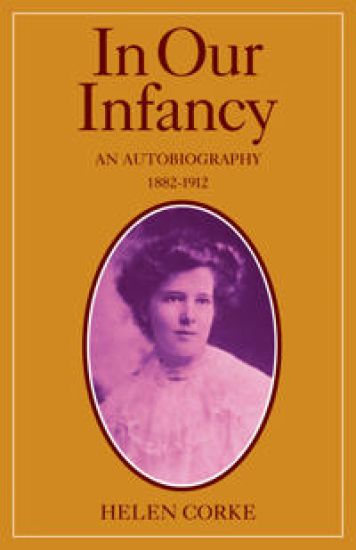
Croydon, England, was the setting of the famous three-way friendship of D. H. Lawrence, Jessie Chambers, and Helen Corke, all of whom made literary records of their association, and all of whom appeared as characters in Lawrence novels. Perhaps the most objective of these records were Helen Corke’s, which became difficult to acquire. Their scarcity and their continuing usefulness were the stimulus for publication of this volume, which contains in four statements Helen Corke’s “major comment on Lawrence the man and Lawrence the artist.” The “Portrait of D. H. Lawrence, 1909–1910,” a section from Corke’s unpublished autobiography, gives the reader glimpses into the earliest stages of the Lawrence-Corke friendship, when Lawrence worked to bring meaning back into Corke’s life after she had suffered a tragic loss. The “Portrait” tells of conversations before a log fire, German lessons, the reading of poetry, and sessions over Lawrence’s manuscript “Nethermere,” which the publishers renamed The White Peacock. In “Portrait,” Corke tells of working with Lawrence on revising the proofs of this book, of Lawrence’s encouragement of her own literary efforts, of their wandering together in the Kentish hill country, and of her first meeting with Jessie Chambers. “Lawrence’s ‘Princess’” continues the narrative of the triple friendship, carrying it to its sad ending, but with the focus on Jessie Chambers. Perceptively and sympathetically written, it throws a clarifying light on the psychology of Lawrence and presents with literary charm another human being-Jessie, the Miriam of Sons and Lovers. In combined narrative-critique method, Corke, in the essay “Concerning The White Peacock,” relates Lawrence’s problems in writing this novel and gives an analysis of its literary quality. Lawrence and Apocalypse is cast in the form of a “deferred conversation” in which Lawrence and Corke discuss his philosophical ideas as presented in his Apocalypse. Although the book was written to present Lawrence’s ideas, its significance reposes equally in Corke’s reaction to his thought. As a succinct statement of Lawrence’s teachings about the nature of humanity, it has unique value.