Kirjojen hintavertailu. Mukana 12 390 323 kirjaa ja 12 kauppaa.
Kirjailija
Helen Cowie
Kirjat ja teokset yhdessä paikassa: 19 kirjaa, julkaisuja vuosilta 1998-2021, suosituimpien joukossa A School for Everyone. Vertaile teosten hintoja ja tarkista saatavuus suomalaisista kirjakaupoista.
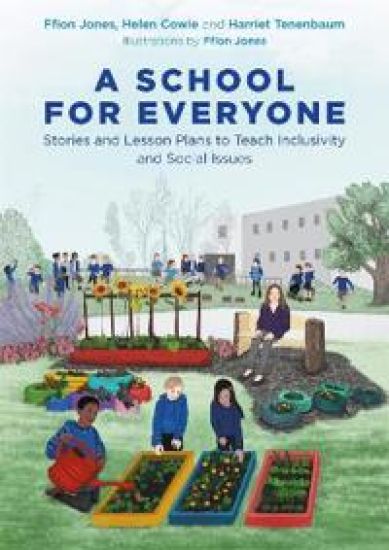
This discussion tool designed to address pressing social issues for children helps teachers, parents and professionals caring for children to alleviate young people's worries and opens up conversations on tricky topics.Providing 16 stories told from different perspectives, the book covers social and emotional concerns around far-ranging issues, including refugees, disability, gender diversity and climate change. For each issue raised, the story is followed by a fact file, a set of interactive activities, lesson plans and a bank of resources to further enhance understanding and promote empathy.
Originally published in 1994, the main function of this book was to provide to counsellors, trainee counsellors and teachers with pastoral care responsibilities, the knowledge and skills to support effective counselling. By drawing on their extensive pastoral and counselling experience gained in education and counselling, the authors produced a work which will also appeal to others involved in the care and protection of children and young people – including educational social workers, nurses, the police and educational psychologists. The authors integrate the development of counselling skills with a reflective stance on issues, approaches and ideas. They seek thus to increase the readers’ capacity to work sensitively and imaginatively with their clients, the sometimes troubled children and young people in primary and secondary schools.
First published in 1994, this book describes how cooperative group work can enhance relationships in the classroom, reduce prejudice and alleviate problems of victimisation and peer rejection. It combines quantitative experimental analysis with detailed case studies; considers the impact of the family on pupil behaviour; and concludes with practical recommendations to foster social acceptance in the classroom.There is a strong emphasis on helping teachers to develop group work in their classrooms as an effective means of averting trouble and inducing a genuinely better attitude to collaboration with their fellow pupils. The difficulties in implementation which can arise if teachers are not motivated, or if pupils are disruptive, are honestly confronted.The book will also help educational and developmental psychologists involved in resolving behavioural difficulties resulting from social tensions in multi-ethnic classrooms.
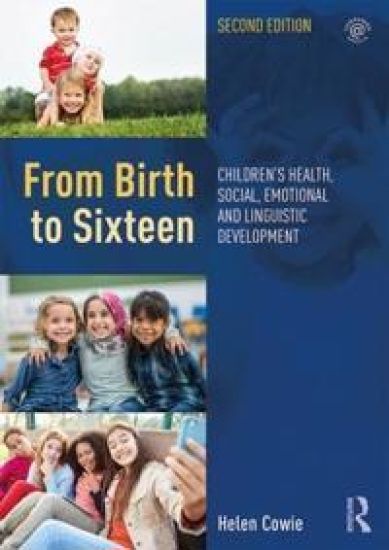
This new edition of From Birth to Sixteen outlines children’s physical, social, emotional and cognitive development from infancy through to adolescence. In both its practical application of research and its contribution to the assessment of child development, this text provides essential reading for students and practitioners in nursing, health visiting, play work, youth work, early years education, teaching, social work and occupational therapy.This innovative and broad-ranging text is accessible and engaging, with case studies, tables, and references to relevant studies making links to professional practice throughout. Taking into account the diversity of ways in which children develop – including considerations of gender, ethnicity, social background, disability and resilience – it presents developmental models for the years from birth to sixteen under each of the following themes: children’s rights and responsibilities relationships in the family relationships in day care, at school and with the peer group language and communication children and the media health and physical development mental health. This fully updated new edition offers additional content on topics such as attachment theory, the neuroscience of the brain, sleep patterns, multi-lingualism in childhood, disability, making the transition to young adulthood, and impact of war and other forms of adversity on emotional health and well-being. A companion website offers additional teaching and learning resources for students and lecturers.From the foundations of the subject through to its application in practice, From Birth to Sixteen provides an indispensable companion for those studying child development or working with children.
This new edition of From Birth to Sixteen outlines children’s physical, social, emotional and cognitive development from infancy through to adolescence. In both its practical application of research and its contribution to the assessment of child development, this text provides essential reading for students and practitioners in nursing, health visiting, play work, youth work, early years education, teaching, social work and occupational therapy.This innovative and broad-ranging text is accessible and engaging, with case studies, tables, and references to relevant studies making links to professional practice throughout. Taking into account the diversity of ways in which children develop – including considerations of gender, ethnicity, social background, disability and resilience – it presents developmental models for the years from birth to sixteen under each of the following themes: children’s rights and responsibilities relationships in the family relationships in day care, at school and with the peer group language and communication children and the media health and physical development mental health. This fully updated new edition offers additional content on topics such as attachment theory, the neuroscience of the brain, sleep patterns, multi-lingualism in childhood, disability, making the transition to young adulthood, and impact of war and other forms of adversity on emotional health and well-being. A companion website offers additional teaching and learning resources for students and lecturers.From the foundations of the subject through to its application in practice, From Birth to Sixteen provides an indispensable companion for those studying child development or working with children.
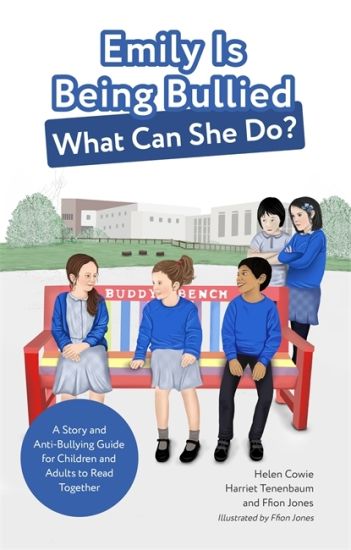
Meet Emily. She is being bullied by a group of children at school. She describes how this makes her feel, think and act. Eventually, she finds ways to help herself and also realises that she can get help from other people - both adults and other children. As well as the perspective of the child being bullied, this guide for children aged 7-11 portrays the view of bystanders and the bully, emphasising the difference everyone can make in a bullying situation. Based on the latest research in anti-bullying interventions and written in collaboration with leaders of the field, the book offers practical, tried-and-tested strategies for the prevention of bullying.
First published in 1994, this book describes how cooperative group work can enhance relationships in the classroom, reduce prejudice and alleviate problems of victimisation and peer rejection. It combines quantitative experimental analysis with detailed case studies; considers the impact of the family on pupil behaviour; and concludes with practical recommendations to foster social acceptance in the classroom.There is a strong emphasis on helping teachers to develop group work in their classrooms as an effective means of averting trouble and inducing a genuinely better attitude to collaboration with their fellow pupils. The difficulties in implementation which can arise if teachers are not motivated, or if pupils are disruptive, are honestly confronted.The book will also help educational and developmental psychologists involved in resolving behavioural difficulties resulting from social tensions in multi-ethnic classrooms.
Originally published in 1994, the main function of this book was to provide to counsellors, trainee counsellors and teachers with pastoral care responsibilities, the knowledge and skills to support effective counselling. By drawing on their extensive pastoral and counselling experience gained in education and counselling, the authors produced a work which will also appeal to others involved in the care and protection of children and young people – including educational social workers, nurses, the police and educational psychologists. The authors integrate the development of counselling skills with a reflective stance on issues, approaches and ideas. They seek thus to increase the readers’ capacity to work sensitively and imaginatively with their clients, the sometimes troubled children and young people in primary and secondary schools.
Known for their haughty demeanour, woolly charm and propensity to spit when threatened, llamas have had a rich and varied history. Since their domestication high in the Andes, they have been sacrificed, farmed, smuggled and petted. They have functioned at different times as luxury commodities, literary muses and national symbols and have served as beasts of burden, circus performers and even golf caddies. This book charts the history of llamas and their close relatives, alpacas, guanacos and vicuñas. Venerated by the Incas, llamas are still cherished in their native Peru and Bolivia, and remain central to Andean culture. After several unsuccessful acclimatization attempts in the nineteenth century, llamas and alpacas have also become popular pets in Britain, North America and Australia, where they are used for trekking, meat and wool production and as therapy animals. Llama recounts the llama’s colourful history and explores the animals’ presence in art, literature and film. Packed with llama drama and alpaca facts, Llama shows that there’s much more to llamas than spitting.
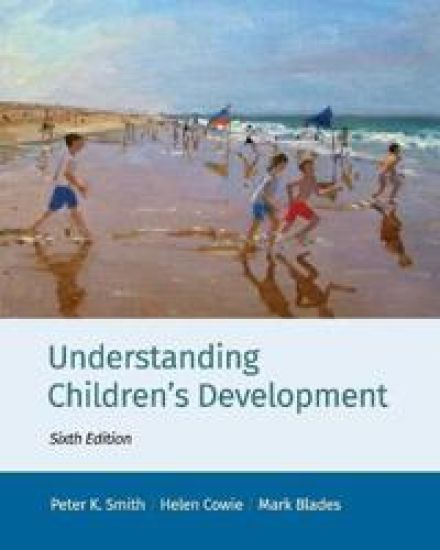
Understanding Children's Development is the UK's best-selling developmental psychology textbook and has been widely acclaimed for its international coverage and rigorous research-based approach. This dynamic text emphasizes the practical and applied implications of developmental research. It begins by introducing the ways in which psychologists study developmental processes before going on to consider all major aspects of development from conception through to adolescence.
This book examines the study of natural history in the Spanish empire in the years 1750-1850. During this period, Spain made strenuous efforts to survey, inventory and exploit the natural productions of her overseas possessions, orchestrating a serries of scientific expeditions and cultivating and displaying American fauna and flora in metropolitan gardens and museums. This book assesses the cultural significance of natural history, emphasising the figurative and utilitarian value with which eighteenth-century Spaniards invested natural objects, from globetrotting elephants to three-legged chickens. It considers how the creation, legitimisation and dissemination of scientific knowledge reflected broader questions of imperial power and national identity.This book will be of particular interest to scholars and students of Spanish and Latin American History, the History of Science and Imperial Culture
This timely text, written by experts in research, practice and training in the field, proposes a whole-school community approach to the reduction and prevention of school violence. Underpinned by recent research findings, the book is illustrated throughout with case studies, examples of good practice in action, ideas and resources including exercises, activities and checklists. The book covers: - personal characteristics of perpetrators, victims and bystanders - role of the family - ethos and culture of the school - quality of interpersonal relationships at school - quality of the learning environment of the school - links between school and community The authors' approach aims to promote non-violence , improve the climate of the school, enhance relationships among staff, pupils and parents, and to support the emotional health and well-being of all members of the school community. Strategies include preventative methods, provision for the individual needs of pupils and peer support, emotional literacy and restorative practice. The authors also provide guidance on how to create a shared understanding of school violence, how to prepare for change and how to carry out an effective needs analysis in order to successfully address the issue. This book is essential for practitioners, students in education and school management as well as local educational advisors.
This timely text, written by experts in research, practice and training in the field, proposes a whole-school community approach to the reduction and prevention of school violence. Underpinned by recent research findings, the book is illustrated throughout with case studies, examples of good practice in action, ideas and resources including exercises, activities and checklists. The book covers: - personal characteristics of perpetrators, victims and bystanders - role of the family - ethos and culture of the school - quality of interpersonal relationships at school - quality of the learning environment of the school - links between school and community The authors' approach aims to promote non-violence , improve the climate of the school, enhance relationships among staff, pupils and parents, and to support the emotional health and well-being of all members of the school community. Strategies include preventative methods, provision for the individual needs of pupils and peer support, emotional literacy and restorative practice. The authors also provide guidance on how to create a shared understanding of school violence, how to prepare for change and how to carry out an effective needs analysis in order to successfully address the issue. This book is essential for practitioners, students in education and school management as well as local educational advisors.
`This publication is a valuable and timely contribution to the current investigations into the behaviours of children and young people that impact on their emotional health. The book will serve as a practical guide for schools addressing the problem as they see it, the case studies vividly illustrating situations and behaviours that teachers will readily recognise. This is a well structured book. [It] deserves to be read and can serve as a source of information on how various behaviours have been defined, investigated and addressed. It will be of value to any school, much more than a topical or interesting read but as the basis of an institutional response to a problem seriously affecting educational achievement for individuals and schools. It would particularly serve as a stimulus to in-service training for teachers and support staff' - George Varnava, Young Minds Magazine 'Each of the authors has considerable relevant expertise so the text is rich both in research data and examples, including case studies, from their experience. Readers will find a wealth of practical advice and encouragement that is balanced by the acknowledgement of the limitations of individual interventions and the potential costs, overt and hidden, of each one. A whole-school approach is advocated and exemplified, including schools that have considered the needs of the staff' - Child and Adolescent Mental Health `This work would be of use throughout all age ranges as the different problems and strategies are very easily accessible with a lot of proven, practical support. Professor Cowie and her colleagues have produced a valuable tool for use in all schools on both micro and macro level' - Education Review `The book is an impressive and useful handbook of advice and resources. More than that, because it presents so much evidence, it's able to show, rather than tell, how schools can improve life for their pupils and teachers' - Gerald Haigh, TES Friday Magazine `This book is recommended for the wealth of practical information it contains about strategies that can help young people in distress' - Youth Studies Australia Secondary school is the place where young people are most constrained, observed and challenged to develop. This is not necessarily a stress free process, either for the young person, or for teachers and parents. This book describes behaviours, both disruptive and secretive, which indicates emotional distress. It looks at both the risk factors and the protective factors involved in emotional health, and addresses the impact of issues such as bullying, social exclusion, loss and bereavement. The authors show what schools can do to develop practices grounded in knowledge about the mental health issues which relate to young people. In an accessible way, they present a range of strategies which practitioners have shown to be effective. They focus especially on methods and policies, which have been scientifically evaluated, or which are considered best practice. Issues and interventions are illustrated throughout with case studies drawn from the authors' own practice and experience. Each of the authors has a long-standing interest in ways of creating supportive environments to prevent distress and to facilitate resilience in the young. This book is essential reading for secondary school teachers, educational psychologists, education welfare officers and all those with pastoral care responsibilities.
`This publication is a valuable and timely contribution to the current investigations into the behaviours of children and young people that impact on their emotional health. The book will serve as a practical guide for schools addressing the problem as they see it, the case studies vividly illustrating situations and behaviours that teachers will readily recognise. This is a well structured book. [It] deserves to be read and can serve as a source of information on how various behaviours have been defined, investigated and addressed. It will be of value to any school, much more than a topical or interesting read but as the basis of an institutional response to a problem seriously affecting educational achievement for individuals and schools. It would particularly serve as a stimulus to in-service training for teachers and support staff' - George Varnava, Young Minds Magazine 'Each of the authors has considerable relevant expertise so the text is rich both in research data and examples, including case studies, from their experience. Readers will find a wealth of practical advice and encouragement that is balanced by the acknowledgement of the limitations of individual interventions and the potential costs, overt and hidden, of each one. A whole-school approach is advocated and exemplified, including schools that have considered the needs of the staff' - Child and Adolescent Mental Health `This work would be of use throughout all age ranges as the different problems and strategies are very easily accessible with a lot of proven, practical support. Professor Cowie and her colleagues have produced a valuable tool for use in all schools on both micro and macro level' - Education Review `The book is an impressive and useful handbook of advice and resources. More than that, because it presents so much evidence, it's able to show, rather than tell, how schools can improve life for their pupils and teachers' - Gerald Haigh, TES Friday Magazine `This book is recommended for the wealth of practical information it contains about strategies that can help young people in distress' - Youth Studies Australia Secondary school is the place where young people are most constrained, observed and challenged to develop. This is not necessarily a stress free process, either for the young person, or for teachers and parents. This book describes behaviours, both disruptive and secretive, which indicates emotional distress. It looks at both the risk factors and the protective factors involved in emotional health, and addresses the impact of issues such as bullying, social exclusion, loss and bereavement. The authors show what schools can do to develop practices grounded in knowledge about the mental health issues which relate to young people. In an accessible way, they present a range of strategies which practitioners have shown to be effective. They focus especially on methods and policies, which have been scientifically evaluated, or which are considered best practice. Issues and interventions are illustrated throughout with case studies drawn from the authors' own practice and experience. Each of the authors has a long-standing interest in ways of creating supportive environments to prevent distress and to facilitate resilience in the young. This book is essential reading for secondary school teachers, educational psychologists, education welfare officers and all those with pastoral care responsibilities.
`It would be of use to adults and teachers who are starting to research peer support and the logistics of adopting such a scheme in their school. It would also be of use to saff who are currently operating a peer support scheme. I personally will use this book and keep a copy in the counselling service library, recommending it to counsellors/trainers and teachers interested or already facilitating peer support in their schools' - British Journal of Guidance and Counselling `It is to read, comprehensive in its structure and advice and through examples of first-hand experiences, makes the reader feel enthusiastic about trying out different ideas…. An excellent handbook for the manager of a peer support system for any organization' - Anne Woodhouse, Clinical Child Psychology and Psychiatry Peer support systems are increasingly being used in schools and other youth settings to tackle problems such as bullying, rejection, social exclusion, sexual identity, self-esteem and loneliness. Peer Support in Action is a practical guide which gives adults who work with children and young people the knowledge, understanding and practical tools to provide effective and appropriate systems of peer support. Helen Cowie and Patti Wallace combine insights drawn from practice with up-to-date research findings, to give a sound basis for peer-based interventions. They encourage readers to build on the potential for offering help which many young people have and give practical guidance on how to train, guide and supervise them in supporting their peers. Peer Support in Action is for teachers, educational psychologists, social workers, education welfare officers, counsellors and counselling psychologists and all professionals involved in the pastoral care and guidance of children and young people.
`It would be of use to adults and teachers who are starting to research peer support and the logistics of adopting such a scheme in their school. It would also be of use to saff who are currently operating a peer support scheme. I personally will use this book and keep a copy in the counselling service library, recommending it to counsellors/trainers and teachers interested or already facilitating peer support in their schools' - British Journal of Guidance and Counselling `It is to read, comprehensive in its structure and advice and through examples of first-hand experiences, makes the reader feel enthusiastic about trying out different ideas…. An excellent handbook for the manager of a peer support system for any organization' - Anne Woodhouse, Clinical Child Psychology and Psychiatry Peer support systems are increasingly being used in schools and other youth settings to tackle problems such as bullying, rejection, social exclusion, sexual identity, self-esteem and loneliness. Peer Support in Action is a practical guide which gives adults who work with children and young people the knowledge, understanding and practical tools to provide effective and appropriate systems of peer support. Helen Cowie and Patti Wallace combine insights drawn from practice with up-to-date research findings, to give a sound basis for peer-based interventions. They encourage readers to build on the potential for offering help which many young people have and give practical guidance on how to train, guide and supervise them in supporting their peers. Peer Support in Action is for teachers, educational psychologists, social workers, education welfare officers, counsellors and counselling psychologists and all professionals involved in the pastoral care and guidance of children and young people.
`A book which will be of great interest and use to teachers and school staff... case examples and details of interventions are very helpful... [a book for] teachers to dip into when faced with a pupil troubled by fears and phobias, or an issue such as bullying' - Young Minds Magazine `This book successfully integrates current theory, practice and research. It is concise and easy to read.... I broadened and deepened my understanding from reading it. I can imagine some EPs and others using individual chapters as informative, quick revisions of key subject areas.... Additionally, this book will be useful to the growing army of other adults now working with children and young people' - British Psychological Society Division of Educational and Child Psychology Newsletter Increasingly, the carers of children must call on basic counselling skills in their interactions with young people and their families. This book addresses the key issues and problems faced by adults involved in the care of children, and gives them the knowledge they need to provide effective support for the children and young people with whom they work. Integrating theory, practice and research, the authors give clear, accessible interventions designed to alleviate distress. They demonstrate how appropriate counselling approaches and support systems can be incorporated by practitioners into their existing repertoire of skills.
`A book which will be of great interest and use to teachers and school staff... case examples and details of interventions are very helpful... [a book for] teachers to dip into when faced with a pupil troubled by fears and phobias, or an issue such as bullying' - Young Minds Magazine `This book successfully integrates current theory, practice and research. It is concise and easy to read.... I broadened and deepened my understanding from reading it. I can imagine some EPs and others using individual chapters as informative, quick revisions of key subject areas.... Additionally, this book will be useful to the growing army of other adults now working with children and young people' - British Psychological Society Division of Educational and Child Psychology Newsletter Increasingly, the carers of children must call on basic counselling skills in their interactions with young people and their families. This book addresses the key issues and problems faced by adults involved in the care of children, and gives them the knowledge they need to provide effective support for the children and young people with whom they work. Integrating theory, practice and research, the authors give clear, accessible interventions designed to alleviate distress. They demonstrate how appropriate counselling approaches and support systems can be incorporated by practitioners into their existing repertoire of skills.