Kirjojen hintavertailu. Mukana 12 595 353 kirjaa ja 12 kauppaa.

Kirjailija

Helen Nissenbaum

Kirjat ja teokset yhdessä paikassa: 6 kirjaa, julkaisuja vuosilta 1985-2017, suosituimpien joukossa Contextual Integrity Through the Lens of Computer Science. Vertaile teosten hintoja ja tarkista saatavuus suomalaisista kirjakaupoista.

6 kirjaa

Kirjojen julkaisuhaarukka 1985-2017.

Contextual Integrity Through the Lens of Computer Science

Contextual Integrity Through the Lens of Computer Science

Sebastian Benthall; Seda Gurses; Helen Nissenbaum

now publishers Inc
2017
nidottu
The theory of Privacy as Contextual Integrity (CI) defines privacy as appropriate information flow according to norms specific to social contexts or spheres. CI has had uptake in different subfields of computer science research. Computer scientists using CI have innovated as they have implemented the theory and blended it with other traditions, such as context-aware computing. Contextual Integrity through the Lens of Computer Science examines computer science literature using Contextual Integrity and discovers: (1) the way CI is used depends on the technical architecture of the system being designed, (2) 'context' is interpreted variously in this literature, only sometimes consistently with CI, (3) computer scientists do not engage in the normative aspects of CI, instead drawing from their own disciplines to motivate their work, and (4) this work reveals many areas where CI can sharpen or expand to be more actionable to computer scientists. It identifies many theoretical gaps in CI exposed by this research and invites computer scientists to do more work exploring the horizons of CI.
Obfuscation

Obfuscation

Finn Brunton; Helen Nissenbaum

MIT Press
2016
pokkari
How we can evade, protest, and sabotage today's pervasive digital surveillance by deploying more data, not less-and why we should.With Obfuscation, Finn Brunton and Helen Nissenbaum mean to start a revolution. They are calling us not to the barricades but to our computers, offering us ways to fight today's pervasive digital surveillance-the collection of our data by governments, corporations, advertisers, and hackers. To the toolkit of privacy protecting techniques and projects, they propose adding obfuscation: the deliberate use of ambiguous, confusing, or misleading information to interfere with surveillance and data collection projects. Brunton and Nissenbaum provide tools and a rationale for evasion, noncompliance, refusal, even sabotage-especially for average users, those of us not in a position to opt out or exert control over data about ourselves. Obfuscation will teach users to push back, software developers to keep their user data safe, and policy makers to gather data without misusing it.Brunton and Nissenbaum present a guide to the forms and formats that obfuscation has taken and explain how to craft its implementation to suit the goal and the adversary. They describe a series of historical and contemporary examples, including radar chaff deployed by World War II pilots, Twitter bots that hobbled the social media strategy of popular protest movements, and software that can camouflage users' search queries and stymie online advertising. They go on to consider obfuscation in more general terms, discussing why obfuscation is necessary, whether it is justified, how it works, and how it can be integrated with other privacy practices and technologies.
Values at Play in Digital Games

Values at Play in Digital Games

Mary Flanagan; Helen Nissenbaum

MIT Press
2016
pokkari
A theoretical and practical guide to integrating human values into the conception and design of digital games.All games express and embody human values, providing a compelling arena in which we play out beliefs and ideas. "Big ideas" such as justice, equity, honesty, and cooperation-as well as other kinds of ideas, including violence, exploitation, and greed-may emerge in games whether designers intend them or not. In this book, Mary Flanagan and Helen Nissenbaum present Values at Play, a theoretical and practical framework for identifying socially recognized moral and political values in digital games. Values at Play can also serve as a guide to designers who seek to implement values in the conception and design of their games. After developing a theoretical foundation for their proposal, Flanagan and Nissenbaum provide detailed examinations of selected games, demonstrating the many ways in which values are embedded in them. They introduce the Values at Play heuristic, a systematic approach for incorporating values into the game design process. Interspersed among the book's chapters are texts by designers who have put Values at Play into practice by accepting values as a design constraint like any other, offering a real-world perspective on the design challenges involved.
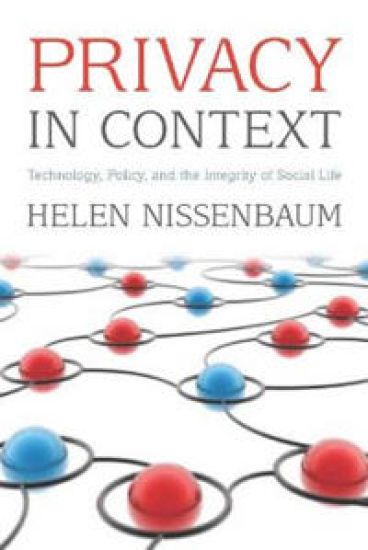
Privacy in Context

Privacy in Context

Helen Nissenbaum

Stanford University Press
2009
pokkari
Privacy is one of the most urgent issues associated with information technology and digital media. This book claims that what people really care about when they complain and protest that privacy has been violated is not the act of sharing information itself—most people understand that this is crucial to social life —but the inappropriate, improper sharing of information. Arguing that privacy concerns should not be limited solely to concern about control over personal information, Helen Nissenbaum counters that information ought to be distributed and protected according to norms governing distinct social contexts—whether it be workplace, health care, schools, or among family and friends. She warns that basic distinctions between public and private, informing many current privacy policies, in fact obscure more than they clarify. In truth, contemporary information systems should alarm us only when they function without regard for social norms and values, and thereby weaken the fabric of social life.
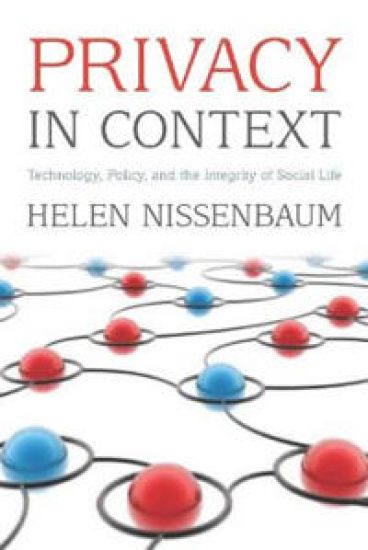
Privacy in Context

Privacy in Context

Helen Nissenbaum

STANFORD UNIVERSITY PRESS
2009
sidottu
Privacy is one of the most urgent issues associated with information technology and digital media. This book claims that what people really care about when they complain and protest that privacy has been violated is not the act of sharing information itself—most people understand that this is crucial to social life —but the inappropriate, improper sharing of information. Arguing that privacy concerns should not be limited solely to concern about control over personal information, Helen Nissenbaum counters that information ought to be distributed and protected according to norms governing distinct social contexts—whether it be workplace, health care, schools, or among family and friends. She warns that basic distinctions between public and private, informing many current privacy policies, in fact obscure more than they clarify. In truth, contemporary information systems should alarm us only when they function without regard for social norms and values, and thereby weaken the fabric of social life.