

Kirjailija
Helen Paul
Kirjat ja teokset yhdessä paikassa: 6 kirjaa, julkaisuja vuosilta 2010-2026, suosituimpien joukossa The Sjögren's Syndrome Handbook. Vertaile teosten hintoja ja tarkista saatavuus suomalaisista kirjakaupoista.
6 kirjaa
Kirjojen julkaisuhaarukka 2010-2026.
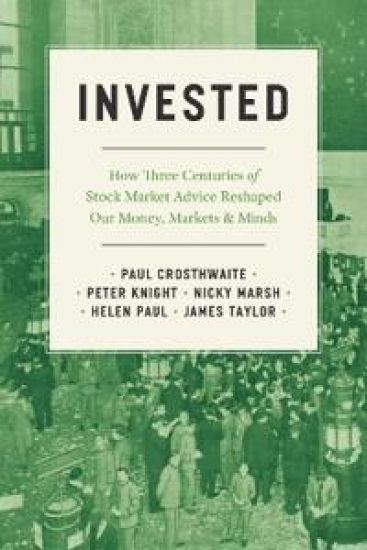
Invested
Paul Crosthwaite; Peter Knight; Nicky Marsh; Helen Paul; James Taylor
THE UNIVERSITY OF CHICAGO PRESS
2023
nidottu
Invested examines the perennial and nefarious appeal of financial advice manuals. Who hasn’t wished for a surefire formula for riches and a ticket to the good life? For three centuries, investment advisers of all kinds, legit and otherwise, have guaranteed that they alone can illuminate the golden pathway to prosperity—despite strong evidence to the contrary. In fact, too often, they are singing a siren song of devastation. And yet we keep listening. Invested tells the story of how the genre of investment advice developed and grew in the United Kingdom and the United States, from its origins in the eighteenth century through today, as it saturates our world. The authors analyze centuries of books, TV shows, blogs, and more, all promising techniques for amateur investors to master the ways of the market: from Thomas Mortimer’s pathbreaking 1761 work, Every Man His Own Broker, through the Gilded Age explosion of sensationalist investment manuals, the early twentieth-century emergence of a vernacular financial science, and the more recent convergence of self-help and personal finance. Invested asks why, in the absence of evidence that such advice reliably works, guides to the stock market have remained perennially popular. The authors argue that the appeal of popular investment advice lies in its promise to level the playing field, giving outsiders the privileged information of insiders. As Invested persuasively shows, the fantasies sold by these writings are damaging and deceptive, peddling unrealistic visions of easy profits and the certainty of success, while trying to hide the fact that there is no formula for avoiding life’s economic uncertainties and calamities.
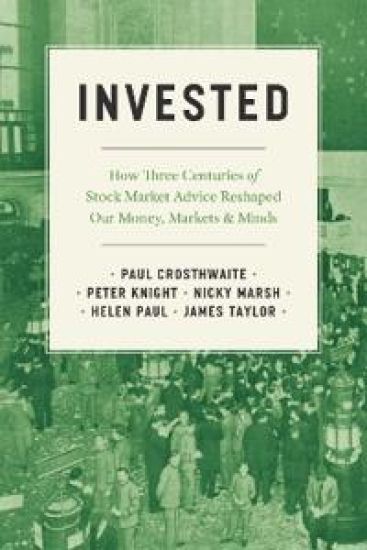
Invested
Paul Crosthwaite; Peter Knight; Nicky Marsh; Helen Paul; James Taylor
THE UNIVERSITY OF CHICAGO PRESS
2022
sidottu
Invested examines the perennial and nefarious appeal of financial advice manuals. Who hasn’t wished for a surefire formula for riches and a ticket to the good life? For three centuries, investment advisers of all kinds, legit and otherwise, have guaranteed that they alone can illuminate the golden pathway to prosperity—despite strong evidence to the contrary. In fact, too often, they are singing a siren song of devastation. And yet we keep listening. Invested tells the story of how the genre of investment advice developed and grew in the United Kingdom and the United States, from its origins in the eighteenth century through today, as it saturates our world. The authors analyze centuries of books, TV shows, blogs, and more, all promising techniques for amateur investors to master the ways of the market: from Thomas Mortimer’s pathbreaking 1761 work, Every Man His Own Broker, through the Gilded Age explosion of sensationalist investment manuals, the early twentieth-century emergence of a vernacular financial science, and the more recent convergence of self-help and personal finance. Invested asks why, in the absence of evidence that such advice reliably works, guides to the stock market have remained perennially popular. The authors argue that the appeal of popular investment advice lies in its promise to level the playing field, giving outsiders the privileged information of insiders. As Invested persuasively shows, the fantasies sold by these writings are damaging and deceptive, peddling unrealistic visions of easy profits and the certainty of success, while trying to hide the fact that there is no formula for avoiding life’s economic uncertainties and calamities.
Simple Way to Improve Eyesight Instantly!: Natural Vision Improvement for Clear, Close, Distant Vision & Astigmatism Removal
Helen Paul
Independently Published
2019
nidottu
Train your eyes and your mind with this visionary, imaginative collection of Magic Eye illustrations that entertains you even as it can help improve your vision at the same time."I have seen incredible changes in people's overall behavior by viewing Magic Eye images, including vision improvement. This book discusses some of the types of behavioral changes that my patients have reported as well as what possible physiological and psychological mechanisms may account for these changes."-Dr. Marc GrossmanWhen Magic Eye images hit the publishing world in the 1990s, the response was as magical as the 3D images popping from their colorful backgrounds. Viewers couldn't get these best-selling books fast enough. In fact, Magic Eye I, II, and III rode the New York Times best-seller list for 34 weeks and eventually sold more than 20 million copies. Now Beyond 3D: Improve Your Vision with Magic Eye takes this phenomenon to another level.Beyond 3D examines the medical benefits and scientific possibilities related to viewing these remarkable images. Clearly explained in lay terms and through the use of numerous Magic Eye illustrations, the book not only helps readers "see" the images, it identifies and demonstrates the many physical and performance-related enrichments that may result, including: Reduced computer eyestrainDiminished stress levelsImproved overall visionLengthened attention spa

The book is an economic history of the South Sea Bubble. It combines economic theory and quantitative analysis with historical evidence in order to provide a rounded account. It brings together scholarship from a variety of different fields to update the existing historical work on the Bubble. Up until now, economic history research has not been integrated into mainstream histories of 1720. Technical work on share prices and ledgers has been inaccessible to a wider audience. As well as providing new evidence against the gambling mania argument, the book also interprets the existing economic history scholarship for non-specialists.
The book is an economic history of the South Sea Bubble. It combines economic theory and quantitative analysis with historical evidence in order to provide a rounded account. It brings together scholarship from a variety of different fields to update the existing historical work on the Bubble. Up until now, economic history research has not been integrated into mainstream histories of 1720. Technical work on share prices and ledgers has been inaccessible to a wider audience. As well as providing new evidence against the gambling mania argument, the book also interprets the existing economic history scholarship for non-specialists.